Showing posts with label #IsraelBookReview. Show all posts

Tuesday, July 31, 2018

Que vivan los tamales!: Food and the Making of Mexican Identity (Diálogos) Paperback Jeffrey M. Pilcher (university of New Mexico Press) (IBRCookBooks)


Connections between what people eat and who they are--between cuisine and identity--reach deep into Mexican history, beginning with pre-Columbian inhabitants offering sacrifices of human flesh to maize gods in hope of securing plentiful crops. This cultural history of food in Mexico traces the influence of gender, race, and class on food preferences from Aztec times to the present and relates cuisine to the formation of national identity.
The metate and mano, used by women for grinding corn and chiles since pre-Columbian times, remained essential to preparing such Mexican foods as tamales, tortillas, and mole poblano well into the twentieth century. Part of the ongoing effort by intellectuals and political leaders to Europeanize Mexico was an attempt to replace corn with wheat. But native foods and flavors persisted and became an essential part of indigenista ideology and what it meant to be authentically Mexican after 1940, when a growing urban middle class appropriated the popular native foods of the lower class and proclaimed them as national cuisine.

Thursday, May 10, 2018

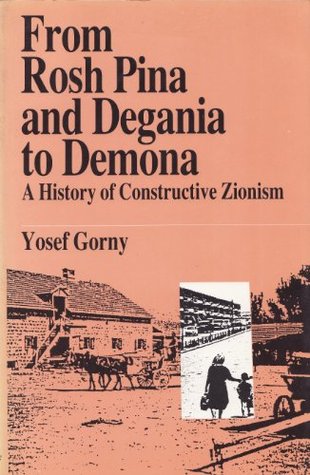
From Rosh Pina and Degania to Dimona: A History of Constructive Zionism by Yosef Gorny (Jewish Lights Pub)

From Rosh Pina and Degania to Dimona: A History of Constructive Zionism

I read this book in Hebrew a number of years ago. I found it to be a largely sympathetic and highly informative account of the building of the land of Israel. The story of a people returning to its land after two- thousand years of exile and creating a modern vibrant state is a moving and compelling one. Ingathering the largely poor, tired, and hungry, the refugees of persecution from over one - hundred lands Israel has through the dedicated work of its people , despite the hostility of neighbors, made major achievements. One is the revival as spoken and living language of the Biblical language, Hebrew. Another is the forging of an economy which began at the bottom and now has reached the lower level of the most prosperous nations. Yet a third achievement is the outstanding contributions made by Israelis to world agriculture, music, computer- science, medicine, and other areas.

The book explores, in the light of immigration, the Jewish settlement of Palestine and Israel, including urban population growth, and economic, social, and political development. The Jewish Thought Series from Israels MOD Books, now distributed exclusively by Jewish Lights. A part of Israel s Broadcast University Series, each book is written by leading experts and authors in their respective fields. They are published jointly by Tel Aviv University, the Chief Education Office of the IDF, and IDF Radio.


Thursday, May 3, 2018

The Prince (Penguin Pocket Hardbacks) Paperback by Niccolo Machiavelli (Author), Tim Parks (Author) (#IBRClassicsReview) (Penguin Classics)


Niccolo Machiavelli's book was written in the mid 16th century; this is a later translation from the 17th century converted into ebook format. There are a couple of issues with the format on the Kindle; some missing page breaks, and some odd sentence breaks. The ebook version also includes a couple of additional items written by Machiavelli later in his life.

"The Prince" of the title is merely a generic label for a leader, rather than a given level of nobility. The main book is a study of the concept of leadership, and particularly the application of politics within a nation or state. It is based upon a very careful study of the leaders of the time, especially within Italy and from the classical period of Greece and Rome. Although written some 500 years ago, most of the precepts can be seen to have been relevant throughout the intervening period and in many ways are still pertinent today.

In fact some of the material could equally be applied within large organisations; examine the biographies of some of the most famous business leaders and entrepeneurs, and you will see many of the factors that enabled them to rise up being the same that Machiavelli identified as being desirable in a great leader. It does perhaps portray a certain level of cynicism and certainly indicates the ruthlessness that is required to become a political figure; and it is this that has made the name of Machiavelli synonymous with political intrigue.

In many ways, this book is to political governance, what Sun-Tzu's "Art of War" was to the concept of military leadership. Careful study will reveal a lot of valuable advice and information; and although not the easiest book to read, the end result is well worth the effort.

Thursday, March 29, 2018

Sister of Zion Paperback – 15 Feb 2016 by Ruth Danon (Gefen Publishing Company)


1967. The beginning of the Six-Day War in Israel. Yehuda and Ruth were recent graduates of Hebrew University of Jerusalem and newlyweds. Yehuda had to join the compulsory service ranks of the Israel Defense Forces (in the medical corps). He was sent to the Jerusalem frontline - to the Old City - where he responded to an ‘incident’ at the Convent of the Sisters of Zion on the Via Dolorosa in the Muslim Quarter of the Old City. He met a Catholic nun at the convent who asked him to please check on her nephew. Her name was Regine Canetti.
Sister Regine, who came from a Jewish Bulgarian family and had converted to Catholicism, later joined the Church after the care and support she received from the nuns during the Second World War. Yehuda was also a war victim, born in Bulgaria, and subject to Fascist law. Their mutual backgrounds contributed to the fast friendship they developed.
They lost contact over the years, but 30 years later in 1997, Sister Regine was a guest on a tv program about the Six-Day War and requested on air that the young military physician she met at the convent in 1967 contact her. A reunion ensued and permission to write her story in a first person narrative resulted.
SISTER OF ZION by Ruth Danon and published by Gefen Publishing is that ‘story’. It is a beautifully written book and I felt that Sister Regine’s voice emanated from every page.
The book begins with a Preface: The Encounter — which tells of the early days of the Six-Day War in 1967 and Yehuda’s meeting with Sister Regine at the convent.
Chapter 1: Childhood — Chapter 2: Leaving Bulgaria — Chapter 3: Palestine-Eretz Israel.
These 3 chapters tell of Regine’s early childhood and family life; the tragic leaving of Bulgaria and arrival in Israel.
Chapter 4: In the Ecce Homo Convent of the Sisters of Zion — tells of Regine’s decision to convert to Catholicism and join the convent.
Chapter 5: The Congregation of the Sisters of Zion — tells of the history of the order. *A fascinating chapter.
Chapter 6: My Journeys — relates the travels and teaching experiences of Sister Regine.
Chapter 7: Back to Jerusalem — relates Sister Regine’s return to Jerusalem.
Chapter 8: The Second Vatican Council — This chapter (for me) was an extremely interesting and informative chapter. Being a Catholic, I am expected to know all this history, but I don’t, and I learned a great deal about my own faith.
Chapter 9: The Convents of the Sisters of Zion in the Holy Land. Another fascinating chapter which told the history of the Convents of the Sisters of Zion in the Holy Land. Archeologists believe that the Ecce Homo ruins are likely from the 2nd century at the time of the Emperor Hadrian.
Chapter 10: My Converted Brothers. This chapter relates the experiences of several people who converted to Catholicism “with full awareness and free will, who entered the Church as adults under the influence of teachers, friends, an enlightenment, or a tragic event.”
Chapter 11: A Visit in London Garden
Reflections of Regine
Afterword: The Power of Destiny The afterword opens with a quote from Marcus Aurelius — “Accept whatever comes to you woven in the pattern of your destiny, for what could more aptly fit your needs?” Regine Canetti was born in 1921 (95 years ago) to a secular Jewish family in Bulgaria. War, expulsion and family loss brought her to the Sisters of Zion Convent as a nun. “Did she abandon her Jewish roots?” The reader should judge by her own words.”
Notes and photographs complete the organization of the book.

A fascinating read. One which taught me so much about my own faith and led to musings about the concepts of cultural heritage, faith and destiny. Please read this book, SISTER OF ZION, whatever your faith or cultural background.

Tuesday, January 2, 2018

Elements of Architecture: Assembling Archaeology, Atmosphere and the Performance of Building Space. Mikkel Bille and Tim Flohr Sørensen (eds). Routledge. 2016.

In the new collection Elements of Architecture: Assembling Archaeology, Atmosphere and the Performance of Building Space, editors Mikkel Bille and Tim Flohr Sørensenseek to forge a meeting point between archaeology and architecture through focusing on the link between physical space and our sensual or ‘atmospheric’ encounters with it. While the sheer breadth of material offered by the book verges on dizzying, I welcome this as an important and critical read that will inspire further research into the relationship between archaeology, atmosphere and architecture.


The term ‘atmosphere’ has recently gained new momentum in interdisciplinary academic discourse, much of which revolves around discussions of ‘affect’ and sensual perceptions of place and architecture. This perspective puts the materiality of built space centre stage, emphasising the profound link between our physical environment and perception. This discourse appears to be ahead of, though potentially also complementary to, the ways in which archaeological studies construct the ‘social’, ‘economic’ or ‘cultural’ elements of architecture from found ruins or objects.

The substantial collection Elements of Architecture: Assembling Archaeology, Atmosphere and the Performance of Building Space, edited by Mikkel Bille and Tom Flohr Sørensen, aims to bring current architectural and archaeological thinking together in order to explore the atmospheric aspects of architecture, rather than ‘just’ its functional or aesthetic ones.

Key to this endeavour is promoting an understanding of architecture not as a static entity, but as an ‘assemblage of elements’, tangible and intangible, which oscillate between materiality, performance/process and meaning-making. By not advocating archaeological over architectural studies or vice versa, the ‘ontological vagueness’ (3) emerging from the focus on architectural atmospheres is here placed centrally for the study of built/building space, whether in the past, present or future.

What is most intriguing about this collection is how the editors set the scene: rather than juxtaposing architectural and archaeological studies, they outline a shared ontological problem. By deploying ‘documentation, drawing plans and making typologies’ as strategies to stabilise architecture into ‘bounded and tangible objects’ (6), both disciplines tend to be blind to the affective qualities of space. Departing from this shared problem, the editors provoke analytical tensions among contributions, which they channel intelligently and productively into four book sections: ‘Form and Temporality’ (Part 1); ‘Atmospheres’ (Part 2); ‘Performance and Process’ (Part 3); and ‘Disintegration and Unfinishedness’ (Part 4), each of which is introduced separately.


‘Form and Temporality’ focuses on temporality, motion and scale to explore how architecture gains form. It is premised on the assumption that archaeological studies of architecture have much to contribute to processual understandings of built space as they tend to privilege building practices over buildings as objects. Contributions in this section vary widely, ranging from Lesley K. McFadyen’s piece on the immanent materials that become invisible in archaeological studies of architecture; Michal Murawski on the affective, scalar and political powers of Warsaw’s Palace of Culture and Science; Jonathan Hill’s investigation of ruins and monuments; Gavin Lucas’s on building as constant and dynamic change; Alison Kohn and Shannon Lee Dawdy’s work on informal settlements in Bolivia; to a photo essay by Mark Minkjan and Ingel Vaikla on Brussel’s contested urban condition.

‘Atmospheres’ then explicitly turns to questions around how spaces feel. Focusing on the immaterial aspects of architecture, such as air and light, contributions explore the link between spatial atmosphere, perception and the built environment. Here, Tim Ingold argues for an inclusion of affect, emotion, rhythm, light and air into notions of architecture, which otherwise tend to focus on form. Jürgen Hasse surveys the German intellectual tradition of engaging with the term ‘atmosphere’ to argue for infrastructure, such as bridges or tunnels, as highly affective rather than surplus spaces. Oliver J. T. Harris returns to the notion of ‘assemblage’ to state that architecture is about ‘becoming’, and therefore not only includes the elements that form part of a building, but also a much wider network of human and non-human actors. Closing this section, Serena Love argues for the importance of materials and their meanings in relation to how spaces feel.

‘Performance and Process’ shifts focus to the social dimension of space, how enactments and lived experiences of people structure architecture and vice versa, premised on the understanding that social practices continuously transform built space. The section starts off with Albena Yaneva’s piece on how architectural images work beyond representation to participate in shaping the city. It then moves on to Larry J. Zimmerman’s intriguing work on homelessness and the necessity of home-making under the constant threat of eviction. Drawing on research in Mozambique, Morten Nielsen gives a detailed account of how personhood is deeply entangled with the ongoing process of building a house. The section closes with Nick Kaye’s explorations of the works of artist Vito Acconci and Augusta McMahon’s piece emphasising the significance of lived experience in ancient Mesopotamia.

The last section, ‘Disintegration and Unfinishedness’, turns to the question of what happens to built space when it decays and falls to ruin. Drawing again on assemblage theory, it argues that architecture does not finish when it fails but can adopt new forms of use and experience. Here, Tim Edensor investigates the reuse of industrial ruins in the UK and their newly emerging multiple temporalities. Þóra Pétursdóttir explores how an abandoned Icelandic herring station has become a popular tourist destination, while Michael A. Ulfstjerne investigates architecture and planning in post-economic boom Mongolia to promote an understanding of building as contingent. Jørgen Ole Bærenholdt analyses ‘designed tourist sites’ in Norway to argue that dissatisfaction among tourists may emerge from the fact that these sites are presented as finalised rather than emerging. Rosemary Joyce’s final piece looks at how architecture, materials and people are linked through notions of failure by investigating nuclear waste containment in the USA.

Unmistakably, this edited collection presents an enormous wealth of complementary work that all in some way links to atmosphere, architecture and archaeology. The intellectual ambition of this book is certainly impressive, and the editors deliver significant conceptual legwork to bring analytical frameworks together that have to date been referenced jointly, but never truly linked up. This is an important, if not the main, achievement of the book, but it comes at a cost: some readers may be overwhelmed by both the analytical density and the sheer amount of contributions in this hefty volume.

Though we can agree with the editors’ statement that the diversity of the approaches signals the quality of this volume, we need to ask if such breadth is actually helpful for advancing current thinking on atmosphere, space and the archaeological method, or whether it contributes to conflating these spheres. Perhaps we have to distinguish between the expert and the interested reader: while the book may well become a key work of reference for scholars and practitioners working on the themes it addresses and prompt conceptual and methodological debate, others may choose more selected reading and engagement.

However, what this collection certainly does is bring together some of the most relevant scholars in the field of social science studies of architecture, atmosphere and materiality, which is an accomplishment. Here, works that are grounded in empirical social research undoubtedly are highlights, not least because they take seriously the notion of ‘atmosphere’ which puts people (and not analysts) and their experiences centre stage.

Overall, the editors should be applauded for tying together not only the seemingly remote fields of architecture and archaeology, but also such wide-ranging contributions. With many thought-provoking statements, Elements of Architecture will most certainly kick off more debate on atmosphere, architecture and archaeology. And because some of it can also be read as a critical commentary on architectural and archaeological methods, it will be an interesting and critical read particularly for architecture and archaeology students, scholars and practitioners.

Friday, December 1, 2017

Taste of Persia” By Naomi Duguid (Artisan, $35) (IBRCookBooks)


Baku fish kebabs from “Taste of Persia.” CreditKarsten Moran for The New York Times

A new book from Naomi Duguid is a reason to celebrate, as each promises a fascinating culinary excursion. Her previous books focused on Southeast Asia, and like them, this newest, “Taste of Persia,” opens with a map, which illustrates Ms. Duguid’s wise observation that regional cooking doesn’t respect borders. So the search for Persian cuisine includes stops in Armenia, Azerbaijan, Georgia, Iran and Kurdistan.

We are seduced from the start with the flavors of the region: saffron (most of the world’s supply comes from this part of the world), mint, dill, parsley, cilantro, dried rose petals, sumac, lime, pomegranate and honey. Cinnamon, cardamom and other sweet spices weave their way through savory and sweet dishes.
Ms. Duguid’s discoveries on these intrepid travels are shared in stories and pictures, along with an abundance of recipes. Many are ultrasimple, like a tomato and cucumber salad dressed with pomegranate molasses; some are more complex, like the cabbage dolmas and stuffed vegetables. Along the way, she teaches us the Persian way with rice and how to make spectacular flatbreads.

I made the herbed yogurt soup, which looked as if it might be bland. But the final addition of chopped herbs, a lot of them, transformed the soup into something divine. A generous spoonful of cinnamon was a surprising and delicious garnish.Photo

“CreditJames Nieves/The New York Times

The easy Baku fish kebabs, marinated with lemon juice, salt and dill, are grilled skin side down to ensure succulence. The accompanying pomegranate-coriander sauce, a kind of relish made with the crushed fruit, lemon juice, a little salt and chopped cilantro, is exquisite.


Tuesday, November 14, 2017

Fairy Tales with more depth and substance ..... BRAVE RED, SMART FROG A New Book of Old Tales By Emily Jenkins Illustrated by Rohan Daniel Eason 94 pp. Candlewick Press. $17.99. (Middle grade; ages 8 to 12) SNOW AND ROSE Written and illustrated by Emily Winfield Martin $17.99 205 pp. Random House Children’s Books (Middle grade; ages 8 to 12)


Since the beginning of “once upon a time,” adults have spent so many hours analyzing and worrying over fairy tales, it’s a wonder most aren’t worn down to a few frazzled golden threads. But before we can get to the meaning of a fairy tale, it must delight us, or scare us, or perhaps both. Two books for young readers — Emily Jenkins’s “Brave Red, Smart Frog,” illustrated by Rohan Daniel Eason, and “Snow & Rose,” by Emily Winfield Martin — reimagine Brothers Grimm fairy tales, treating delight, with a few grisly bits folded in, as its own reward. The deeper meanings of these stories do emerge, but the pleasure they give is paramount.

“Brave Red, Smart Frog” is subtitled “A New Book of Old Tales,” and the stories in it include riffs on “Snow White” and “Red Riding Hood.” But Jenkins adds welcome layers of texture to parables we think we know well. She’s particularly interested in flawed heroines, like Crystal, the princess in her version of “The Frog Prince,” a girl with too many pretty dresses, too many pairs of shoes and “too many ladies-in-waiting instead of friends.” Crystal is spoiled, but it isn’t wholly her fault. She has “too few occupations and too few real conversations” — in a way she’s like today’s superbusy, superachieving kids, who barely have time to imagine what it might be like to kiss a frog. Eason’s finely detailed illustrations balance the natural world with a fantastical one: A witch’s candy cottage looks as realistic and believable as the elaborately etched bark of a tree.

In “Snow & Rose,” a reimagining of the Grimms’ “Snow-White and Rose-Red,” the lives of two sisters — practical, considerate Rose and petulant, anxious Snow — are changed forever when their father disappears in the woods. They’re forced to leave their comfortable house filled with pretty things and, with their grief-stricken, somewhat checked-out mother , make a new home in the very forest that swallowed up their father. Rose attempts cheerfulness; Snow, ever wistful, can’t stop thinking about all that the family has lost. As the two try to make the best of this terrible change in circumstances, they open their eyes to the new people and creatures around them. There’s an ancient librarian with a wooden leg, whose shelves contain not books but strange, useful treasures; a crabby little elf-man out to stir up trouble; and a boy who specializes in growing polychrome mushrooms. He’s given them fanciful names like Ruby Toadstools, Flea’s Parasols, and, my personal favorite, Butterscotch Tinies.

Martin, ties up the story with a graceful, satisfying flourish. Her illustrations — a bear caught in a trap, his face a world of confused, hurt feelings, or Snow, Rose and their mother heading out on Christmas Day in cozy cloaks with pointed hoods — have a gentle folkloric naïveté, reminiscent of Tasha Tudor’s work. They’re very pretty but also suitably mysterious.

As with all fairy tales, there are lessons in these books: Cultivate inner beauty. Be kind, especially to any creature or fellow human who is suffering. And because young heroines figure so prominently, one notion emerges with particular clarity: Girls have the interior resources to do anything they want, and while a little magic helps, it’s hardly necessary. Jenkins and Martin also understand that while it’s important to build confidence, humility and a sense of humor about oneself are essential. In other words, that stuff about being open to kissing the frog still rings true. Now please pass the Butterscotch Tinies.

Sunday, November 12, 2017

This Chicken is a T-Rex!: The Great Big Book of Animal Evolution Hardcover – November 7, 2017 by Roman Garcia Mora (Illustrator) (White Star Kids) (IBRChildrensBooks)


THIS CHICKEN IS A T-REX!The Great Big Book of Animal Evolution
by Rita Schiavo & Cristina Banfi & Cristina Peraboni ; illustrated by Román García Mora ; translated by TperTradurre S.r.l.Age Range: 10 - 13

A portrait gallery of extinct creatures, “scary, attractive, or a little bit bizarre to our eyes,” posed with modern relatives.

García Mora goes for outsized examples, from the titular T. Rex—looking positively dapper in a coat of neatly combed feathers as it towers over a pair of oblivious pullets—and the ancestral dragonfly Meganeura, “large as a seagull,” to giant sloths and armadillos. Rendered in muted, greenish-gold tones, the figures look properly massive but are actually rather small on the page, as plenty of space has been left for early cousin creatures, for scale-capturing views of modern descendants and silhouettes of human children, for close-ups of teeth, feet, or other physical features to show changes over time, and for quick but carefully accurate descriptive notes in tiny type. The gallery isn’t arranged in any particular order, coming to an abrupt end with group portraits of early sharks and other fish, but beyond the eye candy, it does offer examples of both adaptive radiation (species diverging into other species) and evolutionary convergence (different species acquiring similar characteristics) to enrich the basic notion of evolution as an ongoing process. There is no backmatter, making this a bit problematic as a nonfiction resource.

Best adapted for browsing but with some nutritious bits for students of paleontology or animal evolution in general. (Informational picture book. 10-13)

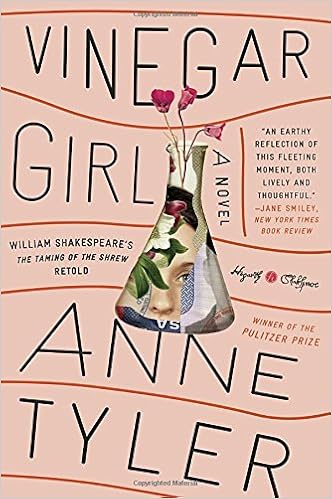
Vinegar Girl: A Novel (Hogarth Shakespeare) Paperback – March 28, 2017 by Anne Tyler (Hogarth)


Anne Tyler's 'Vinegar Girl' a clever riff on Shakespeare's 'Shrew'


"Vinegar Girl" by Baltimore author Anne Tyler. (Penguin Random House / TNS)
Mike FischerMilwaukee Journal Sentinel

"Vinegar Girl," the latest from Baltimore author Anne Tyler, is a clever take on "The Taming of the Shrew."

Is there any living American writer who has written as well about marriage as Anne Tyler? Or who has consistently been as honest about the disconnect between fantasies of lovebirds living happily ever after and the often sad but also funny miracle of two separate people actually staying together?

In "Vinegar Girl," the Baltimore author brings these talents to the altar of the Hogarth Shakespeare series, in which eight writers are creating novelistic adaptations of various Bard plays. Tyler's novel weds her career-long focus on the quirks of marriage to one of Shakespeare's strangest unions: Petruchio and Katherina in "The Taming of the Shrew." It's a heavenly match.

Shakespeare's ostensibly shrewish Katherina is now Kate, a 29-year-old preschool teaching assistant in Baltimore. She lives at home with Bunny and Louis: her spoiled and ditsy teenage sister and her widowed father, a medical researcher convinced he's on the verge of a major breakthrough.

Tyler's Petruchio is Pyotr, Louis' lab assistant. Like Petruchio in Shakespeare's play, he's a foreigner. That's where the plot thickens in "Vinegar Girl": Pyotr's visa is about to expire, and Louis can't afford to lose him. Louis' solution: A contrived marriage between Pyotr and his oldest daughter. She doesn't otherwise look to be getting married anytime soon.

And why not?

Because Kate speaks her own mind and then some, in a world where outspoken women are still liable to be disparaged for the same behavior that prompts praise of male peers as confident and aggressive.

Kate has no compunction telling parents of her preschoolers that their darlings aren't necessarily exceptional. She was asked to leave the college she'd been attending for describing her professor's explanation of photosynthesis as "half-assed" (this strains credulity as a plot point, but plot also wasn't Shakespeare's strong suit).

Kate can be judgmental regarding others' foibles; as with Katherina, it's a convenient way of pre-empting how often others judge her, "dark-skinned and big-boned and gawky." "Nobody," we're told, "had ever called her sweet." Pyotr calls her "vinegar girl."

And he means it as a compliment. "In my country they have proverb," he tells her at one point, in his awkward English. "Beware against the sweet person, for sugar has no nutrition."

Much as Petruchio initially woos Katherina for her fortune, all Pyotr initially wants from Kate is a green card. But as with the pair in "Shrew," what these two lost and lonely souls discover is how much they have in common, as smart and strong-minded people leagued against a world of conformists, none of whom can truly see what makes Kate special.

Truth be told, Kate can hardly see it herself; having been viewed by others as a modern-day shrew for most of her life, she's gradually come to see herself as one, which is among the reasons she has no friends and isn't sure she wants to marry anyone, let alone a man like Pyotr whom she neither knows nor loves.

And yet it's Pyotr a milder version of Petruchio, just as Kate isn't nearly as rough around the edges as Katherina who helps Kate see her supposed deficiencies as strengths, while also giving her permission to fully embrace herself and thereby appreciate him.

As with the best stage productions of "Shrew," love creates a fundamental equality between the pair at the center of Tyler's novel; critics apt to castigate Shakespeare's play for its supposed sexism repeatedly miss this underlying truth.

Tyler misses nothing. Yes: In her best novels about marriage, from "Breathing Lessons" (1988) through "A Spool of Blue Thread" (2015), the canvas on which such truths appear is bigger and more textured; in comparison, "Vinegar Girl" is a bit of a lark. So was "Shrew."

But this jeu d'esprit embodies all the reasons readers love Anne Tyler: it's fun, lighthearted, clever, compassionate and filled with Tyler's always extraordinary love for her characters, liberating them here to love each other.

QUEEN VICTORIA'S MATCHMAKING The Royal Marriages that Shaped Europe by Deborah Cadbury (Bloomsbury)


                            QUEEN VICTORIA'S MATCHMAKING by Deborah Cadbury
Digging deeper into Queen Victoria’s extensive brood, their intermarriages, and their wars.
Prince Albert’s great plan was to intermarry his children with European royal houses to spread the liberalism of England and prevent wars. That was not to be. World War I ended or fatally harmed the monarchies of most of Victoria’s grandchildren. The cousinhood proved to be more harmful than powerful. The great shifts in politics in the early 20th century and the clash of the poor and the wealthy gave rise to anarchists and increasing instances of assassination. BBC producer Cadbury (Princes at War: The Bitter Battle Inside Britain’s Royal Family in the Darkest Days of WWII, 2015, etc.) concentrates on Victoria’s attempts to find a suitable bride for Eddy, the Prince of Wales, pushing primarily German princesses. Victoria’s love of all things German accounts for her deep distrust and dislike of all things Russian, particularly after the assassination of Czar Alexander II. Equally important to Victoria were the marriages of her late daughter’s children. Her death left her mother feeling closer to her granddaughters than to her own children. She hoped to wed her favorite, Alix, to Eddy. At her sister’s wedding to Grand Duke Sergei in St. Petersburg, Alix met the czarevich, Nicholas, who captured her heart. Princess Victoria, the eldest daughter, was married to reformer Frederick II, German emperor and king of Prussia. Alas, his reign was desperately short, and he was succeeded by his bellicose, even maniacal son, Wilhelm II. Victoria’s final choice for Eddy’s wife, Mary of Teck, a rank outsider—she was not a royal—might have worked out, except Eddy died unexpectedly. In this enjoyable story for fans of royal machinations, Cadbury ably shows not just the successes, but also the damage inflicted by Victoria’s single-mindedness.
An instructive European history that effectively shows “the influence of [Victoria’s] matchmaking on the remarkable rise of the royal dynasty.”

Sunday, November 5, 2017

Tenements, Towers & Trash: An Unconventional Illustrated History of New York City Hardcover – October 3, 2017 by Julia Wertz (Black Dog & Leventhal)


You’ve seen these kinds of juxtapositions before: someone will place a photograph of a specific location from a century ago up against a contemporary photograph. Usually, the intent is to make a reader shake their head and wonder about the horrible price of progress: a beautiful old Victorian home in the “before” frame has given way to an ugly strip mall in the “after,” for instance. A field becomes a gas station. A row of quaint row houses is now an ugly and very expensive-looking condominium.

The passage of time, portrayed in the space between those two photos, is almost always portrayed as something deleterious. Spaces lose their power and their beauty and their dignity over time. I don’t know if Robert Crumb’s “A Short History of America” is based on a specific location, for instance, but it’s one of the best examples of the form.

Julia Wertz’s huge new book Tenements, Towers & Trash is packed with those kind of juxtapositions. She’ll draw a New York City street from a hundred years ago, and then she’ll draw the same street in modern times. Readers have almost been trained to drool from nostalgia on seeing this format printed on a page.

But here’s the thing: spend anything more than a minute looking at Wertz’s drawings and you’ll see that they’re not dripping with the kind of judgment that you’ll find in those other books. The past isn’t sainted; it’s not a victim to the merciless, plodding present. It’s just..different, is all.

Oh, sure: Wertz will occasionally focus her loving attention on a particularly beautiful awning or marquee in the “before” picture from the 1930s, and the reader can’t help but notice that the contemporary building has none of the panache of the earlier version. But for the most part, she portrays both drawings as points on a continuum. This isn’t nostalgia, it’s acknowledgement of a past that informs the present. It’s a celebration of city life, where every generation tears down and builds up, and the only consistent fact is that everything will change.

You likely know Wertz from her books The Fart Party or Drinking at the Movies. Her autobiographical comics are funny and piercing and insightful, but they will not likely prepare you for the work you’ll find in Tenements. Wertz’s intentionally simplistic art style in the earlier books is still here — she still draws herself with almost less detail than your standard emoji face — but these drawings of buildings are finely rendered illustrations, with more detail per square inch than you’d find on entire pages of some of Wertz’s earlier work.

Tenements is Wertz’s celebration of New York City — a somewhat bittersweet one. She notes several times that in the course of making the book, she was priced out of her affordable one-bedroom apartment so much of her tribute to the city was illustrated from the other side of the country. The book is packed with NYC-centric digressions about hotel keys and egg cream recipes and the contents of New York’s tap water.

This is a big, dense art book that washes over you, swallowing your attention and overwhelming your senses. It’s like taking a long walk with a friend who loves to shoot the shit about history and whatever she happened to be feverishly researching on Wikipedia at 3 am the night before. It’s a meandering journey with no specific start and end point.

If I had one complaint about Tenements, it’s that it could use a little bit more of a structure. But given a choice, it’s better that Wertz erred on the side of too little structure; it seems entirely appropriate that you don’t know what the hell to expect you when you turn the page in a book about the greatest city in the world. In that way, it kind of simulates the act of walking in New York, when you have no idea what you’ll find around the next corner.

Even though Wertz writes lovingly and in detail about very specific aspects of New York City — I particularly like the biography of Nelly Bly and the short essay on New York inventions like hot dogs, air conditioners, and Tom Collinses — Tenements can also be appreciated by someone who’s never been to New York. The book is a celebration of city life, of living right on top of your neighbor, of those corner shops that barely stay open for a month and the storefronts that last longer than a century.

“Basically,” Wertz admits while on a walk toward the end of Tenements…
I spend the whole walk in current New York City looking for evidence of the past New York City…I’m perpetually fantasizing about a time I never experienced, and imagining a life I’ll never live.

On first reading, this sounds like someone who’s overcome with an irrational love of the past. But really, it’s more just a storyteller coming to terms with the fact that she’ll never be able to see all the stories that came before. She’s always craning her neck to spot those ancient architectural signs of people who once lived where she lived, who walked those streets.

But unlike some foppish nostalgia act, Wertz doesn’t seem beholden to the past. Instead, she’s interested in the relationship between the past and the present. What does it mean when you live where so many others have lived? Are there signs of progress, of actual forward movement, in the streets of New York City? Wertz seems to think so.

Every city is home to countless perspectives — practically an infinite number of perspectives, so far as our limited human understanding can fathom. Tenements is valuable because it provides one talented cartoonist’s perspective on a city. When you really see a city through Wertz’s eyes, you’re likely to understand your own city in a different way forever after.

Thursday, November 2, 2017

Urban Green: Architecture for the Future. Neil B. Chambers. Palgrave Macmillan. . 256 pages.

Product Details


Edward Burtynsky’s well-known photographs of mine tailings, quarries, and workers in Chinese manufacturing plants are a rare reminder of the vast territories, complex circuits, and messy business of material production that underpins today’s global economy. This is the underbelly of our everyday consumption that remains conveniently distant in the wilds of Ontario or the Australian desert. Following Burtynsky’s line of thought, Neil Chambers‘ new book Urban Green: Architecture for the Future, shows a concern for the wider ecological consequences of material production – specifically the mining, manufacturing and transporting of all that heavy ‘stuff’ that is a largely invisible prelude to the construction of our homes, offices and cities.

Chambers argues that “a huge chasm exists today between Green Building and ecological sustainability” with green building practices only scratching the surface of environmental responsibility and side-stepping the broader impacts of construction and urbanisation on eco-systems, waterways and wildlife habitats. We “can’t just focus on individual buildings” but need to broaden the green building agenda to the “retro-fitting of larger systems”; infrastructure, entire cities and regional-scale ecosystems.

Wary of techno-fixes he argues: “if we continue to try to solve the problems created by using fossil fuels with technology-based sustainability, the only thing we will be making is a mess”. If the ecological disaster of first-generation biofuels did not provide a clear enough caution on the problems of narrowly conceived ‘clean energy’, he suggests we will repeat the same mistakes with nuclear electricity, electric cars and large-scale wind farms. Drawn to decentralised and distributed energy generation systems, he goes on to place faith in new hydrogen fuel-cell energy technologies, although without the close life-cycle analysis that he demands of the various technologies he rejects.


While being ‘green’ today equates with energy savings and carbon reductions, for Chambers a bolder ambition is necessary, rightly pointing out that “energy-efficient light bulbs are great for saving energy and making your power bill less, but they do not grow back forests”. Taking seriously the ecological dimension of sustainability, he presents a much-needed correction to the narrow focus on energy efficiency and climate change that dominates today’s green thinking.


Nickel Tailings No. 34, Sudbury, Ontario 1996. Edward Burtynsky

His priority is not carbon emissions but the preservation and development of functioning eco-systems and water systems. Taking up the idea of ‘ecomimicry’ he asks “can we be as beneficial as a beaver?” – whose engineered dams and lakeside homes are obviously disruptive – but also establish vital habitats for other plants and animals while biodegrading over years rather than the too-permanent concrete and glass constructions of our cities. For Chambers “the goal of ecomimicry is to take entire cities … and redesign them in ways that ‘re-enact’ the functions of ecosystems”. This is bread and butter for ecologically-informed landscape architects, but is too often forgotten by architects, engineers and urban designers who have failed to take nature-inspired models seriously.

Working with the idea that architecture is a client-based profession Chambers neatly suggests that city-makers should include eco-systems, wildlife habitats and watersheds as part of an expanded clientele. In achieving this ambition he muses that “maybe there will be no designer at all, and biologists will design the essential part of our future cities”. While landscape ecologists probably should have more say in city design and would likely leave us with plenty of green space, ecological corridors and richer biodiversity, we cannot abandon decision-making on the city to a depoliticised science, whether ecologically informed or not. A question remains about how we ‘speak for nature’ and incorporate the demands of ecosystems with those of architects, developers and the multitude of human and non-human urban inhabitants.

There is a politics here, and although Chambers’ is not explicit, it comes off as slightly libertarian, or at least firmly ensconced in North American suburban life with a car, backyard and stand-alone house. There is less focus on the benefits of cooperation that dense urban life might ideally facilitate and more on the possibilities of independence from inefficient centralised energy grids and backyard ecology. His brief outline of the political action needed to implement his ambitious vision counts too heavily on civil society and consumers ‘speaking with their wallet’. For such a bold idea that requires extensive coordination there might be room for more traditional forms of government intervention.

Chambers is right in broadening what has become a narrow green agenda to assert that a serious environmentalism should put ecology at the heart of its mission. But, in common with the tech-based ‘eco-modernisation’ movement, he places tough social-economic and political challenges beyond his remit. Dealing with problems of income distribution, poverty, ill health and social relations might be a step too far for a book that is already wide-ranging in its scope. Nevertheless, to sidestep such issues and believe that the restoration of ecosystems will become a priority without being locked into a more comprehensive social and economic politics is to miss one of the key lessons of the sustainability movement.

This is an enjoyable read that takes us on intriguing tangents. As an architect and a blogger at treehugger.com, Chambers’ book takes on some of the breezy style of web-based media. Readers familiar with the territory may be disappointed in a lack of new information based on rigorous analysis. Nevertheless, the reassertion of an ecologically-oriented vision is a welcome addition to the on-going work of developing truly sustainable cities.

Thieves of Virtue: When Bioethics Stole Medicine. Tom Koch. MIT Press

Product Details

Bioethics emerged in the 1960s from a conviction that physicians and researchers needed the guidance of philosophers in handling the issues raised by technological advances in medicine. In this book, Tom Koch argues that bioethics has failed to deliver on its promises and has promoted a view of medicine as a commodity whose delivery is predicated not on care but on economic efficiency.  Koch provides an interesting history of the field, but he unnecessarily blames bioethicists for recent developments in health care and medicine.


Tom Koch’s book, Thieves of Virtue: When Bioethics Stole Medicine immediately demands a few questions from the prospective reader. First, why choose to say “when bioethics stole medicine?”. Why not “how bioethics stole medicine,” or “why“? Second, what exactly does it mean to “steal” medicine? Koch quickly addresses this choice and posits that by imposing an artificial narrative of scarcity, 20th century bioethics has replaced the age-old ethics of medicine embodied in the Hippocratic Oath (first, do no harm) with its own inadequate moral codes.

Wait…artificial narrative of scarcity? The United States currently spends about 18% of GDP on health care. Other countries, like the UK, spend a more manageable 10% of GDP on health care, but costs are rapidly rising with no signs of abatement. Most economists consider this level of spending to be wasteful and inefficient. A minority of economists have argued cogently and compellingly that 18% of GDP is not necessarily inefficient, and that the US gets good value for its spending. Almost none, however, would claim that there is room to increase spending, and that scarcity is artificial.


Koch claims that bioethics has persuaded people that resources are scarce, and therefore should be apportioned by valid ethical criteria (devised, of course, by bioethicists themselves), and that in doing so, they are advancing a neoliberal, individualistic agenda. In my experience, I have found this couldn’t be farther from the truth. Bioethics usually advances the exact opposite philosophy. Bioethicists object to market allocations of medical resources, which are apportioned based on ability and willingness to pay. Bioethicists also tend to advocate alternative distributions, like giving treatments first to the youngest in a group, or to those that will fare best from the treatment, or to those who add the most ‘utility’ to society. Of course there is talk of scarcity, but if Koch’s issue with scarcity is better placed with economists than bioethicists, since scarcity has been one of the central tenets of economics since the days of Adam Smith.

Koch also bemoans the loss of paternalism in medicine – the ‘good old days’ when patients listened to doctors. That paternalism in medicine has declined is uncontroversial. However, in praxis, doctors still dictate most treatment decisions. Whether patients actually are more participatory than they have been at the past, or simply fashion themselves more participatory, is an interesting and unanswered question. But is the loss of paternalism the fault of bioethics as Koch suggests? Maybe this is best answered by asking another question — why was medicine paternalistic in the first place? We don’t necessarily trust investment managers with our money, car dealers with our automotive interests, or real estate agents with the task of finding the best house at the best price. Why then do we trust doctors?

About 50 years ago, the Nobel prize-winning economist Kenneth Arrow attempted to answer this question in his famous article, “Uncertainty and the Welfare Economics of Medical Care”. Arrow asserted that because it is hard to verify whether doctors make good decisions, our culture has created an ethic of trust and duty. If a stock broker consistently achieves low return on your money, you might end of firing this person. If a surgeon fails your knee surgery, firing him or her isn’t likely to yield an optimal result as your knee is already injured. Instead, we put in place licensure restrictions and enter into a trust relationship with physicians. Koch claims that bioethics changed this through its sustained attack on physicians as arrogant and self-interested. But in seeking to exonerate physicians, Koch seems to portray bioethicists the arrogant and self-interested ones. If there’s any lesson to be taken from the entire situation, it is that nuance is needed in categorising entire classes of people, whether they be physicians or bioethicists. Koch unfortunately does not provide that.

Are there other explanations for why the physician is no longer the faultless, noble figure he or she once was? A more benign explanation is that access to information has improved significantly – through advances like the internet, and also consumer ratings – and this allow us to judge doctors based on performance, and therefore we don’t need to trust them as much as we once did. Fifty years ago, when someone wanted a knee surgery, they were likely to rely on word of mouth and/or hospital reputation. These days, health consumers are beginning to use actual data to make these decisions. As the data becomes more user-friendly, these trends might increase, and our inherent trust in doctors will continue to decline apace. We might briefly mourn the degeneration of the cultural pact between doctors and patients, but it might actually be a positive development. For all the good that trust entails, it can also seriously decrease competition. If the medical system responds to this new normal by improving quality (as economic theory would suggest), this trade-off may then prove more valuable than the loss of trust.

In the end, Koch provides an interesting history of bioethics, but his overall argument unnecessarily blames bioethicists for recent developments in health care and medicine. While bioethicists may have played some role in emphasising scarcity rather than individual patient care in medicine, it was certainly not solely their doing. Indeed, changing economic realities (health care costs) and a more sophisticated understanding of which procedures work and which do not, have spurred many to consider the health care system as a whole rather than individual patient-doctor interactions. And while “economic efficiency” might seem a cold and antiseptic phrase when applied to health care, insofar as it strives to maximize outcomes at minimal costs, I would argue that it is something to be lauded rather than deplored.

The Creative Destruction of Medicine: How the Digital Revolution Will Create Better Health Care. Eric Topol. Basic Books.

Product Details


Every once in a great while, amidst the doomsday predictions about the percentage of GDP that will be eaten up by health care in 2050, the drumbeat of reports about the astonishing amount of money spent on “waste” and “unnecessary care”, and the horror stories about inequalities, waiting lists and the privations of insurance companies, someone dares to strike an optimistic note about the future of health care. Eric Topol, a prominent cardiologist at Scripps Research Institute in San Diego, is one of these rare optimists, and his recent book, The Creative Destruction of Medicine: How the Digital Revolution Will Create Better Health Care, is an exhilarating account of the coming intersection of technology and medicine.

Topol’s basic thesis is that we are on the cusp of a “super-convergence” in medicine, made possible by cheap genetic sequencing, ubiquitous sensors that track physiological metrics, and constant wireless internet connection. In Topol’s vision of medicine in 15 years, each of us will have on or in us tiny sensors that track blood pressure, oxygen saturation, blood glucose, heart and respiratory rates, and other metrics. These will in turn be continuously uploaded to the Cloud, filtered through algorithms made to detect trouble, and if such trouble manifests itself, alert physicians. If this seems like a far cry from the medicine we all know and (I would say love, but somehow that doesn’t seem appropriate), that’s because it is. Topol recognizes the radical nature of what he refers to as the “digitization of human beings,” predicting that we are about to witness “the biggest shakeup in medicine’s history.”

The digital tools that will usher in these changes – sensors to detect calories burned, steps walked, sleep cycles, blood pressure, and blood glucose – are either already available or will soon be soon. AliveCor sells an iPhone case that doubles as a mobile electrocardiogram, and researchers at the University of Illinois recently developed a flexible electronic skin tattoo that can pick up physiological metrics. These are all serious innovations, but to label any as ready to meaningfully improve health would be sensationalist. However, any preliminary study of history of computation over the past fifty years teaches us that it’s highly unwise to ever bet against it. Where data and computation can encroach, they do.

The more salient question is whether the human body can be “digitized,” as Topol puts it, in the first place. Thirteen years ago, on the eve of the completion of the human genome project, people spoke breathlessly of an age in which disease risk was known and thus quantifiable and preventable. All one had to do was read the genetic code, and an individual’s future medical history would be laid out like a deciphered hieroglyphic. This hope has diminished considerably over the past decade, as researchers learned swiftly that there’s no such thing as the “fat gene” or the “height gene,” and that even seemingly straightforward diseases have mind-numbingly cacophonous genetic profiles. The environment is much more important than we imagined, and figuring out how to understand the effect it has on genes is just beginning to be understood. There’s certainly a chance for breakthroughs in the near future, but the genome looks a lot less like the Rosetta Stone than it once did. To his credit, Topol is is quick to point out that the gains of genetics haven’t materialized fully, although for some reason, his general optimism remains undiminished.

Despite the impressive amount of technical detail contained in the book, one need not have a sophisticated understanding of either biology or medicine to grasp the magnitude of some of Topol’s suggestions. For example, he discusses the potential for nanosensors in the bloodstream to detect a heart attack before it happens, based on a high concentration of cells that have been sloughed from artery walls, alerting the patient of an impending event via smartphone. Eventually, Topol says, the sensors might even be able to squirt out drugs on demand, completely closing the loop. He also predicts that cancer will be much more effectively dealt with, as the “tumor genome” is repeatedly sequenced to identify important mutations, and tailored chemotherapy delivered. If and when these innovations come to pass, they will be game changers.

Topol is convinced that consumers, not physicians, will lead the charge towards digitized medicine. For the most part, he is right. Organized medicine’s clumsy attempted blockade of personal genetics companies indicates a profession that clearly isn’t ready to lead. As medicine becomes more standardized, rule-based, and predictive, the demand for highly paid doctors will diminish. Recent walk-in clinics that are staffed by nurses and run at a fraction of the cost are proof of this. But this legitimate conviction morphs into a latent hostility towards organized medicine that is, at best, distracting. Topol calls medicine “sclerotic, even ossified,” an illegitimate “priesthood,” a “cocoon,” and accuses it of being the profession most resistant to change on the planet. Granted, Topol presumably isn’t interested in winning over doctors, but his consistent vitriol sometimes takes away from the point at hand.

The major question for Topol’s argument is whether people really care about their health. Not care in the banal sense – everyone is notionally interested in remaining alive and healthy. Care in the sacrificial sense – are people actually willing to put effort into maintaining health, enough to buy the sensors he talks about or make the lifestyle changes necessary after receiving their genetic information? The answer here is certainly less than a resounding yes. Most of us eat far more poorly even though we know exactly what a healthy diet would look like. Many of us work out far less often than we should, even though we have enough time to do so. Maintaining health simply isn’t fun, especially because the effect is so diffuse and vague. The marginal calorie I eat right now tastes great right now – the benefit accrues immediately. Presumably, it negatively affects my health. But when? In 6 months? A year? 20 years? The marginal cost is almost completely invisible.

Indeed, a study by Topol himself and his colleagues themselves found that, while individuals actually do prove to be resilient in terms of reacting to bad news from genetic tests, they don’t change their behaviour much at all even to prevent health problems. Thus, access to genetic information alone probably won’t change many people’s behaviour. This certainly mirrors my own experience. I paid for a genetic test from the company 23andMe last summer. While the results were informative, even high risks for certain diseases didn’t motivate me to do any research on what I could do to avoid them, much less make the difficult lifestyle changes necessary. And this is coming from a medical student who is interested in this stuff.

In 2015 and perhaps even 2020, health care will probably still resemble what we experience today rather than Topol’s digital utopia. Perhaps some of Topol’s suggestions are premature. But this is precisely the issue – prematurity. These things will happen, at some point. It’s just a matter of when. Which is a crucial question, because if anything is going to save the day, it is going to be technology. Until technology finally steps in to save us from ourselves, the sheer momentum of normality and a daily routine prevents most of us from changing our behaviour much. Basically anything that takes any sustained, unpleasant effort with uncertain rewards will not be done. But I would put my money on the fact that come 2040, Topol’s vision will prove much more durable than any of the other shrill predictions that are out there.

Wednesday, November 1, 2017

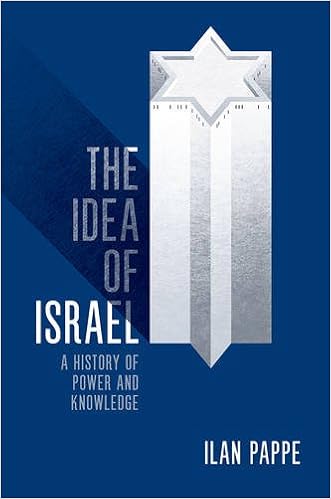
The Alternative History of Israel and Zionism ....The Ethnic Cleansing of PalestineSep 1, 2007 by Ilan Pappe Paperback (One World Publications) ;The Biggest Prison on Earth: A History of the Occupied TerritoriesNov 8, 2016 by Ilan Pappe Hardcover (OneWorld Publications) ;Ten Myths About Israel Paperback – May 2, 2017 by Ilan Pappe (Verso) ;A History of Modern Palestine: One Land, Two Peoples Paperback – September 21, 2006 by Ilan Pappe (Cambridge University Press);The Idea of Israel: A History of Power and Knowledge Paperback – January 5, 2016 by Ilan Pappe (Verso)


As a teenager growing up in an unrepentant  Revisionist Zionist  family ( my grandfater was one of the founders of Betar in South Africa) ,   my reading was guided by my late Father and often included books that were contrary  to his beliefs and point of view. When making the recommendations he always added , "Know the source material of your enemies  better than they do" .  For this reason I recommend that all of Ilan Pappe's books be read.They are can be obtained from Amazon .

Former Israeli academic , professor of History at the Exeter University Center for Palestine Studies is currently on a world tour promoting his new book Ten Myths About Israel. Pappe, a long standing promoter of the boycott of Israeli Universities, gave a lecture on "ethnic cleansing of Palestine" at Tel Aviv University on May 8, 2017. He was invited by the Arab student association to commemorate the Nakba. There was no uproar by the boycott community about him speaking in an Israeli university.  His tour includes Seattle, Washington DCBrazilBuenos Aires, Cornwall, and Wales

Pappe is a controversial historian. To recall, IAM reported on an attempt by the NGO CAMERA requesting Exeter University to inquire into Pappe's falsification of a quote by David Ben Gurion, Exeter University refused to act.

Pappe himself admitted his pro-Palestinian bias in the introduction to his book A History of Modern Palestine: One Land, Two Peoples, "My bias is apparent despite the desire of my peers that I stick to facts and the 'truth' when reconstructing past realities. I view any such construction as vain and presumptuous. This book is written by one who admits compassion for the colonized not the colonizer; who sympathizes with the occupied not the occupiers; and sides with the workers not the bosses. He feels for women in distress, and has little admiration for men in command. He cannot remain indifferent towards mistreated children, or refrain from condemning their elders. In short, mine is a subjective approach, often but not always standing for the defeated over the victorious. At most historical junctures of this history, the Palestinians were in the inferior position, and the Zionists and later the Israelis had the upper hand."

Benny Morris, his former colleague at the New Historians fraternity described Pappe's methodology, "Pappe regarded history through the prism of contemporary politics and consciously wrote history with an eye to serving political ends." Morris added, "Unfortunately, much of what Pappe tries to sell his readers is complete fabrication... This book is awash with errors of a quantity and a quality that are not found in serious historiography. And, in Pappe’s case, it is not just a matter of sloppiness or indolence in checking facts; the problem goes deeper. It can almost be called a deliberate system of error. The multiplicity of mistakes on each page is a product of both Pappe’s historical methodology and his political proclivities."

Morris also noted "For those enamored with subjectivity and in thrall to historical relativism, a fact is not a fact and accuracy is unattainable. Why grope for the truth? Narrativity is all." To provide evidence to Pappe's sloppiness Morris lists numerous errors. Pappe was wrong on the founding date of the Stern Gang and the Palmach; wrong on the dates of the Palmach fighting against the British; wrong on the date Ben-Gurion was chairman of the Jewish Agency Executive; wrong on the date of establishment of the Arab Higher Committee; wrong the date the Arab Legion withdrew from Palestine along with the British; wrong on the voting results of the UN partition proposal; wrong to think the Jewish forces were better equipped than the Arab armies; wrong on the date of the first truce; wrong on the date of battles; wrong on the date the Grand Mufti fled Palestine; wrong on the date of the founding of the Hebrew University of Jerusalem; wrong on the date Tel Aviv was founded; wrong on who established the first Zionist settlements in Palestine; wrong to suggest that the Israeli Foreign Office translated to Hebrew the U.N. Security Council Resolution 242 implying it did not have to withdraw from all the territories occupied in the Six Day War; wrong on the number of Palestinian refugees in Lebanon in 1979 and 1982; wrong on the date of the Black September in Jordan; wrong on the date of the first Israeli settlements in the West Bank; wrong on the date of the anti-Hashemite riots in Jordan; wrong to state that Palestine’s future was determined in the Husayn-McMahon correspondence and the Sykes-Picot Agreement; wrong not to notice the battle Armaggedon or Meggido of September 1918; wrong on the number of casualties in the Arab rioting of 1929. Morris ends his list with "and so on and on and on."

Morris's review of Pappe's A History of Modern Palestine: One Land, Two Peoples, is scathing, "Pappe allowed his politics to hold sway over his history." He noted, "Pappe's errors are not merely a matter of sloppiness born of a contempt for that leaven of dullards, 'the facts.' The book is also awash with errors resulting from the writer’s ideological preferences, his interest in blackening the Zionists and whitening the Palestinians." As an example of such bias Morris noted that Pappe described events of 1920 riots as resulting from clashes "with the most aggressive of the Zionist organizations, Beitar, whose members marched provocatively in the streets of Arab Jerusalem." But Morris scolded him, "Beitar, the youth movement of the right-wing Revisionist Movement, was founded in 1923, so clearly it could not have had a hand in the events of 1920. (Even a postmodernist can see that!)". 

Unperturbed by criticism, Pappe writes books and tours the world accusing Israel of ethnically cleansing the Palestinians. To the contrary, like many of his radical peers, he is using the Palestinians to divert attention, in this case from the bloodshed and ethnic cleansing in Syria.  

The Picture of Dorian Gray (Dover Thrift Editions) Reprint Edition by Oscar Wilde (Dover)


I watched the 1945 black and white film “The Picture of Dorian Gray” and it reminded me of some serious questions. The film a perfect portrayal of Oscar Wilde’s famous tale of a handsome young man, living in 1886 London, who looked at a picture painted of him and said sadly that while he would age, the picture would forever remain young. He added that he would give anything, even his soul, if the opposite happened, that he remained young while the picture aged. While he was a virtuous young man, his devious friend, played very well by George Sanders, tempts him repeatedly to spend his life in pleasure. He does so. As he performs one evil act after another, his portrait changes. It becomes more and more hideous, while he remains young. One of the great performances in the film is by Angela Lansbury looking very young and beautiful, and singing delightfully. She was nominated for her performance for an Academy Award and deserved it, but did not get it. I also read the book and enjoyed it immensely.

Oscar Wilde wrote the book. He was a gay man during a period in England when homosexuality was considered both a civil and religious crime, an abomination to God, a destruction of one’s soul. He was imprisoned for behavior he could not control. I feel that Wilde felt that the theological underpinnings of the community’s abhorrence to homosexuality were wrong, and that his book prompts us to ask fundamental questions, such as the following.

Does the Bible clearly prohibit homosexuality and, if it does, was the prohibition made only for the ancient age when it was promulgated, but like the laws of sacrifices and slavery, allowed, even encouraged, to change when society becomes enlightened? This is what the sage Maimonides said about sacrifices in his Guide of the Perplexed 3:32. Is there an after-life that one could lose by bad acts? The Hebrew Bible makes no mention of it. Is there a soul? Again, no mention of a soul is in the Hebrew Bible; the term nefesh currently used for soul in Modern Hebrew means a person, as in Leviticus 2:1 where a nefesh offers a sacrifice. What is “sin”? The current notion of the term is that it is an act that can mar a person’s soul and can affect a person’s life in the hereafter. But, again, this concept is not in the Hebrew Bible, which in the Bible focuses on this world. A het means “missing the mark.” It encourages a person who missed the mark to correct the behavior, not to agonize about the hereafter, beat his heart, and say prayers.

As I watched the film, I felt that Wilde was raising these questions and that he was mocking the notions of most people. These notions, he is telling us, are as bizarre as the idea that a picture can portray a person’s soul.

Babatha’s Orchard: The Yadin Papyri and an Ancient Jewish Family Tale Retold by Philip F. Esler (Oxford University Press,) 288 pp., $45


Sometime toward the end of the Bar Kokhba Revolt (132–135 C.E.), a Jewish woman named Babatha, daughter of Shimon, fled Ein Gedi with a group of fellow Jews. She had been visiting her stepdaughter and ended up in a remote cave in the Judean desert, accessible only by a narrow ledge carved into sheer cliffs 650 feet above the canyon floor. Like fleeing refugees of other times and places, Babatha carried her most important papers with her, so that she would be able to reclaim her property and re-establish her life when the war was over. However, she and the Jews she was hiding with either died of starvation when Roman soldiers cut off their supply lines or were killed outright when the soldiers penetrated the refuge. Sometime before that happened, she hid her satchel with its 35 documents, including wedding contracts, a property registration, legal petitions and summonses, deeds, and loan notes, in a recess of the cave. These documents were written between 94 C.E. and 132 C.E. in Nabatean Aramaic, Judean Aramaic, and Greek. More than 1,800 years later, in 1961, a research team led by the Israeli general turned archeologist Yigael Yadin discovered Babatha’s archive when a rock wobbled under the feet of a volunteer, revealing the satchel. They also found several other items that likely belonged to Babatha, including a pair of sandals, balls of yarn, two kerchiefs, a key and two key rings, bowls, a clasp knife, and three waterskins.

Yadin’s more famous find in the “Cave of Letters” was the correspondence between Bar Kokhba and his generals Yehonathan and Masabala. What Philip F. Esler demonstrates in Babatha’s Orchard: The Yadin Papyri and an Ancient Jewish Family Tale Retold, an ingenious and meticulous work of reconstruction, is that the documents in Babatha’s satchel shed light on the everyday lives and business practices of Jews and Nabateans who were caught up in the conflict. In contrast to most surviving ancient literature (which was written by and for men), these documents feature women prominently, wheeling and dealing, acting as sellers, buyers, lenders, litigants, and trustees.

Esler’s book focuses on the earliest four documents of Babatha’s archive, all written in Nabatean Aramaic with execution dates ranging from 94 C.E. to 99 C.E., before Babatha was born. One of them records the sale of a date palm orchard to Babatha’s father Shimon in 99 C.E. It is easy to see why Babatha would have held on to this document, since her father had apparently given her the orchard (she registered it as her own in a Roman property census in 127 C.E.). But the other three papyri record transactions among Nabateans who have no apparent relationship to Shimon or Babatha. The question at the center of Esler’s clever microhistory is, simply, why? Why did a Jewish woman living 30 years after these contracts were executed and with no obvious connection to the named parties have them in the first place? And why did she consider them important enough to carry into hiding?

Monday, October 30, 2017

A Life with books from Winnie the Pooh to William Empson


My mother taught me to read in the summer of 1945, between VE Day and VJ Day, when I was turning three. Time lay on her hands: my father, a major in the Territorials, was away in Palestine, battling Irgun and the Stern Gang in the latter days of the British Mandate, and wasn’t due to be demobilised from the army until the end of the year; and I was a pushover for her deck of home-made flash cards and a game I found more fun than our previous sessions of Animal Snap. In the cluttered, narrow-windowed living-room of our house in the village of Hempton Green in Norfolk, my mother and I progressed from letters to words to sentences, stopping the game at intervals to listen to the BBC news crackling from the wireless, its fretwork grill sawn to represent an inappropriately Japanese-style rising sun. By the time we reached sentences, and the cards had given way to headlines from the day’s Times, Japan had surrendered to the Allies, and the wireless was reporting that our troops in the Far East were fighting ‘pockets of gorillas’ – an idea that excited me much more than anything in my father’s letters home from Transjordan. Gorilla warfare was something that any three-year-old could warm to in his imagination: I sought out coloured pictures of gorillas to feed my understanding of the conflict, and it was years before I realised that I was the victim of a deceiving homophone – an early case of the linguistic misunderstanding to which I’ve been prone all my life.


I squandered my mother’s gift to me of so much time and patience. I was proud of my new skill, which I showed off to anyone who’d listen: my grandmother, an indulgent aunt, an illiterate woman called Mrs Atherton who was my mother’s ‘daily’, and, most unwisely, to my few contemporaries in the village, who beat me up for my intolerable conceit. But the capacity to read brought with it no corresponding advance in intellectual curiosity. I rested lazily on my laurels, taking as long as anyone else of my age to venture beyond the conventional diet of Beatrix Potter, Winnie the Pooh, The Wind in the Willows and the Famous Five. By the early 1950s, I was tearing at speed through the middlebrow bestsellers of the time: John Creasey, Nevil Shute, the wartime adventures of British officers who’d escaped, or tried to escape, from German POW camps, like The Wooden Horse and The Colditz Story, along with a stream of books about fishing. The nearest I came to reading ‘literature’ for pleasure, aside from an early passion for Huckleberry Finn, was my discovery, at 11 or 12, of H.E. Bates, whose Fair Stood the Wind for FranceThe Jacaranda Tree and Love for Lydia seemed to me unsurpassably fine in their emotional eloquence and the transporting power of their natural descriptions. For a long time, I couldn’t imagine the existence of a greater novelist than Bates.
In adolescence, my reading predictably widened in its range, but it hardly deepened. Joyce, Hardy, Dickens, Camus, George Eliot, Hemingway, Henry Miller, Lawrence Durrell, D.H. Lawrence, Scott Fitzgerald, Keats, Byron, Auden, Pound, T.S. Eliot … At 16 I was a chain-reader, on a steady three library books a day when not in school, but my style of reading remained much as it was in my Enid Blyton period. I sucked and sucked at books for the juice of vicarious experience they contained, and as soon as they were finished, I discarded them like squeezed-out grapefruit skins. In the course of 24 hours, I might be Nick Adams, Paul Morel, and sitting in one of the dives on 52nd Street, uncertain and afraid, as the clever hopes expired of a low dishonest decade; but these were less acts of serious reading than experiments in identity, made by somebody who very much feared that he lacked an identity of his own and hoped that he might find a suitable off-the-peg identity in a book.
As it turned out, I eventually found one on a bus – a green double-decker owned by the Hants and Dorset company. On my first summer vacation from university, in 1961, I got a temporary job as a conductor, ringing the bell and issuing tickets on various routes through the New Forest between Bournemouth and Southampton. I was kitted out with a serge uniform, to which age had given a bluebottle sheen, a heavy silver ticket machine to wear around my neck and a blackened leather satchel to hold small change: halfpennies, pennies, threepenny bits, sixpences, shillings and half-crowns.
Except in the early mornings and late afternoons, business was generally slow. Often, I was second in command of an empty bus, sprawled on the triple back seat, with ample time to read. My favourite run was the 2 p.m. back-country route from Lymington to Southampton, by way of East End, East Boldre, Beaulieu, Dibden Purlieu, Hythe, Marchwood, Eling and Millbrook, on which the only passengers might be two or three elderly women from Lymington and a couple of Gypsies from an encampment near Hatchet Gate. The jolting bus ambled along the B-roads, resting at intervals at deserted stops, and made a sleepy epic of the round trip, which was little more than 40 miles. I begrudged even the very few passengers we picked up on these slow trawls through the Hampshire countryside, because they interrupted my reading of Seven Types of Ambiguity, in its blue-barred Peregrine paperback edition, which lived for weeks inside the leather satchel, becoming steadily more grimy from the stash of greasily fingered old coins whose company it kept.
The book was a revelation to me. It made me learn to read all over again. Looking at the book now still brings back the old-bus smell of cigarettes, fish and chips, sweat, Polo mints and ineffectual disinfectant, and the excitement with which I first heard Empson’s voice speaking from the page. It was a voice utterly unlike that of any of the literary critics whom I’d begun to read in my first year as an English undergraduate (F.R. Leavis, L.C. Knights, A.C. Bradley, E.M.W. Tillyard): plain-spoken, peppery, disputatious; now talking in cheerful, offhand slang, now rising to lyrical and unforgettable descriptions of the passages he most admired. In almost every paragraph, there was a joke or an arresting surprise.
Briskly disposing of the woolly idea of poetry as the beauty of Pure Sound, Empson made me giggle when he quoted Virgil’s line in the sixth book of the Aeneid, ‘Tendebantque manus ripae ulterioris amore,’ as ‘the stock line to try on the dog’, but went on to make a subtle analysis of its sound, before dismissing the general theory as bunkum.* The line, he wrote,
is beautiful because ulterioris, the word of their banishment, is long, and so shows that they have been waiting a long time; and because the repeated vowel-sound (itself the moan of helpless sorrow) in oris amore connects the two words as if of their own natures, and makes desire belong necessarily to the unattainable. This I think quite true, but it is no use deducing from it Tennyson’s simple and laborious cult of onomatopoeia.
In territory more familiar to me than Latin poetry, Empson brought his inspired common sense to bear on poems that I knew by heart, yet had never properly read. Keats’s ‘No, no, go not to Lethe, neither twist …’ took on a startling new life when Empson gruffly pointed out that it ‘tells you that somebody, or some force in the poet’s mind, must have wanted to go to Lethe very much, if it took four negatives in the first line to stop them’. Of course! It was obvious – but it took Empson to bring the obvious to light.
In what has become the single most famous passage in Seven Types of Ambiguity, he anatomised the fourth line of Shakespeare’s 73rd Sonnet, which begins:
That time of year thou mayst in me behold
When yellow leaves, or none, or few, do hang
Upon those boughs which shake against the cold,
Bare ruined choirs, where late the sweet birds sang.
Of the comparison between the lover in the autumn of his life and those bare ruined choirs, Empson wrote that ‘There is no pun, double syntax, or dubiety of feeling.’
Because ruined monastery choirs are places in which to sing, because they involve sitting in a row, because they are made of wood, are carved into knots and so forth, because they used to be surrounded by a sheltering building crystallised out of the likeness of a forest, and coloured with stained glass and painting like flowers and leaves, because they are now abandoned by all but the grey walls coloured like the skies of winter, because the cold and Narcissistic charm suggested by choirboys suits well with Shakespeare’s feeling for the object of the Sonnets, and for various sociological and historical reasons (the Protestant destruction of monasteries; fear of Puritanism), which it would be hard now to trace out in their proportions; these reasons, and many more relating the simile to its place in the Sonnet, must all combine to give the line its beauty, and there is a sort of ambiguity in not knowing which of them to hold most clearly in mind. Clearly this is involved in all such richness and heightening of effect, and the machinations of ambiguity are among the very roots of poetry.
The temporary bus conductor read this paragraph over and over again, ravished by its intelligence and simplicity. Of course! again. After all, Shakespeare was born in 1564, barely 20 years after Henry VIII’s dissolution of the monasteries, whose fresh ruins were scattered around the landscape, as raw and brutal as the bombsites of my own childhood. The totalitarian vandalism of the mad king, as he tried to erase Catholicism from the land, was in plain view, and echoes of the sweet birds’ singing still remained in the ears of the elderly when Shakespeare wrote his sonnet. The jostle of meanings that Empson exposed in the line made me giddy with a sense of extraordinary discovery: not only of the deeper implications of Sonnet 73, but of what reading, realreading, might be if one could only learn how. If a new passenger got on the bus then, I doubt that I gave her a chance to pay for her ticket.
The first lesson Empson taught was to slow down drastically; to read at the level of the word, the phrase, the line; to listen, question, ponder, think. This was easy because his own writing enforced it. A single paragraph in Seven Types of Ambiguity was like a street closely punctuated with traffic-calming sleeping policemen: you had to study the relationship between one sentence and the next – and often one clause and the next – to see the logic that connected them, and if I tried to read them in my usual skimming style, I instantly lost the thread.
The second, more general lesson required one to greatly enlarge one’s understanding of what writing is and does (all writing, not just poetry; Empson illustrated his arguments with sentences from novels, book titles, newspaper headlines that had caught his eye and so on). On this, Empson was inexplicit except by inference, but as a fisherman, I saw it in angling terms. Every piece of writing was like a pond, sunlit, overhung by willows, with clustering water lilies, and, perhaps, the rippling circle made by a fish rising to snatch a dying fly. This much could be seen and appreciated by any passing hiker. But the true life of the pond lay below the surface, in deep water where only the attentive and experienced eye would detect the suspended cloud of midge larvae, the submarine shadow of the cruising pike, the exploding shoal of bug-eyed small fry. It was with the subaquatic life of literature that Empson – a scientist by early inclination, whose interest in science is a recurrent feature of his writing – was concerned.
Beneath the clean line of type on the page lay the muddy depths of the living and changing language, a world of stubborn historic associations, swarming puns, suggestive likenesses and connections (as between trees and carved choir stalls), meanings that were in a continuous process of evolution and decay, sometimes enriching the word in print, but as often subverting it. (Spare a thought for Coleridge when he wrote the line ‘As if this earth in fast thick pants were breathing’. In 1797, he wasn’t to know that shortly after his death pants would become an abbreviated version of pantaloons, and by 1880 a word for men’s drawers.)
Empson’s preternaturally sensitive ear and eye for the deepwater workings of the language enabled him to share with his readers a myriad subtleties, shades of meaning, richnesses, in lines they might otherwise have skated over. He was equally alert to the way in which language so often betrays the writer, revealing what is really at the back of the writer’s mind when he tries to assert its opposite. (In Some Versions of Pastoral, he unmasked the complacent and reactionary political conservatism that lies just beneath the surface of Gray’s ‘Elegy’, and in Milton’s God he demonstrated how, in the course of writing Paradise Lost, Milton came to detest the God whose ways he was devoutly trying to justify to Man.)
Seven Types made it clear that my supposed skill at reading had never progressed much beyond primary school level. Embarrassment mixed with wonder when I faced up to the fact that Empson’s astounding book had been written when he was 22, and had begun as an undergraduate essay, written for his Cambridge supervisor, I.A. Richards.
Cats may look at kings. It was certainly possible to learn from Empson (‘Kill Your Speed,’ as the traffic signs say). But it would be fatal to make any attempt to mimic his precocious scholarship, his eccentric brilliance, or his quirky and quick-witted, table-talking prose style. After my Empson summer on the buses, my reading measurably improved, with my own fortnightly essays no longer coming back with the Betas, plus and minus, that had been standard in my first year. Had I been at all religious, I might have lit candles in Empson’s honour (something that would have greatly annoyed him, for he was a militant atheist). Since then, I’ve made a living out of reading, one way or another. For reading, of the kind that Empson preached and practised, doesn’t stop at books, but makes the larger world legible.
Trying to understand the habitat in which we live requires an ability to read it – and not just in a loose metaphorical sense. Every inhabited landscape is a palimpsest, its original parchment nearly blackened with the cross-hatching of successive generations of authors, claiming the place as their own, and imposing their designs on it, as if their temporary interpretations would stand for ever. Later over-writing has obscured all but a few, incompletely erased fragments of the earliest entries, but one can still pick out a phrase here, a word there, and see how the most recently dried layer of scribble is already being partially effaced by fresh ink. From the embanked, bullet-path road through the valley, relic of Roman occupation, to the new 50-turbine windfarm on the hill, every feature of the landscape belongs to an identifiable phase of sensibility, politics and language.
We’re somewhere in southern England, on the same hill as the windfarm. In the far distance is the grey smudge of a cathedral city whose housing developments have spread untidily beyond its 1960s ring-road, and whose office parks contain dozens of small companies in the ‘knowledge-based industries’. The course of a narrow, crooked river, marked by a double line of trees, diagonally connects the city to the village at the foot of the hill. This village lost its post office in the 1990s, and its only surviving commercial enterprise, beside the pub and the shop selling ‘gifts and country antiques’, is a Shell station mini-supermarket. Old farm workers’ cottages, built from the nearest and cheapest materials to hand – rocks, pieces of old timber, plaster made from mud – and roofed with bundles of wheatstraw or reeds from the local swamp, have long been prized as weekenders’ second homes. The weekenders, who dearly love ancient brick windmills with skeletal sails, but not their modern descendants, mounted the Stop the Turbines campaign of 2001, and continue to grouse vengefully over their defeat. Sixty or so permanent residents live on ‘the estate’ of semi-detached council houses, which is itself semi-detached from the village, on the main road. The 15th-century church gets half a page to itself in Pevsner’s The Buildings of England, but has been locked against vandals for years, though a communion service, spoken, not sung, is held there on the fourth Sunday of every month, and it’s still used for weddings and funerals (after which the corpses are transported by undertaker-led motorcades to the crematorium on the city’s edge).
Between the village and the city are fields, vastly enlarged since mechanised farming came in after the Second World War, mostly arable (wheat, barley, oilseed rape), with one big dairy farm, a member of an organic milk co-operative that is under contract to Dairy Crest PLC. The redundant farmhouses, stripped of all their surrounding land except pony-sized paddocks, are owned by commuters. The tree-shrouded Georgian hall in the middle distance is now a combined hotel, restaurant, golf club and health spa. Twin lines of pylons, erected in the 1930s, carry high-voltage cables across the landscape, and were a flight hazard when the wartime airfield, used by the US Army Air Forces, was working. After the airfield was decommissioned, its runway drainage systems left it too barren for agriculture; following a brief period as a refugee camp, it became a motor-racing circuit, then a road-haulage vehicle maintenance centre, and is now in the early stages of deciduous broadleaf afforestation.
These are just a few of the changes to the landscape on which the ink is still drying, on the uppermost layer of the palimpsest. Beneath them, the ink colour alters slowly from blue or black to sepia, and the handwriting to copperplate, then italic, then Gothic black-letter, as it registers how use and ownership of this stretch of land has been continuously contested. The windfarm dispute, in which the quarrel spread to include the district council, a multinational power company, a farm corporation, the Ministry of Defence, English Nature, the National Farmers’ Union and the Campaign to Protect Rural England, echoed, in a minor key, the great battles of the past: from the hopeless fight put up by landless peasant farmers against landowners at the time of the enclosure acts, to the long war between the church, the crown, the landed aristocracy and the wool merchants. In our collective rural nostalgia, we like to think of the countryside as settled and placid, not as the scene of perpetual conflict involving class, power and money, but there’s hardly a feature of any real landscape that doesn’t stand for somebody’s triumph, concession or defeat.
Landscape historians can read the palimpsest more skilfully than me, but to begin to see it like this is to go some way towards rescuing oneself from the brain-curdling effects of degraded late Romanticism, which still shapes the way most of us instinctively think about landscape and place. In Britain, it’s led to the cult of the antique-picturesque, in the United States to the parallel cult of ‘pristine’ wilderness. Devotees of both practise a highly selective, self-induced blindness, cancelling from their view, and all claims to their sympathy, everything that intrudes on their preconceived pictures of how landscape ought to be. This sort of mental bulldozing tends to bring real bulldozing in its wake, in fits of Cromwellian zeal to erase from the land whatever offends the eye and taste of the temporary beholder. Better by far to learn to value the landscape, as a reader, for its long accumulation of contradictions and ambiguities – an accumulation to which we’re constantly adding by our presence here.
I moved from London to Seattle on impulse, for casual and disreputable reasons. I met someone … the usual story. A writer’s working life is dangerously easy to transport from one place to another, and in 1990 I thought that possession of a fax machine would be enough to bridge the inconvenient distance between the two cities. As for anxiety about displacement and culture shock, I had none: I cockily thought America was my oyster. I’d taught its literature at two British universities, and was about to begin the last chapter of my second book of American travels. I confidently began to make myself at home in my new surroundings in the only way I knew how, by reading them. More than a year went by before it began to dawn on me that I was floundering out of my depth.
The first time I went sailing on Puget Sound, with a copy of Vancouver’s account of his 1792 voyage through these parts open, face-down, on the cockpit seat, I was taking in the landscape of low, built-over hills, rising fir forest and mountains white with glacial ice and snow in June, when I glanced at the electronic depth sounder. It showed a steady 11 feet of water, though we were more than a mile from the shore and I’d seen no shallows when I’d checked our course against the chart. I immediately brought the boat’s head through the wind, sails clattering, and started to sail back in the direction from which we’d come. From 11 feet, the digital read-out on the depth sounder went to 10, 9.6, and abruptly down to 6 – giving us just 18 inches of clearance between the keel and the sea floor. Starting to panic, I grabbed the chart and guessed at our most likely position, a patch of white paper (a reassuring sign, since shallows are coloured blue or tan) marked with three-figure numbers: 114, 125, 103 … Fathoms, not feet. The water beneath the boat was as deep as it is at the abrupt cliff-edge of the Continental Shelf.
The depth sounder was lost. Programmed to read accurately down to 50 fathoms, or 300 feet, it was hunting for the bottom, and, finding none, was seizing on false echoes and familiarities – drifting kelp fronds? shoaling salmon? plankton? – in a vain effort to regain its footing in the world and make itself at home again.
Its owner was doing the same. On one level, my new city and its hinterland felt deceptively homely. Their similar latitude gave them the angular light and lingering evenings I was used to. Their damp marine weather, blowing in from the south-west, came from the right direction. When the mountains are hidden under a low sky, one might almost imagine oneself to be in Britain.
At first glance, too, the palimpsest appeared to be a lot more easily legible, with many fewer layers of script running at cross-purposes to one another. The first white settlers had arrived here in 1851, and were of the same generation as my great-great-grandfather. Between Henry Yesler, who showed up in 1852 and saw the fortune to be made from cutting down the stands of gigantic Douglas firs on the neighbouring hills and feeding them to his steam mill, and the founders of Microsoft, Starbucks and Amazon, lay a stretch of time little longer than one old person’s range of memory. There must have been people around in 1960 who could remember Yesler (d. 1892) from their teens and had bounced the infant Bill Gates (b. 1955) on their arthritic knees. After living here for 20 years, I’ve already experienced at first hand one eighth of Seattle’s history since the whites drove the Indians from their tribal land and forced them into a reservation on the far side of Puget Sound.
What I saw on arrival was a disorderly free-for-all: tract housing and industrial parks swarming over farmland, farms established on logged-over forest, loggers shaving mountainsides bare of trees, dead and dying mill towns, environmental organisations litigating to save what was left of nature and, everywhere, barbed-wire fences marking out the fronts between the contending armies. The mounting acrimony between the city and its rural hinterland was coming to the boil, as urban-based conservation groups like the Sierra Club and liberal city and county governments confronted the newly formed Wise Use coalition of free-marketeers, property owners, timber and mining interests, farmers and the construction industries.
I’m still a trespasser on this battlefield of old resentments and fresh indignations, whose inequities glare more obviously than they do from any landscape I can think of in Western Europe. It’s a hard place in which to feel at home. From its designated ‘wilderness areas’ (themselves the result of much human ingenuity, conflict, legislation and policing, and so not wilderness at all, but cultural artefacts) to the latest crop of shopping malls and condo blocks, newly sprouting from behind screens of trees, it feels provisional and volatile, as if its entire character might drastically alter with the next shift in the political or economic wind.
For an English-born reader, America is written in a language deceptively similar to one’s own and full of pitfalls and ‘false friends’. The word nature, for instance, means something different here – so do communityclassfriendtraditionhome (think of the implications beneath the surface of the peculiarly American phrase ‘He makes his home in …’). These I’ve learned to recognise, but the longer I stay here the more conscious I am of nuances to which I must still remain deaf. The altered meanings and associations of American English, as it has parted company from its parent language over 400 years, reflect as great a difference in experience of the world as that between, say, the Germans and the French, but in this case the words are identical in form and so the difference is largely lost to sight.
Reading an American novel, I can usually persuade myself that I’m a native speaker of the language in which it’s written. But reading a western landscape, or an American political campaign, I hanker for a dictionary that would explain the difference between nature and naturehome and home, and chart their separate paths of evolution from their common roots. Talking with Americans, I still battle with the static interference, as on a bad long-distance line, caused by the build-up of slight differences of definition and assumption between our two national vocabularies. My grasp of American is a thousand times better than my lousy French, but there are moments over dinner in Seattle that remind me of trying to follow street directions offered by a voluble stranger in a Calais bar-tabac.
Still, it’s always the business of the patient reader to learn to live in a language not – or not quite – his own. Empson made himself extraordinarily fluent in 17th-century English by immersing himself in controversies – social, political and theological – that had long been lost to view, and by digging deep into the private lives of writers who excited him, like Donne, Marvell and Milton. His visits to England in the 1600s were made not in the spirit of conventional historical or literary scholarship but as a fierce partisan. He took sides. He relished battles. In a tribute to I.A. Richards, he wrote that ‘the main purpose of reading imaginative literature is to grasp a wide variety of experience, imagining people with codes and customs very unlike our own.’ He treated the writing of the past as a foreign country – as foreign in its way as Japan or China, where he taught in the 1930s and 1940s. He established himself as a model traveller, acquiring the local dialect, adapting himself to the local codes and customs, and returned with fresh and invigorating news of a world three hundred years distant from his own (as in ‘Donne the Space Man’, his great 1957 essay on Donne, Renaissance cosmology, Giordano Bruno, spheres, life on distant planets, Anglican theology and much else).
In 1971, ten years after first reading Seven Types, I met Empson in London. He’d recently retired from his chair at the University of Sheffield and was living with his wife, Hetta, at Studio House, Hampstead Hill Gardens – in a set-up described by Robert Lowell as a ‘household [that] had a weird, sordid nobility that made other Englishmen seem like a veneer’. Empson’s idea of making lunch was to place an assortment of unpunctured cans of Chinese vegetables on the gas cooker, where they tended to explode. Ancient rashers of fried bacon served as bookmarks in his disintegrating copy of Marvell’s Collected Poems. He stirred his tea with the sole remaining earpiece of his glasses. After an alarming lunch, he and I would set off in my car to raid the Wallace Collection, the Sir John Soane Museum, or some unsuspecting country house in Buckinghamshire or Hertfordshire, where he had found out that a family portrait of an ancestor, distantly connected with Marvell, hung on the walls. Doorstepping a secluded mansion, deep in its landscaped park, at the end of a long and gated drive, Empson displayed an imperious persistence, refused to take no for an answer, and forced his way inside past nonplussed butlers and feebly protesting dowagers. I delighted in the disquiet that he gave such people. During the time I knew him, his silver moustache varied in cut from Fu Manchu to Colonel Blimp; he was, always, legendarily scruffy, but his commanding, high-pitched voice announced his lapsed membership of the landowning classes, and the dowager and butler were clearly uncertain as to whether they were confronting Lord Emsworth in his cups, or an unusually determined Kleeneze brush salesman.
At this time, he was engaged in a campaign to prove that, late in his life, Marvell had married his London landlady, Mary Palmer. This was a question that has interested nobody very much, before or since. But it greatly concerned Empson, who needed to know the full character of the author of ‘The Garden’ and ‘An Horatian Ode upon Cromwell’s Return from Ireland’: not knowing would be to leave Marvell’s moral identity in a state of ambiguous incompletion, and Empson meant to get to the bottom of the matter. Delving into the knotted tangle of Marvell’s legal, sexual and financial affairs in the 1670s – and freely speculating and imagining whenever documentary evidence was lacking – Empson was simply continuing his reading of the poems into a larger reading of the man, the times and the language in which Marvell lived and spoke. He was the best close reader of literature alive, but his definition of ‘reading’ was infinitely more generous and catholic than that of the New Critics who were his immediate contemporaries.
Twenty-five years after his death, he remains a touchstone figure, whose example taunts and teases. Faced with an unfamiliar stretch of countryside, or the language of a political campaign, as with a painting, a movie, or a book for review, I still wonder ‘How would Empson have read this?’ and try to guess – admittedly to no great effect – at how much he might have uncovered in it.
[*] Empson flattered his readers with unexplained allusions, expecting them to be as well read as he was. The line from Virgil translates roughly as ‘each stretching out his hand in longing for the far shore’, and describes the dead souls in the underworld awaiting transport across the Styx. It had been cited by A.C. Bradley in his 1901 lecture ‘Poetry for Poetry’s Sake’, for the untranslatable beauty of its sound (hence, ‘the stock line to try on the dog’). I hasten to add that I found all this out in 2009, 48 years after reading it on the bus, when my O-Level Latin wasn’t up to more than dim guesswork about hands and riverbanks and love.