Showing posts with label . .#stephendarori. Show all posts

Tuesday, October 30, 2018

Ocean Liners: An Illustrated History Hardcover – Illustrated, April 19, 2018 by Peter Newall (Seaforth Publishing / Pen & Sword Books)


A beautifully produced book with a interesting and eclectic selection of ocean liners from around the world. The joy of this book is in the photography - the subjects, some of which were predicatble selections while many others were unuasual and even unheard of. The selection is backed up by the fine quality of the printing. A well researched text accompanies the photographs, although of course the full story of the long and eventful careers many of the ships featured could not be fully told due to space constraints.Before the advent of the jet age, ocean liners were the principal means of transport around the globe, and carried migrants and business people, soldiers and administrators, families and lone travelers to every corner of the world. Though the ocean liner was born on the North Atlantic it soon spread to all the other oceans and in this new book the author addresses this huge global story. 

The account begins with Brunel's Great Eastern and the early Cunarders, but with the rise in nationalism and the growth in empires in the latter part of the 19th century, and the opening of the Suez Canal in 1869, the colonial powers of Spain, France and Germany soon established shipping lines of their own, and transpacific routes were opened up by Japanese and American lines. The golden age between the two world wars witnessed huge growth in liner traffic to Africa, Australia and New Zealand, India and the Far East, the French colonies and the Dutch East and West Indies, but then, though there was a postwar revival, the breakup of empires and the arrival of mass air travel brought about the swan song of the liner. 

Employing more than 250 stunning photographs, the author describes not just the ships and routes, but interweaves the technical and design developments, covering engines, electric light, navigation and safety, and accommodation. A truly unique and evocative book for merchant ship enthusiasts and historians.

Tuesday, October 23, 2018

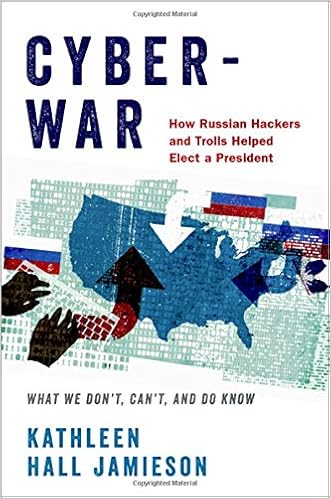
Cyberwar: How Russian Hackers and Trolls Helped Elect a President What We Don't, Can't, and Do Know Hardcover – October 3, 2018 by Kathleen Hall Jamieson (Oxford University Press)


If you care about the American political process, this book is as thorough as one could find in the analysis of the 2016 Presidential election. As someone who majored in Political Science, albeit over 40 years ago, and has read my share of dry textbooks and articles layered with facts and assumptions, this is not a book for someone who is not openminded when trying to ascertain who did what, and how that affected the candidates, voters, and even the media, in the political gamesmanship department.

With the title being CYBERWAR: HOW RUSSIAN HACKERS AND TROLLS HELPED ELECT A PRESIDENT, you would think this book would be only about the cyberwar, but it isn't. Dr. Jamieson discusses what was said by the candidates, when they said it, and even makes assumptions as to what would have happened had they said something different, or even nothing.

CYBERWAR does not tell us what we are to think, and it is not one of those publications written to influence the reader, but, for me, at least, it is an alarming account of how we, especially those of us who have a feeling we know the Internet since we have been using it for almost 40 years, allowed ourselves to be manipulated by others. This isn't an updated version of THE $ELLING OF THE PRESIDENT, where you see how one party packaged a candidate. CYBERWAR uses surveys, news articles, and even the campaign rhetoric to show how specific events shaped voter opinion.

As one who has studied politics for most of my life, this book is scary because right now it seems like what occurred in 2016 has morphed into something even more dangerous for our nation. I gave it four stars mostly because of its seriousness, and five stars might have someone buy it who cannot commit to reading all of it. This book is not for the casual reader or the light sleeper.
Read less

Sunday, October 21, 2018

The Conquistadors: A Very Short Introduction 1st Edition by Matthew Restall and, Felipe Fernández-Armesto (Oxford University Press)


I imagine many people will be frustrated that this is not micro-biographies of individual conquistadors, but more a broad picture sociological profile. If one approaches this book with this in mind, this does built a fairly comprehension picture to what a conquistador actually was. Restal and Fernandez-Armesto do a good job of constructing the context for both Spanish as well as Spanish-cultured African and Native conquistadors. A few myths are debunked along the way as well and individuals are discussed, but mostly for the contrast to the broader model. If taken as an introduction to the concept and context of the conquistadors instead of introductions to specific conquistadors, this book delivers in amble amounts.

With startling speed, Spanish conquistadors invaded hundreds of Native American kingdoms, took over the mighty empires of the Aztecs and Incas, and initiated an unprecedented redistribution of the world's resources and balance of power. They changed the course of history, but the myth they established was even stranger than their real achievements. This Very Short Introduction deploys the latest scholarship to shatter and replace the traditional narrative. Chapters explore New World civilizations prior to the invasions, the genesis of conquistador culture on both sides of the Atlantic, the roles black Africans and Native Americans played, and the consequences of the invasions. The book reveals who the conquistadors were and what made their adventures possible

North American Indians : A Very Short Introduction by Theda Perdue & Michael D. Green (Oxford University Press)


This book is a great introduction to American Indians. It gives a great chronology of the legal battles between the US government and different nations and tribes. Though it covers a great deal of information and is extremely condensed do not expect to see the individual histories or beliefs of each tribe, especially tribes from the northeast that are only discussed in brevity or completely left out. Over all, this is a great book to get better insight into the history of Native Americans.

When Europeans first arrived in North America, between five and eight million indigenous people were already living there. But how did they come to be here? What were their agricultural, spiritual, and hunting practices? How did their societies evolve and what challenges do they face today? 
Eminent historians Theda Perdue and Michael Green begin by describing how nomadic bands of hunter-gatherers followed the bison and woolly mammoth over the Bering land mass between Asia and what is now Alaska between 25,000 and 15,000 years ago, settling throughout North America. They describe hunting practices among different tribes, how some made the gradual transition to more settled, agricultural ways of life, the role of kinship and cooperation in Native societies, their varied burial rites and spiritual practices, and many other features of Native American life. Throughout the book, Perdue and Green stress the great diversity of indigenous peoples in America, who spoke more than 400 different languages before the arrival of Europeans and whose ways of life varied according to the environments they settled in and adapted to so successfully. Most importantly, the authors stress how Native Americans have struggled to maintain their sovereignty--first with European powers and then with the United States--in order to retain their lands, govern themselves, support their people, and pursue practices that have made their lives meaningful. 
Going beyond the stereotypes that so often distort our views of Native Americans, this Very Short Introduction offers a historically accurate, deeply engaging, and often inspiring account of the wide array of Native peoples in America.

About the Series: Combining authority with wit, accessibility, and style, Very Short Introductions offer an introduction to some of life's most interesting topics. Written by experts for the newcomer, they demonstrate the finest contemporary thinking about the central problems and issues in hundreds of key topics, from philosophy to Freud, quantum theory to Islam.

Theda Perdue is Atlanta Distinguished Professor of Southern Culture at the University of North Carolina at Chapel Hill. She is the author of many books, including Sifters:Native American Women's Lives and Cherokee Women: Gender and Culture Change, 1700-1835. She is past president of the Southern Association for Women Historians and the American Society for Ethnohistory, and will serve as president of the Southern Historical Association in 2011.
Michael D. Green is Professor Emeritus of American Studies at the University of North Carolina at Chapel Hill. He has held fellowships from the Newberry Library and the Rockefeller Foundation and is former chair of the Native American Studies Program at Dartmouth College.

Native American Literature: A Very Short Introduction (Very Short Introductions) 1st Edition by Sean Teuton (Oxford University Press)


North American indigenous literature began over thirty thousand years ago when indigenous people began telling stories of emergence and creation, journey and quest, and heroism and trickery. By setting indigenous literature in historical moments, Sean Teuton skillfully traces its evolution from the ancient role of bringing rain and healing the body, to its later purpose in resisting European invasion and colonization, into its current place as a world literature that confronts dominance while celebrating the imagination and resilience of indigenous lives.

By the time Europeans arrived in North America indigenous people already understood the power of written language and the need to transmit philosophy, history, and literature across generations and peoples. Seeking out multiple literary forms such as sermon, poetry, and novel to serve differing worldviews, indigenous authors have shaped their writing into North American indigenous literature as we recognize it today. In this lucid narrative, Sean Teuton leads readers into indigenous worlds. He describes the invention of a written indigenous language, the first indigenous language newspaper, and the literary occupation of Alcatraz Island. Along the way readers encounter the diversity of indigenous peoples who, owing to their differing lands, livelihoods, and customs, molded literature to a nation's specific needs. As Teuton shows, indigenous literature is one of the best places for understanding indigenous views about land and society and the role of humanity in the cosmos. In turning to celebrated contemporary authors such as Thomas King, Leslie Silko, Sherman Alexie, Louise Erdrich, and James Welch, Teuton demonstrates that, like indigenous people, indigenous literature continues to survive because it adapts, both honoring the past and reaching for the future.

The Welfare State: A Very Short Introduction (Very Short Introductions) 1st Edition by David Garland (Oxford University Press)


This short book deepens my understanding of the conceptions of welfare state which, however limited, usually refers to the welfare for the poor. Besides, the conceptions of welfare state also focus on social insurance, social rights and social services that are definitely duties of modern government. Thus, a board conception of welfare state should include the role that the government of the economy plays in every welfare state. On the other hand, Garland insists that ‘the welfare state lacks utopian ideals and a pantheon of heroic proponents. It was a product not of revolutionary idealism but of piecemeal reform and cross-class coalition.’ (P. 10) Therefore, ‘arguments for the welfare state are more often phrased as technocratic recipes than as impassioned ideals.’ (P. 10) In this sense, the idea of welfare state is ideologically-neutral. Instead of being ideologically-neutral, I think the idea of welfare state is ideologically-inspired or even ideologically-driven by the ideals of social democracy, a variant of socialism. Welfare states, though different in forms, pursue social policies and programs aiming at social equalities and harmonies.

Although welfare state is constantly under attack from both Left and Right, (on grounds of inadequacy or futility) I agree with Garland on the indispensability of welfare state. Modern capitalist economies are intrinsically unstable, insecure and unequal that often generate damaging consequences for our social and natural environments. In this regard, welfare state is a pragmatic framework of collective economic security, making capitalist economies socially and economically sustainable.


Welfare states vary across nations and change over time. And the balance between markets and government; free enterprise and social protection is perennially in question. But all developed societies have welfare states of one kind or another - they are a fundamental dimension of modern government. And even after decades of free-market criticism and reform, their core institutions have proven resilient and popular. 

This Very Short Introduction describes the modern welfare state, explaining its historical and contemporary significance and arguing that far from being 'a failure' or 'a problem', welfare states are an essential element of contemporary capitalism, and a vital concomitant of democratic government. In this accessible and entertaining account, David Garland cuts through the fog of misunderstandings to explain in clear and simple terms, what welfare states are, how they work, and why they matter.

ABOUT THE SERIES: The Very Short Introductions series from Oxford University Press contains hundreds of titles in almost every subject area. These pocket-sized books are the perfect way to get ahead in a new subject quickly. Our expert authors combine facts, analysis, perspective, new ideas, and enthusiasm to make interesting and challenging topics highly readable.

The U.S. Congress: A Very Short Introduction (Very Short Introductions) 2nd Edition by Donald A. Ritchie (Oxford University Press)


In the second edition of The U.S. Congress, Donald A. Ritchie, a congressional historian for more than thirty years, takes readers on a fascinating, behind-the-scenes tour of Capitol Hill, pointing out the key players, explaining their behavior, and translating parliamentary language into plain English. No mere civics lesson, this eye-opening book provides an insider's perspective on Congress, matched with a professional historian's analytical insight. 

After a swift survey of the creation of Congress by the constitutional convention, he begins to unscrew the nuts and pull out the bolts. What is it like to campaign for Congress? To attract large donors? To enter either house with no seniority? He answers these questions and more, explaining committee assignments and committee work, the role of staffers and lobbyists, floor proceedings, parliamentary rules, and coalition building. 

Ritchie explores the great effort put into constituent service-as representatives and senators respond to requests from groups and individuals-as well as media relations and news coverage. He also explores how the grand concepts we all know from civics class--checks and balances, advise and consent, congressional oversight--work in practice in an age of strong presidents and a muscular Senate minority.

American Political Parties and Elections: A Very Short Introduction (Very Short Introductions) 2nd Edition by L. Sandy Maisel (Oxford University Press)


Few Americans and even fewer citizens of other nations understand the electoral process in the United States. Still fewer understand the role played by political parties in the electoral process or the ironies within the system. Participation in elections in the United States is much lower than in the vast majority of mature democracies. Perhaps this is because of the lack of competition in a country where only two parties have a true chance of winning, despite the fact that a large number of citizens claim allegiance to neither and think badly of both. Or perhaps it is because in the U.S. campaign contributions disproportionately favor incumbents in most legislative elections, or that largely unregulated groups such as the now notorious 527s have as much impact on the outcome of a campaign as do the parties or the candidates' campaign organizations. These factors offer a very clear picture of the problems that underlay our much trumpeted electoral system.

The second edition of this Very Short Introduction introduces the reader to these issues and more. Drawing on updated data and new examples from the 2016 presidential nominations, L. Sandy Maisel provides an insider's view of how the system actually works while shining a light on some of its flaws. He also illustrates the growing impact of campaigning through social media, the changes in campaign financing wrought by the Supreme Court recent decisions, and the Tea Party's influence on the sub-presidential nominating process. As the United States enter what is sure to be yet another highly contested election year, it is more important than ever that Americans take the time to learn the system that puts so many in power.

Military Strategy: A Very Short Introduction (Very Short Introductions) 1st Edition by Antulio J. Echevarria (Oxford University Press)


Antulio Echevarria, drawing on his deep knowledge of the field, provides a systematic, succinct, and incisive guide to the main themes of military strategy. Invaluable for both students and practitioners.Distilling the ideas of the greatest military theoreticians of history, including Sun Tzu, Niccolò Machiavelli, and Carl von Clausewitz, Antulio J. Echevarria II presents a fascinating account of the "art of the general." Drawing on historical examples, from Hannibal's war against Rome to Napoleon's victory at Austerlitz, from the Allies' campaign to overwhelm Hitler's fortress to the terror attacks of September 11, Echevarria vividly describes the major types of military strategy and their advantages and disadvantages.

Clear and engaging, this book shows that military strategy is essential for understanding major events of the past and becomes even more critical today, in a world increasingly threatened by weapons of mass destruction, terrorist attacks, and new dimensions of conflict such as cyberwar and space.

Antulio J. Echevarria II is the Editor of the US Army War College Quarterly. Prior to that, he was the Director of Research at the US Army War College. He is the author of Clausewitz and Contemporary War, Imagining Future War, and After Clausewitz, and of several articles on military thinking and contemporary war.

Populism: A Very Short Introduction (Very Short Introductions) Paperback – February 1, 2017 by Cas Mudde and, Cristobal Rovira Kaltwasser (Oxford University Press)


Populism is an informative and thorough introduction to its topic. The authors are steeped in populism and display their erudition in an accessible manner. Mudde’s and Rovira Kaltwasser’s ability to provide adroit, concrete examples by maneuvering around the world in search of the best illustrations is impressive. Given that kind of broad coverage, the book—as far as its real world examples go—has great scope. The approach of the book isn’t to analyze populism by way of one or three case studies; therefore, it does not leave the reader with a deep understanding of populism in any one country or region. The authors are particularly knowledgeable about Latin America, Europe, and the United States, but they touch on other countries as well. Readers coming to the book looking for an expose on Donald Trump’s place in populism will be disappointed; the shape-shifting reactionary, who at least campaigned as a right-wing populist, and as president at least treats the press as the authors argue populists do, only gets a brief mention as the book appears to have been written early in the primaries.

Having a textbook quality, the book possesses that category’s strengths and weaknesses. It is extremely well-organized and straightforward. The book is not dumbed down, but it attempts to diagram its points for an inexpert audience. Although it is well-written, clear, and polished, the book lacks personality and style, which is not to say it lacks a point of view. The absence of bold flavor does not make it a chore to read; on the other hand it doesn’t quicken one’s pulse either. However, this is not a failure of execution, merely an outcome of the book’s method and objective—an objective the book satisfies.

One comment on the substance of the text. First of all I find the authors arguments very convincing, and I appreciate their distinction of populist supply (leaders) and demand (people, the masses). The latter shows how populism is not simply a stratagem or means to arouse a base but also a way of thinking. This accords with my belief that conspiracy theories and their acceptance are a form of populist epistemology.

Globalization: A Very Short Introduction (Very Short Introductions) 4th Edition by Manfred B. Steger (Oxford University Press)


Steger begins by defining the term "globalization": A "set of processes" (not a "condition") towards greater interdependence and integration among the various cultures of the world. He makes a point to emphasize that economics is only ONE aspect of globalization: there are also political, cultural and ideological aspects. Moreover, he dedicates one chapter to showing that globalization is by no means a NEW phenomenon: cultural exchanges can be traced back to the prehistoric period.

I found the chapter on the economic aspects of globalization (chapter 3) very useful. It explains the history and role of the IMF, WTO and the World Bank in the global economy. It also discusses the West's transition from "controlled economies" to "free market capitalism." Arguing that globalization is an uneven process, the author shows how it is having very different effects on the various regions of the world. This gives us a clear vision of some of the negative impacts of the new world economy, such as a larger gap between rich and poor nations. His realistic view of globalization is a nice antidote to the cheerleading of hyperglobalizers like Thomas Friedman.

The chapter on opposition to globalization (chapter 7) does an excellent job of explaining challenges that are coming from both the right and the left. The particularist protectionists (on the right) feel threatened by multiculturalism because they want to maintain a sort of cultural purity. This often leads to their rallying against immigration and appealing to nationalism. However, like the left, they also criticize the power of the corporate elite and the negative effects globalization is having on the average domestic worker (i.e., jobs going overseas, lower wages). In the US, Pat Buchanan is a good example of this view. The universalist protectionists (on the left) tend to criticize the poor working conditions of both domestic and foreign workers. In general, universalist protectionists "are concerned with protection of the environment, fair trade and international labor issues, human rights, and women's issues." Ralph Nader is an example of a universalist protectionst.

Overall, an excellent introduction to the various facets of one of the most important issues of our time.


Comedy: A Very Short Introduction (Very Short Introductions) Paperback – February 7, 2013 by Matthew Bevis (Oxford University Press)


This book has some excellent aspects and some major drawbacks. Its best features are a very broad coverage of topics relating to comedy throughout history, and almost 20 pages of references and recommendations for further reading. The author's (MB's) juxtapositions of works from different periods and genres is sometimes very stimulating.

MB's style, though is too clever by way more than half: it's a constant patter of allusions, quips, gratuitous references and supposed insights that too often dazzle rather than inform. E.g., MB mentions "a confederacy of dunces" in the context of a Shakespeare character (@67): the phrase comes from Swift or, if you prefer, J.K. Toole, neither of whom are discussed there at all -- it's just a gratuitous wink. Or: "When Mark Twain noted that `reports of my death have been greatly exaggerated,' he hit upon a good epitaph for comedy, for the mode suggests that death as the final outcome is itself something of an exaggeration" (@109-110). What does this mean, exactly? If it's comedy's epitaph, that means that comedy itself could die, an eventuality that even MB never suggests; but if it were to die, there wouldn't be any exaggeration. And why bring up epitaphs at all?: Twain's epitaph is something else entirely, and rather sentimental. MB's brilliant glibness too often dissolves into non sequitur or other sorts of thought-eddy that distract the reader; page after page of these rococo touches gets old very quickly.

The book's other disturbing feature is that MB's taste in comedy evidently runs to the sadistic. The mild family sitcoms of the US Baby Boom years, or the animal-loving antics of films like "Fierce Creatures" (to say nothing of the pleasant plotless meanderings of much Japanese TV comedy) don't seem to be on his radar. Maybe the tortures inflicted in Voltaire's "Candide" are an important aspect of that tale's message (@83), but it's a bit much to be told that Jonathan's Swift's cruel joke about a flayed woman is "gorgeous" (@99). Similarly, after quoting an Evelyn Waugh passage mentioning how a caged fox had been killed in a British private club by being pelted with champagne bottles, MB notes, "This is more vertiginously, comically delightful than just a satire on the bottle-throwers (satire is often a way of saying that you care, but in Waugh's fiction caring itself is satirized)." (@89). I can imagine the expression on fictional detective Inspector Lewis's face were he to read that while investigating MB, who teaches within Lewis's jurisdiction at Oxford -- and I'd agree with the policeman.

The book has quite a few jokes and quotes with four-letter words and/or sexual overtones, so if that would bother you, be warned. (Not that it affects my rating: I thought the funniest joke in the book was an almost-unquotable one-liner from Sarah Silverman, who BTW is also mentioned often in Oxford's VSI on Humour.) This has many ingredients of an excellent book, but sadly after the first few pages it becomes unpleasant to read. Traditional British understatement would have been much more effective

Environmental Law: A Very Short Introduction (Very Short Introductions) 1st Edition by Elizabeth Fisher (Oxford University Press)


Environmental law is the law concerned with environmental problems. It is a vast area of law that operates from the local to the global, involving a range of different legal and regulatory techniques. In theory, environmental protection is a no brainer. Few people would actively argue for pollution or environmental destruction. Ensuring a clean environment is ethically desirable, and also sensible from a purely self-interested perspective. Yet, in practice, environmental law is a messy and complex business fraught with conflict. Whilst environmental law is often characterized in overly simplistic terms, with a law being seen as be a simple solution to environmental problems, the reality is that creating and maintaining a body of laws to address and avoid problems is not easy, and involves legislators, courts, regulators and communities. 

This Very Short Introduction provides an overview of the main features of environmental law, and discusses how environmental law deals with multiple interests, socio-political conflicts, and the limits of knowledge about the environment. Showing how interdependent societies across the world have developed robust and legitimate bodies of law to address environmental problems, Elizabeth Fisher discusses some of the major issues involved in environmental law's: nation statehood, power, the reframing role of law, the need to ensure real environmental improvements, and environmental justice. As Fisher explains, environmental law is, and will always be, inherently controversial.

ABOUT THE SERIES: The Very Short Introductions series from Oxford University Press contains hundreds of titles in almost every subject area. These pocket-sized books are the perfect way to get ahead in a new subject quickly. Our expert authors combine facts, analysis, perspective, new ideas, and enthusiasm to make interesting and challenging topics highly readable.

Marx: A Very Short Introduction (Very Short Introductions) 2nd Edition, Kindle Edition by Peter Singer (Oxford University Press)


This is a remarkably clear introduction to the thought of Karl Marx. I was a little dubious when I picked it up (I read 3 or 4 of the Very Short Introduction books each year), since most of my knowledge of Singer is through his work either on Animal Ethics, Utilitarianism, or his critique of George W. Bush. In fact, I became a vegetarian 25 years ago after reading Singer and Gandhi at the same time. Marx, though, is a horse of a different color. I was simply not confident that he would write as well on the founder of Marxism as well as he did on practical ethics. If anything, he turned out to write even more clearly on Marx than anything else I've read.

The problem with Marx is that he wrote so much, much of it in advanced draft form, that one can extract several different Marx's from his pages. It isn't that he is inconsistent that his thinking is constantly in flux as he considers one or another aspect of the issues surrounding capitalism. There truly is no final version of Marx's thought, but rather interim versions. The various books and manuscripts almost serve as commentaries on the other books and manuscripts. The trick is to extract the core of what Marx thought without unduly distorting his work as a whole and without reducing him to a caricature. Singer does a great job of highlighting major themes and trends in Marx's thought while not losing the sense of the difficult of determining with finality precisely what Marx wrote.

The importance of a book like this cannot be overstressed. Anyone who knows anything at all about Marx knows that he would have been appalled at the Communist revolutions of the twentieth century. As Singer rightly points out, Marx would unquestionably have been a victim of one of the purges. Whatever complicity Marx had with the excesses of Lenin, Stalin, and Mao is tenuous and debatable (though given that all three cited Marx as their inspiration means that Marx's responsibility for what followed can be legitimately discussed, even if he is exonerated). Not everything he wrote about Capitalism (a term he invented) has proven to be true (though a great deal that he wrote remains shockingly relevant). Those who in 1989 delightedly proclaimed that history had refuted Marx got it all wrong. The fact is that all of us today, even political and economic conservatives, have had our consciousness completely altered by Marx. Nearly all history is done today with unexamined assumptions that we took from Marx. No one would undertake a study of any historical topic without a consideration of the socio-economic factors involved. Sociology, philosophy, political science, economics, and virtually every subject one can consider has been deeply informed by Marxist ideas. Those proclaiming Marx the loser in 1989 got it all wrong: he had won way before then. He has shaped the modern mind as fully as Freud, Martin Luther, Newton, or Darwin. We think through Marxist categories, even when we oppose him.

This is just one reason why it is so important to understand what he was about. There are many other very good elementary intros to Marx's thought. Robert Heilbroner's book on Marx is a great one. Ernest Mandel has an excellent short introduction to Marx's economic theory. But I would put Singer's book up there with those. If you are looking for a clear first introduction to Marx, you can do far worse than this.

Fairy Tale: A Very Short Introduction (Very Short Introductions) Kindle Edition by Marina Warner (Oxford University Press)

Fairy Tale: A Very Short Introduction (Very Short Introductions) by [Warner, Marina]

From wicked queens, beautiful princesses, elves, monsters, and goblins, to giants, glass slippers, poisoned apples, magic keys, and mirrors, the characters and images of fairy tales have cast a spell over readers and audiences, both adults and children, for centuries. These fantastic stories have travelled across cultural borders, and been passed on from generation to generation, ever-changing, renewed with each re-telling. Few forms of literature have greater power to enchant us and rekindle our imagination than a fairy tale.

But what is a fairy tale? Where do they come from and what do they mean? What do they try and communicate to us about morality, sexuality, and society? The range of fairy tales stretches across great distances and time; their history is entangled with folklore and myth, and their inspiration draws on ideas about nature and the supernatural, imagination and fantasy, psychoanalysis, and feminism. In this Very Short Introduction, Marina Warner digs into a rich hoard of fairy tales in all
their brilliant and fantastical variations, in order to define a genre and evaluate a literary form that keeps shifting through time and history. Drawing on a glittering array of examples, from classics such as Red Riding Hood, Cinderella, and The Sleeping Beauty, the Grimm Brothers' Hansel and Gretel, and Hans Andersen's The Little Mermaid, to modern-day realizations including Walt Disney's Snow White, Warner forms a persuasive case for fairy tale as a crucial repository of human understanding and culture.

ABOUT THE SERIES: The Very Short Introductions series from Oxford University Press contains hundreds of titles in almost every subject area. These pocket-sized books are the perfect way to get ahead in a new subject quickly. Our expert authors combine facts, analysis, perspective, new ideas, and enthusiasm to make interesting and challenging topics highly readable.

Applied Mathematics: A Very Short Introduction (Very Short Introductions) Kindle Edition by Alain Goriely (Oxford University Press)

Applied Mathematics: A Very Short Introduction (Very Short Introductions) by [Goriely, Alain]

Mathematics is playing an increasing important role in society and the sciences, enhancing our ability to use models and handle data. While pure mathematics is mostly interested in abstract structures, applied mathematics sits at the interface between this abstract world and the world in which we live. This area of mathematics takes its nourishment from society and science and, in turn, provides a unified way to understand problems arising in diverse fields.

This Very Short Introduction presents a compact yet comprehensive view of the field of applied mathematics, and explores its relationships with (pure) mathematics, science, and engineering. Explaining the nature of applied mathematics, Alain Goriely discusses its early achievements in physics and engineering, and its development as a separate field after World War II. Using historical examples, current applications, and challenges, Goriely illustrates the particular role that
mathematics plays in the modern sciences today and its far-reaching potential.

ABOUT THE SERIES: The Very Short Introductions series from Oxford University Press contains hundreds of titles in almost every subject area. These pocket-sized books are the perfect way to get ahead in a new subject quickly. Our expert authors combine facts, analysis, perspective, new ideas, and enthusiasm to make interesting and challenging topics highly readable.

Poverty: A Very Short Introduction (Very Short Introductions) 1st Edition by Philip N. Jefferson (Oxford University Press)


No one wants to live in poverty. Few people would want others to do so. Yet, we find ourselves in a situation where millions of people worldwide live in poverty. According to the World Bank in 2010, 1.2 billion people lived below the extreme poverty line with an income of US $1.25 or less a day and 2.4 billion lived on less than US $2 a day. Why is that? What has been done about it in the past? And what is being done about it now? 

In this Very Short Introduction Philip N. Jefferson explores how the answers to these questions lie in the social, political, economic, educational, and technological processes that impact all of us throughout our lives. The degree of vulnerability is all that differentiates us. He shows how a person's level of vulnerability to adverse changes in their life is very much dependent on the circumstances of their birth, including where their family lived, the schools they attended, whether it was peacetime or wartime, whether they had access to clean water, and whether they are male or female. Arguing that while poverty is ancient and enduring, the conversation about it is always new and evolving, Jefferson looks at the history of poverty, and the practical and analytical efforts we have made to eradicate it, and the prospects for further poverty alleviation in the future.

ABOUT THE SERIES: The Very Short Introductions series from Oxford University Press contains hundreds of titles in almost every subject area. These pocket-sized books are the perfect way to get ahead in a new subject quickly. Our expert authors combine facts, analysis, perspective, new ideas, and enthusiasm to make interesting and challenging topics highly readable.

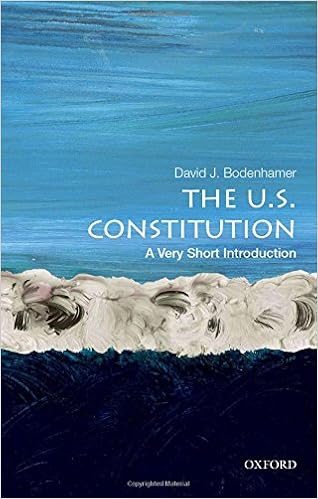
The U.S. Constitution: A Very Short Introduction (Very Short Introductions) Paperback – April 18, 2018 by David J. Bodenhamer (Oxford University Press)


Though the U.S. Constitution was ratified in 1788, its impact on our lives is as recent as today's news. Claims and counterclaims about the constitutionality of governmental actions are a habit of American politics. This document, which its framers designed to limit power, often has made political conflict inevitable. It also has accommodated and legitimized the political and social changes of a vibrant, powerful democratic nation. A product of history's first modern revolution, the Constitution embraced a new formula for government: it restrained power on behalf of liberty, but it also granted power to promote and protect liberty. 

The U.S. Constitution: A Very Short Introduction explores the major themes that have shaped American constitutional history: federalism, the balance of powers, property, representation, equality, rights, and security. Informed by the latest scholarship, this book places constitutional history within the context of American political and social history. As our nation's circumstances have changed, so has our Constitution.

Today we face serious challenges to the nation's constitutional legacy. Endless wars, a sharply divided electorate, economic inequality, and immigration, along with a host of other issues, have placed demands on government and on society that test our constitutional values. Understanding how the Constitution has evolved will help us adapt its principles to the challenges of our age.

ABOUT THE SERIES: The Very Short Introductions series from Oxford University Press contains hundreds of titles in almost every subject area. These pocket-sized books are the perfect way to get ahead in a new subject quickly. Our expert authors combine facts, analysis, perspective, new ideas, and enthusiasm to make interesting and challenging topics highly readable.

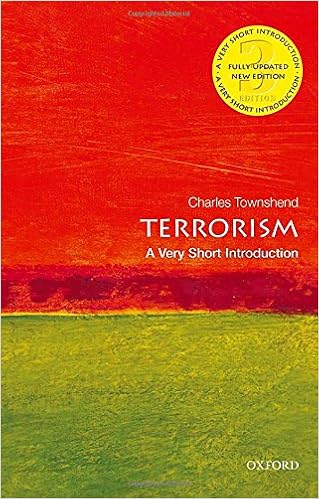
Terrorism: A Very Short Introduction (Very Short Introductions) 3rd Edition by Charles Townshens (Oxford University Press)


Charles Townshend has written a helpful introduction to the subject of terrorism. He begins by discussing the definition of terrorism, a task more difficult than it might seem. He indicates that terrorism is often a matter of perspective since one person's terrorist is another person's freedom fighter. There are also questions about what counts as an act of terrorism. Do intentions and goals make some acts terrorist? Can a line be drawn at the kind of victims selected for a terrorist act? Townshend looks at some laws that define terrorism, USA and British law (as I recall). Even here we encounter problems because these laws could be applied to the actions of nations themselves. In my view, state terrorism is inadequately addressed in this book; I suspect because Townshend lacks a useable sense of what it might be. Yet I think that state terrorism is the easiest category of terrorism to define as well as the most pervasive form of terrorism in the world.

Townshend provides many historical examples of terrorism. They are all well chosen. He discusses the origins of terrorism in history: viz., the first terrorist groups, the philosophical patrimony of "propaganda by deed," assassination as terrorism and the terrorism during the French Revolution. He also explores different types of terrorism: revolutionary, nationalistic and religious. He ends by discussing counterterrorism as a strategy and correctly mentions the dangers inherent in such an approach. Townshend apparently believes that democracies will always be hampered in their responses to terrorism because of their high regard for human rights. Yet Townshend doesn't often discuss the many ways the "great democracies" have employed terrorism, either directly or through proxy forces, sometimes resulting in massive casualties, particularly in the third world nations. Although the western democracies might have a public relations problem in using terrorism, they certainly don't lack the aptitude.

If you want to read a short introduction to the topic of terrorism, then this will do...at times quite well.

Geophysics: A Very Short Introduction (Very Short Introductions) Kindle Edition by William Lowrie (Oxford University Press)

Geophysics: A Very Short Introduction (Very Short Introductions) by [Lowrie, William]
Geophysics is the physics of the Earth. Central to the Earth Sciences today, it encompasses areas such as seismology, volcanism, plate tectonics, gravitational anomalies, and the Earth's magnetic field (present and past, as captured in rocks), all of which give clues to both the structure and the working of the Earth.

In this Very Short Introduction, William Lowrie describes the internal and external processes that affect the planet, as well as the principles and methods of geophysics used to investigate them. He explains how analysis of the seismic waves produced in earthquakes reveals the internal structure of the Earth. Geophysicists have established that the greatest source of energy powering geological processes is the Earth's internal heat. Deep inside the Earth, the temperature is high enough
to produce a fluid outer core of molten iron. It is the motion in this molten iron layer that produces the Earth's magnetic field, which shields the planet against harmful radiation from the Sun and outer space, and thus makes the planet habitable. Lowrie describes how the magnetic field also magnetizes
rocks during their formation, leaving a permanent record of the ancient field and its direction that geophysicists have learned to use to interpret past motions of the continents and tectonic plates. From analyses of Earth's deepest interior to measurements made from Earth-orbiting satellites, Lowrie shows how geophysical exploration is vitally important in the search for mineral resources, and emphasizes our need to understand the history of our planet and the processes that govern its
continuing evolution.

ABOUT THE SERIES: The Very Short Introductions series from Oxford University Press contains hundreds of titles in almost every subject area. These pocket-sized books are the perfect way to get ahead in a new subject quickly. Our expert authors combine facts, analysis, perspective, new ideas, and enthusiasm to make interesting and challenging topics highly readable.