Israel Book Review

Jews Praying In The Synagogue on the Day of Atonement by Maurycy Gottlieb (Tel Aviv Museum of Art) The Israel Book Review has been edited by Stephen Darori since 1985. It actively promotes English Literacy in Israel .#israelbookreview is sponsored by Foundations including the Darori Foundation and Israeli Government Ministries and has won many accolades . Email contact: israelbookreview@gmail.com Office Address: Israel Book Review ,Rechov Chana Senesh 16 Suite 2, Bat Yam 5930838 Israel

Showing posts with label Stephen Darori. Show all posts

Saturday, September 1, 2018

Genevieve's War Hardcover – March 30, 2017 by Patricia Reilly Giff (Author), Becca Stadtlander (Illustrator) (Holiday House) (IBRChildrensBooks)


It's 1939. Genevieve and her brother are spending the summer on their grandmother's farm in Alsace, France, near the German border on the eve of World War II. It's Genevieve's first time meeting her grandmother, whom she finds difficult. It's a precarious time to be in France, with the prospect of war looming. To further complicate things, Genevieve has a ticket on what is said to be the last boat leaving for the United States. Despite her reservations about her grandmother, she impulsively decides to stay with her, without realizing what her life will become. Shortly afterward, German soldiers occupy the area. Everyone must go by German names and speak German, and Genevieve and her family are forced to house a Nazi soldier. The upcoming years are a transformative time for both Genevieve and her grandmother as they struggle to survive and help others throughout the war. This companion to Lily's Crossing is best suited for strong readers. Orienting to the politically charged setting and understanding the convoluted set of circumstances that have placed Genevieve in the middle of a war make the first section of the novel a little overwhelming. By the second half, the book becomes more plot-focused and easier to follow. The Nazi occupation and looming uncertainty about who can be trusted result in a suspenseful read. The narrative spans the whole length of the war, and Giff skillfully takes Genevieve from an impulsive 13-year-old to a thoughtful and compassionate young woman; there is crossover appeal to a YA audience. A basic familiarity with the Second World War and with the Alsace region, or some research while reading, will deepen children's comprehension of the work. VERDICT A well-crafted look at how World War II impacted civilians, with great potential for classroom use.

Thirteen-year-old American girl Genevieve has spent the summer of 1939 at her grandmother’s farm in Alsace, France. Then she makes an impulsive choice: to stay in France. It proves to be a dangerous decision. World War II erupts. The Nazis conquer Alsace and deport the Jews and others. A frightening German officer commandeers a room in Meme’s farmhouse. And when Gen’s friend Remi commits an act of sabotage, Gen is forced to hide him in the attic—right above the Nazi officer’s head. Genevieve’s War is a gripping story that brings the war in occupied France vividly to life. It is a companion work to Lily’s Crossing, a Newbery Honor Book.
Posted by BardofBatYam at 11:27 PM No comments:
Email ThisBlogThis!Share to XShare to FacebookShare to Pinterest
Labels: . . #stephendrus, . . . #IsraelBookReview, . . Israel Book Review, . .. @stephendarori, . The Darori Foundation, Stephen Darori, Stephen Drus

Friday, August 24, 2018

"Know the source material of your enermies better than they do" An Academic Review of Adolf Hitler's Mein Kampf.


My late grandfather was  Chaim ( Hymie) Baker. In 1931 he sponsored Zeev Jabotinsky extended trip to South Africa .Extended as while in South Africa , Jabotinsky was informed that he may not return to what was then called Mandate Palestine. Chaim Baker was one of the founders of the Revionist Zionist ( Herust) Movement and Betar in South Africa .He used to say , 
"Know the source material of your enermies better than they do" . I read and am now reviewig Hitler's Mein Kamp with that in mind . This book is not something I would keep on my desk or bed side table but I would recommend that everyone read it It can be read on line.Here is one of the links . There are many.http://childrenofyhwh.com/multimedia/library/Hitler/mein-kampf.pdf

Being the Stalag edition it has some very simple English mistakes which can be easily excused by the fact it was translated in bulk by one German officer who knew English. It may be worth someone combing through this edition just to correct that as many of the mistakes are simple typos like misspellings of words or simple replacing words with similar ones: like own for our, and so on. But saying all that, this didn’t affect the reading in any major way and certainly took nothing away from the writing style.

The main thing about this book which struck me is the narrative building and the ease of reading, which allows the reader to become immersed very quickly. The book itself is split into two volumes: the first is Hitler’s childhood, working as a manual labourer and struggling artist. his early experience of the working class, Marxists and of course Jews. He then moves on to the events of the Great War (World War I), his part in it, the unity of which Germany fought and the propaganda used by the enemy which ended the war and also pushed a narrative on Germany which helped it lose. For example the stereotype of English people being tea sippers who are cuckolded by their wife meant that the Germans did not take England serious until it was too late, and also the English propaganda which pushed the narrative that most of Germany was being abused by the Prussians, and all that Germany need do is rise against this ruling and abusing class. This led to a revolution which forced Germany to fall apart and lose the war. The war being ended made Hitler want to enter politics, he joins a German Workers Party and begins his rise into popularity. He then builds the narrative that the Germans in power were betraying their nation, race and blood by giving up areas and stopping propaganda against the German people. This is when Hitler goes into the duality of race and nation, and the strength in it. He ends the first volume by expressing the first events of his party and how they came into the German people consciousness.

The second volume begins with a long few sections which explains the world-view (Weltanschauung) and how that incorporates itself into the party: that the state has a duty to be of the people and serve it – a state which does not serve the nation (blood and soil) is against the people. He then explains the supremacy of the spoken word and how it must be used at all costs, because while people may read things and agree, it will not inflame them to change the nation and speak truth to authority. The Marxists come up a lot, and especially in the first few stages of the party because of opposition and media bias against any pro-Deutsche movement. He explains how he formed a strong arm within the party to protect the party itself and also to show the outside world it cannot destroy the will of a party which represents the Volk itself. He also explains that while the entire state may be against him, he who has no allies is strongest because the fire of competition will form a demi-god like will of steel and blood.

One part of the book which really interested me was when he explained his use of propaganda and how to use it. This one section is a must for anyone interested in how propaganda works, what its purpose is, and how to use it for your own gains and message. He then explains how and why he will deal with trade-unions, Germany and how it should treat allies and seek them, the Slavic lands and how they relate to the Deutsche blood and soil, and finally ends with the right of defence and arming yourself as individuals and a nation.

This concludes the two volumes of Mein Kampf. Of course he goes into the history of Jews in Germany, why the Germans are uncomfortable with them, how and what they are behind, and why he himself disliked the Jews and then he lays out his experiences with the Jews (especially in the form of the ideology Marxism) which led him to his conclusions. These parts are a must for anyone interested in an introduction of the JQ. Overall I would sum this book review up as: worth the read, whether you agree or not. Hitler was a momentous power mover in the same way Napoleon was, you should read him regardless of your position and conclusions.
Posted by BardofBatYam at 4:39 PM No comments:
Email ThisBlogThis!Share to XShare to FacebookShare to Pinterest
Labels: Adolf Hitler, Chaim (Hymie) Baker, Israel Book Review, Mein Kampf, Stephen Darori, Stephen Drus, The Final Solution, Zeev Jabotinsky

Saturday, August 18, 2018

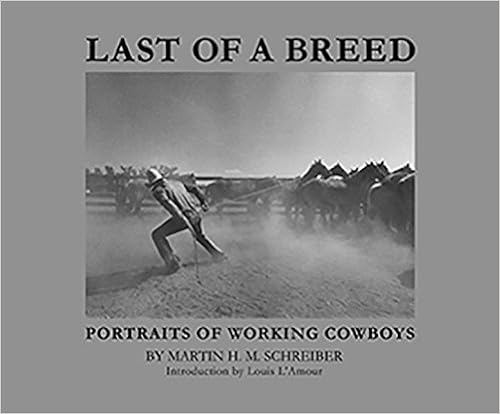
Last of a Breed: Portraits of Working Cowboys Hardcover – May 9, 2017 by Martin H. M. Schreiber (Author), Louis L'Amour (Author), Buck (Ramsey (Author)(Verlag Kettler)


Plot: An American test pilot, Major Joe Mack, a half Sioux half Scottish man is shot down by Russians and taken prisoner to a camp in Siberia. There the ambitious Colonel Zamatev plans to break and interrogate the Major in order to further his experimental espionage operation. Mack's only option? To execute a daring escape in the dead of winter with only the clothes on his back. But where will he go? Stuck in the middle of Siberia during the Cold War, with no one from the Air Force aware of his being alive or a prisoner his only option will be to retrace the trek of his ancestors and cross the Bering Straight in order to get home to America.

My thoughts: This is a fantastical tall tale, it's hard to believe how much it engrossed me. Was is because it was my first taste of survival fiction? Maybe it was just a good story. I was reading it not for entertainment value but not specifically to learn from it and yet I was entertained and picked up a couple of things (to be verified). Here are somethings that rocked my boat:

Every character, even Joe, had great love for the land but little regard for governments.

There is great contempt for the bureaucracy. It's incompetence and apathy is reflected when Alekhin, the Yakut hunting the American, is hampered over and over by the governmental machine, "everything comes second to paperwork these days" he meditates.

Alekhin's character can be summed with this quote "He liked none of them, but he preferred to work with Zamatev. The man was cruel, ice hard, and ruthless. Alekhin did not like him, either, and it would be only what he deserved if the American turned around and went back to find and kill him.".

Of the four qualities a Sioux warrior must posses Mack knows himself brave and with fortitude but what about generosity and wisdom? Does he posses these? Can he survive without them? I like introspection, I think it's a powerful thing to know one's own strengths and weaknesses. And having a clear outlook of the challenges we may face is intrinsically tied to our ability to survive and prepare to face them.

The knowledge and skills Mack honed as a half Sioux in the Idaho wilderness and the training he received as an Air Force officer greatly aided him and somewhat prepared him for what he had to face in Siberia.

I think having a strong mind and heart guided by a well trained moral compass can make a ordinary person into an extraordinary survivor. I enjoyed Major Mack's indomitable wild spirit. His determination to live or die free, his mental readiness to evaluate and adapt to his circumstances, and his well founded faith on his chosen course are uplifting.
In closing survival and preparedness are not about any one thing but a combination and balance of many things. I think knowing who we are, what we're rooted in and what we can do are thoughts worth exploring on this quest we're on. I find that prepping and acquiring survival skills help cultivate many fine qualities and there's a lot more good lessons that can be taken from Mack's story. Last Of The Breed was an enjoyable read though there was a degree of repetitiveness, triteness and stereotypes I'm not fond of. All in all, I think this is a good read.

On Prepping and Surviving:
Staring into a fire messes up your night vision.
Learn to make a bow and arrows, also a sling.
There is no replacement for a good knife.
Always scout an alternate way out.
Game trails and wildlife can sometimes show you the way out of a tough spot.

Words of Wisdom:
"There are good men everywhere."
"Trust is often based on very little more than one's measure of a man."
"When I die, remember that what you knew of me is with you always."
"Possessions can rob one of freedom just as much as the bars of a cage."
Posted by BardofBatYam at 4:15 PM No comments:
Email ThisBlogThis!Share to XShare to FacebookShare to Pinterest
Labels: . . #stephendrus, . . . #IsraelBookReview, . . Israel Book Review, . . Stephen Drus, . .. @stephendarori, . The Darori Foundation, Israel Book Review, Stephen Darori

Wednesday, April 4, 2018

The Library: A World History Hardcover – October 14, 2013 by James W. P. Campbell (Author), Will Pryce (Photographer) ( University of Chicago Press)


A library is not just a collection of books, but also the buildings that house them. As varied and inventive as the volumes they hold, such buildings can be much more than the dusty, dark wooden shelves found in mystery stories or the catacombs of stacks in the basements of academia. From the great dome of the Library of Congress, to the white façade of the Seinäjoki Library in Finland, to the ancient ruins of the library of Pergamum in modern Turkey, the architecture of a library is a symbol of its time as well as of its builders’ wealth, culture, and learning.
 
Architectural historian James Campbell and photographer Will Pryce traveled the globe together, visiting and documenting over eighty libraries that exemplify the many different approaches to thinking about and designing libraries. The result of their travels, The Library: A World History is one of the first books to tell the story of library architecture around the world and through time in a single volume, from ancient Mesopotamia to modern China and from the beginnings of writing to the present day. As these beautiful and striking photos reveal, each age and culture has reinvented the library, molding it to reflect their priorities and preoccupations—and in turn mirroring the history of civilization itself. Campbell’s authoritative yet readable text recounts the history of these libraries, while Pryce’s stunning photographs vividly capture each building’s structure and atmosphere.
 
Together, Campbell and Pryce have produced a landmark book—the definitive photographic history of the library and one that will be essential for the home libraries of book lovers and architecture devotees alike.
Posted by BardofBatYam at 9:26 AM No comments:
Email ThisBlogThis!Share to XShare to FacebookShare to Pinterest
Labels: . . #IsraelBookReview, . @israelbookreview, . @stephendarori, . #stephendarori, . #stephendrus, . Israel Book Review, . The Darori Foundation, Stephen Darori, Stephen Drus

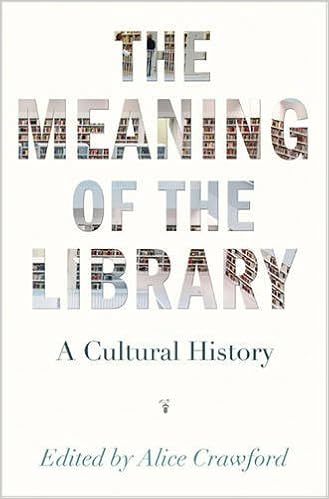
The Meaning of the Library: A Cultural History Reprint Edition by Alice Crawford (Princeton University Press)


No matter whether you are a library user, or a library professional, you are bound to find something that satisfies your curiosity or that tweaks your interest in Alice Crawford’s collection of essays entitled The Meaning of the Library: A Cultural History. Spanning a wide range of topics to do with libraries, the work is separated into three parts: The Library through Time; The Library in Imagination; and The Library Now and in the Future. Being both a librarian by profession and a cultural historian of sorts (by dint of having studied the Cultural History of Western Europe for three years at undergraduate level), I chose to home in on The Library in Imagination, and I was definitely not disappointed. The wide grasp of the subject, and the depth of the insights, was astounding. From Marina Warner’s acknowledgement of the seminal value of the Epic of Gilgamesh, through Robert Crawford’s exploration of the librarian as ennobled and immortalized in poetry (and I can think of a number of librarians who would love to be so remembered), to Laura Marcus’s pursuit of the image of the haunted library and the library as labyrinth (with special focus, much to my delight, being paid to the library as presented in all its convolutions and Mediaeval ramifications in The Name of the Rose), the authors never fail to intrigue and enlighten. Not only are the contributors all experts in their field, but they are also such excellent writers that one can truly savor each word and sentence that they write. Their rhapsodical descriptions embody the mystery that lies at the core of the library as phenomenon stretching down the ages. For instance, Warner draws attention to the “way of making [which] is important with regard to the library in fiction, viewed not only as a particular place where single titles or book-objects have been collected, but as a metaphor for literature itself, a polyphony of voices, laid down on multiple tracks, looping and converging over time, sometimes over great vistas of time”. In short, the richness and wealth of information that is embodied in library collections is brought only honor and memorableness in this text.

Whoever thought of a library as being a prosaic and stuffy old place that bears little relevance to the current digital age must definitely think again. Rounding off the work with an acknowledgement of the significance of libraries even in the modern day and age, given by Library of Congress James H. Billington, tribute is paid to the role of the library as a purveyor of knowledge that is geared towards satisfying mankind’s ongoing search for the truth. The Meaning of the Library: A Cultural History is a riveting and deeply satisfying work that is bound to leave the reader not only far more aware of the sociocultural importance of the institution as a reservoir of heritage and learning, but also inspired to think of issues that lie beyond the earthly and temporal realm.
Posted by BardofBatYam at 9:10 AM No comments:
Email ThisBlogThis!Share to XShare to FacebookShare to Pinterest
Labels: . . #IsraelBookReview, . @israelbookreview, . #stephendarori, . #stephendrus, . Israel Book Review, . The Darori Foundation, Stephen Darori, Stephen Drus

C. S. Lewis Reviews The Hobbit, 1937 Reprinted .....A world for children: J. R. R. Tolkien, The Hobbit: or There and Back Again (London: Allen and Unwin, 1937)


The publishers claim that The Hobbit, though very unlike Alice, resembles it in being the work of a professor at play. A more important truth is that both belong to a very small class of books which have nothing in common save that each admits us to a world of its own—a world that seems to have been going on long before we stumbled into it but which, once found by the right reader, becomes indispensable to him. Its place is with Alice, Flatland, Phantastes, The Wind in the Willows. [1]

To define the world of The Hobbit is, of course, impossible, because it is new. You cannot anticipate it before you go there, as you cannot forget it once you have gone. The author’s admirable illustrations and maps of Mirkwood and Goblingate and Esgaroth give one an inkling—and so do the names of the dwarf and dragon that catch our eyes as we first ruffle the pages. But there are dwarfs and dwarfs, and no common recipe for children’s stories will give you creatures so rooted in their own soil and history as those of Professor Tolkien—who obviously knows much more about them than he needs for this tale. Still less will the common recipe prepare us for the curious shift from the matter-of-fact beginnings of his story (“hobbits are small people, smaller than dwarfs—and they have no beards—but very much larger than Lilliputians”) [2] to the saga-like tone of the later chapters (“It is in my mind to ask what share of their inheritance you would have paid to our kindred had you found the hoard unguarded and us slain”). [3] You must read for yourself to find out how inevitable the change is and how it keeps pace with the hero’s journey. Though all is marvellous, nothing is arbitrary: all the inhabitants of Wilderland seem to have the same unquestionable right to their existence as those of our own world, though the fortunate child who meets them will have no notion—and his unlearned elders not much more—of the deep sources in our blood and tradition from which they spring.

For it must be understood that this is a children’s book only in the sense that the first of many readings can be undertaken in the nursery. Alice is read gravely by children and with laughter by grown ups; The Hobbit, on the other hand, will be funnier to its youngest readers, and only years later, at a tenth or a twentieth reading, will they begin to realise what deft scholarship and profound reflection have gone to make everything in it so ripe, so friendly, and in its own way so true. Prediction is dangerous: but The Hobbit may well prove a classic.

Review published in the Times Literary Supplement (2 October 1937), 714.


1. Flatland (1884) is by Edwin A. Abbott, Phantastes by George MacDonald (1858).

2. The Hobbit: or There and Back Again (1937), chapter 1.

3. Ibid., chapter 15.

Image and Imagination: Essays and Reviews, by C. S. Lewis, edited by Walter Hooper. Copyright © 2013 C. S. Lewis Pte Ltd. Reprinted with the permission of Cambridge University Press.

This article originally appeared in the Times Literary Supplement. Click here to read it on the TLS site.


Posted by BardofBatYam at 2:49 AM No comments:
Email ThisBlogThis!Share to XShare to FacebookShare to Pinterest
Labels: . . #IsraelBookReview, . . Stephen Drus, . @israelbookreview, . @stephendarori, . #stephendarori, . #stephendrus, . Israel Book Review, Stephen Darori

Tuesday, April 3, 2018

The First Amendment Debate ...The Soul of the First Amendment Hardcover – April 25, 2017 by Floyd Abrams (Yale University Press), Free Speech on Campus 1st Edition by Erwin Chemerinsky (Yale University Press), Free Speech: A Very Short Introduction (Very Short Introductions) 1st Edition by Nigel Warburton (OXford University Press) ,Free Speech: Ten Principles for a Connected World Paperback – March 28, 2017 by Timothy Garton Ash (Yale University Press), Speak Freely: Why Universities Must Defend Free Speech (New Forum Books) Hardcover – April 10, 2018 by Keith E. Whittington (Princeton University Press), Freedom for the Thought That We Hate: A Biography of the First Amendment 1st Edition by Anthony Lewis (BAsic Books)Free Speech and False Speech: Political Deception and Its Legal Limits (Or Lack Thereof) 1st ed. 2018 Edition by Robert N. Spicer (Palgrave MacMillan), The Complete Infidel's Guide to Free Speech (and Its Enemies) (Complete Infidel's Guides) Paperback – July 24, 2017 by Robert Spencer (Regnery Publishing)


The Soul of the First Amendment


Whatever else might be said about American exceptionalism, free speech’s status in American law really is exceptional. Although free speech is affirmed in international documents such as the 1966 International Covenant on Civil and Political Rights, there it is typically qualified by other imperatives, or even openly subordinated to other goods. The First Amendment, by contrast, is absolute: “Congress shall make no law...abridging the freedom of speech, or of the press.” How can any American patriot not exalt such rights?

Floyd Abrams certainly does in The Soul of the First Amendment. Abrams’s eminence as a First Amendment lawyer goes back to his work with Alexander Bickel on the brief for New York Times Co. v. United States (the Pentagon Papers case) in 1971, and continued with his winning argument for Senator Mitch McConnell in Citizens United v. Federal Election Commission (2010). Abrams’s book recounts the bipartisan triumph of what might be called free-speech absolutism, from its first stirrings a century ago to its dominant position on the Supreme Court today, all the while contrasting American law with British or European. Though the First Amendment’s language applies strictly to Congress, Abrams accepts the incorporation doctrine that extends its prohibition to the states. He asserts, as well, that it binds the executive and judiciary, not just the legislature.

* * *

In fact, he argues that Bridges v. California (1941), in which the Supreme Court reversed California’s holding a newspaper in contempt for its comment on a pending case, is “the first and most authoritative rejection in the United States of English law governing expression” and “nothing less than a new declaration of American independence.” By contrast, he quotes a dissent by Justice Stephen Breyer from a 2014 decision that struck down campaign finance limits, in which Breyer contended that the First Amendment protects not only individual rights “but also the public’s interest in preserving a democratic order in which collective speech matters.” Abrams doubts “that the First Amendment can serve both ends.” Because the Amendment has an “anticensorial soul,” he argues, “Permitting the government—the very entity the First Amendment was adopted to protect against—to limit the speech of some would inevitably risk the rights of all.”

Abrams’s stirring defense of free speech is biographical as well as analytical. He credits Justice Antonin Scalia’s dissent in Austin v. Michigan Chamber of Commerce (1990) with changing his mind on whether corporations can be punished for spending that promotes or opposes political candidates. This reconsideration led him to help overturn Austin in Citizens United, a development illustrating the migration of free speech commitment from the Left to the Right with the turn of the new century.

* * *

The Soul of the First Amendment deplores the courts’ acquiescence in censorship in the early part of the 20th century, noting that American jurists did their country no favors by following English precedent. Abrams criticizes the English law of libel and documents its worldwide menace to free speech, blocked here by congressional legislation and now somewhat reformed in England itself. The European Union’s “right to be forgotten,” he discovers, has led to the deletion of over half a million news articles online on topics of real public interest, particularly concerning crime. He makes the case against hate speech laws, ubiquitous in Europe but largely and blessedly, in his opinion, absent from the United States.

Only when he turns to the question of the Pentagon Papers and the recent publication of government information leaked by Bradley/Chelsea Manning, Julian Assange, and Edward Snowden, does Abrams seem at all conflicted in his libertarianism. He’s offended, as a patriot, by Assange’s description of his mission: “to safely and impartially conduct the whistleblower’s message to the public, not to inject our own nationality or beliefs.” This neutrality, Abrams believes, probably ended the lives of some overseas informants and certainly risked others, when their names were made public, and compromised undercover practices that protect national security as well. His First Amendment absolutism absolves neither leakers for violating their duties, nor editors from being held accountable in the court of public opinion for publishing classified material. Criticism for abusing rights is free speech, too.

Though Abrams’s bracing defense of free speech is particularly welcome in our censorious age, his approach is ultimately insufficient. It’s easy enough to accept the rule permitting even seditious speech absent an immediate danger of a serious evil, but is the city of Charlottesville really defenseless when white supremacist Richard Spencer and his “fine people” come to town itching to provoke a riot? What about Antifa’s commitment, expressed in word and deed, to use violence to stop speech its adherents detest? Abrams takes for granted that free speech includes expressive conduct, or to put it differently, that free speech equals free expression; but what if erasure of the line between speech and conduct has helped to paralyze us in the face of real threats from extremists? Justice Robert Jackson famously wrote that the Bill of Rights is not a “suicide pact,” a formulation suggesting that Abrams-style libertarianism has a death wish.

* * *

Timothy Garton Ash’s Free Speech: Ten Principles for a Connected World addresses the full range of contemporary questions concerning freedom of expression, particularly those that have emerged in the age of the internet and globalization. Having established his credibility on the speech issue with his fearless reporting from behind the Iron Curtain as it was beginning to crack, Garton Ash spent years developing the framework he expounds here.

Alexis de Tocqueville long ago noticed Americans’ irritable patriotism, which in the past 50 years has been matched by most intellectuals’ irritable anti-Americanism. Garton Ash, who is British, is not entirely immune to this, but his task is actually to defend and promote American-style free speech to a skeptical world. Genuinely thoughtful and unabashedly liberal, his is a book to be reckoned with.

It begins with the circumstances of modern speech, what Garton Ash labels “cosmopolis,” the “world-as-city.” This results simultaneously from the internet, which gives a huge proportion of mankind the ability to be in touch with one another almost instantaneously, and from recent migration patterns, which have made dozens of cities around the world multi-racial, multi-ethnic, and multicultural. Both circumstances are genuinely new, he argues, noting that the modern immigrant does not leave the old country behind but often remains in daily contact with family and friends back home. Similarly, the internet has allowed the spirit of America to penetrate the daily lives of people everywhere.

Free Speech’s account of cosmopolis is not uniformly celebratory: though it instantiates the Enlightenment ideal, it also creates and enables the modern terrorist. Nor is cosmopolis egalitarian, enhancing the “big dogs” (powerful states) and “big cats” (powerful corporations). At the same time, writes Garton Ash, it enhances the “power of the mouse,” the individual user who has access to the web, to social media in particular.

Given these circumstances, he proposes an ideal of free speech, a sketch of norms rather than laws, to guide cosmopolitans’ thinking. It’s unclear whether law, based in territorial jurisdiction and dependent on the politics of a state, has the power to control the internet. China, Russia, and Iran have built digital firewalls, but this is a technical achievement, not a legal one, and its stability is uncertain. The term “free speech” carries different connotations in different tongues, making universal norms problematic, but increasingly supple machine translation and the universality of English make the language boundary porous, too. Americans have promoted global free speech to entrench our own global leadership, a sort of “unilateral universalism” as Garton Ash calls it, but in the realm of norms a genuinely “universal universalism” is at least possible.

* * *

What, then, grounds free speech norms? He offers four arguments. We need free expression, to “realize our individual humanity,” to “find the truth,” because “it is necessary for self-government” and because it “helps us live with diversity.”

The gravamen of the book is the elaboration of universal norms. As promised in his subtitle, Garton Ash proposes ten. First is the fundamental purpose, what he calls the “lifeblood” of free speech: “We—all human beings—must be free and able to express ourselves, and to seek, receive and impart information and ideas, regardless of frontiers.” It isn’t hard to recognize that his “able” is a loaded word. Garton Ash deplores the way “money howls through political campaigns” in the United States. Together with the power of big cats like Google and Facebook, wealth speaks with inordinate force—but the rest of the norms make clear that the aspiration for more widespread economic empowerment is no excuse for silencing the fortunate.

The second norm, “We neither make threats of violence nor accept violent intimidations,” rejects the heckler’s veto and the “assassin’s veto.” Free Speech calls out jihadi Muslims as the chief perpetrators of the latter. The standard he proposes would allow legal suppression of speech only when violence is “intended and likely and imminent.” His argument distinguishes speech from action, while recognizing that ideas have consequences. His working proposal for online communication, in particular for the republication by reputable websites of incendiary expression, is the “one-click-away” principle: make the Danish cartoons available, but as links, so only the reader who goes looking for offense will encounter it.

The remaining norms are “about defending the line drawn in the second principle while we exercise the right spelt out in the first.” Two, in particular, show that Garton Ash not only chronicles but endorses cosmopolis. He welcomes challenges to “all limits to freedom of information justified on such grounds as national security,” and wants to “defend the internet and other systems of communication against illegitimate encroachments by both public and private power.” The former is not as categorical as it sounds: Garton Ash agrees with Abrams that Assange’s indiscriminate leaking of informants’ names was irresponsible. The latter, too, is complicated. Garton Ash recognizes that taming private power usually requires augmenting public power. While he despises the power of money in politics, he admits that “a free market of purveyors enhances the free market of ideas.” Perhaps in the end he would be persuaded by Abrams that Citizens United is not the root of all evil.

The final principle in Garton Ash’s list is courage, circling back to the need to face down the threat of violence that would suppress free speech. He rightly invokes Justice Louis Brandeis’s opinion in Whitney v. California (1927): “Those who won our independence...believed liberty to be the secret of happiness and courage to be the secret of liberty.” Free Speech was published in 2016, before Brexit and the election of Donald Trump. While it is too soon to tell whether these events signal the end of cosmopolis or just anger at its excesses, the issues the book raises have hardly disappeared.

* * *

Compared to these bold contributions to the free speech debate, two new books on free speech on college campuses are disappointing, though in different ways. Both identify the issue of the day as free speech versus inclusion, and both insist that the two goals, properly understood, are compatible. Both are by faculty with senior positions in university administration, which perhaps explains their felt need to equivocate, though in fact both include sensible counsel on a number of issues and profess unyielding support for academic freedom. But none of the authors seems to quite grasp—as Abrams and Garton Ash do—that defending free speech today entails a willingness to face down the purported egalitarians who would suppress it.

When they wrote Free Speech on Campus, Erwin Chemerinsky and Howard Gillman were, respectively, founding dean of the University of California, Irvine School of Law, and that university’s chancellor. (Chemerinsky is now dean of Berkeley School of Law.) Both have independent reputations as scholars of constitutional law, Chemerinsky for his prolific legal commentary, Gillman for his studies of the Supreme Court and American political development.

Like Abrams, they tell the history of the constitutional law of free speech, less colorfully but more systematically. They support free speech for standard reasons—for freedom of thought, democracy, and for a free society—although it is easy to overlook that their emphasis in all three is on individual expression, not truth. They emphasize the benefit free-speech law has provided to groups once outside the mainstream in American society—blacks, religious minorities, sexual pioneers—presumably so college students come to understand that, despite what they are hearing from radical professors, free speech once served the cause of progress.

Chemerinsky and Gillman speculate as to why this is necessary. “This is the first generation of students educated, from a very young age, not to bully.” Very well, but isn’t the issue why they don’t leave behind childhood lessons, as other generations of students surely thought they were doing when going off to college?

* * *

Nevertheless, on many questions the authors’ instincts are good and their judgments sound. They clearly rebuke the British National Union of Students’ “no platform” policy of blacklisting speakers they consider to be fascists or racists and forbidding their appearance on campus—contrasting it to the policy advocated by the Free Speech Movement in Berkeley in the 1960s that insisted in principle, if not always in practice, that all political speech was welcome on campus. They refute legal philosopher Jeremy Waldron’s case for suppressing hate speech, and offer an uncritical summary of recent Supreme Court decisions that have struck down or undermined the suppression of group libel and “fighting words.” They acknowledge the experience of American universities that adopted speech codes in the 1990s: “In practice, the code was used not against the kinds of purely hateful slurs that inspired its passage, but against people who expressed opinions that others objected to.”

Free Speech on Campus lists “what campuses can and can’t do,” and the advice is for the most part sensible, if a bit complacent about the current state of the law. Chemerinsky and Gillman oppose censoring speech just because someone considers it harmful or offensive, but favor punishing speech “that meets the legal criteria for harassment, true threats, or other speech acts unprotected by the First Amendment.” They’re against the destruction of property, and the disruption of classes and classroom activities. The book supports time, place, and manner restrictions on protests so that they don’t disrupt “the normal work of the campus, including the educational environment and administrative operations.”

Does this mean that, when the next crisis comes, the liberals who govern institutions of higher learning will have the backbone and the judgment to stand up for their schools and the nobility of learning, unlike in the ’60s? The authors may prefer this course, but they do not commend it persuasively. If all learned speech is at root self-expression or “personal truth,” and what distinguishes the scholar is only “discipline,” what sustains academic freedom against the “authenticity” of its opponents? They conclude, “If we expect [the current generation of students] to fight for these [free speech] values, we must teach them these values.” But what if the young decide they prefer their equality values to their elders’ liberty values? Are Chemerinsky and Gillman willing to say that some values are better than others, so much so that the superior should be imposed and the inferior discouraged?

* * *

Sigal Ben-Porath is professor of Education and Philosophy at the University of Pennsylvania, but she starts her book, also titled Free Speech on Campus, by describing a crisis involving her duties “as chair of the university’s Committee on Open Expression.” The students had occupied the administration building “demanding changes to the school’s investment portfolio to bring it into better alignment with their ideology,” and she returned to campus in the evening, negotiated for two days, took care that the students were safe overnight, protecting “the free speech of students…while the university operated as smoothly as possible.” Ben-Porath eventually persuaded them to leave so the university could consider their demands, presumably without losing face. This, she writes, is “commonplace” on campus and more typical than the dramatic incidents at other schools that garner attention in the press.

Ben-Porath seeks to construct an ideal of “inclusive freedom,” simultaneously protecting free speech, not least the speech of student protestors, while assuring first-generation college students and minorities that their dignity and opinions are respected. Despite her civil tone, she repeatedly inveighs against the insistence on civility, which she apparently thinks privileges old-fashioned manners over frank expression by the less socially endowed. She comments on the hot cases of the past year or two—Charles Murray at Middlebury, Halloween at Yale, racial trouble at Missouri, the repudiation of trigger warnings at Chicago, and Milo Yiannopoulos wherever he goes—and she seems generally to sympathize with the students or at least to portray them sympathetically, except of course the students who invite Milo. Ben-Porath admits that Erika Christakis at Yale, pilloried by students for suggesting that sensitivity had limits, was a “thoughtful commentator” who got “caught in the middle of [a] polarized debate.”

* * *

Some of her suggestions make sense, such as distinguishing “dignitary safety” (try not to hurt people’s feelings) from “intellectual safety” (it’s okay to argue). Colleges should be concerned about hurt feelings, but must foster challenging ideas. Thus, “mandatory sensitivity training for all faculty members goes too far.” She criticizes “bias response teams” for undermining “the direct relations between students and instructor, and…because of the chilling effect they have on instructors’ speech.”

But such comments are few and far between. When discussing the Middlebury case she condemns the violence against Murray, but praises the students’ arguments against bringing him to campus as serious efforts “to expand the democratic reach of free speech to groups they see as harmed and silenced, not to protect themselves within a liberal cocoon.” In reality, Middlebury’s “harmed and silenced” groups had many chances to hear other speakers at Middlebury that same semester, including Emory philosophy professor George Yancy on “Fear of the Black Body,” Vermont ACLU director James Lyall, Edward Snowden (via the internet), Time magazine’s Joe Klein, Harvard’s Tarek Masoud on “Islam and Democracy in the Age of Trump,” and Amy Goodman of “Democracy Now!”

To say in such circumstances that shouting down the one clear conservative voice is “to expand the democratic reach of free speech” is Orwellian. Fortunately, there are still liberals in the public sphere like Abrams and Garton Ash, and in the academy like Chemerinsky and Gillman, who speak up for free speech and open inquiry, however much the shortcomings of their arguments may cry out to others for more thought, more speech, and more action.
Posted by BardofBatYam at 3:17 PM No comments:
Email ThisBlogThis!Share to XShare to FacebookShare to Pinterest
Labels: . . #IsraelBookReview, . @israelbookreview, . @stephendarori, . #stephendarori, . #stephendrus, . Israel Book Review, . The Darori Foundation, Stephen Darori, Stephen Drus

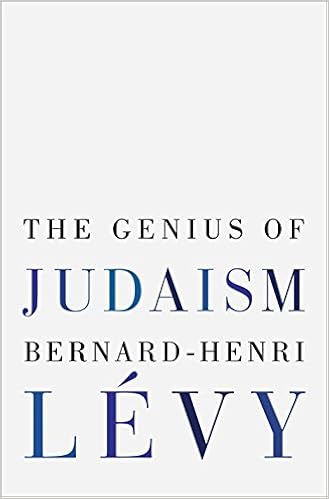
The Genius of Judaism Hardcover – January 10, 2017 by Bernard-Henri Lévy (Author), Steven B. Kennedy (Translator) (Random House)


From world-renowned public intellectual Bernard-Henri Lévy comes an incisive and provocative look at the heart of Judaism.

“A smart, revealing, and essential book for our times.”—The Washington Post

For more than four decades, Bernard-Henri Lévy has been a singular figure on the world stage—one of the great moral voices of our time. Now Europe's foremost philosopher and activist confronts his spiritual roots and the religion that has always inspired and shaped him—but that he has never fully reckoned with.

The Genius of Judaism is a breathtaking new vision and understanding of what it means to be a Jew, a vision quite different from the one we’re used to. It is rooted in the Talmudic traditions of argument and conflict, rather than biblical commandments, borne out in struggle and study, not in blind observance. At the very heart of the matter is an obligation to the other, to the dispossessed, and to the forgotten, an obligation that, as Lévy vividly recounts, he has sought to embody over decades of championing “lost causes,” from Bosnia to Africa’s forgotten wars, from Libya to the Kurdish Peshmerga’s desperate fight against the Islamic State, a battle raging as we speak. Lévy offers a fresh, surprising critique of a new and stealthy form of anti-Semitism on the rise as well as a provocative defense of Israel from the left. He reveals the overlooked Jewish roots of Western democratic ideals and confronts the current Islamist threat while intellectually dismantling it. Jews are not a “chosen people,” Lévy explains, but a “treasure” whose spirit must continue to inform moral thinking and courage today.

Lévy’s most passionate book, and in many ways his most personal, The Genius of Judaism is a great, profound, and hypnotic intellectual reckoning—indeed a call to arms—by one of the keenest and most insightful writers in the world.

Praise for The Genius of Judaism

“In The Genius of Judaism, Lévy elaborates on his credo by rebutting the pernicious and false logic behind current anti-Semitism and defends Israel as the world’s most successful multi-ethnic democracy created from scratch. Lévy also makes the case for France’s Jews being integral to the establishment of the French nation, the French language, and French literature. And last, but certainly not least, he presents a striking interpretation of the Book of Jonah. . . . A tour de force.”—Forbes

“Ardent . . . Lévy’s message is essentially uplifting: that the brilliant scholars of Judaism, the authors of the Talmud, provide elucidation into ‘the great questions that have stirred humanity since the dawn of time.’ . . . A philosophical celebration of Judaism.”—Kirkus Reviews

“Lévy (Left in Dark Times), a prominent French journalist and politically engaged philosopher, turns his observations inward here, pondering the teachings of Judaism and the role they have played in contemporary European history as well as in his own life and intellectual inquiry. . . . [Lévy’s] musings on the meaning of the story of Jonah and the relevance of symbolic Ninevahs in our time are both original and poetic. . . . A welcome addition to his oeuvre.”—Publishers Weekly
Posted by BardofBatYam at 9:42 AM No comments:
Email ThisBlogThis!Share to XShare to FacebookShare to Pinterest
Labels: . . #IsraelBookReview, . @israelbookreview, . @stephendarori, . #stephendarori, . #stephendrus, . Israel Book Review, . The Darori Foundation, Stephen Darori, Stephen Drus

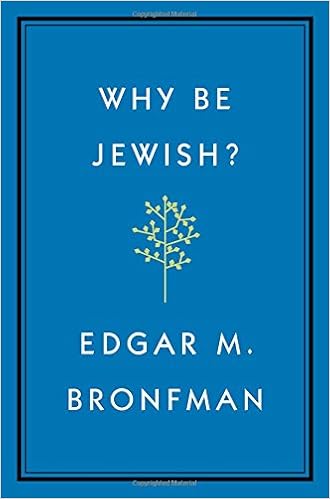
Why Be Jewish?: A Testament Hardcover – March 22, 2016 by Edgar Bronfman (Twelve)


Edgar M. Bronfman's clarion call to a generation of secular, disaffected, and unaffiliated Jews, this book addresses the most critical question confronting Judaism worldwide.

Completed in December 2013, just weeks before he passed away, WHY BE JEWISH? expresses Edgar Bronfman's awe, respect, and deep love for his faith and heritage. Bronfman walks readers through the major tenets and ideas in Jewish life, fleshing out their meaning and offering proof texts from the Jewish tradition gleaned over his many years of study with some of the greatest teachers in the Jewish world.

With honesty, poignancy, and passion, Bronfman shares In WHY BE JEWISH? insights gleaned from his own personal journey and makes a compelling case for the meaning and transcendence of a secular Judaism that is still steeped in deep moral values, authentic Jewish texts, and a focus on deed over creed or dogma.
Posted by BardofBatYam at 9:38 AM No comments:
Email ThisBlogThis!Share to XShare to FacebookShare to Pinterest
Labels: . @israelbookreview, . @stephendarori, . . #IsraelBookReview, . #stephendarori, . Israel Book Review, . The Darori Foundation, .#stephendrus, Stephen Darori, Stephen Drus

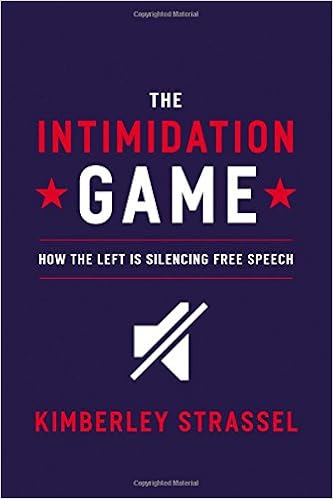
The Intimidation Game: How the Left Is Silencing Free Speech Hardcover – June 21, 2016 by Kimberley Strassel(Twelve)


From Kim Strassel-one of the preeminent political columnists writing today and member of the Wall Street Journal editorial board-comes an insightful, alarming look at how the Left, once the champion of civil liberties, is today orchestrating a coordinated campaign to bully Americans out of free speech.

For nearly 40 years, Washington and much of the American public have held up disclosure and campaign finance laws as ideals, and the path to cleaner and freer elections. This book will show, through first-hand accounts, how both have been hijacked by the Left as weapons against free speech and free association, becoming the most powerful tools of those intent on silencing their political opposition. THE INTIMIDATION GAME provides a chilling expose of political scare tactics and overreach, including:

  • How Citizens United set off a wave of liberal harassment against conservative politicians
  • The targeting of Tea Party groups by the IRS
  • How Wisconsin prosecutors, state AGs, and a Democratic Congress shut down political activists and businesses
  • The politicization by the Obama administration of a host of government agencies including the FEC, FCC and the SEC
THE INTIMIDATION GAME will shine a much-needed light on how liberal governance and the Democratic machine bullies the political process.
Posted by BardofBatYam at 9:24 AM No comments:
Email ThisBlogThis!Share to XShare to FacebookShare to Pinterest
Labels: . . #IsraelBookReview, . @israelbookreview, . @stephendarori, . #stephendarori, . #stephendrus, . Israel Book Review, . The Darori Foundation, Stephen Darori, Stephen Drus

Monday, April 2, 2018

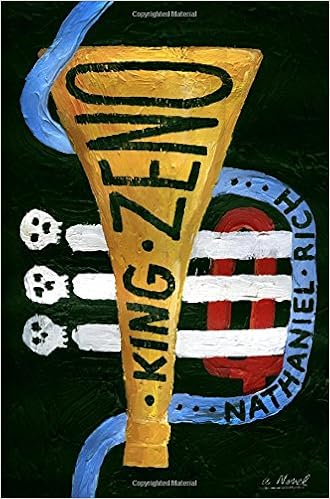
King Zeno: A Novel Hardcover – January 9, 2018 by Nathaniel Rich ( MCD)


New Orleans is a cliché, a loud, brassy, brazen hussy of a cliché, lubricated with booze and animated by jazz. Tits and beads. Corruption and hurricanes. Thanks to the copious, seasonally ubiquitous marketing efforts of Big Beer, that’s all you know and all you need to know.
And yet New Orleans keeps tempting writers to discover, in archaeological digs of the heart and the soul, what else is in this unlikely settlement in the swamp at the mouth of the continent’s great river. John Kennedy Toole legendarily wrote his life away creating the city’s great comic novel, A Confederacy of Dunces (1980), populating midcentury New Orleans with a gallery of only slightly exaggerated grotesques. (The legend includes his mother getting the novel, rejected by twenty-two publishers, into print after his death. It won a Pulitzer.) Michael Ondaatje used dreamlike imaginings in Coming Through Slaughter (1976) to conjure an undocumented reality of the city’s great claim to American cultural primacy, the birth of jazz in the front parlors of New Orleans brothels.
The bookshelf containing the outpouring of “post-Katrina” books has been groaning for a decade now. John McQuaid and Mark Schleifstein’s Path of Destruction (2006) and Ivor van Heerden and Mike Bryan’s The Storm (2006) set themselves the task of dismantling the media narrative of the 2005 flood that nearly wiped New Orleans off the map. That narrative included a city below sea level, poor black people as the primary victims, and a Category 5 hurricane whose ferocity/wrath/rampage was unprecedented—all found, thanks to painstaking research (largely conducted by two major projects, at UC Berkeley and LSU), to be largely or completely untrue.
Dave Eggers’s Zeitoun (2009) told, in careful, unsensational prose, the shocking story of an ordinary New Orleanian (a Syrian-American, as it happens) caught up in racial profiling at a most unfortunate moment, and revealed the one thing the federal government was able to do with remarkable alacrity in the middle of the flood: namely, assemble a secret prison in the parking lot of the Greyhound bus depot. Tom Piazza, in Why New Orleans Matters (2005), made a reasoned, passionate case for the city that then House speaker Dennis (“Coach”) Hastert thought was better left for dead. And on television, David Simon and Eric Overmyer’s Treme (2010–2013) attempted the near-impossible: an impeccably fact-checked fictional portrait of the city’s musical and culinary culture as it worked and played its way through the early stages of post-flood recovery.
An HBO executive said, when I offered them my documentary feature on the flood’s real causes, “We’ve done New Orleans.” Have we? Unlike the crude oil under the Gulf or the wetlands through which pipelines and canals to transport it have been built, the city’s great natural resource, story, is in no danger of being depleted. When you live in New Orleans, you apportion substantially more time for every errand, knowing that someone along the way, friend or stranger, will arrest your progress with a deliciously detailed account of their day, their post-flood recovery, their life. Knitting those stories into a credible and absorbing narrative is still the mandate of New Orleans writers who choose to set their work in their fascinating and infuriating home.
That’s the task Nathaniel Rich sets for himself in King Zeno, a sprawling novel about a pivotal year and a half in the city’s history in 1918–1919. Some New Orleanians, like police detective Bill Bastrop, are returning from World War I, with scars that are barely visible but unbearable. Others, like Beatrice Vizzini, the doyenne of a Sicilian family in a small-time protection racket, are using the opportunity of a crony connection in constructing a new canal to try to move from the “shadow business” to something slightly more legitimate. And Isadore Zeno, a young musician with an ear (and the lips) for a new way to play his cornet, is trying to give up being a sideman in petty street crime before his luck runs out.
The previously prim and comfortable life of New Orleans’ privileged is experiencing fissures. The waterway being built, the Industrial Canal, is the first of several attempts to more closely connect the city with the Gulf of Mexico, to the supposed benefit of commerce and to the ultimate detriment of the wetlands that (we’ve learned only recently, as they disappear at the rate of a football field per hour) help protect New Orleans from storm surge and hurricane winds. What started in 1918 culminated in the 1960s with the Mississippi River–Gulf Outlet, whose design and failed maintenance both contributed to some of the 2005 flooding.
The city’s racial divide was never textbook southern; New Orleans had the largest population of free people of color before the Civil War, while at the same time serving as the nation’s largest slave market. The free people of color became part of the city’s ruling class, and Creoles learned their lessons from their white brothers well: some Creole social clubs had a “paper-bag test” for admission (you could not gain entrance if you were darker than it was). But “jass music,” as it was first known, started to bridge those divides long before the civil rights movement. Isadore Zeno, who styles himself Slim Izzy (but who is granted the sobriquet King Zeno by the real-life bandleader Kid Ory in the same breath that he refuses to hire the youngster), longs for the chance to play his music for white people, to drive them crazy past the point of caring about color.
The city Rich depicts is riven by fear: of the worst flu epidemic in American history, and of crime—specifically, a serial killer given the nom de mort “The Axman” by the local papers because of his intimately brutal choice of weapon. Solving the riddle of the killer’s identity is the driving motivation for Detective Bastrop, who otherwise seems unmoored from life by a brutal dose of survivor’s guilt. If, like me, you are bored past tears by police procedurals and crime stories, you are safe here: Bastrop, like Mrs. Vizzini and Izzy, their families and co-workers and adversaries, are fully drawn characters caught in the cross-currents of a city already mourning the loss of its nineteenth-century grandeur and trying to imagine what the future holds. Most heartening, no one in the book talks like a New Orleanian: there is no awkward attempt to recreate any of the dozen dialects the city to this day maintains like manicured parkland.
Like Treme, King Zeno hews closer to the truth—the historical truth, at least—than much fiction; there really was an Industrial Canal project and a Spanish flu epidemic and an Axman terrorizing the town in 1919. Jazz really was breaking out of the brothel parlors and black bars in the “backatown.” Rich has done his research well. The city’s geography, always quixotic (its streetscape follows the curvilinear path of its river, so the East Bank is west of the West Bank and parallel streets end up intersecting), was subjected to some drastic urban renewing after World War II. But you walk, or run down, the old streets in King Zeno with the joy and dread of the time.
For the folks in this book, carnival is a peripheral moment, not—as it was for the town’s hierarchy then and now—a central organizing principle. These people aren’t playing at topsy-turvy, kings becoming paupers and vice versa for a day; the world at the end of its first global war is doing that for them, for real.
Over the half-century before the 2005 flood, New Orleans, like many older American cities, was shrinking. White flight to the suburbs combined with the oil industry’s exodus to Houston (after it littered Poydras Street with undistinguished modernist towers) to reduce the population by about a third. The waves of immigrant groups—the Germans, the Greeks, the Irish, and the Sicilians that ran the corner groceries preyed upon by the Axman—receded. Brasher southern rivals like Charlotte and Atlanta raced ahead as regional banking centers, while New Orleans seemed content to bask in its uniqueness, as the American city that embraced its past even at the risk of letting its future float away.
The city continues to feel more European, and Caribbean, and even African, than American. Through the efforts of early preservation activists like Clay Shaw (rewarded for his efforts by being prosecuted by then district attorney Jim Garrison in the Kennedy assassination case), the “urban renewal” craze was halted at the border of the French Quarter, left instead to drive concrete wedges through the heart of downtown black neighborhoods. But unlike other American cities, there’s much history beyond the borders of the well-preserved Old Town. Buildings, like people, still tell their stories, reminding us that aping old styles cannot recapitulate the delight of knowing what these walls have witnessed along a city’s wandering path toward its upcoming tricentennial.
The “federal flood” of 2005 marked a turning point. It got that name among locals for reasons that harken back to the digging of the Industrial Canal in 1919. Critics back then, as Rich recounts, feared the new waterway would bring storm surge into the heart of the city, by connecting the river to Lake Pontchartrain. They may have been right. A floodwall along the canal (built by the Army Corps of Engineers) collapsed in two locations, though the surge never got to the top of the wall, launching an eighteen-foot wave that inundated homes in the Lower Ninth Ward.
Mark Twain may or may not have said that “history doesn’t repeat itself, but it often rhymes” (or the addendum that “in hip-hop history, only the vowels have to match”), but another part of the 2005 flood had an eerily similar pattern. In the 1940s the corps pitched business-hungry city fathers on the Mississippi River–Gulf Outlet, a direct connection between the Gulf of Mexico and the Industrial Canal, a straight-line bypass of the curvy Mississippi. Critics, decades after the time of King Zeno, again predicted disaster. Again, they were right: the design and maintenance failures of the Mississippi River–Gulf Outlet were so egregious in causing the flooding of St. Bernard Parish (and the destruction of nearly the entire housing stock of that suburban county) that a federal judge excoriated the corps in a 150-page opinion. That finding was upheld by a three-judge appeals court panel, which, in a turn of events any novelist would envy, decided six months later to reverse its own ruling.
Having survived the most existential of its many crises (not only the Spanish flu epidemic in King Zeno but also, a decade earlier, the last yellow fever epidemic in North America), New Orleans renewed itself as it restored itself. In 2005 it had lost 100,000 of its poorest to a federal relocation that included no return tickets. The renewal took place on two different levels simultaneously: grassroots and institutional.
On the grassroots level, early returnees phoned and e-mailed their former neighbors to persuade them to join the homecoming. Homeowners and businesses gutted and demolded their properties, with the help of friends, family, volunteers, and, later, the hard-to-navigate system of federal aid for property owners called Road Home (hard to navigate by design, given congressional distrust of “those people down there”; there was no such program for owners of rental properties or for renters). Volunteer organizations sprang up, almost always headed by women, to agitate for structural reforms—to the levee boards and the tax assessment system, primarily—which succeeded at the ballot box. As a veteran of public meetings, council hearings, and protest gatherings, I marveled at the discipline and economy of the community meetings that weighed and popularized these reforms: the prospect of civic death really does focus the mind.
Salivating at the “clean slate” they perceived down yonder, city planners and urbanists and urbanologists flocked to the stricken city, inviting citizens to hundreds of meetings at which its future would be imagined. The results ended up as hefty unread volumes on city officials’ shelves and in front-page stories about neighborhoods that would be “green-dotted”—allowed to return to nature as the metropolis shrank. The citizens of those neighborhoods had different ideas, and LaToya Cantrell, the leader of one such neighborhood movement, has just been elected mayor, one of two African-American women in the runoff. It turns out that the future the people of New Orleans imagined looked a lot like…New Orleans.
Up on the institutional level, things were very different. Three vital local systems—health care, education, and public housing—were subjected to dramatic if not brutal restructuring with the impetus of the Bush administration, which saw an opportunity to undo “statist” New Deal–era arrangements. It must be noted, in fairness, that state and local officials abetted these “reforms.”
What the city feared, as it gazed at its sudden conversion to an involuntary Venice, were the problems of failure, like the “jack o’ lantern” effect in which few residents returned, and generally dark neighborhoods were pockmarked with the occasional lighted home. It feared disinvestment, the exodus of the young, the return of crime. Crime has returned, but the problems New Orleans faces now are those of success—like gentrification and the possible dilution of the intense local culture. Ada Colau, the radical mayor of Barcelona—a city not unlike New Orleans in its vivacity, exuberance, culinary tradition, and complex relationship to the dominant national culture—won election in 2015 by warning that her municipality, experiencing a major upsurge in tourism, risked losing its soul. It rang a certain bell.
The flood, and the exodus, tore at the tightly knit fabric of the community—three generations of a family often lived within blocks of one another. Rising rents have exacerbated that threat to the fabric, upon which depends the survival of many of the city’s unique traditions.
For all that change, the city is still recognizably New Orleans. It is, as Dan Baum writes in Nine Lives (2009), his invaluable portrait of locals pre- and post-flood, a city that lives by neither the dollar nor the clock. The infamous corruption, in the time of King Zeno and today, is ridiculously penny-ante compared with, say, New Jersey or Illinois (although, in fairness, a recent indictment alleges that New Orleans has just joined the million-dollar club in “diverted” public funds). Brutal crime coexists, then as now, with refinement and that most rare of civic virtues, grace.
Despite some new arrivals complaining to police of “noisy musicians coming down the block,” the music lives in clubs and concert venues, but it’s still born and bred in the streets. Despite a world of guitars and DJs, the piano and the trumpet reign. Local musicians, just as in Slim Izzy’s time, face a binary choice: migrate north to become ambassadors of the city’s music (Kid Ory, Louis Armstrong, Dr. John, Wynton Marsalis) or stay home (like Izzy) and become one of its kings.
Crime, music, corruption, lively conversation among friends and strangers alike—the (to use a cliché) gumbo of social relations that, along with festivities and culinary traditions like red beans and rice on Mondays—define New Orleans culture: they are not so very different now than they were in the world inhabited by the vividly drawn people in Rich’s novel. Central to that world then and now is the Industrial Canal, that deep dig into swampy muck where the lives of the detective, the doyenne, and the cornetist tangle and mingle in King Zeno. Its excavation is the book’s central metaphor—for how far down depravity can sink, for how low you have to stoop to recover your manhood, for how deep you have to dig to discover your future. The animating impulse of the canal is that of the city’s birth: the human demand that water be tamed in the service of commerce.

Posted by BardofBatYam at 8:48 AM No comments:
Email ThisBlogThis!Share to XShare to FacebookShare to Pinterest
Labels: . . #IsraelBookReview, . @israelbookreview, . #stephendarori, . @stephendarori, . #stephendrus, . Israel Book Review, . The Darori Foundation, Stephen Darori, Stephen Drus

(((SEMITISM))) Being Jewish in America in the Age of Trump By Jonathan Weisman 238 pp. St. Martin’s Press. $25.99.


Come November’s midterm elections, the Republican candidate for the Third Congressional District of Illinois will be a Nazi. There is nothing neo about Arthur Jones. Not just a white supremacist, not merely a foot soldier of the alt-right, Jones is the sort of full-on, unreconstructed, Holocaust-denying (“the blackest lie in history”), Hitler-worshiping, blood-and-soil warrior for whom the Jews are the root of all evil. Don’t panic. He will lose the election in an overwhelmingly Democratic district, but it is precisely that assumed outcome which seemed to have persuaded local Republicans not to bother opposing him in the March 20 primary. Waking up to the result of their indifference they belatedly repudiated Jones. But it might have occurred to them that the mere fact of his appearance on the ballot as the Republican candidate is itself a shocking affront not just to Jews but to all the norms of American political decency. Then again, those norms right now are shifting sand.

The sick joke of Jones’s candidacy doesn’t feature in Jonathan Weisman’s “(((Semitism))),” but every other kind of monstrously reawakened zombie-Nazi madness does, especially those swarming and multiplying in the digital dung heap. His book is largely a report from consternation nation, and its longest chapter chronicles the rise of white supremacist aggression, on and off the web. He has been on the sharp end of trolling storms and knows what it feels like (as do I) to have yourself photoshopped with concentration camp stripes or with your head in an oven. But in the end Weisman is unsure how much of an actual and immediate danger this online abuse represents. For all of the website bile and the tiki-torch marches, “the threat of violence against Jews,” he writes, “has not materialized into actual violence,” especially in comparison with hate crimes committed against African-Americans and Muslims. He quotes the Anti-Defamation League’s Jonathan Greenblatt saying that “the number of Americans that hold anti-Semitic beliefs has decreased dramatically.”

But of course it is the advent of Trumpian politics — its nonstop carnival of paranoia; its scapegoating of Hispanics and African-Americans; its anti-immigrant phobia — that has rung Weisman’s alarm bells, which accounts for his subtitle: “Being Jewish in America in the Age of Trump.” More sinister for him than the foaming lunacies of the neo-Nazis is the alt-right’s embrace of conspiracy theorists; the routine mutation of fantasy into fact; the appetite for seeing secret hands (George Soros for instance) at work in plots to undermine America — all of which have a whiff of late Weimar about them, not to mention the long history of populist anti-Semitism in the United States. Better, Weisman believes, to be fretfully vigilant than torpidly complacent. In one of the 1940s movie-poster homilies he favors (“the world is watching,” “the nation gasped”), he warns that while “unheard thunder” was rumbling, “the Jews slept.”


But this reduction of “being Jewish” to a state of hair-tearing anxiety about the surge of anti-Semitism means Weisman never quite delivers on his subtitle’s promise. A richly researched and nuanced account of Jewish life in stressed-out, polarized America would be timely, but this isn’t it. Instead, Weisman takes a chapter to complain about what he considers the major distraction preventing American Jews from being fully alert to the perils of the time — but this, a little surprisingly, turns out to be “Israel, Israel, Israel.” It is not clear whether he thinks the AIPAC herd mentality, so elated at gestures like the embassy move to Jerusalem, blinkers Jews to the threat that Trump and Trumpism represent to the liberal culture he champions. Or whether he believes that increasingly abrasive debates dividing the Jewish community about the occupation of the West Bank and the expansion of settlements are the greater problem. Weisman reports with understandable pain his demonization by hard-liners as a self-hating Jewish traitor for daring to point out, in a Times infographic, which opponents of the Iranian nuclear deal were Jewish. But such bitter arguments have gone on for a while and it seems odd to suppose that engagement with the trials and tribulations of Israel somehow precludes engaging with diaspora anti-Semitism, as if Jews of all people have a finite capacity for attentiveness. Anti-Semitism and the existence of Israel are hardly historically disconnected.

The second malaise Weisman identifies as blunting Jewish alertness to the peril of the times is the hollowing out of a Jewish identity that is neither uncritically Zionist nor devoutly religious. “The Jews who are most interested in a liberal, internationalist future, who wish to live progressive, assimilated existences free of threat,” he warns, “are disappearing.” But his sense of the tradition he believes is being lost is romantically wishful. In a hasty drive through Jewish history he nominates Moses Maimonides and Moses Mendelssohn as embodying this outward-looking nontribal Judaism. But the two Moseses were intensely devout and at times darkly pessimistic about the prospects of a Jewish life in a non-Jewish world.Continue reading the main story

It is true nonetheless, as Weisman points out, that a considerable majority of Americans identifying as Jews do so by way of remembering the Holocaust or being engaged with the fate of Israel rather than anything much rooted in Judaism and Jewish history. Weisman confesses he isn’t “much into davening” and reckons that even efforts to introduce more Hebrew into the Reform liturgy is a matter of simply “going through the motions,” ultimately more impediment than inspiration. But if “being Jewish” means nothing more than an ethically attuned solidarity with kindred disadvantaged at home and abroad, then the reawakening he wants will just evaporate in a cloud of airy good will. Being Jewish is knowing Jewish history in some depth; being Jewish is engaging with the incomparable treasury of disputation that is the Talmud; being Jewish is immersion in the boundless glories of Jewish literature, poetry, philosophy and art.

It’s this broad-minded debate-conscious kind of Jewish life that Weisman worries is moribund. But it may be too soon to write its obituary. Annual Limmud retreats, which offer a festival of learning and discussion on all things truly or even notionally Jewish, are thriving in Britain and increasingly in America. Jewish journalism in magazines like Moment and Tablet alongside reinvigorated institutions like The Forward and The British Jewish Quarterly Review seems to be entering something of a golden age. In London, JW3 — since its opening in a spankingly smart modern building — has become a magnet of cultural energy, and Jewish Book Week (also in London) draws packed houses (and not exclusively Jewish audiences) to its offerings in early March. And if it is acts of solidarity Weisman wants (those have never really gone away) he might note that the home page of the American Jewish World Service for Purim featured a photograph of a Rohingya refugee.

None of this is to make light of the sinister anti-Semitic strain in the ascendancy of alt-right ideology. There are plenty of signs that Jew-hatred is pushing through the soft walls of ultraright politics and poisoning its bloodstream. There is nothing wrong, as Weisman counsels, with Jews standing shoulder to shoulder with those most damaged and threatened by tribalist populism, as Jews like Abraham Joshua Heschel did in the heyday of the civil rights movement. Ultimately, though, what is needed is an aggressive defense of those things that not so long ago could be taken for granted in America, and under which Jewish life has prospered to a degree unique in the world: the integrity of the democratic process, the protections of the Constitution and the preservation of the ideal of a “nation of immigrants,” a phrase just deleted from the Immigration Service’s mission statement. And a little davening now and then wouldn’t do any harm.

Posted by BardofBatYam at 7:24 AM No comments:
Email ThisBlogThis!Share to XShare to FacebookShare to Pinterest
Labels: . . #IsraelBookReview, . @israelbookreview, . @stephendarori, . #stephendrus, . Israel Book Review, . The Darori Foundation, #stephendarori, Stephen Darori, Stephen Drus

Sunday, April 1, 2018

The Hunger and the Howling of Killian Lone by Will Storr Paperback ( Short Books Ltd / Marble Arch / Simon & Schuster) (IBRCookBooks)


A dark concoction about an ambitious culinary apprentice in 1980s London, Storr’s debut features a complex title character, gothic undertones and an unnerving plot.


Killian Lone begins his journey as a sympathetic young man, a target for neighborhood bullies into adulthood and the product of a dysfunctional family. His only source of solace is his great-aunt Dorothy, who spends hours teaching him to cook when he visits her at Dor Cottage, the old family home. Killian is descended from a long line of talented chefs, including the original owner of the cottage, Mary Dor, who cooked for the first Earl of Sussex and was burned at the stake as a witch. When he's accepted at culinary school, Killian’s skills prove exceptional, and his instructor secures him an apprenticeship at the chic restaurant run by Killian’s idol, acclaimed chef Max Mann. Killian’s dreams of being taken under the chef's wing unravel as he discovers the gulf between Mann’s public persona and his private actions. Though Killian tells himself Mann is under tremendous pressure to earn a third Michelin star, the horrendous kitchen conditions begin to splinter his “turnspit dog” loyalty. Killian's work is undermined by Mann's assistant, and he's subject to a blind "taste test" that involves crackers spread with excrement. As he strives for success, his future becomes increasingly tied to a secret he uncovers at Dor Cottage following Dorothy’s death; using it transforms his career, spurs speculation about his ethics and culinary abilities, affects his relationship with the woman he loves and consumes his life. An award-winning journalist, Storr has created a disturbing tale about cutthroat rivalries in a high-profile industry, and his claim that many of the kitchen incidents are based on true stories makes it even juicier.


Readers with a taste for the unusual (and who don't mind some nauseating passages) will find this a palatable novel about ambition, human fallibility and revenge.


Posted by BardofBatYam at 9:47 PM No comments:
Email ThisBlogThis!Share to XShare to FacebookShare to Pinterest
Labels: . . #IsraelBookReview, . @israelbookreview, . #stephendarori, . #stephendrus, . Israel Book Review, . The Darori Foundation, @Stephendrus, Stephen Darori, Stephen Drus

The Vatican Cookbook: Presented by the Pontifical Swiss Guard Hardcover – April 5, 2016 by David Geisser ),‎ Erwin Niederberger . Thomas Kelly ( Sophia Institute Pres) (IBRCookBooks)


From the Pope's table to yours . . .
Pontifical Swiss Guard presents ... a book like no other. From the elite protectors of the Popes and Defenders of the Faith for more than 500 years, a unique collection of exceptional recipes from simple to sublime, everyday staples to holiday feasts. Here are the classics served at Vatican tables for centuries and the finest of modern cuisine.
Best of all, we pay tribute to Pope Francis, Pope Benedict XVI and Holy Pope John Paul II with the personal favorite dishes from their homelands of Argentina, Bavaria, and Poland.
A marvelous cookbook and so much more. The Vatican Cookbook features superb photographs that take us behind the scenes to secret and special places of Vatican City. Walk the hallowed halls of St. Peter's Basilica, the Vatican Museums, and the Sistine Chapel. Enjoy the stories and legends of the Swiss Guard handed down since the days of Michelangelo.
For all who love to cook and share meals with family and friends, and for all who are fascinated by the wonders and the grandeur of the Vatican, the Swiss Guard is pleased to offer you ... The Vatican Cookbook.
Posted by BardofBatYam at 5:26 PM No comments:
Email ThisBlogThis!Share to XShare to FacebookShare to Pinterest
Labels: . . #IsraelBookReview, . @israelbookreview, . #stephendarori, . @stephendarori, . #stephendrus, . Israel Book Review, . The Darori Foundation, Stephen Darori, Stephen Drus

The Sweet Life in Paris: Delicious Adventures in the World's Most Glorious - and Perplexing - City Paperback – March 1, 2011 by David Lebovitz (BroadwayBooks) (IBRCookBooks)


Like so many others, David Lebovitz dreamed about living in Paris ever since he first visited the city in the 1980s. Finally, after a nearly two-decade career as a pastry chef and cookbook author, he moved to Paris to start a new life. Having crammed all his worldly belongings into three suitcases, he arrived, hopes high, at his new apartment in the lively Bastille neighborhood. 

But he soon discovered it's a different world en France.

From learning the ironclad rules of social conduct to the mysteries of men's footwear, from shopkeepers who work so hard not to sell you anything to the etiquette of working the right way around the cheese plate, here is David's story of how he came to fall in love with—and even understand—this glorious, yet sometimes maddening, city.

When did he realize he had morphed into un vrai parisien? It might have been when he found himself considering a purchase of men's dress socks with cartoon characters on them. Or perhaps the time he went to a bank with 135 euros in hand to make a 134-euro payment, was told the bank had no change that day, and thought it was completely normal. Or when he found himself dressing up to take out the garbage because he had come to accept that in Paris appearances and image mean everything. 

The more than fifty original recipes, for dishes both savory and sweet, such as Pork Loin with Brown Sugar–Bourbon Glaze, Braised Turkey in Beaujolais Nouveau with Prunes, Bacon and Bleu Cheese Cake, Chocolate-Coconut Marshmallows, Chocolate Spice Bread, Lemon-Glazed Madeleines, and Mocha–Crème Fraîche Cake, will have readers running to the kitchen once they stop laughing. 

The Sweet Life in Paris is a deliciously funny, offbeat, and irreverent look at the city of lights, cheese, chocolate, and other confections.
Posted by BardofBatYam at 5:14 PM No comments:
Email ThisBlogThis!Share to XShare to FacebookShare to Pinterest
Labels: . . #IsraelBookReview, . @israelbookreview, . #stephendarori, . @stephendarori, . #stephendrus, . Israel Book Review, . The Darori Foundation, Stephen Darori, Stephen Drus

COQUILLES, CALVA, AND CRÈME Exploring France's Culinary Heritage: A Love Affair with French Food by G.Y. DryanskyJoanne Dryansky (Pegasus) (IBRCookBooks)


A gastronomical memoir of French cuisine that combines historical facts and traditions with today's best dishes.

Longtime Condé Nast Traveler senior European correspondent Dryansky (The Heirs, 1978, etc.) and his wife and contributing author, Joanne (Fatima's Good Fortune, 2003), have been living and eating in Paris for more than 30 years. Their remembrances include the joys of eating ortolans, a small bird "not much bigger than the top joint of your thumb,” before the creature was declared endangered, and drinking an 1874 Mouton Bordeaux at Chateau Mouton Rothschild with Philippe Rothschild and a Japanese ambassador. 

The authors write of eating leg of lamb with Coco Chanel in the flat above her couture house and pieds de cochon, breaded and fire-roasted pigs' feet, at a brasserie surrounded by local Parisians. The couple has traveled among farms, vineyards and restaurants across the country, and they recall with great love their adventures and meals. They move from the decadent, overblown, gourmet dishes of the past to the simplicity of the terroirmovement, "the unique savor of things that are what they are because of where they are.” The prose is as rich and delicious as the highlighted meals, and the authors also include some of the chefs’ recipes for confident or adventurous home cooks to try.

A journey that will delight the palette and nourish the soul.


Posted by BardofBatYam at 5:05 PM No comments:
Email ThisBlogThis!Share to XShare to FacebookShare to Pinterest
Labels: . . #IsraelBookReview, . @israelbookreview, . @stephendarori, . #stephendarori, . #stephendrus, . Israel Book Review, . The Darori Foundation, Stephen Darori, Stephen Drus
Older Posts Home
Subscribe to: Posts (Atom)

About Me

BardofBatYam
View my complete profile

Blog Archive

  • ▼  2018 (4496)
    • ▼  December (1)
      • Trumped Up: How Criminalization of Political Diffe...
    • ►  November (21)
    • ►  October (324)
    • ►  September (576)
    • ►  August (448)
    • ►  July (430)
    • ►  June (436)
    • ►  May (834)
    • ►  April (823)
    • ►  March (302)
    • ►  February (187)
    • ►  January (114)
  • ►  2017 (1441)
    • ►  December (73)
    • ►  November (67)
    • ►  October (121)
    • ►  September (268)
    • ►  August (83)
    • ►  July (73)
    • ►  June (112)
    • ►  May (249)
    • ►  April (140)
    • ►  March (101)
    • ►  February (94)
    • ►  January (60)
  • ►  2016 (252)
    • ►  December (10)
    • ►  November (10)
    • ►  October (37)
    • ►  September (32)
    • ►  August (31)
    • ►  July (19)
    • ►  June (11)
    • ►  May (35)
    • ►  April (48)
    • ►  March (16)
    • ►  February (3)
  • ►  2014 (1)
    • ►  August (1)
Simple theme. Powered by Blogger.