Showing posts with label IsraelBookReview. Show all posts

Friday, September 15, 2017

Textile (Jewish Women Writers) by Orly Castel-Bloom (The Feminist Press at CUNY )


A curious and beautiful study of lives loosely linked by family and heritage.

Proprietor of a successful pajama factory catering to the ultra-Orthodox Jews in Tel Baruch North, Israel, Mandy Gruber ought to feel empowered. Unfortunately, she is hamstrung by deathbed promises made to her mother, an astonishing woman who courageously escaped Rhodesia and pulled herself out of certain poverty as a widowed refugee by founding her own company. Instead of helping Mandy achieve her own independence, she binds Mandy to an unhappy marriage and an antiquated business. Nonetheless, Mandy runs the factory well and supports her self-proclaimed genius husband, Irad, the narcissistic, demanding bore acclaimed for inventing the spiral escalator. Their daughter, Lirit, is at loose ends, living with a judgmental, controlling organic farmer in an effort to avoid following in Mandy’s footsteps too soon. Worse, their son, Dael, an army sharpshooter, has returned to war. Eager to regain the limelight, Irad is working on special protective suits for the military. He is planning to visit an ex-Israeli scientist in America, Bahat McPhee, who (after discovering that Irad shares Rod Serling’s birthday) is eager to share her research. Taking advantage of Irad’s absence, Mandy schedules her eighth (not counting her nose job) cosmetic surgery procedure. She’s become addicted to the numb bliss of anesthesia and the distracting pain of recovery, both of which dull her fears for Dael’s safety. Her surgeon, flying in from Dresden, will implant new shoulder blades. But when the surgery goes awry, everyone closely and distantly related to Mandy will feel the repercussions. Internationally acclaimed Castel-Bloom (Human Parts, 2004, etc.)—whose Dolly City is listed by UNESCO’s Collection of Representative Works—deftly weaves a web of intertwining character studies, each rich with detail and nuance.

Against the backdrop of war and unrest, the strivings of a woman for independence gain international depth.

Saturday, August 19, 2017

Hitler’s American Model: The United States and the Making of Nazi Race Law. James Q. Whitman. Princeton University Press. 2017.


After the full horrors of Nazism were exposed at the end of World War II, eugenics – in Francis Galton’s words, the ‘science which deals with all influences that improve the inborn qualities of a race’ – as a social and scientific movement slowly faded from public view. The fact that Ronald Fisher, the founder of the modern discipline of genetics, and John Maynard Keynes, the economist whose ideas underpinned the New Deal, were active members of the Eugenics Society is now rarely discussed at Cambridge University, where they spent much of their academic careers. In 1954, the name of scientific journal the Annals of Eugenics was changed to the Annals of Human Genetics, and in 1965 the incoming recipient of the Chair of Eugenics at UCL, Harry Harris, became instead the Galton Professor of Human Genetics.
However, two groups of people have worked hard to keep memories of this great enthusiasm for a ‘scientific’ approach to institutionalised racism alive. The first are those who see understanding the history of the twentieth century as important, in order that we do not make the same mistakes again. They argue that whilst Nazism was the extreme end of the spectrum, it espoused views on nationality and race that were, if not mainstream, definitely recognised as acceptable by many sectors of society in Europe and the Americas. James Q. Whitman, author of Hitler’s American Model: The United States and the Making of Nazi Race Law, falls into this camp.

A legal scholar, Whitman identifies many commonalities between Nazi legislation in the early 1930s, which sought to exclude Jews from German public life, and the ‘Jim Crow’ laws enacted to exclude African Americans in the United States. Moving beyond commonalities, he argues that Nazi lawyers and the German public had a keen interest in US race law. As an example, he cites a 1936 article on racial policy in Neues Volk (New Volk), a propaganda newsletter from the National Socialist Office, which included a US map labelled ‘Statutory Restrictions on Negro Rights’, detailing disenfranchisement and anti-miscegenation laws in the 48 mainland US states.

The second group is the far-right movements arguably edging into the mainstream in the United States and Europe (in Hungary or Holland, for example). The chants of ‘Blood and Soil’ from the recent white supremacist rallies in Charlottesville, Virginia were an explicit reference to the Nazi ideal of ‘Blut und Boden’, and those gathered there are united by their fascination with fascist ideology and rhetoric. Vanguard America argues in its manifesto for an economy ‘free from the influence of international corporations, led by a rootless group of international Jews, which place profit beyond the interests of our people’. Membership of the Nationalist Socialist Movement (described on their website as ‘America’s Premier White Civil Rights Organization’) is ‘open to non-Semitic heterosexuals of European descent’, and a popular blogger for the alt-right, Mike Peinovich, who spoke at Charlottesville, hosts a chatshow entitled ‘The Daily Shoah’.

Hitler’s American Model is therefore a timely and sobering outline of how racist ideology can make its way into the political fabric of a country. It focuses on the changes introduced by Nazi lawyers post-1933, but we also learn much about how this developed in the United States. Whilst in the latter the case law excluding non-whites from public life developed over decades, in Nazi Germany the Nuremberg Laws were drafted and introduced in 1935, just two years after Hitler became Chancellor. Whitman’s main premise is that in this accelerated process, German lawyers and officials took inspiration and concrete guidance from legal practice across the Atlantic.
Image Credit: Crescent Theatre in Belzoni, Mississippi, 1939 (Wikipedia Public Domain)
Reading the book, two sets of records stand out, one for their presence, and the other for their absence. The first is the stenographic report of a 5 June 1934 meeting of the Commission on Criminal Law Reform. Whitman’s twenty-page description of this transcript makes for gripping reading, and is the highlight of the book (94-113). The second is the lack of documentation regarding a September 1935 US study tour by 45 German lawyers (132). The trip was apparently a reward for their success in finalising the Nuremberg Race Laws, laid out by Hermann Göring at a rally only a few weeks earlier. As Dr. Heubner, chief of the Nazi Jurists’ Association, told the tour group before they left: ‘through this study trip the upholder of German law [will] gain the necessary compensation for an entire year of work’ (133). According to Whitman, historical record tells us that on arrival in New York at a reception organised by the New York City Bar Association, the group were met by a noisy demonstration lasting six hours and requiring police presence. However, in Whitman’s words: ‘sadly it does not seem possible to learn more about how […] the group fared on their study trip’. From the first set of records we learn much about how German lawyers saw their American counterparts; from the second (missing) set, we might have learnt more about how the American establishment viewed legal developments in the Third Reich.
Assembled at the 1934 meeting were seventeen lawyers and officials, and their brief was to respond to the demands of the Prussian Memorandum of September 1933. This document argued that the ‘task of the National Socialist State is to check the race-mixing that has been underway in Germany over the course of the centuries, and strive towards the goal of guaranteeing that Nordic blood, which is still determinative in the German people, should put its distinctive stamp on our life again’ (85). The final outcome of such meetings was the Nuremberg Laws, which consisted of three parts. The first, the Flag Law for the Reich, declared the swastika to be the only German national flag. The second, the Citizenship Laws, created a difference between German nationals – ‘any person who belongs to the mutual protection association of the German Reich’ – and the citizen – ‘a national of German blood’ who was the ‘sole bearer of full political rights’ (29). The third, the Nuremberg Blood Laws, made a criminal offence of marriage or extramarital sex between ‘Jews and nationals of German blood’ (31).
Whitman’s description of the 1934 meeting is gripping for a number of reasons. Firstly, it allows the opportunity to witness the mechanics of discrimination at work. We learn how a group of highly educated professionals – civil servants, legal academics, medical doctors – came together to formulate a set of profoundly exclusionary and undemocratic laws. The committee was faced with a number of questions. How could one define race in legal terms? Could it be possible to criminalise an act (in this case, sexual relations between a German and a Jew) to which two competent parties had consented? Secondly, as a non-American, it further underscores the deeply institutionalised discrimination within US law at this time, belying the idea that a supposedly independent judiciary can act to protect the rights of all citizens.

In Whitman’s interpretation, two groups were pitted against each other at the 1934 meeting. The first were juristic moderates, who felt that a policy of criminalising German and Jewish sexual relations was not in keeping with the German legal tradition. German criminal law, they argued, was based on clear and unambiguous concepts (105). Race, and in particular Jewishness, was difficult to ‘scientifically’ define (105); judges could not be expected to convict on the basis of vague concepts. Their adversaries were Nazi radicals, who argued that a new Criminal Code should be drawn up using the ‘fundamental principles of National Socialism’ (96). According to Whitman, it was these radicals who championed American law, already touched on in the Prussian Memorandum.
As it turns out, the American approach to defining race was not greatly troubled by the absence of a scientific conceptualisation. For the Nazi radicals, this was a heartening example. Roland Freisler, a State Secretary attached to the Ministry of Justice, pointed out: ‘How have they gone about doing this [defining race]? They have used different means. Several states have simply employed geographical concepts […] others have conflated matters, combining geographical origin with their conception of a particular circle of blood relatedness’ (107). Freisler continued:
they name the races in some more primitive way […] and therefore I am of the opinion that we can proceed with the same primitivity that is used by these American states (109).
Contrary to established German tradition, Nazi radicals believed that judges should be given freedom to institute racist legislation, without the need to come up with a scientifically satisfactory definition of race.
Image Credit: ‘German Passengers Only’, Krakow train, 1941 (Wikipedia Public Domain)
It is hard to argue with Whitman’s assertion that Nazi jurists and policymakers took a sustained interest in American race law, and that this helped shape the legal and political climate that led to the promulgation of the Nuremberg Laws. What Whitman moves on to in his conclusion is the extent to which the American legal and political system as a whole, beyond Jim Crow, was permeated with racism: laws related to race-based immigration, race-based citizenship and race-based anti-miscegenation. He makes the unsettling argument that America and Nazi Germany were united by a strong egalitarian, if not libertarian (in the Nazi case), ethos. This ethos, he argues, is that of all white men being equal, and thus it was not surprising that Nazism – in Whitman’s view an egalitarian social revolution for those self-defining as of German origin – turned to America for inspiration. As Whitman points out, white supremacy has a long history in the US, from 1691 when Virginia adopted the first anti-miscegenation statute, to 1790, when the First Congress opened naturalisation to ‘any alien, being a free white person’ (145), to the anti-immigration laws that followed the San Francisco Gold Rush and the segregation laws that followed the Civil War. In the wake of the Charlottesville protests, he would probably argue against Senator John McCain’s assertion that ‘white supremacists and neo-Nazis are, by definition, opposed to American patriotism and the ideals that define us as a people and make our nation special’.

Whitman also questions whether the US common law system really serves to protect the freedom of individuals against an over-reaching state. He points out that the Nazis, rather than taking over the pre-existing German civil law system, reformed it according to a common law model. Nazi officials were given discretion to act in what they believed to be the ‘spirit of Hitler’ (149), brushing aside the legal scientific tradition of the moderates of the 1934 meeting. He argues that when it came to race, American ‘legal science’ tended to yield to American politics and left much racist legislation untouched.
So where does that leave the ‘science’ of eugenics, and the ‘legal science’ of the jurists working in a civil code system? Does a logically consistent approach of any kind protect individual liberties, or rather open up a way to discriminate based on supposedly objective measures? An important point, not explicitly made by Whitman but implicit throughout the book, is that the supposed objectivity of a scientific approach (whether in biology or the law) can easily be misused by those whose aims are clearly undemocratic and unegalitarian. On ‘The Daily Shoah’ and other racist websites, substantial discussion is devoted to ‘metrics’ related to, for example, race and IQ or sexual orientation and the chance of conviction for paedophile offences.

The Charlottesville protests were sparked by the decision to remove a statue of Robert E. Lee, a Confederate General in the Civil War: proponents of the removal argued that it served as a monument to white supremacy. Conversely, in the United Kingdom, a similar controversy surrounding a petition to remove Cecil Rhodes’s statue in Oriel College Oxford failed to lead to its removal, and the Galton Institute in London (which acknowledges its founding as the Eugenics Education Society in 1907, but disassociates itself from any interest in the theory and practice of eugenics) continues to fund research and award essay prizes on genetics for A Level students. Clearly retaining the material legacy of historical figures runs the risk of allowing their glorification (as in Charlottesville), whitewashing or suggesting implicit sanction of their actions.
However, in Whitman’s view, to try to forget or ignore these figures and their ongoing influence on society today is the more dangerous option. Hitler’s American Model is a thoughtful and carefully researched account of how the legal community in the US and Germany proved ‘incapable of staving off the dangers of the politicization of criminal law’ (159). He worries that:
the story in this book […] is not done yet […] what Roland Freisler saw, and admired, in American race law eighty years ago is still with us in the politics of American criminal justice (160).
Given recent developments in American politics, this should perhaps give us all pause for thought.

Wednesday, May 17, 2017

DOUBLE TAKE! From the "A New Look at Opposites" series by Susan Hood, illustrated by Jay Fleck Age Range: 3 - 5


A white child, a black cat, and a friendly blue elephant give a fresh new twist to the concept of opposites.

Humorous vignettes in a flat, limited color palette show the elephant “IN” the cart and falling “OUT!” of the cart; “ASLEEP” in the hammock, then suddenly “AWAKE!” when a balloon bursts; sitting with boy and cat during the color-saturated day, and, in a mirror image, their black-and-white silhouette at night. Type placement and illustrations are carefully coordinated to demonstrate relative points of view: a plane in the sky can appear to be below a car on a hill; the hare is only “FAST” in comparison with the tortoise, which is “S L O W .” The elephant appears to be the strongest in the picture—until readers realize it is standing on an enormous whale. Readers are encouraged not to take things at first glance: an abstract composition of colored circles turns into a huge painting of a butterfly when viewed from a distance. “What is ABOVE / and what is BELOW?”—it all depends on one’s perspective. “Turn things around! Give them a twist. / FIND a new view / that you might have MISSED!” The elephant and the child in a boat turn to face the land and see a beautiful urban landscape lit by the setting sun.

Ideal for the thoughtful, deliberative child. (Picture book. 3-5)

Friday, May 12, 2017

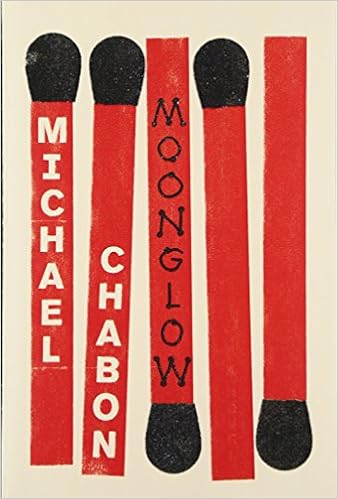
Michael Chabon, Moonglow (Harper, 2016) 430pp

A publishing world replete with literary prizes answering to all categories ought by now to have established an award for authors who have most successfully bridged the gaping chasm between popular fiction and the literary novel. If such an award had existed by the dawn of the new millennium, it would surely have gone before long to the American novelist Michael Chabon. Few writers have so securely maintained a foot in both camps, even as publishers have prised them ever further apart.

Chabon’s career began with an eye-catching advance for his first novel, The Mysteries of Pittsburgh (1988), an unexpectedly charming bisexual coming-of-age story. Its successor, Wonder Boys (1995), was an extended comic romp set in the literary world, which partly satirises the author’s own Foster Wallace-ish attempt to write a contemporary epic which finally sputtered to a halt at around 1500 inconclusive pages.


While the shorter works have the quality of ephemeral jeux d’esprit, the longer novels have been significant achievements. The Amazing Adventures of Kavalier and Clay (2000), for which Chabon won the Pulitzer, is an emotionally wrenching tale of personal aspiration and historical torment, set in the world of comic-books on the eve of America’s entry to the second world war, while The Yiddish Policemen’s Union (2007) is a generically gritty detective story that unfolds in the beautifully realised postwar Jewish homeland of Alaska, history’s counterfactual alternative to Palestine. Only with Telegraph Avenue (2012) did the momentum appear to flag. Despite its promising mise-en-scène in a California music store run by a pair of defeated entrepreneurs whose lives revolve around revolving vinyl and their distinctly smarter wives, the gratuitously extended plot never quite takes off, and the nostalgia promised by the ambience of old songs barely surfaces, perhaps a casualty of the hideous copyright expense of quoting from song-lyrics.

After that last publication, Chabon’s website announced that he would be taking a timely break from writing. In the event, devotees have had to wait only four years for the latest, which arrives in the form of Moonglow, a fictional memoir of a twentieth-century life, as retailed from his final sickbed in the last ten days of its subject’s existence to his grandson. The grandson happens to be one Mike Chabon, a novelist who has built a career out of ‘fancy metaphors’, and who is entrusted by his grandfather to accord the events of his life some meaningful shape, which is what writers are reputedly good at doing.

Grandfather fought with US forces in Europe during the final phase of the war, and was present at the liberation of the Nordhausen slave-labour camp, where the Nazi rocket programme was developed under the supervision of Wernher von Braun. Like many a linchpin of fascist scientific endeavour, von Braun proved himself indispensable to his western captors once political expediency allowed the Cold War to sweep aside the historical memory of Nuremberg. The elder Chabon’s preoccupation with rocket science, and his pride in the American moon landings in the years following 1969, is thereby agonisingly bound up with a veteran’s horror at the constructive amnesia that allowed a war criminal his undeserved place in the democratic sun.

The narrative also embraces the grandfather’s seduction after the war by a sassy young woman at a dance he didn’t want to go to, their subsequent marriage and his wife’s death. In the later stages, he has a bumbling encounter at the local retirement community with a woman whose cat has gone missing, possibly to be devoured by a predatory snake that he offers to hunt down and destroy, only finally sparing it at her insistence. Earlier, after being widowed, he attends the Twelfth Space Congress of the United States at Cocoa Beach, Florida, where, having intended to boycott the award of a prize to von Braun, he inadvertently has an encounter with his nemesis, who has pottered into what he thinks is a vacant room to relieve himself in a plant pot. The analogy of the spared snake stands revealed.

Years later, Sally, the lady from the retirement village, turns up at a stop on one of the narrator’s book tours, still strongly redolent of the Opium perfume his grandfather had recalled about her. Over an uneaten lunch, she tells the writer that she hoped she made his grandfather’s turbulent life a little easier for him. The fragmentary memories, and the bits of memorabilia the narrator and his mother unearth from their storage in an old liquor box, make the point that if the mental traces of a vanished life are never quite as reliable as one would wish, neither do the physical belongings help fill in the gaps. Of such absences is the belief in an afterlife, invoked in the novel’s closing words, constructed.

If Chabon’s earlier work paid due homage to genre fiction, Moonglow defiantly wants nothing to do with it. The valetudinarian theme lends itself naturally to the kind of introspection that genre heartily despises, and although the episodic structure of the book aims for some kind of discontinuous narrative thrust, the episodes themselves are not particularly engaging. Even the wartime interludes, in which an elderly Catholic priest leads the grandfather to a hidden prototype of the Nazis’ V2 rocket, fall strangely flat, an impression not helped by the consignment of the discovery of Nordhausen to external references, in both Thomas Pynchon and various historical sources. If unspeakable crimes are just that, one has to be sure that their unsayability is a function of their enormity, not a matter of dismissive footnoting.

What doesn’t help is that the book’s ethical compass seems too facile for the gravity of its theme. In one passing cheap shot, the British are recalled as the appeasers of Hitler, even having stood alone in Europe against him throughout 1941, while the American space programme, built on the expertise of a vile persecutor of humanity, is nonetheless something of which the grandfather can feel doggedly proud. In the accidental meeting with von Braun at the Space Congress, he finds himself almost bonding with the Nazi scientist over the rocket models, sympathising with the failing physical health of an old man, and then von Braun utters a piece of boilerplate anti-Semitism and the balance is restored.

Chabon’s self-celebrated metaphorical gift occasionally shines through the uncharacteristically monochrome prose. When a dyspeptic medic drops a couple of Bromo-Seltzers into water, ‘the tablets hissed and chuckled in the cup’, and while they do, he prompts out a long belch like a sustained cello note. Elsewhere, though, the similes miss their mark. A vision of von Braun in a motorcycle sidecar ‘like a gentle-natured bear’ has a cartoonish quality that seems to recall Yogi, while the labia of a former circus worker that are remembered as ‘flying like a flag’ resist every effort of mental topology. The eternal verities, meanwhile, seem to be stretching in the direction of Scott Fitzgerald, but end up sounding more Reader’s Digest: ‘I reflected that it seemed to be in the nature of human beings to spend the first part of their lives mocking the clichés and conventions of their elders and the final part mocking the clichés and conventions of the young.’

As with its immediate predecessor, Moonglow lacks distinctive identity, an effect that Chabon seemed to have at command in his early career. The phlegmatic inconsequentiality that writers like Saul Bellow and Philip Roth made their own, as their principal characters aged along with them, a mode where incontinence and systemic pain accompany the unillusioned bitterness of later life, is a style into which Chabon himself might eventually settle, but for the time being, these transitional novels feel like signposts on an unmade road.

Wednesday, April 26, 2017

Sex and Drugs and Sausage Rolls by Graham Garrett by Eliot Collins ,( Face)


Eliot Collins reviews Graham Garrett's Sex and Drugs and Sausage Rolls, a book that is part memoir, part cookery book. Discover more about the chef's background in the music industry and his journey to earning his first Michelin star, with recipes for a number of his signature dishes to try at home.

The first time I met Graham Garrett he described to me one of his favourite food and travel experiences. It was a well trodden journey to a cider house in San Sebastián where a large group of hungry gastronomes were handed a mug, perfectly shaped for lapping up a newly cracked barrel of local cider. Alongside the fresh apply booze was a locally hunted hog, spit roasted and shared amongst friends like a ye olde post hunt celebration. I haven’t had the chance to follow in his footsteps, but it’s on the bucket list. I think this demonstrates a beautiful common trait in all great chefs – a passion for food that is social, cultural, meaningful and adored. Graham is in a position to share these stories another time in another book (hopefully), but for now the tales are of the world of music!


It’s not often you come across a book that combines the hard graft and delectable recipes of a Michelin-starred chef with the anecdotes and stories of a rock ‘n’ roll lifestyle, making Sex and Drugs and Sausage Rolls a highly unique read. I was just starting to eat solid foods when Graham Garrett was bashing the skins of his toms-toms with Dumb Blondes, Panache and Ya Ya back in the 1980s, so reading his account of this decade with a musical lens really provides a perspective I can appreciate and be somewhat envious of. So, why the transition from drumsticks to Thermomix? Well, while all good things must come to an end, it doesn’t mean good things of a different kind can’t begin.


Pork and foie gras sausage rolls by Graham Garrett


Treacle tart with blood orange by Graham Garrett

If we just focus on the food for a second, Graham demonstrates an understanding of the importance of simple, true flavours, with basic methods and recipes for homemade butter, buttermilk and dripping. A set of household staples from many moons ago, these three addictive ingredients are now fashionable again as we adopt the ‘backwards is the new forward’ approach to food. Indeed, just as nostalgic are humble recipes for cakes with ginger, banana and almond and his stunning Treacle tart.

He has also given the readers an interpretation of British classics with an element of finesse in ‘eat-off-the-page’ recipes for Sausage rolls with foie gras, smoked haddock salad and Eccles cakes.

There is something for all eager cooks, with over fifty recipes ranging from sweet and savoury snacks to full on indulgent dinners. My favourites are the spiced mackerel kebab, lamb bacon, sweetbread, peas and roast suckling pig. Influenced by Britain, the Mediterranean, Japan and beyond, Graham demonstrates his passion for great flavours that are big, bold, subtle, humble and elegant.

I’m not sure if Graham Garrett’s hands are more cut up from the dozens of fills he made holding on to a splintering pair of Vic Firths, or deboning game birds with a razor sharp Sabatier under the watchful eye of Nico Ladenis. Either way, this modest artist who is now thirteen years into cooking Michelin-starred food as the chef/owner of The West House in Kent deserves a pat on the back for this highly engaging and well-selected tome.

Monday, April 24, 2017

The Long Pursuit: Reflections of a Romantic Biographer By Richard Holmes Illustrated. 360 pp. Pantheon Books. $30.


When Richard Holmes set out years ago for south-central France, at 18, with a backpack and a preposterous-looking hat, he believed himself to be on the trail of Robert Louis Stevenson. He did not yet suspect that he had found his career. As he portrayed himself later, he made for a ludicrous figure, rummaging about, snuffling around, shredding the French language as pear juice streamed down his face. “I suppose a foreign affaire de coeur would have been the best thing of all; and that, in a way, was what I got,” he observes in the beguiling “Footsteps,” his masterly mash-up of memoir and biography.

Since that 1964 expedition Holmes has camped regularly in the 19th century. He is temperamentally well suited to the Romantic age. He does not so much write lives as haunt them; he seems to invade his subject’s dreams. Moonlight glints off his pages. Certainly no one has made the practice of biography sound so appealing. Here is Holmes, in a “glowing mist,” just after a 5 a.m. coffee in the French fields: “Then I went down to the Loire, here little more than a stream, and sat naked in a pool cleaning my teeth. Behind me the sun came out and the woodfire smoke turned blue. I felt rapturous and slightly mad.” He does for biography what Cheryl Strayed did for the Pacific Crest Trail.

Fifty-three years after that liquefied pear, Holmes remains no less ecstatic about tracking the dead and fixing them on the page. At the same time he is cleareyed about the blisters and bug bites, the hardships and mysteries that follow from entering into “an imaginary relationship with a nonexistent person, or at least a dead one.” Some hauntings have yielded essays rather than books. On one occasion, after Holmes slipped into a literary crevasse — the documentation having failed him — it yielded none. Sometimes the past is simply irrecoverable; you can’t get there from here. From his many years with Shelley he emerged spent, “grizzled, anecdotal, displaced.”

Saturday, April 22, 2017

Compass Paperback – March 22, 2017 by Mathias Enard (Author), Charlotte Mandell (Translator)


A musicologist’s adventures in the Middle East make for a powerful scholarly narrative


Enard’s narrator explores music written by Middle Eastern composers in the western tradition. Photograph: Mohammed Mahjoub/AFP/Getty I

An Austrian musicologist lies in bed all night worrying about his health, fitfully dreaming, and relating his past scholarly adventures in the Middle East in disordered flashback. At the centre of his lucubrations is a fellow academic named Sarah, with whom he is desperately in love. Such is the scheme of the French writer Mathias Énard’s latest novel, which won the Prix Goncourt and has now been longlisted for the Man Booker international prize, perhaps not least because its politics are highly topical.

Orientalism is, here, the key idea – our narrator, Franz, has worked on the appropriation of Middle Eastern music by canonical westerners, as well as music written by Middle Eastern composers in the western tradition. Sarah, meanwhile, specialises in ideas of the Orient in history. Franz relates at great length their conversations and his own trains of thought about where this artist went and who that artist knew and what painting or musical performance that other artist witnessed, playing a kind of endless game of six degrees of separation between European and Middle Eastern cultural figures of the past two centuries. Fascinating though the facts often are, the scores of pages of this kind of thing are mainly rendered in detailed precis: there is very little direct speech in the novel, which helps to evoke the febrile meanderings of insomniac memory but it also threatens to send the reader, if not Franz, off to merciful sleep.

At length the novel reveals its central cultural and political argument, which is that the famous critique of Orientalism in Edward Said’s eponymous book, and its subsequent reverent reception, may have unfortunately helped to buttress that idea of “the Orient” as something inscrutable and other. In fact, as Franz argues, the Orient is an imaginary construction for east and west, a joint enterprise of consensual hallucination and fecund source of inspirations; Europe itself is a “cosmopolitan construction” of both sides. Beheadings by fanatics in Syria, Franz points out to himself, are as horrific and alien to a Turk or an Iranian as they are to an Austrian aesthete.

The novel is also a love letter to the cosmopolitan Middle East of the narrator’s professional travels in Syria and Iran, contrasted with his present sadness at the news from places such as Aleppo, where he had once spent fine times with other academics and artists, drinking and talking. One scene blends into another almost imperceptibly over the course of Franz’s reminiscences, and there is nothing driving a plot. The narrative suspense depends entirely on the author’s unashamedly deployed prolepsis and withholding of information: Franz mentions repeatedly a shameful episode with Sarah, or a horrible journal article he has been sent, and it is only hundreds of pages later that the reader is allowed to know the details. When they are revealed, they are all the more powerful for being such rare doses of ordinary literary pleasure.

The author could certainly, if he had chosen, have written a different novel: one less intent on formally mimicking the pains of lengthy rumination and less determined to demonstrate the pleasures of erudition. There is material here, for instance, for a brilliant tragicomic cosmopolitan campus novel. One characterful fellow academic, a hedonistic opium-smoker, is described as “an entomologist of despondency”.

Quite late on there is an extended passage of direct, dramatic writing, which is quarantined off from the main fuzzy remembrances by being presented as an email that Franz wrote to Sarah but never sent. It is the scene of a terrible confession by another academic friend of theirs, and superbly effective (in Charlotte Mandell’s translation, which is excellent throughout). Arguably too rarely dispensed, also, is the book’s comedy: Franz has a few enjoyably sardonic one-liners (-[============0[[[[[[“God is the great enemy of sheep”; “What an atrocity, to think that some people find dreaming pleasant”), and there is a nice running joke about his relationship with his sarcastic doctor, who at one point says to him: “Ah, Dr Ritter, happy to see you here. When you’re cured or dead I’ll be terribly bored.”

As a literary genre, the stream-of-consciousness epic is by now rather old and conservative, even though new versions are regularly hailed as daringly experimental. Compass, in its relentlessly discursive impressiveness, embodies an uncompromising vision of the novel as relatively static political and cultural essay – at least until the final few pages, when, miraculously, real-time events intrude upon Franz’s reverie, and the book concludes with a surprisingly upbeat, if not sentimental, flourish. As the dawn does for our sleepless hero, this comes as a relief to the reader, who emerges from this strangely powerful work as from a feverish dream.


Tuesday, April 18, 2017

Trigger fingers: Israel's Edge: The Story of The IDF's Most Elite Unit - Talpiot Paperback – February 15, 2016 by Jason Gewirtz ( Gefen Publishing) Israel at War: A Strategic and Operational Analysis, 1948-2014 by Ehud Eilam( McFarland) The IDF officers responsible for intercepting missiles The Weapon Wizards:Eilam's Arc: How Israel Became a Military Technology Powerhouse by Uzi Eilam( Sussex Academic Press) How Israel Became a High-Tech Military Superpower by Yaakov Katz , Amir Bohbot ( St Martin's Press) Missiles, Masks and Miracles Paperback by Charles Samuel, Leventan Press,


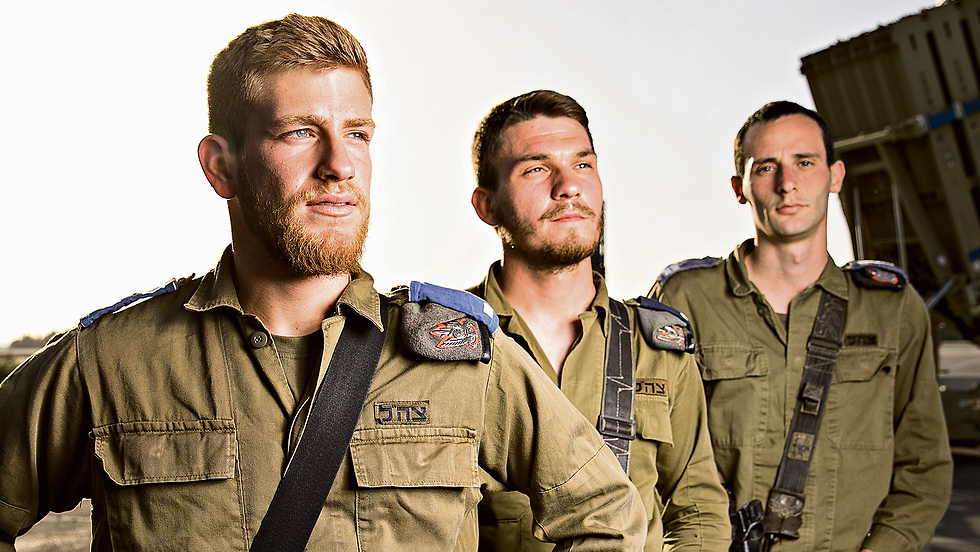
Army officers barely in their twenties are tasked with the tremendous responsibility of identifying rocket attacks on the State of Israel and launching interceptor missiles within seconds, be they Arrow, Iron Dome or Patriot. Three officers share the moments of their famous interceptions.

After the commotion had died down and the debriefings had ended, it was clear to Lt. Ron Shavit who would be the first person he would call. "I called my mom," he remembers, "and I told her, 'Watch the news; that's your son's work.'"

Lt. Dima Kisilov's first phone call, meanwhile, was to his father. "I asked him if he heard what had happened in Eilat because I was afraid he might be worried," he says, "but it turns out I had woken him up. So I told him, he was excited for a bit, and then he went back to sleep."

Before 2nd Lt. Chen Shaked could call his mother, however, she called first, but he wasn't yet at liberty to tell her what had happened. "She started asking, 'How are you? How's your Shabbat going? Is everything okay?'" he says with a smile.

"I told her, 'Mom, I'll talk to you later,' and I called back only after I got permission to tell her. She told me, 'Well done; you're protecting our country.' It was only then that I really got excited and started realizing I had done something important."


Second Lt Chen Shaked, Lt. Dima Kisilov and Lt. Ron Shavit (Photo: Tal Shahar)

Ron, Dima and Chen are the face of a new brand of warfare. They may talk shyly, sometimes a bit too quietly, and smile with embarrassment when talking about their accomplishments, but they, along with the IDF's cyber warfare unit, are at the forefront of the battle against the threats Israel faces today.

They are the interceptors. Being a combat soldier nowadays doesn't necessarily require gun-in-hand and knife-between-the-teeth, but rather advanced technological knowhow and the courage to green-light—with only seconds to decide—the Iron Dome, Patriot or the Arrow missile-defense systems to intercept incoming projectiles. That is true for present threats and even more so for the dangers the future holds.

Each of the three is responsible for a recent, notable missile interception. The latest took place about a month ago when a missile was fired from Syria at Israel and was shot down by an Arrow interceptor. Launching that expensive anti-ballistic missile is a rare occurrence, and Chen, barely 20 years old, is the one who gave the order.

A month before that came 23-year-old Dima's big moment: A barrage of four rockets was fired from the Sinai Peninsula towards Eilat, and he was the one to give the order to intercept them using the Iron Dome.

'I was protecting my home'—Lt. Ron Shavit and a Patriot

The incident 23-year-old Lt. Ron Shavit commanded was even more unusual. It happened on July 14, 2014, on the second week of Operation Protective Edge, when tensions were at a record high.

At 6:15am, unmanned aerial vehicle (UAV) was identified coming out of Gaza and making its way towards Israel. Very quickly, it became clear this threat had to be shot down, and Ron was the one to push the button, sending a Patriot missile to successfully intercept the UAV. This was the first time since the 1991 Gulf War that Israel used a Patriot missile to intercept a threat and the first time a Patriot was used against a UAV anywhere in the world.


Footage of what Hamas claimed was a UAV that infiltrated Israel during Protective Edge

Ron’s entire military service has been in aerial defense. "I enlisted in the IDF as a combat soldier in 2012 and joined the Patriot unit," he shared. "Later, I became a commander and an officer and returned to the battery I started in, and now I command this battery. I really came full circle."

He was still a young officer during Protective Edge. "I finished the final stage of the officers' training course on June 30, 2014, and the war started a week later," he says. "We were presented with intelligence and told things were heating up, and the alertness level was raised. Despite that, my shift on the morning of July 14 was a routine one."

So what happened?

"I was examining the sky on the radar, and it was crowded. But all of a sudden I spotted an unfamiliar object, and I very quickly realized it was an enemy target. I immediately told the combat soldier sitting next to me, 'This one is ours.'"

That's not a trivial statement.

"Definitely not. At that point in time, our Patriot hadn't intercepted anything in 23 years."

How does the battery respond to an identification like that?

"Very quickly. The entire battery goes from zero to 100 within seconds. It's something we've drilled since basic training, throughout our specialized training as Patriot soldiers and during our officers' training course. The decision-making needs to be done very, very quickly.

"So I saw an unidentified target coming close, and I radioed the highest ranks possible—Air Force Commander Amir Eshel—and got the green light to fire. You have to understand: The time to make a decision is very short. I was only a young officer at the time, but I operated under very clear orders, so I hit the button to launch.

"All of this lasted mere seconds. Something like that can last somewhere between 10 to 45 seconds, and the decision is mine."

During that short time, did you even stop to think about the fact you were making history?

"The Patriot may not have intercepted anything in many years, but the people operating this system always believe it could happen soon. It doesn't start with the launch. We had done work ahead of time to adjust the system to the changing reality and the changing threats, and we also adjusted ourselves.

"The soldiers worked very hard so that the launcher that would eventually fire the interceptor missile would be properly maintained and to ensure it worked."

On a personal level, how did it feel to intercept?

"I live in Rishon LeZion, and I carried out the interception from the nearby Palmachim Airbase, so it felt like I was protecting my home."

'An X for every interception'—Lt. Dima Kisilov and the Iron Dome

Lt. Dima Kisilov also felt like he was protecting home. He may not live in Eilat—he's from Ma'alot-Tarshiha, far in the north of the country—but he still felt the love from that city's residents after he and his Iron Dome team intercepted a barrage of rockets fired at the resort town in February.

"Even two weeks after the interception, if (the residents) see any of us at the central bus station in uniform with the aerial defense badge, they stop to thank us," he says. "The residents also come to our battery to say hello and look around. They also bring cakes and pastries with them. We got a lot of food."

You kept the peace for them.

"Yes. My battery had only been in Eilat for seven months when we intercepted those rockets, but actually the last time an Iron Dome interception took place in Eilat was two and a half years ago, on the second week of Protective Edge, so that day came after a long period of calm."

So what happened that day?

"It was near 11pm. I was on shift as the commanding officer with another combat soldier and a technician. We also had two relatively new soldiers who joined that shift to learn and get to know the system as part of their training. Then, all of a sudden, we identified four targets."


An Iron Dome battery stationed near Eilat (Photo: Motti Kimchi)

Did you expect it?


"No. We didn't have any specific warnings—at least not anything unusual. There was no unusual intelligence concerning that particular day, and we weren't told to be on a higher alert than usual."

So how did you react?

"Within seconds, we were all on alert. It was clear to us these four targets were on their way to hit Eilat and that we only had a few seconds to make a decision whether or not to intercept them and then do so."

Doesn't the system do this work for you?

"Not really. The system is extensive; it presents a lot of data—it identifies birds and clouds as well as rockets. We need to know how to pay attention to the data, to analyze it from the system. Even if the system does identify a rocket, it's still our job to analyze the information and see if this is a threat to the citizens of Israel, or rather part of the internal fighting in Sinai.

"This is a radar-based system; there's no such thing as auto-pilot. It's all us. I remember when I was in training studying the system, I kept seeking advice and asking questions to see if I was doing okay, but I never got answers. From the start, we're taught that in real time, we have no one to consult with and that the decision-making is ours alone."

What went through your head in those seconds?

"It really is a matter of seconds; it goes by really fast. With a rocket like that, you have 15 seconds at most to decide whether or not to intercept—usually even less than that. You have to understand the full picture, but you operate based on the existing orders and your training. You're skilled enough to look at all of the data and say, within seconds, 'Okay, this isn't a bird. It's acting like a ballistic target.'

"I immediately identified that this was a barrage. I had just enough time to ask the technician what he was seeing because he was getting slightly different data than I was. The moment he too realized this was a definite threat to Eilat, I decided to intercept it. The entire thing lasted 14 seconds."

What did it feel like after the interception?

"At that moment, we didn't really register what we had done. I mean, this is something we train a lot for and hear a lot of stories about—I remember, for example, that Ron came to my base during basic training and told us about his interception—but you don't quite understand what it means to intercept, what it means to carry out an action that protects so many people. You can instantly see the result on the screen because the target simply disappears. But the deeper understanding of what had happened comes much later."

When did it really sink in?

"Only later, at about 2am, after the debriefing. It was only then that I had time to sit, alone, and really think about what we had done. It gives you a feeling of great satisfaction, and the fact that it happened on my shift was very exciting. I was a part of something very big. Because of that, just like combat soldiers mark an X on their rifles after killing an enemy, we mark an X after each interception."

'The room went quiet'—Chen Shaked and an Arrow missile

Second Lt. Chen Shaked was also a part of something extraordinary. He fired an Arrow interceptor—a missile system that is very rarely used—on March 17, and it even earned him a new nickname. "I no longer have a name; I'm addressed only as 'The Interceptor, '" he says. "They also won't let me wash the finger I used to push the button to intercept."

The Interceptor's new fame is particularly impressive considering the fact he was supposed to be an army cook. "The assignment officer at the IDF induction center told me… 'You'll be a cook or a maintenance worker,'" he remembers with a smile.

"I told him, 'No, there's no way I'm doing that. I want to be a combat soldier.' Eventually, he gave me the options of going to the Armored Corps, the Artillery Corps or aerial defense. I didn't really know what aerial defense was—just what a friend had told me beforehand—but the assignment officer started telling me about it, and it sounded interesting."

You wanted to be a combat soldier, but you chose defense over offense.

"Before the army, I was a basketball player in Be'er Yaakov. I had a coach who always told me, 'When you play offense, you're sometimes good and sometimes not. You have a good day and a bad day.

'But defense is what keeps you going. If you have a strong defense and don't allow anyone to get past you, you'll be more confident in your offense.' It's the same in aerial defense—the importance of defense serves us in our offense as well during war time."

And how did you get to the Arrow unit?

"I was a combat soldier in the Patriot unit under Ron's command. From there, I went on to the officers' training course, and, during the final stage of training, I decided I wanted to switch to the Arrow system. I had all kinds of commanders who told me about the system and got me interested in it, and I wanted to be involved in something that was so important to the State of Israel."

How long were you at the Arrow battery before the interception?

"A month and a half."

And what happened during that shift?

"It was during the night between Thursday and Friday. I started my shift at 2am—a regular shift. I got a rundown, and everything was going as it should. There was no intelligence warning; there was nothing special. Then, all of a sudden, a target moving towards Israel appeared on the screen."


The Syrian missile

That must have been stressful.

"We train for this a lot, so I knew what I had to do, despite being young. I had drilled this, and I know that when I make a decision—in accordance with orders, of course—I'll have full backing.

"In this case, I simply identified a ballistic threat to the State of Israel, and we immediately called in the team we needed for interception. It was very quick. Fourteen seconds after we called the team in, everyone was ready to intercept when given the order. Then I made the decision to do it."

Did you have no one to consult with?

"No. It was just me, on my own, against the missile. In my system, the window of time for making a decision is very small, and you have no one to talk to. By the time I take this upstairs, the missile could hit. There's not much you can do about it besides knowing it's down to you. And then you make a decision based on the orders."

So you pressed the button.

"Yes. And a second or two later, my commander happened to enter the room. I pointed to the board and told him, 'Look, Arrow has been launched.' I was told I stuttered, but I don't remember that. I do remember that he looked at me and said, 'Well done.'"

In those initial moments, before the debriefing and investigation, and before the army officially determined the interception was justified, did you think that perhaps you didn't act correctly?

"I knew that I had done the right thing. My target identification was very clear. But there was this feeling of uncertainty."

And how did others react? After all, an Arrow interception is rare.

"In the first few seconds, the room went quiet. I don't know why; it just went silent. You expect that when something like this happens, that there would be noise, shouting. The Arrow was launched, that's not something that happens every day. But it was quiet. Only a little while later, we started smiling and told each other, 'Way to go!' and 'You’re the man!' There wasn't a deep conversation about it."


An Arrow missile (Photo: Defense Ministry)

Did it take you a while to really understand what had happened?

"Yes, I couldn't fall asleep. The interception was at 2:40am, and at 4pm, I finally went to bed, but those seconds kept playing in my head, and I couldn't calm down. At 5pm, I realized there was no chance I was going to fall asleep, and I got up. I only managed to fall asleep at midnight."

You also had to do a debriefing.

"Yes, I had to stand in front of all the soldiers in the battery and explain what I had done. I also heard the criticism from outside, like from Ehud Barak, about the fact the interception wasn't necessary. But I don't let that get to me; I only listen to my commanders."

And what's happened since?

"This kind of interception is something that stays with you. A week after that, we went on a large-scale training exercise, the kind we do every four months, and the reserve soldiers started asking around about the interception. I happened to be there, and they told me, 'It's you? You kid, we've been waiting for 20 years to do this, and you got to?'"

From planning to operational—Zvika Haimovich oversees his officers

Brig. Gen. Zvika Haimovich listens to the three officers tell their stories with a proud smile on his face. He's been heading the IAF's aerial defense network for a year and a half now after having had many years of experience with Patriot, Iron Dome and Arrow.

Today, Israel is the only nation in the world to have a multi-layered defense system against ballistic missiles comprised of the Iron Dome, David's Sling and the Arrow systems. This is mostly because Israel is also the only nation in the world to be under a constant threat of ballistic fire at any given moment and on several fronts.


Brig. Gen. Zvika Haimovich (Photo: Tal Shachar)

"We're just marking six years to Iron Dome's first operational interception," Haimovich says. "It was on April 7, 2011, on a Thursday—only five weeks after the system was delivered to the Air Force and only four days after it first became operational.


"We just had an inauguration ceremony for David's Sling, and it's important to understand that this isn't just a ceremony. If, a minute later, a ballistic threat had presented itself, David's Sling could have intercepted it.


"To us that seems very natural sometimes. We host officials from abroad, and I explain to them that just over the past decade, over 12,000 direct threats have been fired at the State of Israel from the Second Lebanon War to all of the rounds of fighting in Gaza since.

"There's a changing reality, and we need an aerial defense apparatus that adjusts itself to it and builds itself up. That's how the idea of four layers of defense—Iron Dome, David's Sling, Arrow 2 and Arrow 3—went from a PowerPoint presentation to an operational system in less than a decade."

But will all of this be enough in the next war?

"We keep watching Hamas, and it's obvious to us that just like we have been learning a lot since Protective Edge, so have they. We're in a race—they realize that Israel's aerial defense is what prevents them from fulfilling their full potential of causing damage, and they'll try to do whatever it takes to get past our systems and challenge them."

During the 2006 Second Lebanon War, there was a ratio of one dead for every 90 rockets fired at us. During the 2008 Operation Cast Lead, there was one dead for every 110 rockets. During the 2012 Operation Pillar of Defense, we had one dead for every 250 rockets, while during the 2014 Operation Protective Edge, it was one dead for every 750 rockets. Looking at these data, what would a future Lebanon war look like?

"It would have more of everything. We'll see more extensive rocket fire, with bigger barrages covering a wider area. If during Protective Edge, 70 percent of the population was under threat for 51 days, then in a future war in Lebanon, a bigger area of the country would be at risk."

During Protective Edge, you had a 90-percent success rate with Iron Dome. This wouldn't happen in an all-out war.

"And that is why I'm most concerned about this feeling of security. Here's a story: One Shabbat during Protective Edge, I visited an Iron Dome position near Ashkelon. When I drove into the city, I saw a religious family—father, mother and three children—strolling on the street.

I asked them why they were wandering around there, only an hour after…a rocket had fallen. They told me, 'It's okay, we have kippot.'" (In Hebrew, the word "kippa" means both "dome" and the traditional Jewish skullcap.)

"I told the father, 'In this case, the kippa on your head won't help you. It's irresponsible; you should go to a shelter.' So he replied, 'No, I have these kippot,' and he pointed at the Iron Dome battery.

"To me, that's the biggest danger. This feeling of security among the public can lead to complacency. The public needs to understand this protection is not foolproof."

What does it mean for a future conflict?

"It means rockets will fall in the next war against Hezbollah, and the challenge will be to minimize these rocket hits and manage them. We won't be able to protect everything. There will be places we'll define as high priority—densely populated urban areas or important assets—while in other areas, more open and less densely populated, the priority will be lower."

Monday, April 17, 2017

Before Marilyn: The Blue Book Modelling Years Hardcover – July 1, 2015 by Booby Brown (Author), The History Pres Ltd


GIRL NEXT DOOR
Before She Was Marilyn: Rare Photos of Norma Jeane
WILLIAM BOOT11.07.15


Before she was a bombshell, Norma Jeane Mortenson was a sometime model. See the rare collection of her pre-fame photos in the new book Before Marilyn: The Blue Book Modelling Years.


FROM THE COLLECTION OF KIM GOODWIN. PERMISSION GRANTED BY DAVID CONOVER JNR


Only a few years before before Marilyn Monroe was the platinum-haired actress and sex symbol of the ’50s, she was Norma Jeane Mortenson. Her girl-next-door image is captured in her early work with the Blue Book Modelling Agency in Hollywood. Blue Book was a big launching point in Marilyn's career, despite the head of the agency initially dismissing her hair as “pretty unmanageable” and her face “too round.”


A collection of more than 200 archived photos from that era is now available in a new book, Before Marilyn: The Blue Book Modelling Years.


Here, Norma Jeane poses outside the factory she worked at before her modeling days.


POTTER HUETH / FROM THE COLLECTION OF DIONNE ABRAHAM


Norma Jean with a Great Dane.


FROM THE ARCHIVE OF BEN AND ASTRID FRANSE, REPRODUCED WITH PERMISSION FROM MARGARET MILLER


Miss Snively kept the negative for this Richard C. Miller photo in her archive for the rest of her life.


RICHARD C. MILLER. REPRODUCED WITH PERMISSION OF MARGARET MILLER


Norma Jeane with yellow skirt.


DAVID CONOVER / FROM THE COLLECTION OF KIM GOODWIN


Norma Jeane becomes a “sweater girl.”


LARRY KRONQUIST/FROM THE ARCHIVE OF BEN AND ASTRID FRANSE


Douglas Airview magazine employed models to advertise its American Airlines flights. Here, Norma Jeane shows great interest in the stewardess handing milk to a young mother.


DAVID CONOVER/FROM THE COLLECTION OF KIM GOODWIN


Norma Jeane at the factory.


H MAIER STUDIO/FROM THE COLLECTION OF KIM GOODWIN


RICHARD C. MILLER


Norma Jeane at the pool.


FROM THE COLLECTION OF KIM GOODWIN


JOSEPH JASGU/FROM THE ARCHIVE OF BEN AND ASTRID FRANSE


Norma Jeane posing in the gardens of the Ambassador Hotel holding the Blue Book Models life ring.

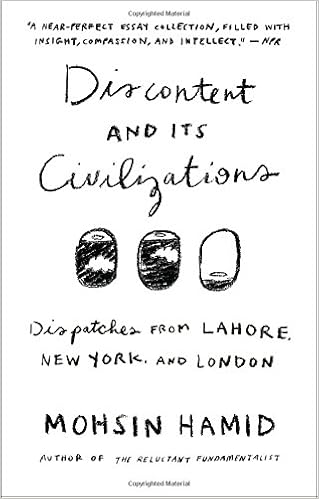
Discontent and its Civilizations: Dispatches from Lahore, New York, and London Paperback – February 2, 2016 by Mohsin Hamid , Riverhead Books. In a collection of essays, Mohsin Hamid looks at Pakistan’s role as villain within the global news industry


Discontent and Its Civilizations – Pakistan’s place in the world

In a collection of essays, Mohsin Hamid looks at Pakistan’s role as villain within the global news industry


In 2010, Mohsin Hamid was asked by Granta to contribute to a piece entitled “How to write about Pakistan”. Other poets or novelists might have railed against accounts littered with mullahs, military generals, secret agencies and American drones. Hamid, characteristically droll, drew up a list of 10 commandments of which the first three were: “Must have mangoes”; “Must have maids who serve mangoes”; “Maids must have affairs with man servants who should occasionally steal mangoes.”

In Discontent and Its Civilizations, a collection pulling together essays and reviews from the past 15 years, he talks about the way in which Pakistan “plays a recurring role as villain in the horror sub-industry within the news business”. In his eyes, the nation in which he grew up, and to which he returned in 2009 after lengthy stints living in cities on both sides of the Atlantic, is less diabolical; he loves the “out-of-character Pakistan, Pakistan without its makeup and plastic fangs, a working actor with worn-out shoes, a close family, and a hearty laugh”.
Hamid, author of novels such as Moth Smoke (2000) and The Reluctant Fundamentalist (2007), left Lahore at the age of 18. He’s a Princeton graduate, a former McKinsey consultant, describes himself as a “nomad” and seems on the surface to be a member of that gilded elite of transnational Asians who, at least before 9/11, were seen as exemplars of a new kind of progressive postcoloniality.

That identity was always a bit shaky. Writing in 2000, he evokes the cruel theatre of modern travel for those with the wrong background: he goes to the Italian consulate in New York to get a visa for a trip to see his girlfriend, but worries about missing a patch beside his chin and exposing his stubble: “Fundamentalist stubble. Ayatollah, Hezbollah stubble.” Is that paranoid? Soon an official says he needs a notarised letter and a copy of his Italian partner’s passport to confirm their relationship.

Years later, even though he’s a father and a successful writer, his family’s typical entry to any country ends up with them being “the last passengers on our flight to claim our luggage, a lonely set of suitcases and a foldable playpen on a now-stationery baggage carousel”.

Hamid insists that Pakistan is really a series of Pakistans. It’s a “patchwork of cultures, ethnicities, languages and sects. Since independence, we’ve tried to use Islam to bind us together, to undo our inherent and pervasive minority-ness.” Perhaps, he suggests, it should be seen as an ongoing experiment, “a test-bed for pluralism on a globalising planet that desperately needs more pluralism”. He writes with great passion about the country’s Ahmadi, who are deemed heretical by orthodox Muslims.

Hamid admits his optimism is sometimes a little forced. He talks up the nation’s free media, but also says that to switch on the television “is to find oneself entering a world permeated with conspiracy theories, an almost mythical space in which a refusal to accept that Pakistan can take the lead in solving its various crises seems not misguided but commonsensical”. Shortly after he moves back to Lahore, a suicide bombing makes him wonder if he should get blast-resistant film fitted for his daughter’s window. His mother’s eye doctor is assassinated while taking his son to school; the boy is shot in the head.

In one essay, Hamid says he’s in “self-exile from the United States”. His reflections on that country are pointed. Discussing “the Great American Novel”, he observes that “‘the’ is needlessly exclusionary, and ‘American’ is unfortunately parochial. The whole, capitalised, seems to speak to a deep and abiding insecurity, perhaps a colonial legacy.”

Rather too many pieces – on fatherhood, ebooks, Obama’s election – feel dated or too short. Then again, as he proved in The Reluctant Fundamentalist, brevity has its virtues. Writing about Antonio Tabucchi’s Pereira Maintains, he claims: “Novels are like affairs, and small novels are affairs with less history, affairs that involved just a few glances across a dinner table or a single ride together, unspeaking, on a train, and therefore affairs still electric with potential, still heart-quickening, even after the passage of all these years.” It’s a lovely notion and Discontent and Its Civilizations has just enough others to make it worth spending time with.

Moonglow by Michael Chabon, Harpur


Stuart Walton reviews the latest novel by acclaimed author Micheal Chabon, arguing that the famed author is in a transitional stage and speculating where it might lead.

A publishing world replete with literary prizes answering to all categories ought by now to have established an award for authors who have most successfully bridged the gaping chasm between popular fiction and the literary novel. If such an award had existed by the dawn of the new millennium, it would surely have gone before long to the American novelist Michael Chabon. Few writers have so securely maintained a foot in both camps, even as publishers have prised them ever further apart.

Chabon’s career began with an eye-catching advance for his first novel, The Mysteries of Pittsburgh (1988), an unexpectedly charming bisexual coming-of-age story. Its successor, Wonder Boys (1995), was an extended comic romp set in the literary world, which partly satirises the author’s own Foster Wallace-ish attempt to write a contemporary epic which finally sputtered to a halt at around 1500 inconclusive pages.

While the shorter works have the quality of ephemeral jeux d’esprit, the longer novels have been significant achievements. The Amazing Adventures of Kavalier and Clay (2000), for which Chabon won the Pulitzer, is an emotionally wrenching tale of personal aspiration and historical torment, set in the world of comic-books on the eve of America’s entry to the second world war, while The Yiddish Policemen’s Union (2007) is a generically gritty detective story that unfolds in the beautifully realised postwar Jewish homeland of Alaska, history’s counterfactual alternative to Palestine. Only with Telegraph Avenue (2012) did the momentum appear to flag. Despite its promising mise-en-scène in a California music store run by a pair of defeated entrepreneurs whose lives revolve around revolving vinyl and their distinctly smarter wives, the gratuitously extended plot never quite takes off, and the nostalgia promised by the ambience of old songs barely surfaces, perhaps a casualty of the hideous copyright expense of quoting from song-lyrics.

After that last publication, Chabon’s website announced that he would be taking a timely break from writing. In the event, devotees have had to wait only four years for the latest, which arrives in the form of Moonglow, a fictional memoir of a twentieth-century life, as retailed from his final sickbed in the last ten days of its subject’s existence to his grandson. The grandson happens to be one Mike Chabon, a novelist who has built a career out of ‘fancy metaphors’, and who is entrusted by his grandfather to accord the events of his life some meaningful shape, which is what writers are reputedly good at doing.

Grandfather fought with US forces in Europe during the final phase of the war, and was present at the liberation of the Nordhausen slave-labour camp, where the Nazi rocket programme was developed under the supervision of Wernher von Braun. Like many a linchpin of fascist scientific endeavour, von Braun proved himself indispensable to his western captors once political expediency allowed the Cold War to sweep aside the historical memory of Nuremberg. The elder Chabon’s preoccupation with rocket science, and his pride in the American moon landings in the years following 1969, is thereby agonisingly bound up with a veteran’s horror at the constructive amnesia that allowed a war criminal his undeserved place in the democratic sun.

The narrative also embraces the grandfather’s seduction after the war by a sassy young woman at a dance he didn’t want to go to, their subsequent marriage and his wife’s death. In the later stages, he has a bumbling encounter at the local retirement community with a woman whose cat has gone missing, possibly to be devoured by a predatory snake that he offers to hunt down and destroy, only finally sparing it at her insistence. Earlier, after being widowed, he attends the Twelfth Space Congress of the United States at Cocoa Beach, Florida, where, having intended to boycott the award of a prize to von Braun, he inadvertently has an encounter with his nemesis, who has pottered into what he thinks is a vacant room to relieve himself in a plant pot. The analogy of the spared snake stands revealed.

Years later, Sally, the lady from the retirement village, turns up at a stop on one of the narrator’s book tours, still strongly redolent of the Opium perfume his grandfather had recalled about her. Over an uneaten lunch, she tells the writer that she hoped she made his grandfather’s turbulent life a little easier for him. The fragmentary memories, and the bits of memorabilia the narrator and his mother unearth from their storage in an old liquor box, make the point that if the mental traces of a vanished life are never quite as reliable as one would wish, neither do the physical belongings help fill in the gaps. Of such absences is the belief in an afterlife, invoked in the novel’s closing words, constructed.

If Chabon’s earlier work paid due homage to genre fiction, Moonglow defiantly wants nothing to do with it. The valetudinarian theme lends itself naturally to the kind of introspection that genre heartily despises, and although the episodic structure of the book aims for some kind of discontinuous narrative thrust, the episodes themselves are not particularly engaging. Even the wartime interludes, in which an elderly Catholic priest leads the grandfather to a hidden prototype of the Nazis’ V2 rocket, fall strangely flat, an impression not helped by the consignment of the discovery of Nordhausen to external references, in both Thomas Pynchon and various historical sources. If unspeakable crimes are just that, one has to be sure that their unsayability is a function of their enormity, not a matter of dismissive footnoting.

What doesn’t help is that the book’s ethical compass seems too facile for the gravity of its theme. In one passing cheap shot, the British are recalled as the appeasers of Hitler, even having stood alone in Europe against him throughout 1941, while the American space programme, built on the expertise of a vile persecutor of humanity, is nonetheless something of which the grandfather can feel doggedly proud. In the accidental meeting with von Braun at the Space Congress, he finds himself almost bonding with the Nazi scientist over the rocket models, sympathising with the failing physical health of an old man, and then von Braun utters a piece of boilerplate anti-Semitism and the balance is restored.

Chabon’s self-celebrated metaphorical gift occasionally shines through the uncharacteristically monochrome prose. When a dyspeptic medic drops a couple of Bromo-Seltzers into water, ‘the tablets hissed and chuckled in the cup’, and while they do, he prompts out a long belch like a sustained cello note. Elsewhere, though, the similes miss their mark. A vision of von Braun in a motorcycle sidecar ‘like a gentle-natured bear’ has a cartoonish quality that seems to recall Yogi, while the labia of a former circus worker that are remembered as ‘flying like a flag’ resist every effort of mental topology. The eternal verities, meanwhile, seem to be stretching in the direction of Scott Fitzgerald, but end up sounding more Reader’s Digest: ‘I reflected that it seemed to be in the nature of human beings to spend the first part of their lives mocking the clichés and conventions of their elders and the final part mocking the clichés and conventions of the young.’

As with its immediate predecessor, Moonglow lacks distinctive identity, an effect that Chabon seemed to have at command in his early career. The phlegmatic inconsequentiality that writers like Saul Bellow and Philip Roth made their own, as their principal characters aged along with them, a mode where incontinence and systemic pain accompany the unillusioned bitterness of later life, is a style into which Chabon himself might eventually settle, but for the time being, these transitional novels feel like signposts on an unmade road.

‘Climate Change: What Everyone Needs to Know®’ by Joseph Romm. 328 p. Oxford University Press. $10.26..... The Climate Change Book the GOP Needs to Read


Joseph Romm’s accessible book about global warming is the right book at the right time, and good enough to persuade even Republican pols of the dangers ahead.

At that time, at least some in the GOP had pivoted from a position of outright denial toward one that at least accepted that the world was warming, even if most stopped short of acknowledging that humans were to blame. As evidence, I pointed to a transformation in talking points—from calling global warming a hoax or a fraud to the ubiquitous “I’m not a scientist” cop-out—and a resolution signed by almost every Republican senator in January acknowledging the reality of warming. Some Republicans, including Rand Paul, even signed a separate resolution stating human activity contributed to climate change. While I saw this as a positive trend, a potential step toward a bipartisan deal to address greenhouse gas emissions, I cautioned that any progress could be obliterated during primary season. After all, how would this position survive the pandering to the far right that comes with the Republican primaries?

During November’s debate, we got our answer. Maria Bartiromo of the Fox Business Network pressed Paul on the resolution. She noted that he was one of only 15 Republicans to agree that humans played a role in warming. Was it possible, Bartiromo asked, to continue America’s booming energy production while simultaneously pursuing a meaningful climate change program?

Paul said that as president he would repeal regulations on energy companies. (Yes, that’s really how he began.) He continued: “While I think man ha—” and then stopped. “While I think man may,” he corrected, “have a role in our climate, I know nature does.” Paul then observed that the Earth is 4.5 billion years old and has seen hotter and colder periods. What was needed now, he insisted, was to “free up the energy sector, let ’em drill, let ’em explore.” While none of the candidates denied the Earth was warming, none seemed to think it was much to worry about, either.


Joseph Romm presents a significantly more dire situation in his new book, Climate Change: What Everyone Needs to Know.


A physicist and former acting assistant secretary in Clinton’s Energy Department, Romm runs the blog ClimateProgress.org, and is the author of several books on energy and climate. His new book is essentially a reference guide in which he poses common questions—“How do scientists know that recent climate change is primarily caused by human activity?” “How does climate change affect droughts?” “What will the impacts of sea level rise be?”—and answers them concisely and conversationally. While he is mostly successful avoiding wonkiness, he cites such a huge number of studies that it’s almost unimaginable that anyone could walk away unconvinced of the matter’s urgency.


The problem, of course, is that those who most need to read Romm’s book, won’t. As I write, in fact, a video is circulating showing New Jersey Gov. Chris Christie saying it’s his “feeling” that climate change is not a crisis—irrespective of what scientists think. And he’s one of the more progressive Republicans on the issue.


The reluctance of the American right to take action against climate change in the face of such overwhelming evidence over so many years will be questioned frequently by historians. The data hasn’t always been as voluminous as it is now, of course, but it’s existed for decades. Romm cites studies from as far back as the mid-’70s warning of the dangers of carbon emissions and global warming. ExxonMobil, as we learned recently, became aware of the hazards of carbon emissions in 1977, yet they funded climate denial until just a few years ago. Charles and David Koch, of Koch Industries, meanwhile, continue to spread misinformation, and they have pledged almost $1 billion to influence the 2016 presidential contest.

When I interviewed Romm in 2010, he asserted that the key figures pushing climate denial will be judged very harshly by history, “in the category of Neville Chamberlain or people who were shills for the tobacco industry.”

The basic facts of climate change, as Romm makes clear, are not particularly complicated. Since the beginning of the 20th century, the Earth has warmed about 1.5°F (.8°C). Most of that warming has come since 1970. This warming trend tracks almost perfectly the increase in human-generated greenhouse gas emissions (mostly carbon but also methane and others) over the same period. There is now more carbon in the Earth’s atmosphere (400 parts per million) than there has been in more than 1 million years. While it’s certainly true that the Earth’s climate has changed over the ages, the reasons—solar variability, volcanoes, etc.—have been analyzed and discarded as the “forcings” driving current trends. In fact, Romm concludes, “In the absence of human activity… the planet would likely have cooled in recent decades.” In other words, the forcing that is changing our climate now is us.

Most scientists agree that a warming of 4°C (7.2° F) over pre-industrial levels would be near catastrophic for humans, and we are on course to exceed that by century’s end. Scientists are seeking to keep the temperature rise below 1.5°C (2.7°F), which would avoid many of the worst impacts. But that would mean taking significant action to reduce emissions. Already 90 percent of our glaciers are shrinking, the seas are rising and acidifying (they are acidifying faster than they have in 300 million years), storms are getting worse, droughts are lasting longer (California’s drought is the worst in 1,200 years), and forest fires are more frequent (the wildfire season is two months longer than it used to be). Romm even presents new evidence suggesting that high levels of carbon in the air reduce cognitive ability. Given the pressing need for action, Climate Change is the right book at the right time: accessible, comprehensive, unflinching, humane.


This is all pretty alarming (though not “alarmist”), but the good news is that popular support for action is high. In a recent poll, two-thirds of Americans favored the deal made at the COP21 conference, in which nearly 200 nations agreed to limit emissions so that the global temperature rise stays “well below 2°C (3.6°F).” Moreover, the Chinese have agreed to an emissions cap for the first time ever. Helping nudge global leaders along were the three-quarters of a billion people around the world who marched in support of an agreement.

Significant obstacles remain, some right here at home. Along with Republican presidential candidates, congressional Republicans don’t exactly seem moved to action. On Dec. 1, in fact, the Republican-led House voted to block emissions rules on power plants. Explaining why, Rep. Jeff Duncan of South Carolina blasted President Obama for taking the “pseudoscientific threat” of climate change more seriously than radical jihadists.

What Rep. Duncan may not realize is that strong evidence exists to support a link between climate change and terrorism. Syria’s four-year drought, for example, destroyed the livelihood of 800,000 people, contributing to a civil war that has fueled the rise of ISIS. Climate change made that drought two to three times more likely. If only Rep. Duncan had read Joe Romm’s new book, he’d know that.