Showing posts with label Stephen Drus @stephendarori. Show all posts

Wednesday, April 26, 2017

Sex and Drugs and Sausage Rolls by Graham Garrett by Eliot Collins ,( Face)


Eliot Collins reviews Graham Garrett's Sex and Drugs and Sausage Rolls, a book that is part memoir, part cookery book. Discover more about the chef's background in the music industry and his journey to earning his first Michelin star, with recipes for a number of his signature dishes to try at home.

The first time I met Graham Garrett he described to me one of his favourite food and travel experiences. It was a well trodden journey to a cider house in San Sebastián where a large group of hungry gastronomes were handed a mug, perfectly shaped for lapping up a newly cracked barrel of local cider. Alongside the fresh apply booze was a locally hunted hog, spit roasted and shared amongst friends like a ye olde post hunt celebration. I haven’t had the chance to follow in his footsteps, but it’s on the bucket list. I think this demonstrates a beautiful common trait in all great chefs – a passion for food that is social, cultural, meaningful and adored. Graham is in a position to share these stories another time in another book (hopefully), but for now the tales are of the world of music!


It’s not often you come across a book that combines the hard graft and delectable recipes of a Michelin-starred chef with the anecdotes and stories of a rock ‘n’ roll lifestyle, making Sex and Drugs and Sausage Rolls a highly unique read. I was just starting to eat solid foods when Graham Garrett was bashing the skins of his toms-toms with Dumb Blondes, Panache and Ya Ya back in the 1980s, so reading his account of this decade with a musical lens really provides a perspective I can appreciate and be somewhat envious of. So, why the transition from drumsticks to Thermomix? Well, while all good things must come to an end, it doesn’t mean good things of a different kind can’t begin.


Pork and foie gras sausage rolls by Graham Garrett


Treacle tart with blood orange by Graham Garrett

If we just focus on the food for a second, Graham demonstrates an understanding of the importance of simple, true flavours, with basic methods and recipes for homemade butter, buttermilk and dripping. A set of household staples from many moons ago, these three addictive ingredients are now fashionable again as we adopt the ‘backwards is the new forward’ approach to food. Indeed, just as nostalgic are humble recipes for cakes with ginger, banana and almond and his stunning Treacle tart.

He has also given the readers an interpretation of British classics with an element of finesse in ‘eat-off-the-page’ recipes for Sausage rolls with foie gras, smoked haddock salad and Eccles cakes.

There is something for all eager cooks, with over fifty recipes ranging from sweet and savoury snacks to full on indulgent dinners. My favourites are the spiced mackerel kebab, lamb bacon, sweetbread, peas and roast suckling pig. Influenced by Britain, the Mediterranean, Japan and beyond, Graham demonstrates his passion for great flavours that are big, bold, subtle, humble and elegant.

I’m not sure if Graham Garrett’s hands are more cut up from the dozens of fills he made holding on to a splintering pair of Vic Firths, or deboning game birds with a razor sharp Sabatier under the watchful eye of Nico Ladenis. Either way, this modest artist who is now thirteen years into cooking Michelin-starred food as the chef/owner of The West House in Kent deserves a pat on the back for this highly engaging and well-selected tome.

Monday, April 17, 2017

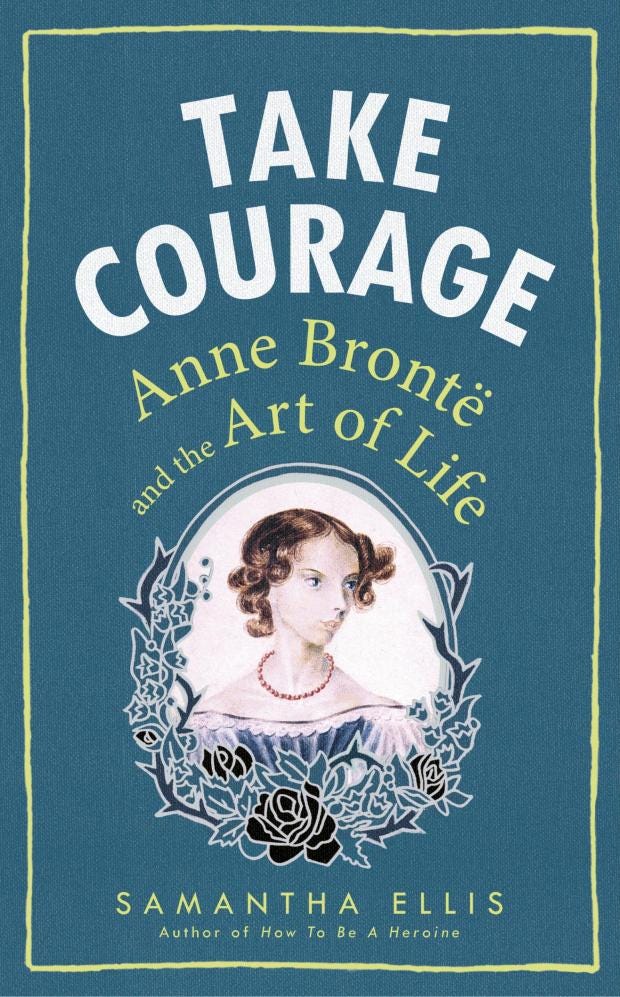
Take Courage: Anne Brontë and the Art of Life by Samantha Elli,Chatto & Windus


A deeply sympathetic and interesting re-evaluation of a woman ahead of her time,Samantha Ellis turns her attention to the youngest of the Bronte sisters, Anne, in her latest book, and realises she wasn't as meek as she was presented, after reading a sprightly letter the author wrote five weeks before she died, aged 29


If you’ve read Samantha Ellis’s charming bibliomemoir How to be a Heroine – a heartwarming trip down memory lane as she looks back over the literary ladies that have shaped her life – you might be surprised to discover it’s Anne Brontë, the oft-overlooked “third Beatle” of England’s most famous literary siblings, who’s the subject of her second book, Take Courage: Anne Brontë and the Art of Life.

Better-known Charlotte and Emily were both integral to the journey recounted in How to be a Heroine, Ellis’s entire enterprise inspired by an argument with her best friend regarding the respective allure of passionate, headstrong Cathy Earnshaw versus dependable, independent Jane Eyre. The stories told in both Wuthering Heights and Jane Eyre are held aloft as grand romances, inspiring a host of adaptations, sequels and prequels from fan fiction through to Jean Rhys’s revisionist masterpiece, Wide Sargasso Sea. Similar approbation for Anne’s novel The Tenant of Wildfell Hall (1848) would be tricky since it lays bare the underbelly of the romance fantasy, taking a leading lady “who starts out like other Brontë heroines, charmed by a sexy dangerous man,” Ellis explains, “but she sees the light and leaves him.” As Ellis points out, this depiction of female agency was radical for its time. While readers today will no doubt find the story hugely “refreshing,” it wasn’t exactly what people either expected or wanted in the mid 1800s.

This novel (Anne’s second and final work) is central to Ellis’s project though, her modus operandi being to “see Anne through the stories she told, not the stories told about her,” especially since when it comes to the latter, there are two significant stumbling blocks. Firstly, nowhere near as much is known about the baby Brontë as compared to her more famous sisters; and secondly, what is available has been filtered through Charlotte, who suppressed the publication of The Tenant of Wildfell Hall after Anne’s death (by then she was the only surviving sibling). Hence the image of the “virginal Victorian spinster, sweet and stoic, selfless and sexless, achieving very little before wasting away at twenty-nine” has held sway. Not least over Ellis herself. Until, that is, the day she was shown Anne’s last letter, written only five weeks before her death. Despite the writer’s failing health, Ellis is captivated by the “hope and spirit” she sees on the page.

As such, Take Courage is as much an account of Ellis’s own discovery of Anne’s work as it is that of her subject’s life, and herein lies the book’s unique appeal. Ellis – who is, it should be noted, as intelligent and perceptive a reader as she is an evocative storyteller – truly writes from the heart, which isn’t to say she hasn’t done her research. She has. But if you’re looking for a run-of-the-mill scholarly biography heavy with footnotes, this isn’t what Take Courage is. Instead it’s a deeply sympathetic and interesting re-evaluation of a woman ahead of her time who has much to teach us all about living courageously