Showing posts with label .#stephendrus. Show all posts

Sunday, April 22, 2018

Lonely Planet London (Travel Guide) Paperback – February 16, 2016 by Lonely Planet (Author), Peter Dragicevich (Author), Steve Fallon (Author), Emilie Filou (Author), Damian Harper (Author) (Lonely PLanet)


I always look forward to these books **see pics**. The Lonely Planet books are always high quality with sometimes even too much information. Even as a frequent traveler to London (at least once a year) I still found tips and things to do and see to make each trip feel just as new. Ok once you leave Heathrow. That never seems to change.

The four sections in the book, with color coded page edges, are:
1 - Plan Your Trip (Red)
2 - Explore (Blue)
3 - Understand (Green)
4- Survival Guide (Grey)

Planning is straight forward with quite a bit of information that could be considered Explore as well. Explore is broken into sub sections (the tabs are in groups down the page edges) for different areas of London. You have to understand how dense London is with things to do. Each part feels like a different experience. Neighborhood walks are even outlined and mapped to save you the effort of trying to map it all out.

The Survival Guide section is the quick go to for major information. Airports, tours and a general listing of things like hospitals, money, etc are broken down quickly. I think they could cross link the Planning with the Survival to make it even more useful.

Lastly there is a fold out map as updated as the release of the book. I took a picture of that for you as well so you can see how large it is. If I could add a tip for you, download the Tube app to your device and update regularly (daily) to get all the Tube closures and changes while there. It is a huge help and timesaver. The map is great with the markers and side information.

Note that you can get this book in digital format to make it easy to search and carry around with the Kindle app. I happened to get the hard copy for the review. Overall Lonely Planet rocked it again with the new London version.

Tuesday, April 3, 2018

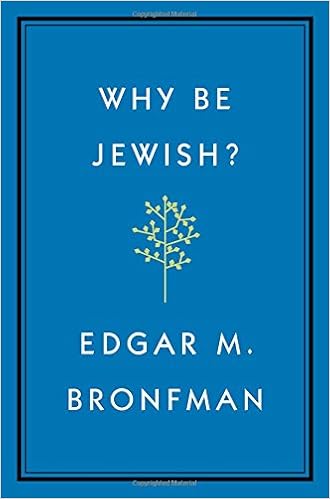
Why Be Jewish?: A Testament Hardcover – March 22, 2016 by Edgar Bronfman (Twelve)


Edgar M. Bronfman's clarion call to a generation of secular, disaffected, and unaffiliated Jews, this book addresses the most critical question confronting Judaism worldwide.

Completed in December 2013, just weeks before he passed away, WHY BE JEWISH? expresses Edgar Bronfman's awe, respect, and deep love for his faith and heritage. Bronfman walks readers through the major tenets and ideas in Jewish life, fleshing out their meaning and offering proof texts from the Jewish tradition gleaned over his many years of study with some of the greatest teachers in the Jewish world.

With honesty, poignancy, and passion, Bronfman shares In WHY BE JEWISH? insights gleaned from his own personal journey and makes a compelling case for the meaning and transcendence of a secular Judaism that is still steeped in deep moral values, authentic Jewish texts, and a focus on deed over creed or dogma.

Friday, March 30, 2018

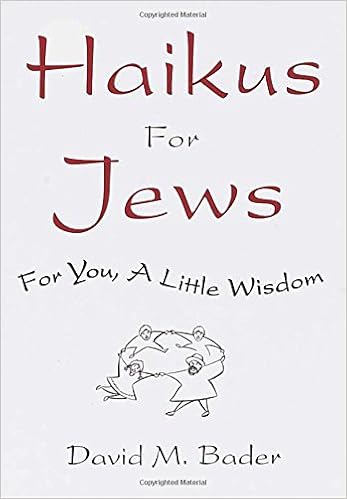
Haikus for Jews: For You, a Little Wisdom Hardcover by David M. Bader (Harmony)


Haiku (俳句) About this sound listen  (plural haiku) is a very short form of Japanese poetry. It is typically characterized by three qualities:

The essence of haiku is "cutting" (kiru). This is often represented by the juxtaposition of two images or ideas and a kireji ("cutting word") between them, a kind of verbal punctuation mark which signals the moment of separation and colours the manner in which the juxtaposed elements are related.
Traditional haiku consist of 17 on (also known as morae though often loosely translated as "syllables"), in three phrases of 5, 7, and 5 on, respectively.] (An alternative form of haiku consists of 11 on in three phrases of 3, 5, and 3 on, respectively.)
A kigo (seasonal reference), usually drawn from a saijiki, an extensive but defined list of such terms.

Of all the many forms of Jewish-Japanese poetry, the Jewish haiku is perhaps the most sublimely beautiful," begins the foreword to the wickedly funny and tirelessly bizarre Haikus for Jews by David M. Bader. If you can't abide a little fun with stereotypes, read another book. But if you don't mind a little ribbing, take a look at the following haiku, which gives only a mild taste of the yummy-as-lox treats gathered in this collection: 
Jewish voodoo tip 
mention an acting career,
 then watch for chest pain.

And if you liked that, you'll love this: 
Lightbulb out again --
how many of us must meet 
 to change it this time?" 
And they just keep getting better.

Why is this haiku book different from all other haiku books? 

For centuries, the Japanese haiku has been one of the world's most dazzling poetic forms. In just three short lines, it captures the sublime beauty of nature--the croak of the bullfrog, the buzzing of the dragonfly, the shriek of the cicada, the scream of the cormorant. Now, with Haikus for Jews, there is finally a collection that celebrates the many advantages of staying indoors.
        
Inspired by ancient Zen teachings and timeless Jewish noodging, this masterful work is filled with insights that will make you exclaim, "Ah!" or at least "Oy!" Whether you are Jewish or you simply enjoy a good kosher haiku, these chai-kus (so called because of their high chutzpah content) are certain to amuse. What's more, with each poem limited to seventeen syllables, Haikus for Jews is perfect for people in a hurry. Find out why God has made these The Chosen Haikus.

Tuesday, March 20, 2018

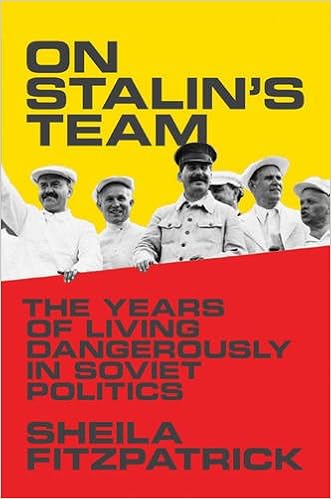
On Stalin’s Team: The Years of Living Dangerously in Soviet Politics by Sheila Fitzpatrick Princeton University Press, 364 pp., $35.00 (Princeton University Press)


There seems to be an insatiable appetite for biographies of Stalin. The catalog of Harvard University’s library lists 690, 203 of them published since the year 2000. Although Stalin plays a central part in Sheila Fitzpatrick’s latest book, this is not a biography but something more unusual: a story of the circle or “team” of which he was the leader but on which he was also dependent. She calls Stalin “the lynchpin” and stresses that the team members helped him run the country of which, after 1928, he was the undisputed leader. Yet he relied on them not only politically but also emotionally, especially in his later years. To reveal this mutual dependence is a major contribution of this innovative book.

Sheila Fitzpatrick is a native of Australia and the child of Brian Fitzpatrick, a radical writer of the “fellow traveler” school whose portrait she provided in My Father’s Daughter (2010). Although she obviously absorbed some of his radicalism, in time she distanced herself from him and his world outlook. She left her native land to attend Oxford University, where in 1969 she received a doctorate from St. Antony’s College. Ultimately, she ended up in the United States, where she taught Soviet history at the University of Chicago. She returned to Australia after a fifty-year absence. She is the author of numerous books, virtually all of them dealing with the Soviet Union.

Fitzpatrick belongs to the school of historians of the USSR known as “revisionists.” This school tends to emphasize the complexity of the Soviet regime, rejecting as simplistic the concept of “totalitarianism.” It stresses social history at the expense of politics. The totalitarian concept was first formulated in Fascist Italy in the early 1920s: Mussolini defined it as “everything within the state, nothing outside the state, nothing against the state.” Neither Mussolini nor Hitler established truly totalitarian regimes because both retained private property, which limited the power of the state. The founder of the first totalitarian state was Stalin, who nationalized all of the country’s economic resources, be they land or industry. Revisionists have made some valuable contributions to the understanding of Soviet history, but they have tended to underestimate its horrors.


Joseph Stalin lying in state, attended by Vyacheslav Molotov, Kliment Voroshilov, Lavrenty Beria, and Georgii Malenkov, Moscow, March 8, 1953


Alexander Yakovlev, Gorbachev’s closest adviser and a member of the Politburo with access to all the documents of Lenin’s and Stalin’s regimes, estimated the victims of the two dictators’ reign at 20 million. Some revisionists minimize the evils of terror on the grounds that it not only caused deaths and incarceration but also increased social mobility by allowing others to take over the victims’ jobs. This kind of reasoning, if applied to the Holocaust, would see its benefits in the “Aryans” taking over the positions and possessions of the slain Jews.

The head of the “team” in this book’s title was, of course, Stalin. Fitzpatrick rightly insists that he was not the kind of nonentity that Trotsky and many others had depicted. In her words, he was “a whole lot cleverer and better-read” than commonly believed. At the same time she characterizes him as “a great evildoer,” a man with “sadistic instincts.”

The leading member of the “team” until the eve of Stalin’s death was Vyacheslav Molotov. A bureaucrat with a stony face, he was far from a striking personality: Fitzpatrick says that he could have been “a clerk in a government office” while Trotsky dismissed him as “mediocrity personified.” Molotov joined the Bolshevik faction early and eventually became editor of its organ, Pravda. When in 1922 Stalin was appointed the Party’s general secretary, he became his de facto deputy.

From then on, he was Stalin’s shadow, the Bolshevik in whom Stalin placed the greatest trust, and who reciprocated this confidence by supporting all of Stalin’s actions, including the murderous purges of the 1930s. Stalin’s reliance on Molotov became apparent in 1939 when he entrusted him with the signing of the treaty with Nazi Germany. This loyalty remained steadfast even after 1948, when Stalin ordered the arrest of Molotov’s Jewish wife for “treason.”

Another prominent member of the group was Anastas Mikoyan, an Armenian who joined the Bolshevik Party in 1915 and from the early years of the Soviet regime attached himself to Stalin. He was active both before and during World War II in developing the Soviet food industry. At various times, besides Molotov and Mikoyan, the group included Nikolai Bukharin, Nikolai Bulganin, Lavrenty Beria, Felix Dzerzhinsky, Sergo Ordzhonikidze, Georgii Malenkov, and Nikita Khrushchev.

Fitzpatrick makes it clear that membership in Stalin’s team did not ensure security:


Stalin was a suspicious man. He was suspicious even of his own team…. He kept tabs on them, encouraged informing, liked to keep them off balance, and sometimes set traps for them…. Nobody on the team could consider himself safe.

Khrushchev in his memoirs graphically described how precarious was the position and even the life of every member of Stalin’s intimate circle. Toward the end of his life, for no known reason, Stalin became suspicious of both Molotov and Mikoyan, his oldest associates. In 1952, he called them “hirelings of American imperialism” and accused them of being English or American spies, which suggested that their days were probably numbered. Publicly, Stalin


attacked Molotov with particular viciousness…. He brought up the old charges of currying favor with Western journalists…; he also raised the question of why Molotov wanted “to give Crimea to the Jews” and why he had told his wife about secret Politburo decisions. As for Mikoyan, Stalin said he had probably been plotting…to sell out Soviet interests to the Americans.

In March 1949, Stalin removed Molotov from the post of minister of foreign affairs and Mikoyan from the post of minister of foreign trade. The lives of the two were likely saved by Stalin’s sudden death three years later.

When the Germans attacked the USSR in June 1941, Stalin was so shocked that for a week he withdrew from public life and fell into some kind of coma. As Fitzpatrick points out, he had expected his alliance with the Nazis to last several years during which he could bring his military establishment into “full operational and fighting trim.” For this reason, he ignored repeated warnings from the West and his own agents that Hitler was preparing an imminent invasion. This had disastrous consequences leading to the destruction of much of the Soviet military in the early months of the war. During World War II, when Stalin oversaw grand strategy and the appointments of top commanders, much of the day-to-day management of the country fell into the hands of his associates organized as the State Defense Committee (GKO). As Fitzpatrick writes, citing Mikoyan:


When the GKO’s core Group of Five (Stalin, Molotov, Malenkov, Beria, and Mikoyan) met, as they usually did late in the evening without a precirculated agenda or minutes taken, “each of us had full possibility to speak and defend his opinion or suggestion,” and Stalin’s attitude was “reasonable and patient,” even if he didn’t like what someone said. It quite often happened that Stalin, “convinced by our arguments,” changed the opinion he had had at the beginning.

Marshal Georgy Zhukov, the architect of Soviet victory in World War II, was not a member of the team but of Stalin’s informal military “brain trust,” yet he did not fear contradicting Stalin. During the war, Stalin was in charge of military affairs while his associates ran the economy. The partnership worked well and brought the Soviet Union victory.

Matters did not change after the war. Indeed, the responsibilities of the team increased as Stalin spent ever more time in the south, away from the Kremlin. As he grew old, Stalin looked to his team not only for assistance in running the country but also for succor in his loneliness:


Stalin had been lonely since the breakup of his prewar social circle, first through his wife’s death and then through the arrest of various relatives during the Great Purges, and he grew lonelier after the war, with a total estrangement from the old network of in-laws and no new friends or partner to fill the gaps. This threw him back on the team for companionship. A wartime habit of team meetings late in the day, ending in a shared supper, was continued in less spartan form. Since Stalin hated to be alone, the team was drafted with increasing frequency for dinners at Stalin’s dacha that started late, often after a film showing at the Kremlin; [they] were marked by heavy (compulsory) drinking, as well as a certain amount of work discussion; and went on until the not-very-early hours of the morning (4:00 or 5:00 AM).

Milovan Djilas, a prominent Yugoslav Communist who visited the USSR during the war, found these dinners to be rather congenial occasions: “It all rather resembled a patriarchal family with a crotchety head whose foibles always made his kinsfolk rather apprehensive.”

As his energy declined, Stalin handed ever more business to members of his team: he let them make decisions that he simply approved. The government now was run by Beria, Malenkov, Khrushchev and Bulganin. The last policy Stalin initiated was a drive against Soviet Jews, a policy that the team did not approve. (When Nazi Foreign Minister Joachim von Ribbentrop in 1939 and 1940 complained that there were too many Jews in the Soviet government, Stalin promised him and the Führer that as soon as he had enough Russians to run things, he would eliminate Jewish officials.)

In January 1953, he charged a number of Jewish physicians working in the Kremlin with having caused the death of some prominent Soviet personalities. The “Doctor’s Plot” led to the arrest of some Jewish physicians. More ominously, preparations were made for the deportation of several million Soviet Jews to Siberia and Central Asia. According to Fitzpatrick, by this time Stalin’s paranoia knew “no bounds.”

When Stalin died, the team quietly took over. It was designated as “collective leadership” consisting of Malenkov, Beria, and Molotov. The transition was smoother than one might have expected after a quarter-century of Stalin’s dictatorship. The team promptly released the arrested Jewish doctors, declared an amnesty that led to the release of more than a million prisoners, and talked of a “détente” in the cold war. Beria, the hated and feared head of the secret police, was executed. It was generally expected that either Molotov or Malenkov would succeed Stalin but since neither showed an inclination to challenge the collective leadership, they remained in place for the next five years, until 1958 when Nikita Khrushchev took over.

As Fitzpatrick points out, some of her interpretations have been anticipated. In particular, the Russian scholar Oleg Khlevniuk did pioneering work with his Master of the House: Stalin and His Inner Circle, originally published in the 1990s, in which he stressed the influence of Stalin’s staff. Similar contributions were made by Stephen Wheatcroft and Arch Getty.

On Stalin’s Team is an important book because it modifies the prevalent view of Joseph Stalin as a lone dictator and his staff as flunkies who merely carried out his orders. It shows that, in fact, Stalin’s dictatorship was something of a collegiate arrangement in which the dictator had the ultimate power to appoint his staff and take or reject its advice. Yet, Fitzpatrick writes, “they couldn’t have done it without him. But the corollary is also true: he couldn’t have done it without them.” In her conclusion, Fitzpatrick refers to the totalitarian model:


Based on observation of similarities between mid-twentieth-century fascist regimes and the Soviet regime under Stalin, the totalitarian model posited a regime headed by a charismatic leader, ruling through a mobilizing party aspiration and a secret police force, and aspiring to total control over society. Much ink has been spilled, including by me, on the applicability of this model to Soviet history. As far as the present study is concerned, however, the model’s relevance is quite limited, as it never focused on Stalin’s relationship with his closest advisors or attached particular importance to it.

This kind of “revisionism” is persuasive. In my opinion it does not invalidate the totalitarian concept nor does it, as the Princeton University Press blurb claims, paint “an entirely new picture of Stalin within his milieu.” But it does add a new dimension to the totalitarian model. As such, Sheila Fitzpatrick’s book is to be warmly welcomed.


Tuesday, March 13, 2018

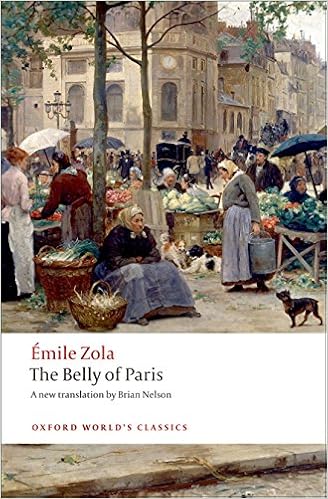
The Belly of Paris (Oxford World's Classics) Paperback – September 28, 2009 by Emile Zola (Oxford University Press) (IBRClassicsReview)


Zola at his best


AN AMERICAN MARRIAGE by Tayari Jones (Algonquin)


A look at the personal toll of the criminal justice system from the author of Silver Sparrow (2011) and The Untelling (2005).

Roy has done everything right. Growing up in a working-class family in Louisiana, he took advantage of all the help he could get and earned a scholarship to Morehouse College. By the time he marries Spelman alum Celestial, she’s an up-and-coming artist. After a year of marriage, they’re thinking about buying a bigger house and starting a family. Then, on a visit back home, Roy is arrested for a crime he did not commit. Jones begins with chapters written from the points of view of her main characters. When Roy goes to prison, it becomes a novel in letters. The epistolary style makes perfect sense. Roy is incarcerated in Louisiana, Celestial is in Atlanta, and Jones’ formal choice underscores their separation. Once Roy is released, the narrative resumes a rotating first person, but there’s a new voice, that of Andre, once Celestial’s best friend and now something more. This novel is peopled by vividly realized, individual characters and driven by interpersonal drama, but it is also very much about being black in contemporary America. Roy is arrested, tried, convicted, and imprisoned in Louisiana, the state with the highest per-capita rate of incarceration in the United States, and where the ratio of black to white prisoners is 4 to 1. There’s a heartbreaking scene in which Celestial’s uncle—Roy’s attorney—encourages her to forget everything she knows about presenting herself while she speaks in her husband’s defense. “Now is not the time to be articulate. Now is the time to give it up. No filter, all heart.” After a lifetime of being encouraged to be “well spoken,” Celestial finds that she sounds false trying to speak unguardedly. “As I took my seat…not even the black lady juror would look at me.” This is, at its heart, a love story, but a love story warped by racial injustice. And, in it, Jones suggests that racial injustice haunts the African-American story.


Monday, March 12, 2018

THE CROOKED MIRROR A Memoir of Polish-Jewish Reconciliation by Louise Steinman (Beacon)


A writer/literary curator explores the anguished, often contentious topic of Polish Jewry through the lens of her own family history.

For centuries, Jews “had been part of Poland’s body and soul,” writes Steinman (Los Angeles Institute for the Humanities/Univ. of Southern California; The Souvenir: A Daughter Discovers Her Father’s War, 2001). But during the Holocaust, their Christian neighbors did the unthinkable and allowed millions of Jewish people to die in Nazi death camps. The maternal side of the author’s family was so marked by this horror that family history disappeared into a “black hole” of silence. Aching from this loss of connection to her past, Steinman traveled to a Polish interfaith retreat looking for answers. She left realizing how little she knew, not just about her family and personal prejudices, but also about Polish history. For the next decade, she returned to Poland to recuperate lost family history and understand the relationship between Jews and Christians. As the author pieced together the fragments of her family’s past, she came into contact with Poles of all ages and faiths who had dedicated their lives to not only studying Polish Jewish history, but opening a dialogue about both the Holocaust and Polish anti-Semitism. Steinman discovered how cities throughout Poland and Eastern Europe had once been home to thriving multiethnic communities. When war expunged the Jews and their culture from those populations, the cities became flattened shells of what they had once been. The rise of Nazism was to blame for this mass genocide, but as Steinman learned, Israel also helped to perpetuate anti-Polish sentiment by highlighting only what happened during Hitler’s reign of terror and ignoring everything else.

Steinman’s elegiac book is a powerful reminder of how ideologies can become “crooked mirror[s]” that distort reality and destroy lives, cultures and nations.


Friday, March 2, 2018

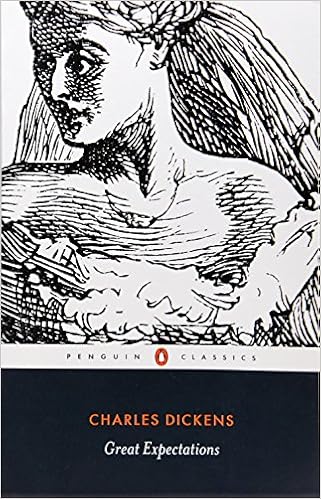
Great Expectations (Penguin Classics) Paperback by Charles Dickens (Penguin Classics)


The very title of this book indicates the confidence of conscious genius. In a new aspirant for public favor, such a title might have been a good device to attract attention; but the most famous novelist of the day, watched by jealous rivals and critics, could hardly have selected it, had he not inwardly felt the capacity to meet all the expectations he raised. We have read it, as we have read all Mr. Dickens's previous works, as it appeared in installments, and can testify to the felicity with which expectation was excited and prolonged, and to the series of surprises which accompanied the unfolding of the plot of the story. In no other of his romances has the author succeeded so perfectly in at once stimulating and baffling the curiosity of his readers. He stirred the dullest minds to guess the secret of his mystery; but, so far as we have learned, the guesses of his most intellectual readers have been almost as wide of the mark as those of the least apprehensive. It has been all the more provoking to the former class, that each surprise was the result of art, and not of trick; for a rapid review of previous chapters has shown that the materials of a strictly logical development of the story were freely given. Even after the first, second, third, and even fourth of these surprises gave their pleasing electric shocks to intelligent curiosity, the denouement was still hidden, though confidentially foretold. The plot of the romance is therefore universally admitted to be the best that Dickens has ever invented. Its leading events are, as we read the story consecutively, artistically necessary, yet, at the same time, the processes are artistically concealed. We follow the movement of a logic of passion and character, the real premises of which we detect only when we are startled by the conclusions.


The plot of Great Expectations is also noticeable as indicating, better than any of his previous stories, the individuality of Dickens's genius. Everybody must have discerned in the action of his mind two diverging tendencies, which in this novel, are harmonized. He possess a singularly wide, clear, and minute power of accurate observation, both of things and of persons; but his observation, keen and true to actualities as it independently is, is not a dominant faculty, and is opposed or controlled by the strong tendency of his disposition to pathetic or humorous idealization. Perhaps in The Old Curiosity Shop these qualities are best seen in their struggle and divergence, and the result is a magnificent juxtaposition of romantic tenderness, melodramatic improbabilities, and broad farce. The humorous characterization is joyously exaggerated into caricature,--the serious characterization into romantic unreality. Richard Swiveller and Little Nell refuse to combine. There is abundant evidence of genius both in the humorous and pathetic parts, but the artistic impression is one of anarchy rather than unity.

In Great Expectations, on the contrary, Dickens seems to have attained the mastery of powers which formerly more or less mastered him. He has fairly discovered that he cannot, like Thackeray, narrate a story as if he were a mere looker-on, a mere knowing observer of what he describes and represents; and he has therefore taken observation simply as the basis of his plot and his characterization. As we read Vanity Fair and The Newcomes, we are impressed with the actuality of the persons and incidents. There is an absence of both directing ideas and disturbing idealizations. Everything drifts to its end, as in real life. In Great Expectations there is shown a power of external observation finer and deeper even than Thackeray's; and yet, owing to the presence of other qualities, the general impression is not one of objective reality. The author palpably uses his observations as materials for his creative faculties to work upon; he does not record, but invents; and he produces something which is natural only under conditions prescribed by his own mind. He shapes, disposes, penetrates, colors, and contrives everything, and the whole action is a series of events which could have occurred only in his own brain, and which it is difficult to conceive of as actually happening. And yet in none of his other works does he evince a shrewder insight into real life, and a clearer perception and knowledge of what is called the world. The book is, indeed, an artistic creation, and not a mere succession of humorous and pathetic scenes, and demonstrates that Dickens is now in the prime, and not in the decline of his great powers.

The characters of the novel also show how deeply it has been meditated; for, though none of them may excite the personal interest which clings to Sam Weller or little Dombey, they are better fitted to each other and the story in which they appear than is usual with Dickens. They all combine to produce the unity of impression which the work leaves on the mind. Individually they will rank among the most original of the author's creations. Magwitch and Joe Gargery, Jaggers and Wemmick, Pip and Herbert, Wopsle, Pumblechook, and "the Aged," Miss Havisham, Estella, and Biddy, are personages which the most assiduous readers of Dickens must pronounce positive additions to the characters his rich and various genius has already created.

Pip, the hero, from whose mind the whole representation takes its form and color, is admirably delineated throughout. Weak, dreamy, amiable, apprehensive, aspiring, inefficient, the subject and the victim of Great Expectations, his individuality is, as it were, diffused through the whole narrative. Joe is a noble character, with a heart too great for his powers of expression to utter in words, but whose patience, fortitude, tenderness, and beneficence shine lucidly through his confused and mangled English. Magwitch, the "warmint" who "grew up took up," whose memory extended only to that period of his childhood when he was "a-thieving turnips for his living" down in Essex, but in whom a life of crime had only intensified the feeling of gratitude for the one kind action of which he was the object, is hardly equalled in grotesque grandeur by anything which Dickens has previously done. The character is not only powerful in itself, but it furnishes pregnant and original hints to all philosophical investigators into the phenomena of crime. In this wonderful creation Dickens follows the maxim of the great master of characterization, and seeks "the soul of goodness in things evil."

The style of the romance is rigorously close to things. The author is so engrossed with the objects before his mind, is so thoroughly in earnest, that he has fewer of those humorous caprices of expression of which formerly he was wont to wanton. Some of the old hilarity and play of fancy is gone, but we hardly miss it in our admiration of the effects produced by his almost stern devotion to the main idea of his work. There are passages of description and narrative in which we are hardly conscious of his words, in our clear apprehension of the objects and incidents they convey. The quotable epithets and phrases are less numerous than in Dombey & Son and David Copperfield; but the scenes and events impressed on the imagination are perhaps greater in number and more vivid in representation. The poetical element of the writer's genius, his modification of the forms, hues, and sounds of Nature by viewing them through the medium of an imagined mind, is especially prominent throughout the descriptions with which the work abounds. Nature is not only described, but individualized and humanized.

Altogether we take great joy in recording our conviction that Great Expectations is a masterpiece. We have never sympathized in the mean delight which some critics seem to experience in detecting the signs which subtly indicate the decay of power in creative intellects. We sympathize still less in the stupid and ungenerous judgements of those who find a still meaner delight in willfully asserting that the last book of a popular writer is unworthy of the genius which produced his first. In our opinion, Great Expectations is a work which proves that we may expect from Dickens a series of romances far exceeding in power and artistic skill the productions which have already given him such a preeminence among the novelists of the age.