Showing posts with label . .. Show all posts

Sunday, October 21, 2018

American Political Parties and Elections: A Very Short Introduction (Very Short Introductions) 2nd Edition by L. Sandy Maisel (Oxford University Press)


Few Americans and even fewer citizens of other nations understand the electoral process in the United States. Still fewer understand the role played by political parties in the electoral process or the ironies within the system. Participation in elections in the United States is much lower than in the vast majority of mature democracies. Perhaps this is because of the lack of competition in a country where only two parties have a true chance of winning, despite the fact that a large number of citizens claim allegiance to neither and think badly of both. Or perhaps it is because in the U.S. campaign contributions disproportionately favor incumbents in most legislative elections, or that largely unregulated groups such as the now notorious 527s have as much impact on the outcome of a campaign as do the parties or the candidates' campaign organizations. These factors offer a very clear picture of the problems that underlay our much trumpeted electoral system.

The second edition of this Very Short Introduction introduces the reader to these issues and more. Drawing on updated data and new examples from the 2016 presidential nominations, L. Sandy Maisel provides an insider's view of how the system actually works while shining a light on some of its flaws. He also illustrates the growing impact of campaigning through social media, the changes in campaign financing wrought by the Supreme Court recent decisions, and the Tea Party's influence on the sub-presidential nominating process. As the United States enter what is sure to be yet another highly contested election year, it is more important than ever that Americans take the time to learn the system that puts so many in power.

Friday, September 7, 2018

Fear: Trump in the White House Hardcover – September 11, 2018 by Bob Woodward (Simon & Schuster)


Bob Woodward’s New Trump Book Sounds Both Damning and Frightening

The veteran Watergate scribe allegedly has evidence that the Trump White House is as dysfunctional and broken as everyone fears


Fire and Fury, the New York Times bestseller chronicling the first year of the Trump White House, provided a shockingly intimate look into the machinations of a chaotic presidential administration. Its allegations were detailed and damming, but its author, Michael Wolff, carried an unsavory reputation as a journalist known to bend the rules of conventional reporting. The book’s veracity was called into question by the White House, Trump and critics on both the left and right. The same will not be said for Fear, the forthcoming book from Bob Woodward that offers a similarly nuanced glimpse of the terrifying culture surrounding a breathtakingly incompetent president. While Wolff was known to skirt protocol, Woodward — known primarily for his role exposing the Watergate scandal that led to Richard Nixon’s resignation — is one of the most revered and well-respected journalists in American history. Though Fear won’t be released until September 11th, the Washington Post, where Woodward serves as an associate editor, picked up an advance copy. On Tuesday, the paper published a delicious preview of what to expect.

According to the Post, the book, which was based on hundreds of hours of interviews conducted on deep background, meaning the sources were not revealed, depicts an administration rife with “anger and paranoia.” Trump is portrayed as someone with little knowledge of how government functions and, tragically, little desire to learn. He is deeply embarrassed by Special Counsel Robert Mueller’s investigation, routinely critical of the administration officials he hired and totally unequipped to lead the world’s most powerful nation. Those around him work tirelessly to protect Trump from himself, employing “stealthy machinations” in an effort to “control his impulses and prevent disasters, both for the president personally and for the nation he was elected to lead.”

Woodward reportedly writes of how after Trump learned in April 2017 that Syrian leader Bashar al-Assad attacked his own people with chemical weapons, the president instructed Defense Secretary James Mattis to “fucking kill him” and to go in and “kill the fucking lot of them.” Mattis agreed before telling an aide to come up with a more “measured” response. Former economic adviser Gary Cohn would reportedly remove papers from Trump’s desk to prevent them from being signed. Cohn ultimately resigned, as would John Dowd, the president’s former legal counsel who allegedly attempted to convince Trump that he would end up in an “orange jumpsuit” should he agree to an interview with Mueller’s team. As former staff secretary Rob Porter told Woodward, “This was no longer a presidency. This is no longer a White House. This is a man being who he is.”

The book also appears to be packed with accounts of Trump airing grievances against his staffers and Cabinet members. Here are some (reported) words and anecdotes from the president, as gleaned from the Post.


On Attorney General Jeff Sessions:

Trump told Porter that Sessions was a “traitor” for recusing himself from overseeing the Russia investigation, Woodward writes. Mocking Sessions’s accent, Trump added, “This guy is mentally retarded. He’s this dumb Southerner. … He couldn’t even be a one-person country lawyer down in Alabama.”

On former National Security Adviser H.R. McMaster:

He often mocked former national security adviser H.R. McMaster behind his back, puffing up his chest and exaggerating his breathing as he impersonated the retired Army general, and once said McMaster dresses in cheap suits, “like a beer salesman.”

On former Chief of Staff Reince Priebus:

Trump apparently had little regard for Priebus. He once instructed then-staff secretary Rob Porter to ignore Priebus, even though Porter reported to the chief of staff, saying that Priebus was “‘like a little rat. He just scurries around.’”

On Commerce Secretary Wilbur Ross:

Trump told Commerce Secretary Wilbur Ross, a wealthy investor eight years his senior: “I don’t trust you. I don’t want you doing any more negotiations. … You’re past your prime.”

The lack of respect goes both ways. Woodward reportedly writes that Cohn called Trump a “professional liar.” Mattis described his behavior as that of “a fifth- or sixth-grader.” Dowd called him a “goddamn dumbbell.” Chief of Staff John Kelly is portrayed as especially resentful of his boss’ ignorance. “He’s an idiot,” Kelly said, according to Woodward. “It’s pointless to try to convince him of anything. He’s gone off the rails. We’re in Crazytown. I don’t even know why any of us are here. This is the worst job I’ve ever had.”

Later on Tuesday, the Post published the audio and a transcript of an on-the-record call between Woodward and Trump. The call, which took place in August after the manuscript for Fear had already been submitted, revolved around Woodward’s inability to get gain access to Trump, despite repeated attempts. Woodward explained to Trump that though the president wasn’t quoted, the book was written entirely based on first-hand accounts, warning him that it would “a tough look at the world and your administration and you.” Trump took this to mean that the book would be “negative” and proceeded to tout his accomplishments. When Woodward emphasized that the book would be “accurate,” Trump didn’t necessarily agree. “Well, accurate is that nobody’s ever done a better job than I’m doing as president,” Trump said.


But considering the book’s author, it’s going to be harder for the White House to discredit Fearthan it was for them to dismiss Fire and Fury or, more recently, Unhinged, Omarosa Manigault-Newman’s tell-all account of her time with the administration, as not credible.


Gabby Morrongiello
✔@gabriellahope_

WH officials are going to have a difficult time dumping on Woodward's credibility like they did with Omarosa & Wolff. He's revered by 99.9% of Washington, respected by folks inside the administration (they wouldn't have spoken to him otherwise), & a household name across America
6:50 PM - Sep 4, 2018
Twitter Ads info and privacy

That doesn’t mean they’re not going to try, of course. Hours after the preview was published, the White House responded as expected. “This book is nothing more than fabricated stories, many by former disgruntled employees, told to make the president look bad,” Press Secretary Sarah Huckabee Sanders wrote in a statement. Included in the response was a statement from Kelly. “The idea that I ever called the president an idiot is untrue,” he wrote. Dowd issued a separate denial. “There was no so-called ‘practice session’ or ‘re-enactment’ of a mock interview at the Special Counsel’s office,” he wrote, referring to a mock Mueller interview reportedly conducted by the president’s former legal counsel. “Further, I did not refer to the President as a ‘liar’ and did not say that he was likely to end up in an ‘orange jump suit.'” Pundit-at-law Rudy Giuliani chimed in, as well. “If they said it, they should be questioning why they are there,” he told CNBC. “Why don’t they go get another job? That’s the kind of disloyalty that leads to you leaving, not staying and undermining the president.”

Mattis, too, denied what Woodward’s reporting alleges. “The contemptuous words about the President attributed to me in Woodward’s book were never uttered by me or in my presence,” he said in a statement. “While I genuinely enjoy reading fiction, this is a uniquely Washington brand of literature, and his anonymous sources do not lend credibility.”

Trump responded Tuesday afternoon during an Oval Office interview with the Daily Caller. “It’s just another bad book,” Trump said. “He’s had a lot of credibility problems.” The president added that he “probably would have preferred to speak to him, but maybe not. I think it probably wouldn’t have made a difference in the book. He wanted to write the book a certain way.”

“It’s just nasty stuff,” Trump continued. “I never spoke to him. Maybe I wasn’t given messages that he called. I probably would have spoken to him if he’d called, if he’d gotten through. For some reason I didn’t get messages on it.” A few hours later he suggested on Twitter that Woodward could be a “Dem operative.”

Despite Woodward’s “credibility problems,” the president wondered in 2013 how the Obama White House could get away with criticizing a journalist as esteemed as the longtime Postreporter.


Donald J. Trump
✔@realDonaldTrump
Only the Obama WH can get away with attacking Bob Woodward.
11:04 PM - Mar 1, 2013
Twitter Ads info and privacy

There really is a tweet for everything.

Monday, August 6, 2018

The Odyssey By Homer, Emily Wilson W. W. Norton & Company 592 Pages


By my count, we have seen 27 translations of Homer into English since 2000, so no one can say we languished for want of a new Odyssey. It’s all the more remarkable, then, that Emily Wilson is making her presence felt in so crowded a field. This she does with the full literary arsenal of our age. She tweets, she appears discreetly photographed and interviewed in The New York Times Magazine, and writes for The New Yorker. Her tweeting then becomes a topic in itself for The New Yorker and Bustle. She makes the rounds on two continents for readings and chats. Good for her! We classical scholars can only rejoice to see a colleague hit the big time. Of course, tweeting is an offensive weapon, and she has ruffled feathers by taking her predecessors to task for misogyny — while also tweeting footage of dreamy Mark Ruffalo reading her verse for some celebrity cachet. So let me anticipate the inevitable criticism with an observation: Emily Wilson is not breaking norms of behavior as the first woman to translate Homer’s Odyssey into English; she is fulfilling them. From the outset, our English translators have all been on the make. Take our founding father, George Chapman. His translation is surrounded by punchy commentary and wild claims, both for Homer’s genius and his own bona fides as a translator — to the extent of calling one critic an “envious windfucker” for suggesting he had not really read the Greek (the word refers to a type of kestrel, so maybe it’s not as bad as it sounds).

Chapman’s successors were reinventing the book business, effectively, with innovative schemes. John Ogilby made use of a clever subscription drive, getting wealthy aristocrats to pay for the illustrations (which he adorned with their crests) to help float his huge folio Homers and Virgil. Alexander Pope was the ultimate artist of the deal; his Homer made him one of the first people in history able to live off the proceeds of a literary translation. So before the critics dismiss Wilson for taking to Twitter and making the most of her moment, I say look to her predecessors and know that Chapman and Pope would definitely have had Twitter accounts. Translations have a way of finding new readerships, and if Wilson is actively responding to her readers and building a different audience for Homer, then she is doing the gods’ work and well deserves a silver bowl — maybe even a gleaming chariot — for her efforts.

“Tell me about a complicated man.” So this new Odyssey begins, and with this verse Wilson plants her flag of difference. It’s a line that introduces a fundamental ambivalence toward the epic’s hero, whom Renaissance translators strove to make a wise and stoic mirror of princes. Wilson dove into the meanings pooled in the keyword polytropon and swam up with “complicated,” the kind of euphemism you use to describe a person you once admired, but who has hurt you. It’s kind of a trilingual play on words, as “much turned/turning” shades into “folded up” (from Latin complicare) and comes out, “complicated” (we never really sense the physicality of our Latinate words, but the classicist learns to savor it). The funny thing is, though this verse complicates Odysseus’ stature, it greatly simplifies the syntax of Homer’s opening sentence, which includes a number of snaking clauses and actually ends on line five. But this single verse introduces both her take on the work’s hero and a poetics of reduction that she observes rather ruthlessly in order to make a poem that matches Homer’s line for line. That’s quite a challenge when rendering Homer’s dactylic hexameter (ranging from 12 to 17 syllables) into iambic pentameter (comprising 10 or 11 syllables), a meter that slips behind easily unless you toss things overboard. But Wilson would rather match the old bard verse for verse than allow herself the indulgences of past translators. The result is a lean, wiry Homer, shorn of his more ornamental features. In this she is consistent, even to a fault.

Take, for example, the moment we might imagine a female translator would relish: Penelope’s challenge of the bow contest to the suitors. Male translators in the past have made Penelope very much a queen in this moment — or as Pope says, a “matron, with majestic air.” Wilson’s Penelope is remarkably understated, sounding almost depressive by contrast.

She said,

“Now listen, lords. You keep on coming
to this house every day, to eat and drink,
wasting the wealth of someone who has been
away too long. Your motives are no secret.
You want to marry me. I am the prize.
So I will set a contest. This great bow
belonged to godlike King Odysseus.”

Contrast this with the high dudgeon of Robert Fitzgerald’s Penelope:

“My lords, hear me:
Suitors indeed, you commandeered this house
to feast and drink in, day and night, my husband
being long gone, long out of mind. You found
no justification for yourselves — none
except your lust to marry me. Stand up, then:
we now declare a contest for that prize.”

Fitzgerald’s Penelope is irritated and indignant, pointing out they are violating her husband’s space. Wilson’s in contrast only vaguely refers to a “someone” whose wealth is being wasted, though she is still very much attached to the house. Fitzgerald resorted to the plural of majesty for the contest’s big reveal; Wilson’s speaks in short sentences, with diamond clarity but little defiance. We have come a long way from Pope’s, “If I the prize, if me you seek to wife / Hear the conditions, and commence the strife.”

Epic blank verse is making a comeback recently, and to her credit Wilson knows how to craft her lines in the most flexible way, including a number of those ridiculously named “feminine” endings (an unstressed 11th syllable — this is only shocking if your notion of iambic pentameter comes from Pope and not Shakespeare, whose “To Be or Not to Be” starts with five 11-syllable lines in a row). But while her verse is traditional and flexible, her syntax is so clipped and terse at times she seems to be channeling Hemingway. Her sense of poetic diction is so austerely modern it’s as though she has jettisoned all the frippery from Homer’s argosy, paring it down to the frame. Perhaps it’s just as well — Odysseus only needed a raft to set out for Ithaca.

The result pitches between the ancient and modern as any translation must if it chooses to pursue the vitality of storytelling over the archeology of poetic form. Translating epic is, after all, a marathon, not a sprint; you have to be careful what you grab onto. Wilson’s verse may be traditional, but it contains an interesting variety of modern conveniences. Canapés and kebabs are now being served aboard Homer. Odysseus is a “scalawag.” Demeter has “cornrows in her hair” — anachronistically, if the metaphor is based on new-world maize; ironically, when we think she is an agricultural goddess.

Wilson shows humane concern about the status of slave women, though we might quibble that calling female slaves “girls” may not be not as enlightened as she thinks (to Homer they are women), nor is the suggestion that their escapades with Penelope’s suitors were things those men “made them do.” No one seems to believe this in the poem, including the other slaves, and Wilson has chucked the option of class rebellion in favor of a protective if bougie instinct to save their reputations. There’s a thread of philological justification for this, and she is right to tweet out no one actually refers to them as sluts and whores in Homer. But that strong language of past translations was focalized through Telemachus and Odysseus, not the narrator. The brutality of the women’s execution by mass hanging — sadly, perhaps the only thing Telemachus thinks up on his own — still speaks for itself: uppity slaves get lynched.

Wilson strives quietly at moments for striking imagery in order to deliver on epic’s “poetry” beyond the ticking of plot points. This typically occurs when she faces the dilemma of Homer’s formulaic lines, part of the repetitive boilerplate of traditional poetic diction that unnerves the translator; “rosy-fingered Dawn” and “winged words” are already clichés in English. Wilson responds with imagistic variations: “The early Dawn was born, her fingers bloomed,” “When vernal Dawn first touched the sky with flowers,” “When early Dawn, the newborn child with rosy hands, appeared.” Homer’s functional formularity thus becomes an occasion to wax lyrical, as if to turn the routine signposts of oral tradition into so many miniaturist paintings. This lyricization of epic may restore the poetry through the backdoor, but it reveals the tension between Homeric and modern notions of poetry. Again, Wilson has the virtue of consistency in her choices here. As a classics professor, an Englishwoman at home in the United States, a deep reader of English and American verse, Emily Wilson has come by her Homer honestly. Her poem has the stamp of a clear and consistent vision, and brings Odysseus home to us again — cunning, eloquent, murderous; in sum, complicated.

Sunday, August 5, 2018

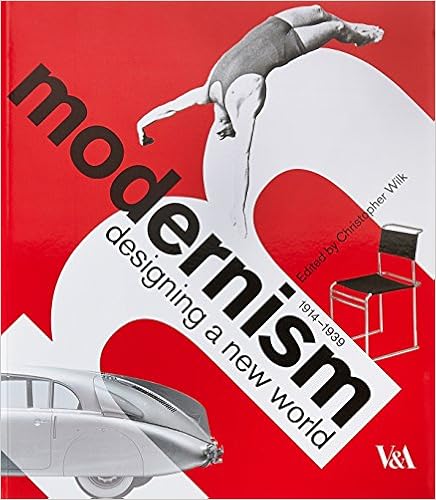
Modernism: Designing a New World Paperback – October 1, 2008 by Christopher Wilk (Victoria & Albert Museum)


I thought Christopher Wilk, in his excellent introduction, mentions a very interesting point: 'It is difficult to see how Modernism could be understood without investigating the idea of utopia (both as a dream that existed on paper and as an experiment in actual building)'. Bearing this thought in mind it helped me understand how this 'ism' effected so much visual culture for several decades in the twentieth century.

The eleven chapters pull the various strands of Modernism together: The cataclysmic effect of the First World War, the rise of totalitarian authority, rejection of past ornamentation and an increased awareness of the machine and technology. To creative folk in central Europe it looked like a better life might be possible for all though the public's visual awareness of the style was mainly through architecture. They were the ones who initially accepted new social housing estates and high rise apartments designed for maximum light and easy maintenance, who participated in the mass gymnastics and the healthy body ideal. Chapter seven deals with the healthy body concept that was probably the oddest part of Modernism. Central Europe again seems to have provided the lead. Dance, mass gymnastics, fresh air and exercise would create a perfect working body, just like a machine. Architects like Alvar Aalto and Mies van der Rohe designed sanatoria, Richard Neutra designed the Lovell 'Health' house in Los Angeles.

The format of book is the same as the V&A's remarkable Art Deco: 1910-1939: each chapter covers a theme in depth followed by a pictorial section with additional image related text and captions. Because both books are centered round exhibitions I sometimes found it rather annoying attempting to find a particular image because the exhibition ones have been augmented by many more for the book and each are referred to in different ways. The design, paper and printing (in 175dpi) are of the quality one would expect for this type of book.

I think it's worth saying that the title concentrates on creativity in the designed world so it does not include literature or music but I think, rightly, does include movies and chapter eight has an excellent survey by Ian Christie. The four hundred illustrations and photos throughout the book give a wonderful idea of the huge creative energy created by a relatively small group of artists and designers. I think it covers the subject in more depth than Richard Weston's Modernism though his book is useful because he starts his analyses of the style before 1900 and concentrates more on fine art and architecture.

Like the previous V&A 'Art Deco' I expect 'Modernism' will be considered the standard reference book on this fascinating creative style. For a short-lived concept it influenced so much that is still with us today.

Saturday, August 4, 2018

Red Famine: Stalin’s War on Ukraine by Anne Applebaum Doubleday, 461 pp., $35.00


On December 14, 1932, Joseph Stalin and Vyacheslav Molotov, the former as head of the Communist Party, the latter as premier of the Soviet government, signed a decree titled “On the Procurement of Grain in Ukraine, the North Caucasus, and the Western Region.” The country was in the midst of a food crisis that had already caused widespread hunger, but the decree was not concerned with the famine. Its purpose was to mobilize party cadres to continue extracting grain from the countryside so that, among other things, it could be sold abroad to pay for Soviet industrialization. Procurement quotas were not being fulfilled, and the collectivization of agriculture was in trouble, as were the reputation of Stalin and his team and ultimately their chances of staying in power.

The Soviet leaders demanded that their underlings in Ukraine and the North Caucasus—two of the three main grain-producing areas of the USSR—fulfill the grain-procurement quotas for 1932 by January–February 1933. The decree of December 14 ordered the arrest and, if necessary, the execution of collective farm heads and local officials who fell short. Some of the “saboteurs” were mentioned by name: fifteen regional officials were to be sentenced to hard labor for five or ten years—the decree gave the Soviet judiciary a modicum of flexibility in that regard. In the Kuban region of the North Caucasus, the inhabitants of the Poltavskaia settlement were accused of sabotaging the procurement campaign, and the secret police were ordered to deport its entire population to the Soviet north. The village would be resettled by Red Army veterans from central Russia.

But Stalin was not after grain alone. The decree of December 14 also dealt with the politics of culture. All the “saboteurs” listed by name were Soviet cadres from Ukraine, and the Poltavskaia villagers happened to be overwhelmingly Ukrainian as well. The decree ordered local officials in Kuban to change the language of their official correspondence and of public education immediately from Ukrainian to Russian and to stop publishing Ukrainian-language newspapers and journals. It also demanded that the republic’s leaders establish strict control over the “Ukrainization” policy instituted in the 1920s to promote the development of Ukrainian culture, as well as to purge nationalists and agents of foreign powers.

The December 1932 decree turned Stalin’s all-Union grain-extraction campaign into a direct assault on the Ukrainian political elite and the cultural foundations of Ukrainian nation-building, thereby distinguishing the famine in Ukraine from that in other parts of the USSR. Now known in Ukraine as the Holodomor (killing by hunger), the famine of 1932–1933 claimed the lives of close to four million Ukrainians, more than half of all those who starved to death in the Soviet Union during that period. It dramatically changed Ukrainian society and culture, leaving deep scars in the national memory. It also produced a vast literature on the subject, and since the Soviet regime refused to admit the very existence of the famine, its recognition was hotly contested in the last decades of the cold war. Subsequently it became a matter of dispute between Ukraine and Russia, with the Ukrainian government defining the famine as an act of genocide against the Ukrainian people and the Russian government stressing that the disaster affected the entire Soviet Union.

Anne Applebaum walks into the minefields of memory left by Stalin’s policies in Ukraine and multiple attempts to conceal, uncover, interpret, and reinterpret the Holodomor, bringing a new determination to set the record straight and new evidence that has become accessible since the fall of the Soviet Union. Red Famine is the most important study in English of the famine since Robert Conquest’s Harvest of Sorrow(1986) and stands out for its persistent focus on Ukraine as the place where the history of the famine not only took on its salient characteristics and conclusions but also where it began. Applebaum recognizes and states repeatedly that the famine was not limited to Ukraine and was caused by policies that grew out of considerations and circumstances broader than what she defines as Moscow’s “Ukrainian Question.” But she is no less persistent in pointing out the uniqueness of the Ukrainian situation and the political and cultural factors—the strength of Ukrainian nationalism, the stubborn peasant resistance to the Communist regime in Moscow, and, last but not least, the fertility of the soil—that made the Ukrainian famine the deadliest of the Soviet famines of the time.


Alexander Wienerberger and Samara Pearce
A peasant girl during the Holodomor, Ukraine’s Stalin-era famine, Kharkiv, 1933

The time frame of the book is unusually broad for a history of the Great Famine. While the events of 1932–1933 are central, Applebaum presents a brief survey of Ukraine’s history before the twentieth century that illuminates her approach to the “Ukrainian Question.” She also covers in detail the prehistory of the famine, starting with the revolution of 1917, and her epilogue brings the interpretation of the Holodomor up to the present. This broad perspective helps to explain its importance for the perennial historical debate on the Russian Revolution, understood in the book as comprising a number of national revolutions, for the history of Ukraine, and for the history of Russo–Ukrainian relations, which are so hostile today.

Ukraine’s rich black soil has produced grain for international markets since the days of Herodotus, and the country became known as the “breadbasket of Europe” long before Germany occupied it in 1918 to feed its army and home front. The Bolsheviks were there before the Germans came. Applebaum documents the Bolshevik obsession with Ukrainian grain in striking detail. “For God’s sake, use all energy and all revolutionary measures to send grain, grain and more grain!” wrote Vladimir Lenin to his commanders in Ukraine in January 1918. “Otherwise Petrograd may starve to death. Use special trains and special detachments. Collect and store. Escort the trains. Inform us every day. For God’s sake!” Lenin’s troops were waging war against the socialist government of the Ukrainian Central Rada, allegedly to crush counterrevolution, but at the top of Lenin’s agenda was grain, without which the Bolshevik regime was doomed. The villages, especially the Ukrainian villages, were to be robbed and exploited: Communist colonialism was taking shape.

The Bolshevik regime survived civil war and economic collapse not only by being ruthless but also by making concessions to forces that its leaders were initially unprepared to tolerate, including Ukrainian nationalism and the Ukrainian peasantry. The first was appeased by the policy of Ukrainization, which offered support for the Ukrainian language and culture in exchange for giving up aspirations to political sovereignty. The second was pacified by the New Economic Policy, which allowed the peasants to keep the land they had acquired in the revolution and put an end to requisitions, introducing elements of the market.

Ukraine, or rather the eastern and central parts of today’s Ukraine that comprised the Ukrainian Socialist Soviet Republic during the interwar period, benefited from both policies, but the Bolsheviks considered them temporary. Their long-term objective was the transformation of the peasantry into the working class and the elimination of ethnic and national differences. “The national question is purely a peasant question,” declared Mikhail Kalinin, the nominal head of the Soviet state and one of the very few Bolshevik leaders with a peasant background. “The best way to eliminate nationality is a massive factory with thousands of workers.” The connection established by the Bolshevik rulers between the peasant and nationality questions created policies that cost Ukraine millions of lives.

The Soviet Union entered the 1930s with a new sense of insecurity that prompted a drive to accelerate the revolutionary transformation of the economy and society. The Soviet leaders’ hopes of using the Russian Revolution as a spark to ignite world revolution, first in Europe and then in the colonial East, never materialized and were replaced by their determination to build socialism in one country. The survival of the regime in a hostile capitalist environment necessitated a strong industrial base to arm and mechanize the military, while mobilizing the population in defense of the “socialist motherland” required an ideology with deeper local roots than Marxist internationalism. The regime looked to the villages to provide human and agricultural resources for industrialization and to Russian nationalism as a source of legitimization—which promised nothing good for Ukraine.

The villages were the first to feel pressure from Moscow. Stalin’s policy of forced collectivization, implemented in the fall of 1929, singled out Ukraine for especially rapid conversion to the supposedly more efficient model of agriculture. The collectivized farms were to produce more grain and sell it to the state for rock-bottom prices, providing resources for building industry and the military. Those who questioned the new policy were declared to be kulaks (in Russian) or kurkuls (in Ukrainian)—a term that meant a wealthy peasant and exploiter and cast the most entrepreneurial peasants, who had everything to lose from collectivization, as agents of counterrevolution. But eventually the regime began to apply the term to almost anyone who opposed it. In March 1930 Moscow ordered the arrest of 15,000 kurkuls and the deportation to the north of over 30,000 kurkul families from Ukraine alone. The goal was to remove the potential opponents of collectivization from an important grain-producing area and soften the peasant resistance to government policies.


A Soviet poster from 1930 depicting a wealthy peasant being surrounded by collective farmers. The text reads: ‘We will smite the kulak who agitates for the reduction of crop land.’

The Ukrainian villages, with their record of armed resistance to the Bolsheviks, rebelled. Two thousand “mass” protests were registered by the secret police in Ukraine by the end of March 1930. Peasants in the Pavlohrad and Kryvyi Rih areas—the home base of the strongest warlord of the revolutionary era, Nestor Makhno—formed detachments but were soon outnumbered and outgunned by the regime’s security forces. In areas neighboring Poland, whole villages marched to the border in a futile attempt to cross it and leave the collectivization nightmare behind. Stalin sounded a retreat, blaming excesses in collectivization on overzealous local cadres. Peasants forcibly enrolled in the collective farms were allowed to leave them. That gave them an incentive to work on their plots and, coupled with good weather, helped produce in the summer and fall of 1930 a record harvest in Ukraine. It was a victory for the peasantry and a defeat for collectivization, but Stalin interpreted the good harvest differently.

With the harvest in the silos, Stalin moved his shock troops of party and Young Communist League activists and secret police officers back into the countryside to push once again for collectivization and to collect the grain. With rebel leaders of the previous year imprisoned or exiled and villages cleansed of kurkuls, the peasants returned to the collective farms, but they did not change their attitude toward the government and its policies. They were not eager to grow more than was needed for themselves and their families. The record harvest of 1930 would never be equaled again. Stalin and his aides in the Kremlin decided that peasants were simply hiding what they had grown. In the fall of 1931 they ordered requisitions that brought famine to Ukraine in the spring of 1932. Hardest hit were the sugar beet–producing areas south of Kyiv, where the authorities tried to collect what was not there. The famine, limited at that point to Ukraine, had begun.

As people began dying en masse in central Ukraine in the late spring and early summer of 1932, the government in Moscow sent the republic new quotas for grain procurement in the fall of 1932. As there was no sowing in regions already affected by famine and the rest of the collective farms were in disarray, Ukrainian party officials sounded the alarm, pleading with Stalin for the reduction of quotas. He refused. Keeping the 1932 quotas in place and maintaining pressure on the peasantry, Stalin opened a new front in his war on Ukraine. His enemies were the Ukrainian party and government officials who were trying to defend the peasantry instead of following the party line and extracting grain no matter what.

The attack on the Ukrainian political leadership, allegedly for colluding with the kurkuls in the countryside, was first conceived in the summer of 1932. Doubting the loyalty of the cadres in Ukraine, Stalin accused them of sympathizing with Ukrainian nationalism, which he associated with Symon Petliura, a Ukrainian leader of the revolutionary era. He also suspected them of leanings toward Marshal Józef Piłsudski, the leader of Poland and Petliura’s former ally. “If we don’t make an effort now to improve the situation in Ukraine, we may lose Ukraine,” wrote Stalin to his right-hand man, Lazar Kaganovich.


Keep in mind that Piłsudski is not daydreaming…. Keep in mind that the Ukrainian Communist Party includes more than a few rotten elements, conscious and unconscious Petliurites as well as direct agents of Piłsudski. As soon as things get worse, these elements will not be slow in opening a front within (and without) the party against the party.

Stalin wanted to purge the party leadership and top echelons of the Ukrainian secret police not only to facilitate increased grain requisitions but also to cleanse the party and government apparatus of cadres more loyal to their people than to their boss in Moscow. In November 1932 he sent into Ukraine as a plenipotentiary a senior secret police official, Vsevolod Balytsky, who was experienced in combating Ukrainian nationalism. In the following month Stalin opened one more front in his Ukrainian war, this time against the cultural elite. The decree signed on December 14, 1932, signaled the start of his offensive on all three fronts: against the peasantry, the local party elite, and the Ukrainian intelligentsia. It linked the failure to fulfill grain-requisition plans with kulak resistance to the regime, the alleged nationalism of the elites, the subversive activities of foreign governments, and policies to promote the Ukrainian language and culture. The political conditions under which the Great Famine of 1932–1933 would unfold were now fully in place.

On New Year’s Day 1933 Stalin sent a telegram to the Ukrainian party bosses ordering them to apply a recently adopted law on the theft of collective farm property to prosecute those who did not fulfill grain quotas. From now on, all grain found in peasant households could be considered stolen from the collective farm and thus from the state. As the procurement brigades, composed of party cadres from the cities, police officials, and local activists, moved from one peasant household to another, confiscating grain and often taking all available food supplies as “fines” from the starving peasants, they left in their wake a devastated countryside bracing itself for the inevitable new famine.

The first cases of mass death from starvation were recorded that January. Especially hard hit were regions of central Ukraine that had not recovered from the famine of 1932. They were too weak to do any sowing in the spring and had little to harvest in the fall. Peasants there died at a higher rate than anywhere else, with the administrative zones of Kyiv and Kharkiv accounting for losses of over one million each. According to the latest estimates, most of the nearly four million people who died from starvation in Ukraine perished between March and June 1933, when food supplies were exhausted and early crops turned out to be too difficult for shrunken stomachs to digest. Government assistance arrived too late and was insufficient to stop the death spiral. It was distributed exclusively to the collective farms and shipped predominantly to the main grain-producing areas in southern Ukraine. People in the most severely afflicted areas of central Ukraine were left to die. As in the Gulag, the subject of Applebaum’s earlier book, the regime was prepared to feed those still able to work.

As the peasants died of hunger, Stalin intensified his war on Ukraine on the two other fronts: against the party elite and the cultural intelligentsia. The charge was led by his plenipotentiary Pavel Postyshev, who arrived in Ukraine in January 1933. Tens of thousands of Ukrainian Communists were purged from the party during Postyshev’s first year in Ukraine. In the commissariat of education, close to four thousand teachers were dismissed, and repressive measures were taken against most school administrators. Ukrainian writers were targeted for especially severe persecution. In May 1933, on hearing of the arrest of his friend Mykhailo Yalovy, Ukraine’s leading Communist writer, the poet and novelist Mykola Khvylovi committed suicide. “The arrest of Yalovy—this is the murder of an entire generation…. For what? Because we were the most sincere communists?” wrote Khvylovi in his suicide note.

In July 1933 Mykola Skrypnyk, an old Bolshevik and architect of cultural policies in Ukraine, committed suicide to avoid imminent arrest. By that time, teaching and publishing in Ukrainian in the Kuban and other regions of the Russian Federation settled by Ukrainians was already banned. The largest ethnic minority in Russia was wiped out culturally. In Ukraine itself, the promotion of Ukrainian culture among non-Ukrainians was stopped in its tracks, ensuring the dominance of Russian culture in the Ukrainian cities. Stalin’s three-pronged assault on the Ukrainian peasantry and the country’s political and intellectual elite produced a new Ukraine—subdued and silent but refusing to forget.

Applebaum tells the story of the Great Famine not only with compassion but also with precision, using a wealth of official documents and oral testimony to reconstruct the events and reveal the thoughts, concerns, and feelings of those involved, both perpetrators and victims. Analyzing the famine from multiple political, economic, ethnic, and cultural perspectives, she avoids reducing it to a chronicle of ethnic suffering or turning it into something it was not.

“Stalin did not seek to kill all Ukrainians, nor did all Ukrainians resist,” writes Applebaum in her conclusions. “But Stalin did seek to physically eliminate the most active and engaged Ukrainians, in both the countryside and the cities.” The Holodomor, she suggests, does not conform easily to the definition of genocide set forth in the United Nations convention of 1948, which “came to mean the physical elimination of an entire ethnic group, in a manner similar to the Holocaust.” The UN convention, Applebaum explains, was shaped in large part by Soviet delegates who were eager to limit the definition of genocide to acts committed by proponents of fascist and racist ideologies.

But the Holodomor readily fits the definition produced by no less a figure than the father of the concept, the lawyer Raphael Lemkin: “Genocide does not necessarily mean the immediate destruction of a nation…. It is intended rather to signify a coordinated plan of different actions aiming at the destruction of essential foundations of the life of national groups, with the aim of annihilating the groups themselves.” In his unpublished lecture “Soviet Genocide in the Ukraine” (1953), Lemkin emphasized that the Soviets attacked the Ukrainian political and cultural elite because they were “small and easily eliminated, and so it is upon these groups particularly that the full force of the Soviet axe has fallen, with its familiar tools of mass murder, deportation, and forced labour, exile and starvation.” Applebaum leaves it to readers to draw their own conclusions on the issue.

Red Famine, a book about an enormous tragedy, ends on a positive note:


In the end, Ukraine was not destroyed. The Ukrainian language did not disappear. The desire for independence did not disappear either—and neither did the desire for democracy, or for a more just society, or for a Ukrainian state that truly represented Ukrainians…. When they were allowed to do so, in 1991, they voted overwhelmingly for independence.

Applebaum suggests that Stalin, who succeeded in forcing the Ukrainian peasantry into collective farms and crushed the Ukrainian national renaissance of the 1920s, failed in the long term: “A generation of Ukrainian intellectuals and politicians was murdered in the 1930s, but their legacy lived on.” So did the memory of the Holodomor. “As a nation, Ukrainians know what happened in the twentieth century, and that knowledge can help shape their future,” reads the last sentence of the book. Red Famine helps the world at large to understand it as well.

Tuesday, July 31, 2018

Leta Hong-Fincher, Betraying Big Brother: the Feminist Awakening in China,(Verso Books, 2018), 288pp.


Academic and journalist Leta Hong-Fincher made an impressive debut some years ago with her first work, Leftover Women: The Resurgence of Gender Inequality in China (Zed Books, 2014). Leftover Women was an illuminating read detailing the systematic disenfranchisement of women by the Chinese Communist Party. Hong-Fincher’s second work, Betraying Big Brother, picks up naturally where Leftover Women left off, beginning with the arrest of China’s “Feminist Five” on the eve of International Women’s Day, 2015.

On March 6, 2015, the Chinese government arrested Wei Tingting, Zheng Churan, Wu Rongrong, Li Maizi and Wang Man, five women accused of “picking quarrels and provoking trouble.” All these women had done were hand out stickers in subway stations against sexual harassment, as part of their campaign against domestic violence. The consequent uproar, and the blatant hypocrisy of the Chinese government (Xi Jinping was scheduled to host a United Nations summit on women’s rights in New York), resulted in the newly dubbed “Feminist Five” being released after a harrowing 37 days.

Where Leftover Women contended with relatively specific issues such as the propaganda campaign shaming “leftover women” and the redistribution of property wealth to men, Betraying Big Brother contends with the state of feminism in China as a whole. It is a far more urgent piece of work, painfully aware that Chinese women are fighting a losing battle against a deeply misogynist government, in a society that appears determined to rob women of safety, wealth ownership, reproductive rights and more.

Previously unknown figures, the Feminist Five quickly became leaders of the stubborn, growing movement for women’s rights in China. Each of them detail, in interviews with Hong-Fincher, their own experiences of domestic and sexual violence – the title of Chapter 4, “Your Body is a Battleground” serving as a poignant reminder of just how much feminist “awakening” is dependent on female pain and suffering. It is a coming to activism that, as Hong-Fincher goes on to relate, is dogged by even more turmoil, not least of which is the harassment and violence meted out by the police.

That being said, Hong-Fincher makes clear that Weibo and access to the internet have proven to be crucial tools in galvanising support for activists like the Five. Even as censorship in China remains notoriously unforgiving (Betraying Big Brother reminds us of the crackdown on internet freedom after the riots in Xinjiang), support for women’s rights on Chinese social media persists. Examples include the creative use of the homophone ‘mi-tu’ (‘rice rabbit’) as a hashtag to dodge censors on Weibo, as well as the galvanising of over 8000 students and alumni from 70 universities in signing #MeToo petitions. Not only is the use of social media despite censorship impressive, it also reinforces the necessarily global nature of feminism – #MeToo reached women all around the world because of social media. Betraying Big Brother asserts that it is because of global connections and transnational activism that women are increasingly able to stand in solidarity against patriarchal regimes – as the founding of the Chinese Feminist Collective in New York, detailed in the book, shows.

Unlike Leftover Women, Betraying Big Brother does not primarily rely on numbers and statistics to make a convincing argument. Instead, the pain and terror experienced by Chinese feminists, their first-hand accounts of imprisonment, harassment and abuse at the hands of the CCP, provide more than enough proof of Xi Jinping’s misogynist regime. However, the overall impression given by the book is one of female persistence, as shows of female solidarity both within China and worldwide (particularly over the internet) confront the relentless crackdown of any breed of “subversiveness” by Xi’s regime.

The incredible audacity of China’s leadership in attacking women who were simply giving out stickers is thus outlined in its full outrageousness before being explained by Hong-Fincher. She traces China’s historical approach to gender equality in Chapter 7, and points out “the profound irony of Chinese authorities persecuting women’s rights activists today” sincethe very origins of China’s Communist Party in the early twentieth century lay in the revolutionary dream of women’s liberation, with the publicly celebrated principle that women and men are equal.

The deep ironies in the CCP’s treatment of women, from enlisting female labour during collectivisation to encouraging women to give up their jobs in the twenty-first century, is all traced in Betraying Big Brother to the Party’s foundational prioritisation of economic growth and “political stability” in the form of party-held power. Hong-Fincher provides a sweeping history of modern China’s history, tracing how the ascension of Deng Xiaoping to power in 1976 began sweeping reforms leading to rocketing gender inequality. Along with sharp declines in female labour force participation, the CCP’s eugenics programmes encouraging women, especially educated urban ones, to create “high-quality” children, paint a picture of a dystopian society not unlike Margaret Atwood’s fictional worlds.

Such severe gender inequality might have taken decades to establish, but glimmers of hope appear with the resistance put up by human rights lawyers as well as Chinese women in the Taiwanese and American diaspora, amongst others. Noting such examples, Hong-Fincher strikes a careful balance between documenting the genuinely dire circumstances that activists face in China, as well as the commitment that those activists have towards a more equal society.

This book is a crucial one, broadening the discussion around global #MeToo and focusing on what such a movement might mean to Chinese women – that is, one-fifth of the world’s female population. Even as feminism received a boost from #MeToo, the world is seemingly becoming an increasingly dangerous place for women (one only need look at America, the Philippines, and so on). It is crucial reading for understanding what contemporary feminism looks like, from a non-Eurocentric, Chinese perspective. Betraying Big Brother feels heavy and potent with the evidence upon which it reports, and its arguments urgently need to be heeded. Sadly, for many women in China, it is perhaps already too late for feminism to save the day.

Monday, July 30, 2018

Vintage Reading: From Plato to Bradbury: a Personal Tour of Some of the World’s Best Books Paperback by Robert Kanigel (Bancroft Press)


These brief essays on Kanigel's personal choice of best books provide a unique point of view to literature students in search of an overview or comments about their favorite work. The author makes no claim to be scholarly or comprehensive, but has written briefly about enduring books and stories that appeal to his "middle-brow" tastes. Included are essays on Alice's Adventures in Wonderland, Pride and Prejudice, Native Son, and other works often studied by high school students. The selections are collected under broad subjects such as "I Know What I Like," "Literary Classics," and "The Realm of the Spirit.Vintage Reading: From Plato to Bradbury, A Personal Tour of Some of the World's Best Books is an anthology of 80 book reviews that the author wrote over a seven-year period for three separate newspapers. Most are around 750 words. The reviews are well written and engrossing.

The book is broken into nine sections:

"On Everyone's List of Literary Classics" in which 12 books are reviewed. Two examples: Kim by Rudyard Kipling and My Antonia by Willa Cather.

"On Many a List for Burning: Heretics, Subversives, Demagogues" in which 7 books are reviewed. Two examples: Mein Kampf by Adolf Hitler and Ten Days That Shook the World by John Reed.

"Books That Shaped the Western World" in which 11 books are reviewed. Two examples: Essays by Montaigne and Democracy in America by Alexis de Tocqueville;

"Making Hard Work Easy: The Great Popularizers" in which 10 books are reviewed. Two examples: Coming of Age in Samoa by Margaret Mead and The Greek Way by Edith Hamilton.

"Not Robinson Crusoe, Not Brave New World: Lesser Known Classics" in which 7 books are reviewed. Two examples: A Journal of the Plague Year by Daniel Defoe and Roughing It by Mark Twain.

"Lighter Fare: Good Reads, Best Sellers" in which 8 books are reviewed. Two examples: A Bell for Adano by John Hersey and The Martian Chronicles by Ray Bradbury.

"But I Know What I Like: On Aesthetics and Style" in which 5 books are reviewed. Two examples: The Seven Lamps of Architecture by John Ruskin and The Nude: A Study in Ideal Form by Kenneth Clark.

"One-of-a-Kinds" in which 9 books are reviewed. Two examples: A Room of One's Own by Virginia Woolf and The Structure of Scientific Revolutions by Thomas Kuhn

"The Realm of the Spirit: Holy and Human" in which 11 books are reviewed. Two examples: The Seven Storey Mountain by Thomas Merton and Night by Elie Wiesel.

Each of the 80 reviews is like a tasty appetizer that entices you
to read (or re-read) an outstanding book.

Friday, July 20, 2018

Strangers in Their Own Land: Anger and Mourning on the American Right Paperback – February 20, 2018 by Arlie Russell Hochschild (The New Press)


Arlie R Hochschild is a sociology professor at UC Berkley. In this book she has compiled an interesting story of how people think on the right. She was concerned about the “increasingly hostile split in our nation between two political camps.” To do this, she spent about five years in Louisiana talking with people on the other side of her “empathy wall” as she calls it. The empathy wall is defined as an obstacle that prevents a deep understanding with another person. It can make us feel hostile or indifferent to the beliefs of others. The book is divided into four main parts: The Great Paradox, The Social Terrain, the Deep Story and the People in It, and, finally, Going Natural.

She picked Louisiana because it presented an extreme example of what she called the “great paradox.” Statistics show that this state ranks very low in “human development.” - it ranks 49th. In overall health, it ranked last, it ranked 48th in eight-grade reading, 49th out of 50 in eight-grade math, and 49th in child well-being. Yet these same people will spurn most federal help. Even so, 44 percent of the state’s budget comes from the federal government. As Alec MacGillis of the NY Times stated, “People in red states who need Medicaid and food stamps welcome them but don’t vote…while those a little higher on the class ladder, white conservatives, don’t need them and do vote – against public dollars for the poor.” When it comes to the significant pollution from the petrochemical industry, the logic is “the more oil, the more jobs. The more jobs, the more prosperity, and the less need for government … the better off they will be.”

In the subsequent chapters of Part II, the author enters the “social terrain” of the people to investigate how the basic institutions of industry, state government, church, and the press influenced their feelings about life. The author has many conversations with the people living there and relates the narratives for us. We get a firsthand look at just how the people think, and what influences their opinions.

In Part III, the author discuss the “deep story” of the people. She defines this as the story feelings tell in the language of symbols, removing judgement and fact. It allows both sides to “explore the subjective prism through which the party on the other side sees the world.” It represents, in metaphorical form, “the hopes, fears, pride, shame, resentment, and anxiety in the lives” of those she talked to. We see how racism, discrimination, sexism, oppression, gender issues, class, and immigration play into their sympathies.

In the final section, the author provides a contrast between the 1860s and the 1960s before delving into something called “collective effervescence,” referring to the “state of emotional excitation felt by those who join with others they take to be fellow members of a moral biological tribe.” In her travels, Hochschild was humbled by the complexity and height of the empathy wall, but felt that the people she met in Louisiana showed that the wall could easily come down, and that there is a possibility for practical cooperation.

The book concludes with three appendixes. Appendix A describes the research, Appendix B talks about the relationship of politics and pollution, and Appendix C covers fact-checking.

Tuesday, May 22, 2018

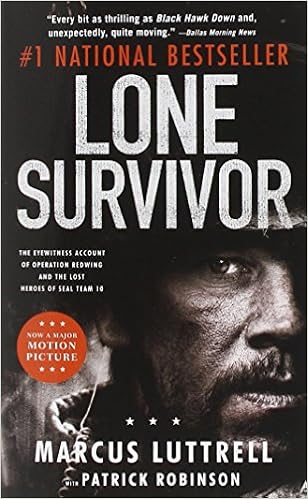
Lone Survivor: The Eyewitness Account of Operation Redwing and the Lost Heroes of SEAL Team 10 Mass Market Paperback by Marcus Luttrell (Author), Patrick Robinson (Contributor) (Little, Brown and Company) (IBRCookBooks)


This book  starts with training and most of the “Can-Do” is mental. Coronado takes its toll, but builds in a resilience that leaves no one behind and everyone covers the team. Against unimaginable odds, four SEALS find themselves in a firefight in the mountains near Pakistan where they are without air support and are heavily out-numbered an outgunned by a hate driven enemy. It happened because of the Rules of Engagement (ROE), which are designed by suits behind desks and more frequently than not, bring death and destruction on American men and women because the enemy knows what the ROE are also, and they use them to their own advantage. Non-stop action, incredible bravery in the face of certain death, and always dedication and duty, to the Team and the Nation, call the shots. These men are truly a gift to the United States, and we are most grateful for their service and dedication. An incredible accounting and well worth the time.

On a clear night in late June 2005, four U.S. Navy SEALs left their base in northern Afghanistan for the mountainous Pakistani border. Their mission was to capture or kill a notorious al Qaeda leader known to be ensconced in a Taliban stronghold surrounded by a small but heavily armed force. Less then twenty-four hours later, only one of those Navy SEALs remained alive. 

This is the story of fire team leader Marcus Luttrell, the sole survivor of Operation Redwing, and the desperate battle in the mountains that led, ultimately, to the largest loss of life in Navy SEAL history. But it is also, more than anything, the story of his teammates, who fought ferociously beside him until he was the last one left-blasted unconscious by a rocket grenade, blown over a cliff, but still armed and still breathing. Over the next four days, badly injured and presumed dead, Luttrell fought off six al Qaeda assassins who were sent to finish him, then crawled for seven miles through the mountains before he was taken in by a Pashtun tribe, who risked everything to protect him from the encircling Taliban killers.


A six-foot-five-inch Texan, Leading Petty Officer Luttrell takes us, blow-by-blow, through the brutal training of America's warrior elite and the relentless rites of passage required by the Navy SEALs. He transports us to a monstrous battle fought in the desolate peaks of Afghanistan, where the beleaguered American team plummeted headlong a thousand feet down a mountain as they fought back through flying shale and rocks. In this rich , moving chronicle of courage, honor, and patriotism, Marcus Luttrell delivers one of the most powerful narratives ever written about modern warfare-and a tribute to his teammates, who made the ultimate sacrifice for their country.

Golden: Sweet & Savory Baked Delights from the Ovens of London's Honey & Co. Hardcover – November 1, 2016 by Itamar Srulovich (Author), Sarit Packer (Author) (Little, Brown and Company) (IBRCookBooks)


Golden is another beautiful cookbook from Honey & Co. In fact, it's the exact same cookbook as Honey & Co. The Baking Book, which was released in the UK last year. I wish that fact were made apparent anywhere in the publishers description, because I already own the UK version, and there's nothing new here. The only real difference is the use of F instead of C for the oven temperatures. Both books specify ingredients in grams/ml only. Don't own the UK version? Golden is definitely worth the money.

I've made the ijjeh (herb frittata), orange tahini soft pretzels, chocolate sandwich cookies with tahini cream, roasted pepper lahma, chocolate hazelnut cinnamon krantz loaf (akin to homemade nutella babka) and the coffee cardamom walnut cake from Golden. Getting the hang of making the pretzels took me a while, and some of the recipes are quite involved. However, everything was delicious and eventually I'd like to make virtually every recipe. Most of these recipes can be made within an hour or two, even more if you don't count rise time. Almost everything I've made from Honey & Co (Book 1) and Golden (Book 2) has turned out to be richly-flavored, satisfying, crave-able, and completely outside of the types of dishes I usually make for myself. The flavor combinations are creative and unusual, yet homey and comforting as well. The only recipe that hasn't turned out for me was their potato bread in Book 1, and that was likely my mistake somewhere along the way (or my sad potato). My old roommate was from Israel, and these recipes have earned his seal of approval too.

Sunday, May 20, 2018

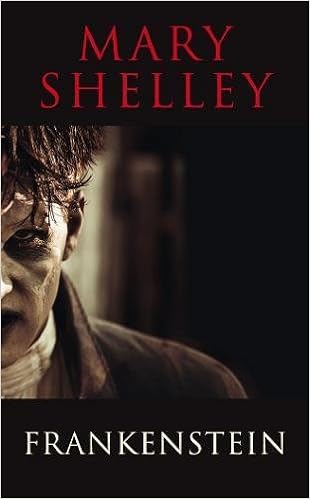
Frankenstein Paperback – 2012 by Mary Shelley (Vintage Classics)


The commentary tries to give depth and meaning to this poorly written story.

Victor grew up reading the works of Paracelsus, Agrippa, and Albertus Magnus, the alchemists of the time. Toss in a little natural philosophy (sciences) and you have the making of a monster. Or at least a being that after being spurned for looking ugly becomes ugly. So for revenge the creature decides unless Victor makes another (female this time) creature, that Victor will also suffer the loss of friends and relatives. What is victor to do? Bow to the wishes and needs of his creation? Or challenge it to the death? What would you do?

Although the concept of the monster is good, and the conflicts of the story well thought out, Shelly suffers from the writing style of the time. Many people do not finish the book as the language is stilted and verbose for example when was the last time you said, "Little did I then expect the calamity that was in a few moments to overwhelm me and extinguish in horror and despair all fear of ignominy of death."
Much of the book seems like travel log filler. More time describing the surroundings of Europe than the reason for traveling or just traveling. Many writers use traveling to reflect time passing or the character growing in stature or knowledge. In this story they just travel a lot.

This book is definitely worth plodding through for moviegoers. The record needs to be set strait. First shock is that the creator is named Victor Frankenstein; the creature is just "monster" not Frankenstein. And it is Victor that is backwards which added in him doing the impossible by not knowing any better. The monster is well read in "Sorrows of a Young Werther," "Paradise Lost," and Plutarch's "Lives." The debate (mixed with a few murders) rages on as to whether the monster was doing evil because of his nature or because he was spurned?

Saturday, May 5, 2018

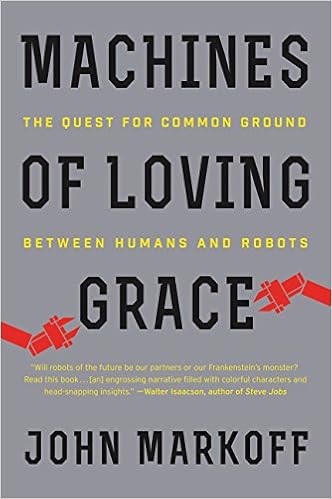
Machines of Loving Grace: The Quest for Common Ground Between Humans and Robots Paperback – August 16, 2016 by John Markoff (Ecco)


Machines of Loving Grace: The Quest for Common Ground Between Humans and Robots discusses evolution of robotic technology through observed advances in artificial intelligence and intelligence augmentation. The author brings into light and contrasts the varying views and opinions of multiple individuals in the computer science realm who have contributed to these advancements.

John Markoff is a technology and science reporter for the New York Times, and also a former recipient of the Pulitzer Prize. Perhaps due to his work in journalism, he focuses mainly on the industry and machines as workers and assisting utilities for workers. Markoff expresses support in the increasing use of robotics in the job industry, though he does acknowledge the negative short-term consequences at the expense of longer-term gains. He emphasizes the implementation of human-centered technologies, in which new machineries are designed in such a way as to aide and work with human users, as opposed to entirely replacing them. The book was published in 2015 and is quite current. Though the author discusses many views and examples from the mid-late 1900s, he also does a thorough job of relating these sometimes-outdated opinions to the current state of the computer science realm. In fact, each chapter itself seemed to flow in a chronological fashion, showing the evolving human-machine relationship over the past 70 years or so. In addition, Markoff also shares and interprets the visions of the future given by many in the field.


Much of the book is devoted to discussing or offering examples of the differing opinions and stances of those in the field of artificial intelligence and intelligence augmentation, and the collaboration between the two. Briefly, artificial intelligence looks to mimic and replicate human features and functions in such a way that a robot could sufficiently replace a human, while intelligence augmentation looks to design robots in such a way as to optimally enhance human functions in a collaborative way. Though I find the design and creation of artificial intelligences to be truly fascinating, I strongly support the goals of intelligence augmentation. I agree with many of Sherry Turkle’s points, both stated in this book and in her own novel, Reclaiming Conversation: The Power of Talk in a Digital Age, addressing the loss of features of interactions, relationships and developments that make us uniquely human as technology use increases. I am wary, not of machines of artificial intelligence turning on humans, but of the negative impacts that further increases in human reliance on and trust in technology and machines will cause for the future of humankind. The author did not discuss this consequence nearly as much as I would have liked, but instead focused more on the emergence of robotics in industries, and the effects that would be observed for companies, employed workers, consumers, and the economy.


Markoff does an excellent job of presenting the work of numerous machine intelligence contributers and voices in the computer science realm, including those of Sherry Turkle and Ray Kurzweil. Additionally, he ties multiple aspects of technology impacts, including discussing the topics of social media, the “job apocalypse” and the movie Transcendence. To anyone interested in the exponential growth of advancing technologies, especially in the work realm, I would highly recommend this book for its insightfulness, its substantial offering of varying views and interpretations, and the authors well-explained means for the future and what may lie ahead of us.

Friday, May 4, 2018

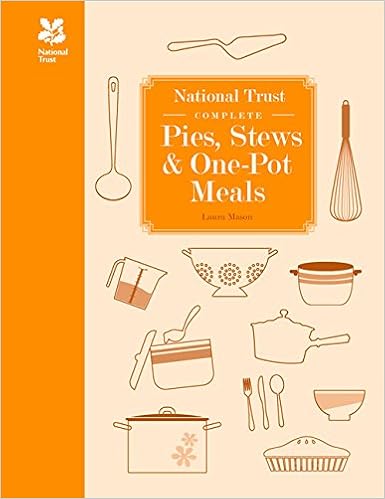
National Trust Complete Pies, Stews & One-Pot Meals (National Trust Food) Hardcover – May 1, 2015 by Laura Mason (National Trust) (IBRCookBooks)


Chicken and Red Wine Sauce

"A simple red wine sauce with brown sugar, garlic, paprika, salt, and pepper makes this dish simply yummy! Braised chicken breasts, brazenly good taste."

Ingredients
1 tablespoon olive oil
1 tablespoon minced garlic
3 pounds skinless, boneless chicken breast halves
1 tablespoon paprika
1 cup brown sugar
1 cup red wine
salt and pepper to taste

Directions
Prep10 m
Cook45 m
Ready In55 m

  1. Heat oil in a large skillet over medium high heat. 
  2. Cook garlic in oil until tender. 
  3. Place chicken in the skillet, and cook about 10 minutes on each side, until no longer pink and juices run clear.
  4. Drain oil from skillet. 
  5. Sprinkle chicken with paprika and 1 cup brown sugar.
  6. Pour red wine around chicken. 
  7. Cover, and simmer about 15 to 20 minutes; lightly baste chicken with wine sauce while cooking. Season to taste with salt and pepper.

Chicken in Red Wine, Lamb Meatballs, Potatoes Roast in Cream and Herbs—a collection of delicious recipes for ultimate comfort foods

A hearty collection of the traditional favorite pies, stews, and one-pot meals, from Steak and Kidney Pie and Bolton Hotpot to Chicken & Leek Pie and Sausage & Lentil Stew. Recipes are included for beef and veal, lamb, pork, chicken, game, fish and vegetables, as well as dumplings, pastry, and other must-have accompaniments. Ingredients can be swapped, altered, or added to make quick and easy nourishing meals for friends and family. Recipes include dual measurements.

Friday, April 13, 2018

England's Jewish Solution. Experiment and Expulsion, 1262-1290 Robin R. Mundill , Cambridge University Press


This has been a long awaited book. The wait has not been in vain. Dr Mundill's is the last, well-considered word on Edward's final solution of a so-called Jewish problem. If there was a problem, Dr Mundill believes, it was that the Jews would not become Christians. They were, however, becoming merchants. The result of the author's patient and meticulous scholarship are original conclusions about the Statute of the Jewry of 1275, which in prohibiting the taking of interest and the granting of mortgages, stopped the age-old Jewish involvement in the land market. The view hitherto has been that the statute undermined Jewish business, that English Jewry subsequently became impoverished, and that it was a bankrupt and diminished community which was expelled in 1290. Too little is known about pawn-broking to say more than that it was certainly an avenue of diversification taken by some Jews. More importantly, and as Dr Mundill evidences in impressive detail, Jewish businessmen in London, Lincoln, Canterbury, and elsewhere across England went in for 'advance sale credits' on the basic commodities of grain and wool. They even specialized: wool at Lincoln, corn in Canterbury. In those places, as on a smaller scale in other towns, Jewish business thrived. Business generally was thriving in England in the 1280s. It was a time of boom in agriculture and commerce. Anyone with cash ought to have been able to use it advantageously. Jewish businessmen were doing so. By 1290, stopped in one lucrative place, they were opening up in another. Dr Mundill shows that far from meekly going under, English Jews responded to adversity with imagination, resilience, and courage. What Dr Mundill does not tell us, probably because there is no evidence to suggest it, is whether English, or rather non-Jewish, businessmen resented these intrusive newcomers. Were those shipmen who murderously mistreated the departing Jews of 1290, like Henry Adrian who was imprisoned at Sandwich for his genocidal act off the Isle of Sheppey, shipowners too? Were they actively vindictive (and they appear to have been the only people who were) because they were of that commercial world which had most recently experienced Jewish resourcefulness? I begin with a question Dr Mundill does not ask to show that his splendid book stimulates thought. Most other questions he has not only asked; he has come up with compelling answers.

The 2000 or so Jews who left England in 1290 were not, therefore, a demoralised and sorry remnant. We have to stop thinking that they were, must cease to see them in such time-honoured fashion. Like most of the Jews who fled Germany and Austria in the 1930s, the English Jews of 1290 were productive and contributive citizens, super-contributive where taxation was concerned. To contemporaries, however, that was beside the point. In both cases what counted was that, whatever else Jews were, they were Jews. Dr Mundill makes Edward I's responsibility for the expulsion crystal-clear; he also illuminates Edward's winding path towards so final a Final Solution. Edward shared with his fellow West European rulers, scholarly and mendicant clergy, and clerical civil-servants the notion that something had to be done about the Jews; in some sense they had to be got rid of, if possible in the sense of transforming them into Christians. All these people believed they knew about Jews, much in the fashion Rosenberg, Goebbels, and Hitler thought they understood them. It was an arrogant as well as a mistaken belief. The merciless coin-clipping affair of 1278-9, which the gifted and tenacious Israeli scholar Zefira Rokeah has taught us to regard as a bureaucratic iniquity of major proportions, bears an uncanny resemblance to Kristallnacht. It was, like Kristallnacht, a pogrom: a government orchestrated persecution of a group targeted as criminal. Radical measure though it was, which the numerous hangings and the imprisonment of 600 Jewish men in the Tower (probably all the heads of Jewish households in the country) illustrate, was it a staging post on the road to the Endlösung? Not if that road was as twisted as Dr Mundill says it was. It was, for example, Edward himself who brought to a close the persecuting zeal of his first- and second-line managers in 1279. Nevertheless, thereafter the 'ever-present threat of confiscation of his goods and chattels was one which hung over every Jew's life, his family, and his business transactions'; those are Dr Mundill's wise words; they need to be carefully pondered when we examine the last years of Medieval English Jewry.

The expulsion itself was not financially motivated. Dr Mundill makes that crystal-clear also. Money is not everything. It is, however, something. Governments plunder their people: not all of their people all of the time, but some of them most of the time. Edward I plundered the Jews, as his father had done before him, and his father before him. Moreover, in tallaging the Jews he was taxing his Christian subjects. The Statute of the Jewry was one solution to that problem. Yet, what impresses a reader about the financial exactions of Edwardian government is the immense effort put into them. Take, for example, the painstaking national investigation into the goods and chattels of the condemned Jews of 1278-9: all for a paltry £2000. There was more to it than royal avarice and administrative experience. Even if, as Dr Mundill notices, the association of Jews with money appears to have been so imprinted on the minds of some historians they have been unable to think of little else when endeavouring to explain the relation between Edward I and English Jewry, there was far more to that relation than wealth creation. Bureaucrats are driven not only by a need to impress their superiors by doing a good job. Knowing the boss's mind is the first, often the only, imperative of careerists: Edward I's mind, the mind of his archbishop of Canterbury, John Pecham, and probably of his Chancellor, Robert Burnell, were set like stone towards the Jews. Nor is it difficult to understand why. The Jews were not only usurers, they were stubborn usurers who refused to see Christian reason. The so-called Jewish problem in England by the 1270s had nothing to do with a commercial class which facilitated the land market and was, as a consequence and by the familiar process of a rationalizing projection, seen as causing the distress, decline, and ruin of the profligate, negligent, and born loser. That might have been the case in 1190; it was not a hundred years later. By 1290, after his attempts to make them less than Jewish, Edward appears to have believed the Jews were incorrigible cheats and rogues, incorrigible by nature, in other words racially incorrigible, for a devastating racial myth had taken root in West European intellectual and pseudo-intellectual minds. There were exceptions, John le Romeyn, archbishop of York, might have been one Righteous Gentile; he threatened to excommunicate any who molested the Jews as they made their way out of England in 1290. His lone example does not amount to much: not a single voice was raised against the Expulsion itself. Nor was Edward an innovator, despite the expulsion of the Jews from Gascony in 1287. The Papal and Mendicant campaign against the Jews in the 1280s, the anti-Jewish measures of St Louis, Philip III, and Alphonso X of Castille, the earlier expulsions of Jews from English towns, the anti-Semitism of his wife and mother, the example set by Charles of Anjou in 1289, all these played a part in making up Edward's mind in 1290. He might have hoped to gain from the expulsion: a lay grant of taxation as Charles of Anjou had obtained one in 1289, a church more amenable to clerical taxation, and the windfall of Jewish property. Yet, what he most hoped to gain was a name for himself. A good name, because getting rid of the Jews was for a Christian prince the right thing to do. Even so, it demonstrates something about the English perception of their history that Edward is not known as the Hammer of the Jews, but of the Scots, whom he hammered, but not with the finality he did the Jews.

This is a necessary book. It is not always easy reading. Chapters six and seven which fill in the picture of Jewish business and Christian indebtedness do so in abundant and repetitive detail. They might have been trimmed. A book is not a thesis, however important the thesis, however necessary the book. These days that maxim is too often forgotten and the book of the thesis is like a beached iceberg: the submerged five-eighths one does not want to know about are there for all to see. That said, and carping laid aside, Dr Mundill has put us all in his debt. The book, as well as being learned, is pondered, temperate, perhaps too temperate, and wise. Dr Mundill exhibits due respect for the historians who have worked on the financial records of English Jewry before him, the extent of those records itself a testimony both to the importance of the Jews to English government revenue and to the archival mindset of England's governors. With England's Jewish Solution Robin Mundill has added to the canon and shown himself to be a worthy successor to Lionel Abrahams, James Parkes, Cecil Roth, and Barrie Dobson.

Friday, April 6, 2018

New Times' by Rehana Rossouw (Jacana)


'New Times' will take you on a journey filled with a fascinating cast of characters


'


Acclaimed writer Rehana Rossouw's book New Times, set in 1995, resonates with the heady days of South Africa's new democracy - tinged with a sense of deja vu.

Well-known for her previous tour de force, What Will People Say?, readers here are lured into a world that on the surface appears to be filled with promise yet shadowed by the past, as Rossouw illuminates the tensions inherent in these new times.

Juxtaposing the present with the looming future, Aliyah Adams lives with her staunchly devout Muslim family in the Bo-Kaap. She's just started a new job as a political reporter in Parliament. But as Mandela begins his second year as president, she finds his party is sidestepping the promised path to freedom and upliftment as the new economic policy being drafted does not provide for the poor.

Ali smells the scent of corruption like a cat weeding out a rotten fish and uncovers a major scandal. As she writes up stories that somehow relive the brutal past, her frind Lizo, who happens to work in Presidency, controls the information that gets through to Madiba. And in the midst of all this, Munier, yet another friend, is making her voice heard outside the gates of Parliament about taking action against Aids.


Rossouw skilfully balances Ali's work life with her complicated life at home. Her mother, after losing her husband, immerses herself in religion; Ali's friend Sumaya is getting married and there's an intense pressure for her to also tie the knot and get pregnant.

In all of this, tolerance is in in short supply for alternative lifestyles in this close-knit community. Against this already convoluted background the Rugby World Cup starts and tourists, drawn to the colourful Bo-Kaap like a magnet, pour up the slopes, discovering a hidden gem their dollars can afford.

Rossouw is a mistress of story-telling and narrative and relates this compelling and descriptive tale of a woman trapped between family and friends in a seemingly impenetrable mesh of politics and traditional culture.

It's a stunning new novel filled with both pathos and warmth, as we are taken on a journey filled with a fascinating cast of characters, each so ravishingly described along with the evocatively described scenes of Cape Town that you may just be swept away.

Sunday, March 4, 2018

Of Mice and Men Mass Market Paperback – September 1, 1993 by John Steinbeck (Penguin Books) )


Of Mice and Men is a novella written by author John Steinbeck. Published in 1937, it tells the story of George Milton and Lennie Small, two displaced migrant ranch workers, who move from place to place in California in search of new job opportunities during the Great Depression in the United States.

Steinbeck based the novella on his own experiences working alongside migrant farm workers as a teenager in the 1910s (before the arrival of the Okies he would vividly describe in The Grapes of Wrath). The title is taken from Robert Burns' poem "To a Mouse", which reads: "The best laid schemes o' mice an' men / Gang aft agley". (The best laid schemes of mice and men / Often go awry.)

While it is a book taught in many schools, Of Mice and Men has been a frequent target of censors for vulgarity and what some consider offensive and racist language; consequently, it appears on the American Library Association's list of the Most Challenged Books of 21st Century.

Plot
Two migrant field workers in California on their plantation during the Great Depression—George Milton, an intelligent but uneducated man, and Lennie Small, a bulky, strong man but mentally disabled—are in Soledad on their way to another part of California. They hope to one day attain the dream of settling down on their own piece of land. Lennie's part of the dream is merely to tend and pet rabbits on the farm, as he loves touching soft animals, although he always kills them. This dream is one of Lennie's favorite stories, which George constantly retells. They had fled from Weed after Lennie touched a young woman's dress and wouldn't let go, leading to an accusation of rape. It soon becomes clear that the two are close and George is Lennie's protector, despite his antics.

After being hired at a farm, the pair are confronted by Curley—The Boss's small, aggressive son with a Napoleon complex who dislikes larger men, and starts to target Lennie. Curley's flirtatious and provocative wife, to whom Lennie is instantly attracted, poses a problem as well. In contrast, the pair also meets Candy, an elderly ranch handyman with one hand and a loyal dog, and Slim, an intelligent and gentle jerkline-skinner whose dog has recently had a litter of puppies. Slim gives a puppy to Lennie and Candy, whose loyal, accomplished sheep dog was put down by fellow ranch-hand Carlson.

In spite of problems, their dream leaps towards reality when Candy offers to pitch in $350 with George and Lennie so that they can buy a farm at the end of the month, in return for permission to live with them. The trio are ecstatic, but their joy is overshadowed when Curley attacks Lennie, who defends himself by easily crushing Curley's fist while urged on by George.

Nevertheless, George feels more relaxed, to the extent that he even leaves Lennie behind on the ranch while he goes into town with the other ranch hands. Lennie wanders into the stable, and chats with Crooks, the bitter, yet educated stable buck, who is isolated from the other workers racially. Candy finds them and they discuss their plans for the farm with Crooks, who cannot resist asking them if he can hoe a garden patch on the farm albeit scorning its possibility. Curley's wife makes another appearance and flirts with the men, especially Lennie. However, her spiteful side is shown when she belittles them and threatens Crooks to have him lynched.

The next day, Lennie accidentally kills his puppy while stroking it. Curley's wife enters the barn and tries to speak to Lennie, admitting that she is lonely and how her dreams of becoming a movie star are crushed, revealing her personality. After finding out about Lennie's habit, she offers to let him stroke her hair, but panics and begins to scream when she feels his strength. Lennie becomes frightened, and unintentionally breaks her neck thereafter and runs away. When the other ranch hands find the corpse, George realizes that their dream is at an end. George hurries to find Lennie, hoping he will be at the meeting place they designated in case he got into trouble.

George meets Lennie at the place, their camping spot before they came to the ranch. The two sit together and George retells the beloved story of the dream, knowing it is something they'll never share. He then shoots and kills Lennie, with Curley, Slim, and Carlson arriving seconds after. Only Slim realizes what happened, and consolingly leads him away. Curley and Carlson look on, unable to comprehend the subdued mood of the two men.

Characters
I was a bindlestiff myself for quite a spell. I worked in the same country that the story is laid in. The characters are composites to a certain extent. Lennie was a real person. He's in an insane asylum in California right now. I worked alongside him for many weeks. He didn't kill a girl. He killed a ranch foreman. Got sore because the boss had fired his pal and stuck a pitchfork right through his stomach. I hate to tell you how many times I saw him do it. We couldn't stop him until it was too late.
John Steinbeck, interview by The New York Times, 1937
George Milton: A quick-witted man who is Lennie's guardian and best friend. His friendship with Lennie helps sustain his dream of a better future. He was bound in teasing Lennie since he was young. He is described by Steinbeck in the novel as "small and quick," every part of him being "defined," with small strong hands on slender arms. He has a dark face and "restless eyes" and "sharp, strong features" including a "thin, bony nose."
Lennie Small: A mentally disabled, but physically strong man who travels with George and is his constant companion.[6] He dreams of "living off the fatta' the lan'" and being able to tend to rabbits. His love for soft things conspires against him, mostly because he does not know his own strength, and eventually becomes his undoing. Steinbeck defines his appearance as George's "opposite," writing that he is a "huge man, shapeless of face, with large, pale eyes" and "wide, sloping shoulders." Lennie walks heavily, dragging his feet a little, "the way a bear drags his paws," adding that his arms do not swing at his sides, but hang loosely.
Candy: An aging ranch handyman, Candy lost his hand in an accident and worries about his future on the ranch. Fearing that his age is making him useless, he seizes on George’s description of the farm he and Lennie will have, offering his life’s savings if he can join George and Lennie in owning the land.
Slim: A "jerkline skinner," the main driver of a mule team and the "prince of the ranch". Slim is greatly respected by many of the characters and is the only character whom Curley treats with respect. His insight, intuition, kindness and natural authority draw the other ranch hands automatically towards him, and he is significantly the only character to fully understand the bond between George and Lennie.
Curley: The Boss' son, a young, pugnacious character, once a semi-professional boxer. He is described by others, with some irony, as "handy", partly because he likes to keep a glove filled with vaseline on his left hand. He is very jealous and protective of his wife and immediately develops a dislike toward Lennie. At one point, Curley loses his temper after he sees Lennie appear to laugh at him, and ends up with his hand horribly damaged after Lennie fights back against him.
Curley's wife: A young, pretty woman, who is mistrusted by her husband. The other characters refer to her only as "Curley's wife". Steinbeck explained that she is "not a person, she's a symbol. She has no function, except to be a foil – and a danger to Lennie."
 Curley's wife's preoccupation with her own beauty eventually helps precipitate her death: She allows Lennie to stroke her hair as an apparently harmless indulgence, only for her to upset Lennie when she yells at him to stop him 'mussing it'. Lennie tries to stop her yelling and eventually, and accidentally, kills her by breaking her neck.
Crooks: Crooks, the black stable-hand, gets his name from his crooked back. Proud, bitter, and cynical, he is isolated from the other men because of the color of his skin. Despite himself, Crooks becomes fond of Lennie, and though he claims to have seen countless men following empty dreams of buying their own land, he asks Lennie if he can go with them and hoe in the garden.
Candy's dog: A blind dog who is described as "old", "stinky", and "crippled", and is killed by Carlson.
Carlson: A "thick bodied" ranch hand, he kills Candy's dog with little sympathy.
The Boss: Curley's father, the superintendent of the ranch. The ranch is owned by "a big land company" according to Candy.
Whit: A young ranch hand.

Themes
In every bit of honest writing in the world there is a base theme. Try to understand men, if you understand each other you will be kind to each other. Knowing a man well never leads to hate and nearly always leads to love. There are shorter means, many of them. There is writing promoting social change, writing punishing injustice, writing in celebration of heroism, but always that base theme. Try to understand each other.

— John Steinbeck in his 1938 journal entry
Steinbeck emphasizes dreams throughout the book.[clarification needed] George aspires to independence, to be his own boss, to have a homestead, and most importantly to be "somebody". Lennie aspires to be with George on his independent homestead, and to quench his fixation on soft objects. Candy aspires to reassert his responsibility lost with the death of his dog, and for security for his old age—on George's homestead. Crooks aspires to a small homestead where he can express self-respect, security, and most of all, acceptance. Curley's wife dreams to be an actress, to satisfy her desire for fame lost when she married Curley, and an end to her loneliness.

Loneliness is a significant factor in several characters' lives. Candy is lonely after his dog is gone. Curley's wife is lonely because her husband is not the friend she hoped for—she deals with her loneliness by flirting with the men on the ranch, which causes Curley to increase his abusiveness and jealousy. The companionship of George and Lennie is the result of loneliness. Crooks states the theme candidly as "A guy goes nuts if he ain't got anybody. Don't make any difference who the guy is, long's he's with you."[8] The author further reinforces this theme through subtle methods by situating the story near the town of Soledad, which means "solitude" in Spanish.

Despite the need for companionship, Steinbeck emphasizes how loneliness is sustained through the barriers established from acting inhuman to one another. The loneliness of Curley's wife is upheld by Curley's jealousy, which causes all the ranch hands to avoid her. Crooks's barrier results from being barred from the bunkhouse by restraining him to the stable; his bitterness is partially broken, however, through Lennie's ignorance.

Steinbeck's characters are often powerless, due to intellectual, economic, and social circumstances. Lennie possesses the greatest physical strength of any character, which should therefore establish a sense of respect as he is employed as a ranch hand. However, his intellectual handicap undercuts this and results in his powerlessness. Economic powerlessness is established as many of the ranch hands are victims of the Great Depression. As George, Candy and Crooks are positive, action- oriented characters, they wish to purchase a homestead, but because of the Depression, they are unable to generate enough money. Lennie is the only one who is basically unable to take care of himself, but the other characters would do this in the improved circumstances they seek. Since they cannot do so, the real danger of Lennie's mental handicap comes to the fore.

Regarding human interaction, evil of oppression and abuse is a theme that is illustrated through Curley and Curley's wife. Curley uses his aggressive nature and superior position in an attempt to take control of his father's farm. He constantly reprimands the farm hands and accuses some of fooling around with his wife. Curley's Napoleon complex is evidenced by his threatening of the farm hands for minuscule incidents. Curley's wife, on the other hand, is not physically but verbally manipulative. She uses her sex appeal to gain some attention, flirting with the farm hands. According to the Penguin Teacher's Guide for Of Mice and Men, Curley and Curley's wife represent evil in that both oppress and abuse the migrants in different ways.

Fate is felt most heavily as the characters' aspirations are destroyed when George is unable to protect Lennie (who is a real danger). Steinbeck presents this as "something that happened" or as his friend coined for him "non-teleological thinking" or "is thinking", which postulates a non-judgmental point of view.

Development
Of Mice and Men was Steinbeck's first attempt at writing in the form of novel-play termed a "play-novelette" by one critic. Structured in three acts of two chapters each, it is intended to be both a novella and a script for a play. It is only 30,000 words in length. Steinbeck wanted to write a novel that could be played from its lines, or a play that could be read like a novel.

Steinbeck originally titled it Something That Happened (referring to the events of the book as "something that happened" because nobody can be really blamed for the tragedy that unfolds in the story). However, he changed the title after reading Robert Burns's poem To a Mouse.Burns's poem tells of the regret the narrator feels for having destroyed the home of a mouse while plowing his field.

Steinbeck wrote this book and The Grapes of Wrath in what is now Monte Sereno, California. An early draft of Of Mice and Men was eaten by Steinbeck's dog, named Max.