Showing posts with label #IBRChildrensBooks. Show all posts

Wednesday, February 28, 2018

BEFORE I WAKE UP... by Britta Teckentrup ; illustrated by Britta Teckentrup Age Range: 3 - 7, Prestel, #IBRChildrensBooks


Together they venture into the night in a bed carried along in a hot air balloon basket suspended from a yellow moon. They travel over a meadow and deep into the ocean, making friends with animals along the way. Author and illustrator Teckentrup owes something to Maurice Sendak’s Where the Wild Things Are in the style of her illustrations as well as the book’s design. In full and partial double-page spreads, the companions float on the seas in a simple sailboat with a triangular sail. The dreamy, sparse text is frequently set opposite the illustrations, surrounded by white space. The story conveys both a sense of adventure and the comfort of a protective companion: “You make me feel safe, / you are always near. / That’s why I am brave, / without any fear….” Mottled, textured collage and mixed media in a gentle, subdued palette propel the story from the dark of night until dawn, the journey echoed in the endpapers. The lovely illustrations on matte paper are an evocative match to the simple prose, drawing readers into the child’s dream. Even the binding of this well-designed book adds to its success, as the large pages fall open with a satisfying sound.

This charming bedtime read-aloud, a German import, assures children that a new day awaits them.(Picture book. 3-7)

Saturday, February 24, 2018

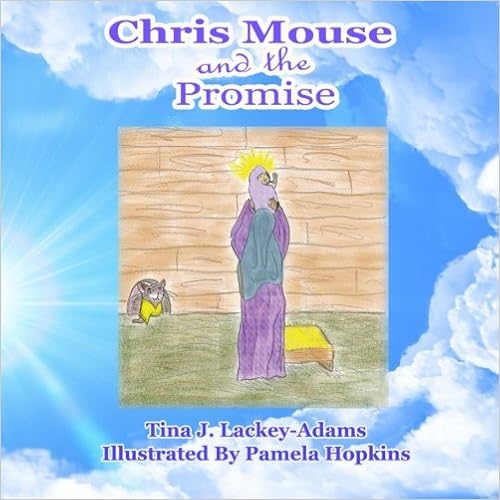
Chris Mouse and the Promise Paperback – November 20, 2015 by Tina Jane Lackey-Adams (Author),‎ Pamela Hopkins (Illustrator) (IBRChildrensBooks)


Chris Mouse recalls her best Christmas ever: After putting her children to bed, she saw a beautiful star in the sky. Right after that a man and his pregnant wife came to stay in the humble stable where Chris and her family live. The woman gave birth that night to a very special baby, and when she whispered his name, Jesus, Chris knew this was the Promised Child she'd been told about all her life.
Review

There are numerous re-tellings of the blessed birth of Christ in children's literature, and I'm always interested in checking out new ones. Chris Mouse and the Promisewas a cute enough story of a mother mouse's reminiscence of the first Christmas, but I thought it was missing that little something extra to make it truly special. I realize this is a children's book and there is only so much one can do with such limited words, but I still couldn't help but feel the story needed a bit more development. As one example, Chris Mouse mentions the wise men visiting Jesus, but not the shepherds. I'm not a historical stickler when it comes to putting the wise men in the nativity, but considering that they most likely weren't there at the actual birth of Christ while the shepherds were, not including them seems a rather big omission. I don't think I've ever read a Christmas story before that left them out. I thought it could have been a bit more original too. After reading Chris Mouse and the Promise, I went to my bookshelf and found no less than three other children's books told from the perspective of animals who were present in the stable when Jesus was born.

The illustrations were also a bit different than what I'm used to seeing in a children's story. When it comes to picture books, the illustrations are half of what makes the book engaging in my opinion. The pictures in Chris Mouse and the Promise are very simplistically rendered, appearing to be pencil and crayon type drawings much like a child's artwork with a bit more sophistication. They appropriately complimented the story being told, but didn't really draw me any further into it.

Children are likely not going to be as particular as an adult reader like myself, so for anyone who is simply looking for something new to read with their young ones for the holiday season, Chris Mouse and the Promise may be the perfect choice. Those readers who are looking for gorgeous illustrations or a compelling story may want to borrow a copy first to make sure it is the right type of book for them and/or their children. Some of the pictures can also be viewed on the author's website. At a cover price of $16.95, it is a bit pricey for a paperback edition of a children's book. Usually, only hardcovers are that expensive. However, a signed copy can be purchased at Ms. Adams website for nearly $5.00 less including shipping.


BOOKS! BOOKS! BOOKS! Explore the Amazing Collection of the British Library by Mick Manning & Brita Granström ; illustrated by Mick Manning & Brita Granström Age Range: 8 - 12 ( Candlewick)


As the subtitle indicates, young bookworms are invited to “Explore the Amazing Collection of the British Library.”

“Explore” is the key word here, as the table of contents lists 21 potential discoveries among the library’s holdings. In its tour, the text capitalizes on the human-interest aspects of the collection, such as the facts that Shakespeare’s First Folio is kept in a bombproof, underground room and that the oldest surviving book produced in Europe, St. Cuthbert’s Gospel, was found in a coffin. Other monuments to the (mostly) English masterworks surveyed include Darwin’s On the Origin of the Species, Handel’s handwritten sheet music, and the original manuscript of Alice’s Adventures in Wonderland. Questions to readers provide segues from one entry to the next; “Are you hungry after all that drama?” leads them from Shakespeare to the section on cookbooks. The watercolor-and-digital illustrations lend a fanciful, hodgepodge effect to the collection of literary tidbits. Varying typefaces play to the topics, as with the use of a Gothic type for The Canterbury Tales and a delicate scriptlike type for Jane Austen. The book effectively demonstrates the role of the British Library as custodian to a broad swath of British literary history. The question here is, who is the audience on this side of the Atlantic, particularly at a time when concerted efforts are being made to create a more diverse and inclusive canon? The Inside-Outside Book of Libraries, by Julie Cummins and illustrated by Roxie Munro (1996), is a little old but still provides a better introduction to the concept of libraries.

Beautiful and reverent but perhaps not particularly relevant. (thumbnail bios, glossary) (Nonfiction. 8-12)


Wednesday, February 21, 2018

COOK IT! illustrated by Georgie Birkett Age Range: 2 - 4 (Child's Play) ( IBRchildrensBooks)


A cheery little girl and her dad plan a shopping trip, go to the grocery store (by bike), purchase ingredients and go home to make pizza for the whole family (a biracial one, in a nice touch). An enthusiastic running commentary narrates the activities, which all go smoothly and safely, with just a bit of mess. Birkett’s bright, line-and-color illustrations focus on the child and her contributions, evoking Aliki in line and mood. The narration, which seems to include both the child and her father’s dialogue without distinction, may confuse some readers slightly, but its rapid-fire enthusiasm is appealing. This entry in the Helping Hands series is joined by Clean It!(ISBN: 978-1-84643-283-6), Fix It! (ISBN: 978-1-84643-286-6) and Grow It! (ISBN: 978-1-84643-285-9). All have a thinner-than-usual page stock that suits them, appropriately, to toddlers. (Board book. 2-4)

Tuesday, February 6, 2018

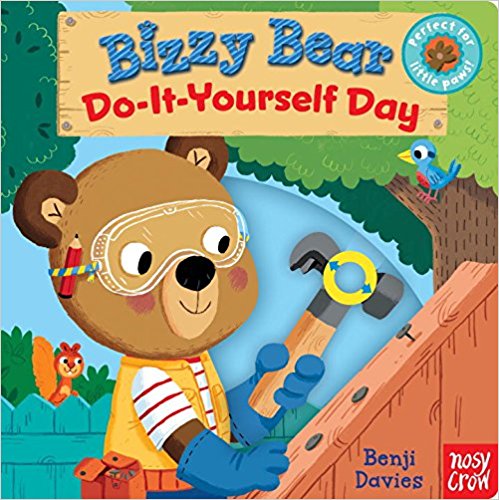
Bizzy Bear: Do-It-Yourself Day Written by Nosy Crow Illustrated by Benji Davies Age Range: 0 -3 Hardcover Book: 8 pages Publisher: Nosy Crow Ltd. (2017) ISBN: 978-0-7636-9 328-2 (IBRChildrensBooks)


What to Expect: Bizzy Bear, Teamwork, Tools, Projects, DIY

Bizzy Bear has been busy deep sea diving, visiting with dinosaurs and having fun on the farm. Now he is taking time to work on a fun project for him and his friends!

Benji Davies brings back yet another interactive Bizzy Bear as he hammers, measures, saws, and drills to create an out-of-this-world treehouse that seems to be able to rocket into space! Youngsters push and pull the tabs to mimic the actions of Bizzy Bear. Davies does not miss a beat with his illustrations by including the excess sawdust and the little friends (ie. the ladybug and worm) who pop up from the grass to keep on eye on things.

This interactive board book teaches children not only about teamwork, but also the ability to create things with your own two hands, and knowing that we all have this capability in each of us. This is a lesson that can never be taught too early.

About The Illustrator

From a young age, Benji Davies was invariably found drawing and painting at the kitchen table, a scene which is often repeated to this day. He is the award-winning illustrator of all the Bizzy Bear books and apps, as well as a number of recent picture books, including Also an Octopus by Maggie Tokuda-Hall and Grandad’s Island, which he also wrote. Benji Davies lives in east London.

Saturday, February 3, 2018

Cuddly Cow A Farm Friends Sound Book by Nosy Crow ; illustrated by Axel Scheffler Age Range: 1 - 3 (Nosy Crow / Candlewick) IBRChildrensBooks


A cow named Cuddly searches for a quiet place to hit the hay in this book with barnyard sounds supplied in an embedded sound chip.

From the cover, toddlers can push a big green button (which doubles as a speaker) to activate the chip, which features a loud moo with other animal sounds in the background; die-cut circles in the lower corner of the cover and subsequent pages ensure its accessibility throughout. Cuddly tries to bunk with the hens, a horse, and the pigs to no avail. She has a brainstorm and counts the sheep in a field and quickly falls asleep. Scheffler, of The Gruffalo fame, uses richly colored gouache to paint scenes with friendly, wide-eyed farm residents against pastoral backgrounds. Young readers may be confused to see a very bright sky in this tale set at twilight. Each one-page scene is paired with a nicely scanning quatrain set in a large font against a brightly colored background on the opposite page. In the companion title, titular Higgly Hen loses her eggs as they hatch, legs first, and then walk away. In slapstick fashion, she chases the walking eggs around the farm until she finds them all in time for them to complete their emergence. This offering sports a large yellow button that clucks realistically when pressed. The battery can be replaced by opening a panel (with a tiny Phillips screwdriver) in the back of the book, but caregivers may choose to let the noisemaker die a natural death.

The art and writing can stand on their own while the gimmick will likely distract anyone reading aloud even as it delights little ears and fingers. (Board book. 1-3)

Porrtly Pig From the "Farm Friends Sound Book" series by Nosy Crow ; illustrated by Axel Scheffler Age Range: 1 - 3 (Nosy Crow/ Candlewick)


Portly Pig is much too clean and searches for the perfect muddy pool.

He soon discovers a good patch in the corner of a field and makes himself sufficiently dirty. When a brief rainstorm washes him clean, he quickly heads back to this new favorite spot to muck himself up all over again. While the story is slight, the key attraction is the large blue button/speaker on the cover that’s accessible on every page through a die-cut circle. When pushed, it activates a sound chip that produces realistic pig grunts and barnyard bird song. Scheffler uses richly colored gouache and a bold black outline to create playful and expressive farm critters, all with the artist’s signature circular, bulgy eyes. Each one-page scene is paired with a quatrain on a solid background on the opposite page to relay the simple tale. In the companion title, Gobbly Goat, the title character searches for something yummy to eat until he spies a bowl of strawberries and cream inside a farmhouse. He promptly breaks in, devours the treat, and eats the flowers in a vase as well. This offering in the series also employs a large button that bleats realistically when pushed. A button battery is secured behind a plastic panel in the back cover and can be accessed or replaced only with a tiny Phillips screwdriver.

While the writing is not as whimsical as in predecessors Cuddly Cow and Higgly Hen (both 2017), the prospect of pushing buttons will make this a toddler crowd pleaser. (Board book. 1-3)


Pub Date: Feb. 6th, 2018


ISBN: 978-0-7636-9621-4


Page count: 12pp


Publisher: Nosy Crow/Candlewick

Thursday, February 1, 2018

Where's the Hen? by Nosy Crow ; illustrated by Ingela P. Arrhenius Age Range: 0 - 2 ( Nosy Crow / Candlewick)


A lift-the-flap board book plays peekaboo with baby.

Verso-page text asks where various farm animals are from one spread to the next, with the response “Here it is!” on the facing recto. But readers must lift a felt flap to reveal that response and to see the hidden animal in each instance. The titular question doesn’t appear until the penultimate spread, with prior ones asking about the pig, the cow, and the sheep. And, on each spread, there are other unmentioned characters—a bird, a pink-skinned farmer, an olive-skinned person driving a tractor, and a baby chick—who all appear to be looking for the named animals. All pictures feature bold colors and ample open space to make the spreads accessible and engaging for little ones. The culminating spread depicts all previously hidden animals (the sheep, cow, pig, and hen) on the verso under text reading “And where are you?” This time the flap (red felt shaped like a barn) lifts to reveal a mirror and the response: “There you are!” Companion title Where’s the Owl?follows the same pattern but depicts woodland creatures both seeking and being sought before the page with the mirror closes the book.

Playful, interactive reading fun for the youngest readers. (Board book. 6 mos-2)

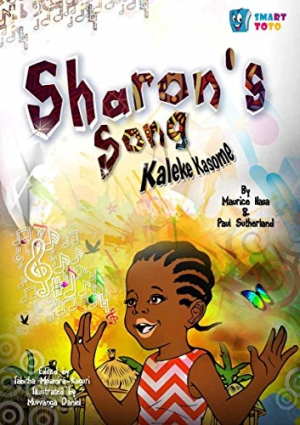
Sharon's Song by Kaleke Kasome (Amazon Digital Services) (IBRChildrensBooks)


Wonderful details offer a peek into another culture and will help children learn to love and accept all people.

Paul Sutherland’s Sharon’s Song was inspired by Maurice Hasa’s “Kaleke Kasome” and is a sweet book about a little girl who loves to sing. With bright colors and lyrics on nearly every page, the book flows from beginning to end.

Sharon sings everywhere she goes. Many adults are critical of her singing, but the children in her village enjoy hearing her songs. One day, a new girl comes to school. The girl cannot talk and has very limited vision, but she loves to hear Sharon sing, and the two become immediate friends.

When the girl is missing from school the next day, Sharon is worried; when the two are reunited, she finds out that the girl has no name and no family. Sharon is quick to invite her to be her sister.

There are a lot of lovely messages in Sharon’s Song. Sharon sings for herself and for those who can appreciate the beauty in her music, and she learns to be strong and loving and generous. When she is picked on, her cousins protect her and teach her how to use her voice and her words to protect herself.

The illustrations on each page depict a colorful, vibrant African village, as well as interesting details not mentioned in the text: the nameless girl appears to have a cleft palate; children come in multiple shapes and sizes; adults, particularly the women, are dressed in colorful patterned fabrics. These wonderful, unspoken details will help children learn to love and accept all people, and offer a peek into another culture.

There is a guide at the end of the book for parents and teachers that primarily addresses appropriate touch. It describes who it’s okay to hug and kiss, who it’s okay to shake hands with, and the kind of touch a child should be wary of, alongside a list of internet resources on this topic. Though the information here is certainly good, the topic of appropriate touch is only mentioned once in the context of a song and is not the primary focus of the book.

Sharon’s Song is a lovely book, full of positivity. It will be a wonderful addition to any library.

Spooky House From the "Bizzy Bear" series by Nosy Crow ; illustrated by Benji Davies Age Range: 1 - 3 (Nosy Crow / Candlewick) IBRChildrensBooks


Bizzy Bear attends a Halloween party.

Bizzy Bear enters a spooky house on Halloween night. As the friendly critter follows a dog butler through the house, readers are able to slide panels that make portraits’ eyes move, bats and animal witches fly outside, doors open and close, and more. The story ends in the attic, where a Halloween bash is in full swing. The illustrations eschew the Bizzy Bear books’ usual bright primary color palette and swap in dark purples, greens, and oranges. The comfortably rounded Bizzy Bear character stylings are still there, but the backgrounds incorporate harsh angles in their compositions to make the environment all the spookier. The sliding panels and tabs are sturdily constructed, resistant to even the harshest tugs from spooked toddlers. The shifting environments are particularly creative, drawing little readers into the creepy environment but still keeping this fun instead of truly scary.

An excellent read for little ones learning about the holiday as well as those who can’t wait for Halloween to arrive. (Board book. 1-3)


The Storm Whale in Winter by Benji Davies ; illustrated by Benji Davies Age Range: 4 - 8 (Henry Holt)(ISBChildrensBooks)


A winter tale of a boy, his dad, and a whale

A little white boy’s love for his fisherman father and an unlikely friendship with a mysterious whale take the forefront in Davies’ sequel to The Storm Whale (2014). The seasons have changed, and little Noi has not seen his friend the whale in quite some time. “Now and then he thought he caught a glimpse of the whale, its tail tipping the waves in the distance. But it was always something else.” When Noi ventures out into a winter storm to help bring his father home to safety, gentle suspense ensues as Noi wanders over the frozen sea and is lost amid the snowflakes in search of his dad. Perhaps his loyal whale friend will intervene….As with its predecessor, the illustrations here capture the feeling of another time, provide a vivid depiction of life by the sea, and contain just the right amount of detail, while clear, descriptive text allows the plot to gracefully unfold. Readers who don’t know the previous selection will enjoy this quiet depiction of the seashore in winter, while those already familiar with Noi and his world will further appreciate this continuation of the earlier story.

A meditative tale of family, friendship and warmth. (Picture book. 4-8)


The Itsy Bitsy Spider Sing Along with Me! by Nosy Crow ; illustrated by Yu-hsuan Huang Age Range: 2 - 3(Nosy Crow / Candlewick) (IBRChildrensBooks)


The itsy bitsy spider scales the water spout again.

Little readers all over know about the itsy bitsy spider’s quest to reach the top of the water spout. This board book features sliding panels that let little ones help the spider along its journey. The song’s four verses are spread over four double-page spreads, with the spider finally achieving the top of the water spout against a rainbow backdrop on the final page. The illustrations boast a color palette that leans heavily on purples, blues, yellows, and greens. The spider is a round, smiling critter with a jaunty cap and high-top sneakers on all eight feet (one pair each of red, orange, yellow, and blue). The first page of the board book holds a QR code for caregivers to download a free version of the song. The sliding panels are sturdily built, and the calm nature of the song will aid their durability. While some little ones will instinctively want to sing the song and go through the accompanying hand motions, they will adapt to the interactive manipulations fairly easily, making this especially well suited to car rides.

Wednesday, January 31, 2018

Gratitude, Trust and Tolerance.....“Thank You, Bees,” by Toni Yuly (Candlewick ),“The War I Finally Won,” by Kimberly Brubaker Bradley (Dial Books),“The 57 Bus,” by Dashka Slater (FSG)(IBRChildrensBooks)


The sweetness of food, the warmth of a sweater, the soil and rain that nourish plants and flowers: There is much for which to be grateful. But where do these things come from? Toni Yuly shows us, joyfully, in Thank You, Bees (ages 18 months to 4 years). Cheerful ink and collage art sings from each page in vibrant primary colors and interesting textures. Yuly’s clear, crisp depictions of things such as rain, gardens or a treehouse are lively and immediate, demonstrating that we have light from the sun, honey from the bees, wool from sheep, wood from trees — and each of these makes up a part of the home that the Earth gives us. This is an exuberant book about some everyday gifts from the natural world and a lighthearted way to express gratitude for them, with words that are easy, charming and important to say out loud now and then: “Thank you, bees,” “Thank you, trees,” “Thank you, Earth.”


Trust comes hard to 11-year-old Ada in The War I Finally Won(Dial, ages 9 to 12), by Kimberly Brubaker Bradley. This stunning sequel to Bradley’s Newbery Honor book “The War That Saved My Life” opens in 1940 with Ada about to undergo surgery on her clubfoot. Its success allows Ada to walk and run, but she remains haunted by memories of her abusive mother. Ada’s worries are further complicated by the uncertainties of war. The cottage Ada shares in Kent, England, with her younger brother and their guardian grows cramped and occasionally fractious when the landlord, Lady Thorton, moves in. Bradley brings to vivid life the home-front experience of blackout curtains, ration books, bombs and the constant fear of loss. When a Jewish teenager from Germany joins the household, Ada remains aloof, believing, like many at the time, that all Germans were enemies. Slowly, the girls bond over a shared love of the horses in Lady Thorton’s stable, and Ada learns of Hitler’s treatment of Jews. A series of tragic events thrusts Ada into action — and brings the disparate characters together. By turns tough and tender, this novel leavens complex themes with moments of wonder and joy, including a trip to the London zoo and a magical late-night gallop.


—


“The 57 Bus,” by Dashka Slater (FSG)

On the afternoon of Nov. 4, 2013, a 16-year-old boy in Oakland, Calif., set fire to another teenager’s thin white skirt. The victim received second- and third-degree burns and spent the next few weeks undergoing multiple surgeries. In The 57 Bus (Farrar Straus Giroux, ages 12 to 18), Dashka Slater examines this horrific incident from several angles, providing a nuanced portrait of the assailant and the victim, a brainy teen who identifies as agender (neither male or female). The book also sensitively explores the hot-button issues of gender nonconformity, bias crimes and juvenile justice. And since the attack occurred at one point along the sprawling route of the 57 bus, the city of Oakland — a diverse community beset by inequalities in income, opportunity and safety — also figures heavily in the narrative. For kids in East Oakland, “life had a way of sticking its foot out, sending you sprawling,” and Slater well describes the bleak and bleaker prospects they face.

Saturday, January 27, 2018

Shabbat In The Playroom (Shira's Series Book 1) by Galia Sabbag

‘Shabbat in the Playroom’The book “Shabbat in the Playroom” teaches children a little bit of the Hebrew language and also that every […]


The book “Shabbat in the Playroom” teaches children a little bit of the Hebrew language and also that every Jewish house should have Kabbalat Shabbat. The story is about a girl named Shira, who learns at school about Shabbat – the candles, challah, kippot, the Kiddush cup, the siddur and more – but never has these things at home.

Shira wants to observe the Day of Rest with her family, so every Friday after school, she asks her parents if they can have Kabbalat Shabbat. Many times, they say they’re too busy; read the book to find out if Shira can use her new knowledge to convince her parents to make the time.

The author of “Shabbat in the Playroom,” Galia Sabbag, taught at the Davis Academy for more than 15 years. She also believes that every family should have Kabbalat Shabbat, and the situation that the character of Shira has is based on experiences that her students had during her years of teaching.

This book is a great story for children from preschool to first grade; it’s educationalteaches a little Hebrew and teaches that every Jewish house should have Kabbalat Shabbat. Coming soon are also other books in the series (shirasseries.com).

Friday, January 26, 2018

The War I Finally Won By Kimberly Brubaker Bradley 385 pp. Dial. 16.99 (IBRChildrensBooks)


‘The War I Finally Won’ Tells One English Girl’s Survival Story

Readers of Kimberly Brubaker Bradley’s last novel, “The War That Saved My Life,” will already be familiar with the terrible particulars of Ada Smith’s childhood: her abusive mother, her captivity in a single shabby room in London during World War II, her painful clubfoot and its associated shame. They will have watched her journey out of that dark place, into one of relative safety. Leaving us to wonder: Now what? Now comes Ada’s aftermath, as she struggles not to let her trauma define her life.

In some ways, the structure of “The War I Finally Won” could not be simpler. “You can know things all you like,” Ada says in the very beginning of the book, “but that doesn’t mean you believe them.” This is the book’s anchor. Ada’s journey, we understand, will be about learning to believe.

Ada’s physical and external problems will be solved rather quickly. In the book’s first chapters, her clubfoot is repaired and she finds herself mending in a hospital. She discovers that her horrible mother is conveniently dead, so Ada and her brother, Jamie, can live happily with their kind guardian, Susan, in a comfortable country cottage. But those physical solutions only take her so far, because of course Ada’s journey isn’t really a physical one at all. Her journey is about constructing belief, and that path is less clear.

Ada can’t simply shake off the pain of the past, because she suffers from a kind of PTSD. Fearful and nervous, she hoards, mistrusts physical affection, is ashamed to talk about her foot and struggles to express love until the very end of the book. External events occur — Susan gets sick , a Jewish refugee named Ruth joins them and Ada’s sponsor, Lady Thorton, suffers a great loss when her son dies — but these events matter primarily because they give Ada the opportunity to learn, to experience empathy and, ultimately, to love.

Ada also grows through direct lessons from others, who increasingly inspire trust. Halfway through the book, Susan offers a variation on the theme. “You don’t have to feel safe to actually be safe,” Susan reassures Ada after a moment of panic on a rooftop. Safety is not something Ada can feel yet, but she is able, after so much work, to accept that maybe the safety is there before she can feel it. And that Susan can help her believe in it. This is key, because Ada’s healing feels most complete when she becomes whole enough to see past her own pain, and able to believe or feel for others. As Ada comes to see that her life is better than it has ever been, she recognizes that some of her loved ones are struggling. In the end, she gets her turn to help, and so becomes stronger, more whole.

By the story’s final page, that initial anchor sentence has shifted. “You can know things all you like,” Ada tells us. “And someday you might believe them.” That “might” is my favorite word in the book. It makes me believe in Ada, in her journey. The beauty of this book is in the slightness of this shift, in the fact that Ada is still not quite certain but has hope.

Rarely is a children’s book so honest in its approach to suffering, and the possibility that recovery will never be complete. Ada will always limp, and she may always feel survivor’s guilt or struggle to trust those who love her. In this way, “The War I Finally Won” is daring. But there is comfort too, in Ada’s desire to love and grow.

This willingness to allow for true contrast is the book’s greatest strength. Despair and hope, coldness and warmth, fear and trust, ugliness and beauty. Bones break and knit back together. A terrifying climb to a rooftop reveals a breathtaking sky full of stars. Children are broken and then made whole. And yet they will always have been broken.“The War I Finally Won” explores how pain can lead to strength, or fear to joy. In the end, we accept that Ada will carry her burden. But we also know that she will work to be okay. The power of this book is that it describes, slowly and sometimes painfully, that it is possible not just to live through pain, but to live with it.

Monday, December 18, 2017

Hershel and the Hanukkah Goblins By Eric A. Kimmel , illustrated by Trina Schart Hyman (Scholastic)(IBRChildrensBooks)


‘Hershel and the Hanukkah Goblins’ Is the True Story of Hanukkah

 So what if the festival of lights has some magic?

Part of the way through the holiday-season classic Hershel and the Hanukkah Goblins, I pause and ask myself, What do goblins have to do with anything in the first place? And while we’re at it, what do enchanted dreidels or golem latkes have anything really to do with the festival of lights? Yes, Eric A. Kimmell, the famed children’s book writer responsible for Hershel and the Hanukkah Goblins, in addition to a number of other Hanukkah stories involving demons, goblins, and golems, hits the Hanukkah dreidel on the head. The question isn’t whether goblins are part of the canonical tale of Hanukkah, but whether there really is a canonical tale at all.

Hanukkah is a holiday with so many different origin stories, so many different traditions, rituals, practices, that ultimately its most fitting bard is a children’s book writer. Not just because Hanukkah isn’t really in the Torah, but because you don’t have to buy tickets to go to temple on Hanukkah, you don’t flock across state lines to eat with relatives, you don’t bring girlfriends or boyfriends home for Hanukkah, you don’t invite lonely Jews into your home because they don’t have a place to go for Hanukkah. It stands out because it’s hard to put your finger on what exactly the real story of Hanukkah is to begin with. Is it that they tried to kill us and we won, or the miracle of the oil, or the story of Jews refusing to practice in secret?

With Hanukkah, we aren’t really celebrating just one thing, and so it inevitably becomes a holiday of naked projection. Which is to say, the best Hanukkah literature has always been children’s books, and sometimes you get to write about goblins.

Hershel and the Hanukkah Goblins is about a traveler who comes across a town that cannot celebrate Hanukkah because goblins have taken over its synagogue. Hershel must go through a series of herculean tasks and use duplicity in order to oust goblins and return Hanukkah festivities to the village. He hunkers down in the old synagogue and waits each night for a different goblin to appear, out-maneuvering each before finally being confronted by the goblin leader.

Can you imagine goblins on Yom Kippur? Even Kimmell’s Passover children’s book is a sensible illustrated holiday companion text. Passover, the heart and soul of the modern Jewish experience, shows up in canonical Jewish literature precisely because its meaning is so distinct, because it is so special. It is the story of how we as a people do not belong here, wherever here is.

Passover and Yom Kippur are sacred literary refrains because we understand the fundamental framework of these holidays. They are touchstones in our lives. Every Jew knows what it feels like to be Jewish on Passover. But to be Jewish on Hanukkah? What that means is more or less up to us.

If Hanukkah gives us a chance at inventing how we wish to celebrate our Judaism, Hanukkah also offers writers a blank canvas. Hershel is not a fantasy interpretation of a holiday, but a reimagining of its true origin story. It was almost as if the holiday sprung not from the story of Maccabees but from Hershel himself.

The villagers give Hershel a few meager supplies and provisions (sadly no latkes) and send him off to the synagogue, convinced that he’ll never make it out. Using wit and ruses worthy of an Upper West Side Jewish matriarch, Hershel gives the boot to the goblins and restores Hanukkah celebrations. And even though the synagogue is destroyed in a final confrontation with a goblin, the menorah stands and the town bursts with celebration. And in each window, Hershel sees a menorah.

Kimmell does what no other author could do with Hanukkah. He tells an entire story of survival without expounding on the virtues of courage, or moralizing about the traditions of our ancestors. There is no ham-fisted attempt at teaching us the received meaning of Hanukkah. What Kimmell’s Hanukkah stories do is participate in one of the greatest storytelling traditions, which is available only to stories that are largely unwritten. He understood that because Hanukkah is about a moment when the practice of Judaism was forced underground its stories should inevitably be a variation on a theme—a foggy campfire interpretation, elastic and forgiving, necessarily different every time. And so what if one of them has goblins?

Thursday, December 14, 2017

Cuddly Cow: A Farm Friends Sound Book by Nosy Crow ; illustrated by Axel Scheffler Age Range: 1 - 3 (Nosy Crow / Candlewick) (IBRchildrensBooks)


A cow named Cuddly searches for a quiet place to hit the hay in this book with barnyard sounds supplied in an embedded sound chip.

From the cover, toddlers can push a big green button (which doubles as a speaker) to activate the chip, which features a loud moo with other animal sounds in the background; die-cut circles in the lower corner of the cover and subsequent pages ensure its accessibility throughout. Cuddly tries to bunk with the hens, a horse, and the pigs to no avail. She has a brainstorm and counts the sheep in a field and quickly falls asleep. Scheffler, of The Gruffalo fame, uses richly colored gouache to paint scenes with friendly, wide-eyed farm residents against pastoral backgrounds. Young readers may be confused to see a very bright sky in this tale set at twilight. Each one-page scene is paired with a nicely scanning quatrain set in a large font against a brightly colored background on the opposite page. In the companion title, titular Higgly Hen loses her eggs as they hatch, legs first, and then walk away. In slapstick fashion, she chases the walking eggs around the farm until she finds them all in time for them to complete their emergence. This offering sports a large yellow button that clucks realistically when pressed. The battery can be replaced by opening a panel (with a tiny Phillips screwdriver) in the back of the book, but caregivers may choose to let the noisemaker die a natural death.

The art and writing can stand on their own while the gimmick will likely distract anyone reading aloud even as it delights little ears and fingers. (Board book. 1-3)

Pub Date: April 25th, 2017
ISBN: 978-0-7636-9325-1
Page count: 12pp
Publisher: Nosy Crow/Candlewick

TOOT, TOOT, BOOM! LISTEN TO THE BAND A Press and Listen Board Book From the "Wee Gallery" series illustrated by Surya Sajnani Age Range: 1 - 3 (QEB Publishing) (IBRChildrensBooks)


Brief but noisy fun in this “press and listen” introduction to musical instruments for tots.

A piano-playing penguin, a trumpet-tooting bear, a twanging tiger with a guitar, and a drum kit–bashing bunny make beautiful music in this charming, interactive board book. This simple primer hits the right notes, featuring four instruments with their corresponding sounds, four types of animals, and a variety of colorfully descriptive musical sound effects—plinks, twangs, and crashes, to name a few. The illustrations are delightful: simple, bold, and kinetic, all creatures invested with abundant personality as they bang away on their respective instruments. The recto of each double-page spread includes a tab containing an easily activated button that, when pressed, plays a few representative bars of music played on the instrument depicted on those pages. The built-in sound feature should fascinate young readers. At the same time, caregivers will no doubt appreciate the small but easy-to-find on/off switch on the back of the book. The final spread shows the animals playing together as a band: “All together now…make some noise!” Unfortunately, the final button merely repeats the instruments individually instead of playing an ensemble song as the title and illustration imply. Despite this missed opportunity to illustrate song composition, this tuneful tome should engage and entertain.

Hours of amusement for budding Beethovens. (Board book. 1-3)
Pub Date: Dec. 12th, 2017
ISBN: 978-1-68297-210-6
Page count: 8pp

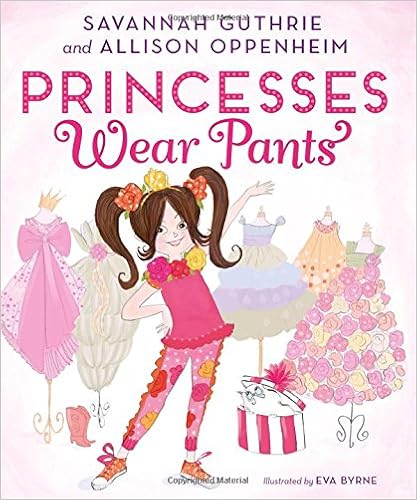
Princesses Wear Pants Hardcover – September 12, 2017 by Savannah Guthrie and Allison Oppenheim ,‎ Eva Byrne (Illustrator) (Harry N. Abrams) (IBRChildrensBooks)


From NBC’s TODAY coanchor Savannah Guthrie and educator Allison Oppenheim comes an empowering fairy tale with a twist.

In the tradition of Not All Princesses Dress in Pink and Princess in Black, Princesses Wear Pants follows the unflappable Princess Penelope Pineapple, who knows how to get the job done while staying true to herself. Princess Penelope lives in a beautiful palace with a closet full of beautiful dresses. But being a princess is much, much more than beauty. In fact, every morning Princess Penelope runs right past her frilly dresses to choose from her beloved collection of pants!

What she wears each day depends on which job she has to do. Will she command the royal air force sporting her sequined flight suit? Will she find her zen in her yoga pants and favorite tee? Or, will she work in the kingdom’s vegetable garden with pocketed overalls for all of her tools?

Unfortunately for Princess Penelope, not everyone in the Pineapple Kingdom thinks pants are always appropriate princess attire. When the grand Lady Busyboots demands that Princess Penelope must wear a gown to the annual Pineapple Ball, the young royal finds a clever way to express herself. Penelope’s courage (and style choices) result in her saving the day!

In their debut children’s picture book, Savannah Guthrie and Allison Oppenheim team up for a savvy and imaginative story that celebrates fashion and girl power. Perfect for fans of Nickelodeon’s Nella the Princess Knight, Princesses Wear Pants challenges gender stereotypes in the name of individuality, showing girls it’s not how they look but what they do that matters.

The Princess and the Warrior: A Tale of Two Volcanoes (Americas Award for Children's and Young Adult Literature. Commended) Hardcover – September 20, 2016 by Duncan Tonatiuh (Abrams Books for Young Readers ) ( IBRChildrensBooks)


The appealing story, the powerful illustrations, and the celebration of the Aztec culture make this a sure thing for those looking for a story, while an extensive author’s note goes a step beyond, adding to the impact of the tale with a great deal of historical and cultural information

Award-winning author Duncan Tonatiuh reimagines one of Mexico’s cherished legends. Princess Izta had many wealthy suitors but dismissed them all. When a mere warrior, Popoca, promised to be true to her and stay always by her side, Izta fell in love. The emperor promised Popoca if he could defeat their enemy Jaguar Claw, then Popoca and Izta could wed. When Popoca was near to defeating Jaguar Claw, his opponent sent a messenger to Izta saying Popoca was dead. Izta fell into a deep sleep and, upon his return, even Popoca could not wake her. As promised Popoca stayed by her side. So two volcanoes were formed: Iztaccíhuatl, who continues to sleep, and Popocatépetl, who spews ash and smoke, trying to wake his love.