Wednesday, July 26, 2017

Man Gene Edition : Man Being God ......The Gene Machine: How Genetic Technologies Are Changing the Way We Have Kids—and the Kids We Have by Bonnie Rochman Scientific American/Farrar, Straus and Giroux, 272 pp., $26.00;DNA Is Not Destiny: The Remarkable, Completely Misunderstood Relationship Between You and Your Genes by Steven J. Heine Norton, 344 pp., $26.95; A Crack in Creation: Gene Editing and the Unthinkable Power to Control Evolution by Jennifer A. Doudna and Samuel H. Sternberg Houghton Mifflin Harcourt, 281 pp., $28.00


Image result for Jennifer Doudna in her lab
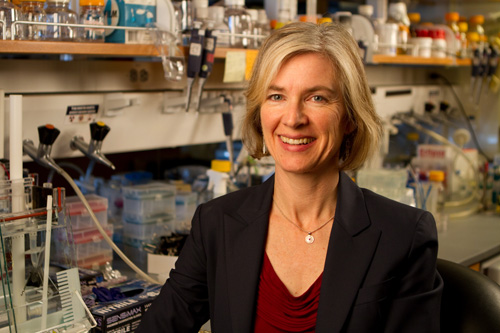
The biochemist Jennifer Doudna, a pioneer of the technique of DNA modification known as CRISPR, at her lab at the University of California, Berkeley,

In recent years, two new genetic technologies have started a scientific and medical revolution. One, relatively well known, is the ability to easily decode the information in our genes. The other, which is only dimly understood by the general public, is our newfound capacity to modify genes at will. These innovations give us the power to predict certain risks to our health, eliminate deadly diseases, and ultimately transform ourselves and the whole of nature. This development raises complex and urgent questions about the kind of society we want and who we really are. A brave new world is just around the corner, and we had better be ready for it or things could go horribly wrong.

The revolution began in benign but spectacular fashion. In June 2000, President Bill Clinton and Prime Minister Tony Blair announced the completion of the first draft of the human genome. According to a White House press statement, this achievement would “lead to new ways to prevent, diagnose, treat, and cure disease.” Many scientists were skeptical, but the public (who footed much of the $3 billion bill) probably found this highly practical justification more acceptable than the mere desire to know, which was in fact a large part of the motivation of many of the scientists involved.

During the 2000s, Clinton’s vision was slowly put into practice, beginning with the development of tests for genetic diseases. As these tests have become widespread, ethical concerns have begun to surface. Bonnie Rochman’s The Gene Machine shows how genetic testing is changing the lives of prospective parents and explores the dilemmas many people now face when deciding whether to have a child who might have a particular disease. Some of these technologies are relatively straightforward, such as the new blood test for Down syndrome or the Dor Yeshorim genetic database for Jews, which enables people to avoid partners with whom they might have a child affected by the lethal Tay-Sachs disease (particularly prevalent in Ashkenazis). But both of these apparently anodyne processes turn out to raise important ethical issues.

Whether we like it or not, the Dor Yeshorim database and other similar initiatives, such as genetic tests for sickle-cell anemia, which largely affects African-Americans, are enabling us to deliberately change the frequency of certain human genes in the population. This is the technical definition of eugenics and might seem shocking, since eugenics is forever associated with the forced sterilization of the mentally ill and Native Americans in the US or the murder of those deemed genetically defective by the Nazis. But the ability to use genetic testing when deciding whether or not to have children is clearly a form of soft eugenics, albeit one carried out voluntarily by those affected and clearly leading to a reduction of human suffering. With the best of intentions and, for the moment, the best of outcomes, we have drifted across a line in the sand.

The new genetic test for Down syndrome also hides ethical traps. The test detects tiny amounts of fetal DNA in the mother’s bloodstream, and in the US it has largely replaced the widespread use of invasive alternatives (amniocentesis or chorionic villous sampling, in which cells are taken from the placenta) that involve a risk of miscarriage. The advent of a safe way to detect Down is a positive development (in the UK it is predicted that the test will prevent up to thirty invasive test–induced miscarriages each year), but some women feel that its simplicity means they are being inadvertently pressured into having a test for Down, and potentially into having an abortion if the test result is positive.

It is extremely difficult to obtain reliable data on how often identification of Down syndrome in a fetus has led to a decision to terminate a pregnancy, but a recent study in Massachusetts suggested that prior to the introduction of the safer test in 2011, around 49 percent of such pregnancies were aborted. Since many parents opted not to have an invasive test for fear of miscarriage (in the UK the figure was around 40 percent), it is reasonable to expect that an increased rate of identification of fetuses with Down syndrome will lead to more abortions. This has led to criticism from families with Down syndrome children, who understandably want to emphasize the joy they feel living with a child who has the condition. Rochman navigates these difficult waters with skill and compassion, drawing on conversations with families and physicians and setting out the ethical challenges and the range of solutions adopted by different people, without being preachy or moralistic.

In the last few years, genetic testing has entered the commercial mainstream. Direct-to-consumer testing is now commonplace, performed by companies such as 23andMe (humans have twenty-three pairs of chromosomes). Much of the interest in such tests is based not only on the claim that they enable us to trace our ancestry, but also on the insight into our future health that they purport to provide. At the beginning of April, 23andMe received FDA approval to sell a do-it-yourself genetic test for ten diseases, including Parkinson’s and late-onset Alzheimer’s. You spit in a tube, send it off to the company, and after a few days you get your results. But as Steven Heine, a Canadian professor of social and cultural psychology who undertook several such tests on himself, explains in DNA Is Not Destiny, that is where the problems begin.


Some diseases are indeed entirely genetically determined—Huntington’s disease, Duchenne muscular dystrophy, and so on. If you have the faulty gene, you will eventually have the disease. Whether you want to be told by e-mail that you will develop a life-threatening disease is something you need to think hard about before doing the test. But for the vast majority of diseases, our future is not written in our genes, and the results of genetic tests can be misleading.

For example, Heine reveals that according to one test, he has “a 32 percent increased chance” of developing Parkinson’s disease. Behind this alarming figure lurks the reality that his risk is only slightly higher than the small likelihood that is found in the general population (2.1 percent for Heine, 1.6 percent for the rest of us). That does not sound quite so bad. Or does it? What does a risk of 2.1 percent really mean? People have a hard time interpreting this kind of information and deciding how to change their lifestyle to reduce their chance of getting the disease, if such an option is available. (It is not for Parkinson’s.)

Even more unhelpfully, different companies testing for the same disease can produce different results. Heine was told by one company that he had a higher-than-average risk of prostate cancer, Parkinson’s, melanoma, and various other diseases, whereas another said his risk for all these conditions was normal. These discrepancies can be explained by the different criteria and databases used by each testing company. Faced with varying estimates, the average customer might conclude that contradictory information is worse than no information at all. As Heine puts it, “The oracle’s crystal ball is made of mud.”

More troublingly still, however imperfect its predictive value, the tsunami of human genetic information now pouring from DNA sequencers all over the planet raises the possibility that our DNA could be used against us. The Genetic Information Nondiscrimination Act of 2008 made it illegal for US medical insurance companies to discriminate on the basis of genetic information (although strikingly not for life insurance or long-term care). However, the health care reform legislation recently passed by the House (the American Health Care Act, known as Trumpcare) allows insurers to charge higher premiums for people with a preexisting condition. It is hard to imagine anything more preexisting than a gene that could or, even worse, will lead to your getting a particular disease; and under such a health system, insurance companies would have every incentive to find out the risks present in your DNA. If this component of the Republican health care reform becomes law, the courts may conclude that a genetic test qualifies as proof of a preexisting condition. If genes end up affecting health insurance payments, some people might choose not to take these tests.

But of even greater practical and moral significance is the second part of the revolution in genetics: our ability to modify or “edit” the DNA sequences of humans and other creatures. This technique, known as CRISPR (pronounced “crisper”), was first applied to human cells in 2013, and has already radically changed research in the life sciences. It works in pretty much every species in which it has been tried and is currently undergoing its first clinical trials. HIV, leukemia, and sickle-cell anemia will probably soon be treated using CRISPR.

In A Crack in Creation, one of the pioneers of this technique, the biochemist Jennifer Doudna of the University of California at Berkeley, together with her onetime student Samuel Sternberg, describes the science behind CRISPR and the history of its discovery. This guidebook to the CRISPR revolution gives equal weight to the science of CRISPR and the profound ethical questions it raises. The book is required reading for every concerned citizen—the material it covers should be discussed in schools, colleges, and universities throughout the country. Community and patient groups need to understand the implications of this technology and help decide how it should and should not be applied, while politicians must confront the dramatic challenges posed by gene editing.

The story of CRISPR is a case study in how scientific inquiry that is purely driven by curiosity can lead to major advances. Beginning in the 1980s, scientists noticed that parts of the genomes of microbes contained regular DNA sequences that were repeated and consisted of approximate palindromes. (In fact, in general only a few motifs are roughly repeated within each “palindrome.”) Eventually, these sequences were given the snappy acronym CRISPR—clustered regularly interspersed short palindromic repeats. A hint about their function emerged when it became clear that the bits of DNAfound in the spaces between the repeats—called spacer DNA—were not some random bacterial junk, but instead had come from viruses and had been integrated into the microbe’s genome.

These bits of DNA turned out to be very important in the life of the microbe. In 2002, scientists discovered that the CRISPR sequences activate a series of proteins—known as CRISPR-associated (or Cas) proteins—that can unravel and attack DNA. Then in 2007, it was shown that the CRISPR sequence and one particular protein (often referred to as CRISPR-Cas9) act together as a kind of immune system for microbes: if a particular virus’s DNA is incorporated into a microbe’s CRISPR sequences, the microbe can recognize an invasion by that virus and activate Cas proteins to snip it up.

This was a pretty big deal for microbiologists, but the excitement stems from the realization that the CRISPR-associated proteins could be used to alter any DNA to achieve a desired sequence. At the beginning in 2013, three groups of researchers, from the University of California at Berkeley (led by Jennifer Doudna), Harvard Medical School (led by George Church), and the Broad Institute of MIT and Harvard (led by Feng Zhang), independently showed that the CRISPR technique could be used to modify human cells. Gene editing was born.

The possibilities of CRISPR are immense. If you know a DNA sequence from a given organism, you can chop it up, delete it, and change it at will, much like what a word-processing program can do with texts. You can even use CRISPR to introduce additional control elements—for example to engineer a gene so that it is activated by light stimulation. In experimental organisms this can provide an extraordinary degree of control in studies of gene function, enabling scientists to explore the consequences of gene expression at a particular moment in the organism’s life or in a particular environment.

There appear to be few limits to how CRISPR might be used. One is technical: it can be difficult to deliver the specially constructed CRISPR DNA sequences to specific cells in order to change their genes. But a larger and more intractable concern is ethical: Where and when should this technology be used? In 2016, the power of gene editing and the relative ease of its application led James Clapper, President Obama’s director of national intelligence, to describe CRISPR as a weapon of mass destruction. Well-meaning biohackers are already selling kits over the Internet that enable anyone with high school biology to edit the genes of bacteria. The plotline of a techno-thriller may be writing itself in real time.

A Crack in Creation inevitably focuses on Doudna’s work, providing insight into her own feelings as the implications of CRISPR slowly dawned on her and her principal collaborator, the French scientist Emmanuelle Charpentier. However, the book also describes the work of the many laboratories around the world that contributed to the breakthrough. This evenhanded approach contrasts with an article on the history of CRISPR written for Cell by the molecular biologist Eric Lander of the Broad Institute. Lander’s article was widely seen as unfairly emphasizing the work of the Harvard researchers Zhang and Church and downplaying the contribution of Doudna and Charpentier.* These contesting histories seek to influence not only who will get what seems like an inevitable Nobel Prize for the discovery, but above all the fortune that can be made, for individuals and institutions, from the patents to CRISPR applications.Anthony A. James/UC Irvine
Adult female Anopheles stephensi mosquitoes, important malaria carriers in urban India, transformed in genetic experiments to study whether they can be made inhospitable to malaria parasites

Frustratingly, Doudna and Sternberg say little about the patent issue, which is currently the focus of a complex legal case between the University of California and the Broad Institute over which group of researchers can rightfully license CRISPR-Cas9. In February, the US Patent Trial and Appeal Board ruled in favor of the Broad Institute, supporting its patent for the use of CRISPR-Cas9 in eukaryotic cells (including humans). The Berkeley team, on the other hand, had previously filed patents on the use of CRISPR-Cas9 in any cell, which, if supported by the courts, would mean that any researcher wishing to use the technology would have to get licenses from both Berkeley and the Broad Institute. The problem—apart from the obvious fact that the main beneficiaries of the US Patent Board’s decision will be lawyers, not scientists, and certainly not patients—is that the outcome may limit scientific inquiry by imposing fees for using CRISPR technology. More fundamentally, it can be argued that it is inherently wrong to patent discoveries made through publicly-funded research.

The story is far from over. The Berkeley team is appealing the initial decision; patents in other areas of the world, including Europe, have yet to be decided; other institutions have also filed patents that have yet to be examined in court; and the use of alternative enzymes that are more efficient than Cas9 may render the whole process moot. Initially, the Berkeley and Broad teams were working together on the commercialization of the technology, but something broke down in their relationship, and the current patent dispute is the consequence. What caused that rupture has not been made public, and Doudna and Sternberg give no hints.

The second half of A Crack in Creation deals with the profound ethical issues that are raised by gene editing. These pages are not dry or abstract—Doudna uses her own shifting positions on these questions as a way for the reader to explore different possibilities. However, she often offers no clear way forward, beyond the fairly obvious warning that we need to be careful. For example, Doudna was initially deeply opposed to any manipulation of the human genome that could be inherited by future generations—this is called germline manipulation, and is carried out on eggs or sperm, or on a single-cell embryo. (Genetic changes produced by all currently envisaged human uses of CRISPR, for example on blood cells, would not be passed to the patient’s children because these cells are not passed on.)

Although laws and guidelines differ among countries, for the moment implantation of genetically edited embryos is generally considered to be wrong, and in 2015 a nonbinding international moratorium on the manipulation of the human germline was reached at a meeting held in Washington by the National Academy of Sciences, the Institute of Medicine, the Royal Society of London, and the Chinese Academy of Sciences. Yet it seems inevitable that the world’s first CRISPR baby will be born sometime in the next decade, most likely as a result of a procedure that is intended to permanently remove genes that cause a particular disease.

Already in the early days of her research, Doudna seems to have been haunted by the implications of her work—she describes a disturbing dream in which Hitler keenly asked her to explain the technique to him. Over the last couple of years, following meetings with patients suffering from genetic diseases, Doudna has shifted her position, and now feels that it would be unethical to legally forbid a family to, say, remove a defective portion of the gene that causes Huntington’s disease from an embryo, which otherwise would grow into an adult doomed to a horrible death.

Like many scientists and the vast majority of the general public, Doudna remains hostile to changing the germline in an attempt to make humans smarter, more beautiful, or stronger, but she recognizes that it is extremely difficult to draw a line between remedial action and enhancement. Reassuringly, both A Crack in Creation and DNA Is Not Destiny show that these eugenic fantasies will not succeed—such characteristics are highly complex, and to the extent that they have a genetic component, it is encoded by a large number of genes each of which has a very small effect, and which interact in unknown ways. We are not on the verge of the creation of a CRISPR master race.

Nevertheless, Doudna does accept that there is a danger that the new technology will “transcribe our societies’ financial inequality into our genetic code,” as the rich will be able to use it to enhance their offspring while the poor will not. Unfortunately, her only solution is to suggest that we should start planning for international guidelines governing germline gene editing, with researchers and lawmakers (the public are not mentioned) encouraged to find “the right balance between regulation and freedom.”

The failure to resolve the issue of how to regulate gene-editing technology is even more striking when Doudna and Sternberg describe what they acknowledge is the most dangerous potential application of their technique: the deployment of what are known as gene drives, especially in species with short generation times, such as insect pests. Gene drives are artificial bits of DNA that rapidly spread through the population, unlike existing GMO techniques in which modified genes spread at a very slow rate and easily disappear from the gene pool. When a gene drive is used, the frequency of the altered gene increases exponentially with each generation, rapidly flooding the whole population. This is the technology that scientists have been proposing as a way of rendering all mosquitoes sterile or preventing them from carrying malaria, and it could clearly have an enormous effect on the epidemiology of some of the most deadly diseases. Over 300,000 children die each year of malaria; CRISPR gene drives could potentially save them by altering the mosquito’s genome.

The problem with a gene drive is that it is essentially a biological bomb that could have all sorts of unintended consequences. If we make the mosquito inhospitable to the malaria parasite, we might find that, just as with the overuse of antibiotics, the parasite mutates in such a way that it can evade the effects of the gene drive; this change could also mean that it is immune to our current antimalarial drugs. Meanwhile, the alternative approach of eradicating the mosquito from a particular environment, as Doudna and Sternberg point out, may lead to unexpected changes in the ecology of the region—we simply do not know enough about ecology to be able to predict what will happen.

Claims that a gene drive that goes wrong could be reengineered (this is facilely called “undo” by its advocates) ignore the fact that other species might have been irreversibly damaged by the initial genetic change. Ecosystems are fragile. A vaccine against malaria might eventually become an ecologically safe alternative, but the advocates of gene drives understandably argue that if we carry on with our current approach, using insecticides and bed nets, malaria will continue to kill those hundreds of thousands of children each year, together with thousands more who are infected with other mosquito-borne diseases, such as Zika, dengue, West Nile virus, and chikungunya.

At the moment, there are no regulations governing if and how gene drive technology should be deployed. Part of the problem is that this is effectively a global question—insects travel easily, and they and the diseases they transmit can mutate as they go. An apparent solution in one part of the world might turn into a catastrophe in another, as manipulated insects and pathogens move unhindered across frontiers and enter new ecosystems. Global regulation of gene drives—much as we have global regulation of other potentially dangerous technologies such as civilian air travel or nuclear power—is crucial, but many governments, and especially the current US administration, have little appetite for international regulation.

Whether these developments excite us or appall us, we cannot unlearn what we have discovered. CRISPR is already speeding up scientific discovery, making it possible to manipulate genes in organisms and providing stunning insights into evolution, such as last year’s study by Neil Shubin at the University of Chicago that explored how fish fins were replaced by feet in land vertebrates nearly 400 million years ago. CRISPRwill soon be applied to health care, making some previously lethal or debilitating diseases a thing of the past. Not all diseases will be easily cured—for example, the development of a cure for Duchenne muscular dystrophy is likely to be hindered for many years by technical difficulties associated with the delivery of CRISPR sequences to all the affected muscle cells—but we truly are emerging into a new world.

To prevent gene editing from taking a dystopian turn, strict regulation through internationally recognized guidelines must be found to protect our genetic information from unscrupulous states or commercial exploitation, prevent the irresponsible release of gene drives, and prohibit any form of discrimination against people because of their genes. Hostility to such discrimination should become a basic moral principle shared by societies around the world. The first step toward such an outcome is to ensure that the public and lawmakers understand the new technology and its dramatic implications. A Crack in Creation—the first book on CRISPR to present a powerful mix of science and ethics—can help in this process. As Francis Bacon said, knowledge is power.


*

For a taste of the dispute, see “Heroes of CRISPR”—Lander’s article—and “Villain of CRISPR”—the delightfully splenetic response by the Berkeley geneticist Michael Eisen, available at michaeleisen.org.

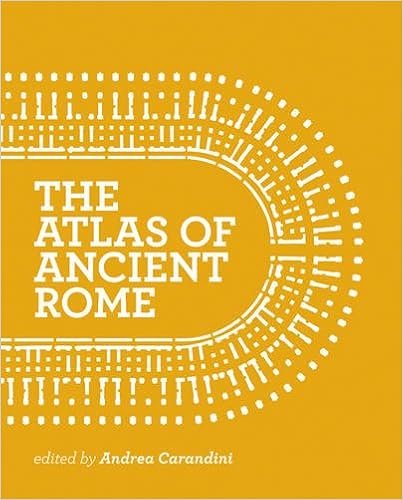
The Atlas of Ancient Rome: Biography and Portraits of the City edited by Andrea Carandini with Paolo Carafa, translated from the Italian by Andrew Campbell Halavais Princeton University Press, two volumes, 1,103 pp., $199.50


The Roman Forum in 2008, looking east toward the Arch of Titus, with the remains of the Temple of Saturn (right), the Temple of Castor and Pollux (center, with three columns), and the Temple of Vespasian (foreground); the Palatine Hill rises to the right

The ancient Roman Forum is one of the most frustrating tourist sites in the world. This is the spot where some of the most famous events in Western history took place and some of the most consequential decisions were made. It is where the Roman Senate debated how to respond to the threat of Hannibal, where Marcus Tullius Cicero denounced would-be tyrants and radical revolutionaries, where Julius Caesar’s body was cremated after his assassination in 44 BC, and where Mark Antony delivered the original version of “Friends, Romans, countrymen.” Yet what you now see has almost nothing to do with any of that.

The imposing “senate house,” preserved to more or less its full height thanks to its conversion into a church in the seventh century AD, has no connection with the place in which Cicero held forth in the first century BC; it was completely rebuilt almost five hundred years later. The elegant circular temple of the goddess Vesta (where the Vestal Virgins kept the sacred flame of the city permanently alight) owes more to Mussolini’s “restorers” in the 1930s than to any ancient Roman builders or architects. The ground surface is largely a confusing mass of rubble and masonry, interspersed with equally confusing holes left by archaeologists digging down in search of the structures, shrines, and burials that formed the first layers of human occupation in the city of Rome, as far back as the eighth century BC. Even the trained eye finds it hard to work out how any of this fits together, or what the place would have looked like at any particular period of antiquity. Most visitors walk through the Forum baffled. Cicero would not have recognized it.

What is left of the imperial palace on the Palatine Hill, which rises above the Forum, is hardly less frustrating for the modern visitor—and endlessly debated among specialists. For centuries after the end of the Republic, this vast complex of buildings was the hub of Rome’s empire, the main residence of its emperor, and luxuriously equipped to match. Contemporary poets—whose talent for exaggeration probably did not extend to outright invention—described the precious colored marbles imported from all over the Mediterranean lining its walls, the hundreds of columns (enough to support the whole world if Atlas should decide to take a break), and the enormous height of the building, which dwarfed even the pyramids of Egypt.

Not now. All that decoration has long since been looted, leaving for the most part rough brick walls more reminiscent of a factory or warehouse than of a palace. But even more to the point than the predictable loss of splendor is the fact that, for most of us, the site has become very hard to decode. The emperors’ own enthusiasm for domestic improvements is largely to blame, as each successive modernization program covered over, adapted, or destroyed what had been there before. The result is that it is often impossible to work out, among the maze of walls, exactly what part or period of the palace we are looking at, still less what went on there


.

That is true even in the better-preserved sections. One of the highlights of the Palatine, and a pleasant relief from all the bare brick, is a small series of attractively painted, but not aggressively luxurious, rooms that are said to belong to the “House of Augustus,” the first emperor. They almost certainly were part of that original “palace” (the style of the painting more or less guarantees the date). But how these rooms fitted into the overall scheme of the emperor’s accommodation is far from clear. Did they actually form the main nucleus of his living space and public reception areas, the heart of the Augustan regime? If so, that would match the claims of his biographer Suetonius that Augustus lived relatively modestly by the standards of later emperors. (And there have even been some optimistic attempts to identify a small chamber partly surviving on a floor above them with the emperor’s private study-cum-hideaway that Suetonius also mentions.)

Or were these rooms only one rather ordinary, even lowly, part of Augustus’s very much larger and more lavish palace, most of it later destroyed, its precise dimensions unknown? That is the more common recent view, despite the ancient assertions of Augustan modesty. It is rather like the problem of the emperor Nero’s “Golden House,” some of which is still preserved underground, behind the modern Colosseum metro station. There is a nagging suspicion that many of its vast eerie corridors and delicate paintings, which have enthused visitors ever since the painter Raphael explored them in the sixteenth century, had little to do directly with Nero at all, but were actually part of the service quarters.

Some of these questions of “Roman topography”—as the subspecialism of classical archaeology devoted to the layout of the city is now known—can seem narrowly arcane. The exact route of a deeply buried ancient street or the name of some minor temple may not matter very much; and pinpointing Augustus’s private hideaway, though intriguing, is in the end no more than a curiosity. But other puzzles and problems not only defeat tourists trying to make sense of these sites with their guidebooks (whose usual mode simply adds to the confusion by pretending that there are no problems at all); they also raise some important historical issues.


The size and style of Augustus’s “house” on the Palatine make a huge difference to how we understand the character of the first emperor’s rule and his relationship with the traditional Roman aristocracy whose power he had effectively displaced. Did he live in conditions that were more or less on a par with any other member of the Roman elite? Had he already sponsored a palace on a scale that far outbid the rest of his onetime peers? Or—as the fashionable view was among archaeologists thirty years ago (though almost certainly wrong)—did he live in quarters that were relatively modest in themselves but cleverly integrated into the next-door Temple of Apollo, with the obvious implications that, whatever his disdain for luxury, he really belonged very close to the realm of the gods? Equally, the arrangement of the Forum (how many people could come together there, for example, or what precisely the physical relationship was between the meeting places of the Senate and the assemblies of ordinary citizens) has enormous bearing on how we understand the working of Roman democracy during the Republic.

It is partly with those big issues in mind, and partly from antiquarian zeal, that archaeologists have tried for centuries to solve these puzzles and impose some order on the apparent chaos of the archaeological remains, by constructing atlases and models of the ancient city. The detailed three-dimensional reconstruction in plaster created by Italo Gismondi for Mussolini’s exhibition in 1937 to celebrate the two thousandth anniversary of the birth of Augustus is still the most famous such model, and continues to be reproduced on any number of posters, postcards, and fridge magnets, despite its proud Fascist origins. (It is now housed at the Museo della Civiltà Romana at EUR, though currently not on display while the museum is closed for renovation.)

Alternatively, in a very different format, they have compiled huge “topographical dictionaries” that discuss one by one, in alphabetical order, all the buildings in ancient Rome, whether they are known from physical remains, literary references, or both. The most comprehensive is the multilingual Lexicon Topographicum Urbis Romae (Topographical Dictionary of the City of Rome), edited by Eva Margareta Steinby, which appeared in six volumes between 1993 and 2000 (with five volumes following on the Suburbium, “the Suburbs”). Leaving aside the well-known public monuments, almost two hundred pages of this work, and not far short of a thousand individual entries, are devoted to private houses (from the “Domus: Marcus Acenna Cesillanus” to the “Domus: Volusius Saturninus,” both known only from their owners’ names stamped onto lead pipes). That alone gives an idea of the scale of the problems—or the richness of the data, depending on how you choose to look at it.

The Atlas of Ancient Rome, edited by Andrea Carandini, is the latest hefty addition to these topographical reference books. Now almost eighty years old, born into the liberal elite (his grandfather was director and part owner of Corriere della Sera before being forced out by the Fascists; his father was ambassador to London after World War II and president of Alitalia) and a left-wing radical (onetime member of the Italian Communist Party), Carandini is one of the most distinguished and charismatic Italian archaeologists of his generation, perhaps ever.

In many ways, he has been a tremendous force for good in archaeology and heritage. His excavations in the late 1970s of the Roman agricultural, slave-operated estate at Settefinestre north of Rome have remained a classic in the field—partly because they were concerned more with the infrastructure of Roman agriculture and social relations than with the unearthing of great works of Roman art—and recently he has been an influential president of the Fondo Ambiente Italiano (the Trust for the Italian Environment, more or less the equivalent of the British National Trust), which is concerned with the protection of Italy’s natural and artistic heritage.

Carandini’s Atlas comes in two exquisitely produced volumes, packed in a presentation box, with a ribbon thoughtfully provided to help the reader remove them; like its original Italian version, it is an extraordinarily pleasurable book to hold and handle. The first volume consists, after Carandini’s introduction, of a series of essays by different authors, many of them his colleagues and former students. These cover some general issues of Roman topography (boundaries, roads, aqueducts, and so on), and go on to cover, in individual chapters, the history and layout of each area of the city, starting with the Forum and ending with what we now know as Trastevere, on the west bank of the Tiber.


Sir John Soane’s Museum, London
Henry Parke: A Student on a Ladder Measuring a Corinthian Capital at the Temple of Jupiter Stator, Rome, 1819

The illustrations are many and often magnificent, though in a few the color is misleadingly garish. They include detailed plans and photographs of the archaeological remains, of excavations in progress, and of some key objects and works of art found in them—as well as a range of careful digital reconstructions of individual monuments and of wider areas of the city (as always there is a slightly sanitized, computer-game feel to some of these and to the toga-clad people introduced to give scale, but that no doubt comes with the genre).

The second volume contains over four hundred pages of maps, additional reconstructions, and diagrams of all sorts: from illustrations of the architectural orders, or of monuments depicted on Roman coins, to plans of different areas of the city at different periods. At first sight, it appears to be the reliable answer to anyone’s confusion about the Forum or Palatine, or indeed about any part of the ancient city of Rome. But it is not.

That is partly the fault of the translation from Italian into English, which lies somewhere on the spectrum between awkward and incompetent, and which can hardly have been attentively edited. Perhaps many readers will concentrate on the plans and illustrations, which are such an important part of the book. So much the better: because as soon as they turn to the essays, they will be as irritated, baffled, and sometimes seriously misled as those trying to make sense of the Forum on the ground. “Archaeological cartography, of the digital variety in particular, is no longer seen as an appendix to the topographical lexicon, used merely as a link between the philological-archeological data and the territory” and “a reformed cultural mindset is a precondition for carrying out an archeological endeavor” are typically awkward versions of Carandini’s flowery, though consistently lucid, prose.

But there is also a series of strange coinages such as “planimetry” for the Italian planimetria, meaning “ground plan” (“the planimetry was rebuilt based on the domusnext to it” is the translator’s sorry substitute for what should be “the ground plan has been reconstructed on the basis of the house next door”); not to mention unhelpful “translations” of technical terms (the strange “hauspice/s” is used for the “auspices” or auspicia, the system of signs by which Romans ascertained the will of the gods) and frequent slips in Latin (urbis for urbs is only one example of confusion between genitive and nominative). Careless typos are suspiciously common in the names of European scholars: “Mar Augé” for “Marc Augé,” “Hesbery” for “Hesberg”; even the original publisher of the Atlas appears as “Electra,” not “Electa.”

Worse still, there are many occasions on which mistranslations or sloppy editing has produced howlers that would shock the Italian writers. The large inscribed map of the city of Rome, the so-called “Marble Plan” of which hundreds of pieces still survive, at the precise scale of 1:240, is misdated by half a millennium. It was erected in the third century AD, not BC (and most of the public “does not know” of it; they do not willfully “ignore” it as the translation puts it, missing the sense of the Italian ignora). The very idea of such a map, as well as the technical know-how to construct it, would have been unthinkable at any such early date.

At one particularly low point, the translator concocts a statue base on the Palatine that “reproduced the bas-relief of the so-called Sorrento Base, a work by Greek artists, Skopas among them, originally made in the fourth century BC.” Almost everything about this simple sentence is garbled. The original author was, in fact, clearly referring to a famous piece of relief sculpture known (from where it was found) as the “Sorrento Base,” which dates to the first century AD, not the fourth century BC. It is famous because it appears to reproduce in its design the cult statues, now lost, of Apollo, Diana, and Latona that stood in Augustus’s new Temple of Apollo on the Palatine and had been brought, so it is often believed, to Rome from Greece; it is these lost statues that were possibly the work of the fourth-century-BC sculptor Skopas. Reader, beware.

The translation is not the only weakness of the Atlas. There were even bigger problems, of audience and approach, already in the original Italian version. First of all, it is not clear at whom the book is aimed. Its lavish production suggests that it was designed as much for the coffee table as for the library shelves, as much for the interested amateur as for the specialist (and Carandini, in a new preface, refers to “the enthusiastic reception it received from the public” in Italy). But in truth, it makes hard reading for anyone who is not already reasonably familiar with Roman topography.

Even the organizing principles will be unclear to most people. Each of the main chapters or essays focuses on one of the fourteen numbered “regions” into which the emperor Augustus divided the city, for presumably administrative purposes (the area of the Forum being number VIII, the Palatine number X); and specific monuments are given an individual identifying number, or “individuated,” within each region (the Augustan Temple of Apollo, for example, being X. 13). But the nature of these regions is only very briefly explained, and it is mentioned merely in passing that we do not know their precise boundaries.

Nor is there any proper discussion of the so-called “Regionary Catalogues,” even though they are referred to frequently (and if you have never heard of them, rather mystically) throughout the Atlas. These are two lists or gazeteers, compiled in the fourth century AD, of buildings and other landmarks in Rome, ordered by the same Augustan regions. They are both an extraordinarily valuable resource for any study of the city and also in many respects very puzzling. What, for example, were they for? And how accurate is the information—including some rudimentary statistics—they contain (“130 houses, 18 warehouses, 85 bath buildings” in region VIII)? The Atlasappears to assume a readership that does not need to be introduced to the Regionaries, their background and dilemmas. Perhaps that is true of the public in Italy (though I doubt it); it is certainly not true in the Anglophone world.

It also assumes a readership that prefers dry detail to any broader overview. It is true, there are the general essays at the beginning on “the city as a whole,” and Carandini’s spirited new preface includes fighting talk on a variety of topics: on “resuscitat[ing] Rome as the ancient city was conceived,” on the way in the modern world “working-class people” have been “pushed…out of the historic city centers,” and on the importance of archaeology as a major tool for understanding the past, equal to literary sources (“history is a lady and archeology is merely her servant” is how he rather quaintly characterizes the approach he is trying to unseat). However, the main chapters on each of the fourteen regions do not do much to set the general scene. Instead they rather uncompromisingly plod through the urban development of the area, period by period, monument by monument.

If you know what information you are looking for, you will probably find it in the Atlas. But there is very little effort to explain why there are disagreements and uncertainties in making sense of the layout of the city. Nor is there much attempt to represent different views and different reconstructions. We sometimes learn that an old theory of dating or identification is now deemed incorrect, but rarely why it is wrong. In fact, the rather scant attention given to alternative interpretations or potential disagreements is bound to make the Atlas less useful even to specialists than it appears. There is, to use a grammatical analogy, far too much of the “past definite” here.

That is especially the case with the lengthy sections on the earliest history of the city, in which Carandini’s own vision of the subject is enshrined with very little indication of just how controversial it is. I heard him recently talk very powerfully at the American Academy in Rome on how archaeology should, and can, engage the public, and how important it is in that project for archaeologists to be able to tell stories about the distant past. For Carandini narrative is a fundamental part of popular, and indeed academic, archaeology.

But sometimes his stories become part of the problem. Over the last few decades he has been mostly concerned with questions of how the city of Rome began, and he has led major excavations around the Forum and the Palatine aimed at revealing the founding phases. His conclusion (as well as his premise, I suspect) is that the legends of early Rome, as told by historians such as Livy, were more or less accurate and can be authenticated by archaeology. In fact, in a series of well-publicized discoveries, Carandini boldly claims to have found such emblematic structures as the first defenses of the city built by Romulus himself, sometime very close to the traditional founding date of 753 BC; and he even thinks he has pinned down the

very house occupied by Tarquinius Priscus, or Tarquin, the legendary fifth king of Rome.

Tarquin is supposed to have lived around the turn of the seventh and sixth centuries BCand is credited with all kinds of urban improvements to the proto-city, from building the “Great Drain” or Cloaca Maxima to starting the Temple of Jupiter Optimus Maximus on the Capitoline Hill. The house Carandini identifies with this legendary figure was uncovered in excavations near the Arch of Titus at one end of the Forum, though the remains are very scant (this is the house whose “planimetry was rebuilt based on the domus next to it”). Carandini has reconstructed it with a central hall or atrium, and rooms opening off—complete with the upstairs window through which, according to Livy, Tarquin’s widow announced the succession of her favored heir, Servius Tullius.

These discoveries have divided classicists and archaeologists. There are some who view them as a brilliant, daring, and largely successful attempt to tie up the literary tradition with the physical remains, and as a triumphant demolition of all those with an “unjustifiably hypercritical attitude” who regard the myths of early Rome as just that, myths. Many others—and I am one of them—see instead a dangerous literal-mindedness in Carandini’s discoveries and reconstructions, somewhat akin to reported findings of King Arthur’s Round Table. The myths of Rome’s earliest phases (and there were many contradictory ones) are extremely important in our understanding of the Romans’ view of themselves, but Carandini provides no plausible account of how writers of the first century BC could access any reliable information about Rome of the eighth and seventh centuries BC, when there were no literary records of any sort (he relies entirely on the idea of “oral tradition”).

Besides, the closer you look at the particular claims about the individual sites, the flimsier they appear. The supposed “House of Tarquinius Priscus,” for example, hardly survives the scrutiny of T.P. Wiseman, who points out that there is very little remaining of this “house” at all (at most a few feet of possible wall), at the same time arguing convincingly, to me at least, that Carandini’s method of aligning the literary sources with the (largely nonexistent) remains is more wishful thinking than brilliant and daring.

Of course, the authors of the Atlas have every right to follow Carandini’s reconstructions if they choose, or to opt for whatever version of ancient Rome they want. But they have, I think, some obligation to acknowledge the disagreements and other views, which they very rarely do; there is, for example, no mention of Wiseman’s critique of the “House of Tarquinius Priscus,” although it appeared several years before the original Italian edition. It may well be that every reference book is driven by an ideology that it tries, usually unsuccessfully, to conceal (see the examples of word usage cited in the Oxford English Dictionary, or the Latin quotations used to illustrate grammatical rules in Kennedy’s Latin Primer); it is in fact almost the definition of a reference book that it is one that tries to conceal its ideology. But the Atlas is a particularly flagrant example of a partisan account masquerading as a work of reference, and given authority and credence by that. Again, reader beware.

Devil’s Bargain: Steve Bannon, Donald Trump, and the Storming of the Presidency by Joshua Green Penguin, 272 pp., $27.00

Product Details


Is

LESS By Andrew Sean Greer 263 pp. A Lee Boudreaux Book / Little, Brown & Company. $26.


Convulsed in laughter a few pages into Andrew Sean Greer’s fifth novel, “Less,” I wondered with regret why I wasn’t familiar with this author. My bad. His admirers have included John Updike, Michael Chabon, Dave Eggers and John Irving. “Less” is the funniest, smartest and most humane novel I’ve read since Tom Rachman’s 2010 debut, “The Imperfectionists.”

The setup: Nothing is going well for Arthur Less. He’s about to turn 50. The mysterious narrator tells us that Arthur is “the first homosexual ever to grow old. That is, at least, how he feels at times like these.” Arthur is a novelist, and that’s not going well, either. His first book, now distant in the rearview mirror, was a “moderate success.” A big-name critic reviewed it in these very pages. “But every author can taste the poison another has slipped into the punch,” and the critic ended by calling Arthur “a magniloquent spoony.” Staring at this odd phrase, Arthur asked his lover at the time, a distinguished older poet, “What the hell was a spoony?” “‘Arthur,’ Robert said, holding his hand, ‘he’s just calling you a faggot.’”

Years later, Arthur is nominated for a prize he didn’t even know existed: the “Wilde and Stein Literary Laurels.” He thinks his agent has told him, “Wildenstein.” Arthur replies that he’s not Jewish. The agent coughs and says, “I believe it is something gay.” “‘How did they even know I was gay?’ He asked this from his front porch, wearing a kimono.”

Now, on the cusp of the dreaded 50th birthday, Arthur finds himself in a sort of authorial Sargasso Sea, “too old to be fresh and too young to be rediscovered, one who never sits next to anyone on a plane who has heard of his books,” reduced to accepting gigs like interviewing a mega-best-selling author named H.H.H. Mandern, who has made zillions writing “space operettas” of “tin-ear language and laughable stock characters.” Arthur knows that the event sponsor has made the calculation: “What literary writer would agree to prepare for an interview and yet not be paid? It had to be someone terribly desperate. How many other writers of his acquaintance said ‘no chance’? How far down the list did they go before someone said: ‘What about Arthur Less?’”

It has come, finally, to this. But wait — the crowning humiliation of “our gay Job” is that his boyfriend, having dumped him, is now getting married.

As Hunter S. Thompson used to say, “When the going gets weird, the weird turn pro.” Rather than submit to the ultimate humiliation of attending the wedding, or even of finding himself in the same time zone (nonspoiler alert: the San Francisco Bay Area), Arthur decides to accept a series of invitations to literary events that most self-respecting authors would probably toss into the wastebasket.

Off he goes, around the world, wearing his treasured blue suit, hand-tailored years ago in “humid, moped-plagued” Ho Chi Minh City. His itinerary will take him to New York, Paris, Berlin, Morocco, southern India and Kyoto. His current project is a novel titled “Swift,” about which the lover who has spurned him sniffed censoriously, “All you do is write gay ‘Ulysses.’”

Maybe. But “Ulysses” was never this much fun. Arthur’s wanderings as he makes his way from disaster to disaster are hilariously, brilliantly harrowing. But laughter is only a part of the joy of reading this book. Greer writes sentences of arresting lyricism and beauty. His metaphors come at you like fireflies — or like the “pygmy hummingbird moths” that delight Arthur amid his latest gloom, at a golf resort he fears he has visited accidentally (in place of a vacationing Austrian doctor in red shorts and suspenders).Photo


Delights of language abound. On a turbulent night flight into Mexico City, “the plane convulses in the moonlight, like a man turning into a werewolf.” And in another fraught venue, “an eel of panic wriggles through him as he searches the room for exits, but life has no exits.” Even Arthur’s random observations are entertaining. Why, he bitterly wonders, do today’s young gay men insist on marrying? “Was this why we all threw stones at the police, for weddings?” And as for quaaludes, “is there any more perfect spelling than with that lazy superfluous vowel?”

In France, Arthur is taken to a remote area on the German border where his schedule consists of “visiting a school during the day and a library at night, with sometimes a monastery in between. … Later: He read aloud to coal miners, who listened thoughtfully. What on earth was everyone thinking? Bringing a midlist homosexual to read to French miners?”

At a literary festival in Italy, where he’s in the running for yet another award he’s never heard of, Arthur recalls being ambushed on stage once, excoriated as an “assimilationist” gay writer. His crime? In Arthur’s debut novel, the gay protagonist returns in the end to his (female) wife. Arthur is not a gay enough writer, it appears.

In Piemonte, where the Italian festival convenes, the big prize jury turns out to consist of a dozen teenagers. Again, Arthur has a bad feeling. “How has it come to this? What god has enough free time to arrange this very special humiliation, to fly a minor novelist across the world so that he can feel, in some seventh sense, the minusculitude of his own worth? Decided by high school students, in fact.”

Yet what bubbles up amid all these disasters isn’t self-pity but Arthur’s warm humanity. Pace E. M. Forster’s famous dictum, Arthur connects, especially with young people.

The creative writing seminar he gives in Berlin is so inventive and engaging that it could be used as a template at any college, as a model of how to get kids to fall in love with literature. He has them cut up a paragraph of “Lolita” and reassemble the text any way they want. “He gives them a page of Joyce and a bottle of Wite-Out — and Molly Bloom merely says ‘Yes.’ A game to write a persuasive opening sentence for a book they have never read … leads to a chilling start to Woolf’s ‘The Waves’: I was too far out in the ocean to hear the lifeguard shouting, ‘Shark! Shark!’” His students “learn to love language again, something that has faded like sex in a long marriage. Because of this, they learn to love their teacher.”

By the time Arthur reaches Japan, the reader isn’t just rooting for him but wants to give the poor guy a hug. And by now, good things are starting to happen. A crisis prompts a phone call to the former lover/mentor, the older poet, who informs Arthur that turning 50 “isn’t all bad. It means now people will think you were always a grown-up. They’ll take you seriously. They don’t know that you once spent an entire dinner party babbling about Nepal when you meant Tibet.” “I can’t believe you brought that up again,” Arthur replies.

Like Arthur, Andrew Sean Greer’s “Less” is excellent company. It’s no less than bedazzling, bewitching and be-wonderful.

Man or Monster? The Trial of a Khmer Rouge Torturer. Alexander Laban Hinton. Duke University Press. 2016.


Perpetrators of mass crimes are easy to condemn, but harder to understand. Although their crimes may be evident, the degree of guilt and level of responsibility can be difficult to establish. This becomes all the more complex when the perpetrator is put on the stand. In his latest book Man or Monster? The Trial of a Khmer Rouge Torturer, Alexander Laban Hinton, a professor at Rutgers University and the founding director of the Center for the Study of Genocide and Human Rights, dives deep into the tribunal of Kaing Guek Eav, more commonly known as Duch, and elegantly tackles this exact challenge of sifting through the many shades of one mass criminal’s life and character.

From 1975 to 1979, Duch served as the Deputy and then the Chairman of S-21 (also known as Tuol Sleng), the genocidal Khmer Rouge regime’s most notorious political prison and security complex. As many as 20,000 prisoners passed through Tuol Sleng’s doors to be tortured and executed on Duch’s instruction. In July 2007, the Extraordinary Chambers in the Courts of Cambodia (ECCC) arrested him on charges of crimes against humanity, breaches of the 1949 Geneva Conventions and the murder and torture of over 12,000 prisoners. His eventual guilty verdict was delivered almost five years later in February 2012.

But what Hinton exposes is a man more nuanced than the sum of his crimes. Born in Kompong Thom, Cambodia, Duch began his career as a school teacher. He excelled in his studies, and was observed to be incredibly meticulous and hard-working in his professional and academic pursuits. Even at Tuol Sleng, prisoners and guards alike found him to be equally scrupulous and diligent in record-keeping, experimentation in torture methods and political education sessions. He memorised French poetry, had a wife and four children, acknowledged the severity of his crimes and publicly apologised before the courtroom. The duality demonstrated by these details muddled the public’s perception of Duch and had a clear impact on his trial. Hinton captures all of these intricacies.
Image Credit: Kaing Guek Eav, alias Duch, during trial proceedings at ECCC in Phnom Penh, Cambodia on 20 July 2009 (courtesy of Extraordinary Chambers in the Courts of Cambodia CC BY 2.0)

Like any other criminal of mass atrocities appearing before an international tribunal, Duch was presented with a range of dilemmas during his time as a murderous leader and again during his trial. Was he taking orders from the elite to save his own life or was he instrumental in ordering executions at S-21? Was he also a victim of the Khmer Rouge regime or was he complicit in carrying out its atrocities? Was he truly remorseful or did he publicly apologise in the hope of going free? In a shocking and bizarre turn at the end of the trial, Duch ultimately redacted his public apology and insisted that he was not guilty for his crimes. This manoeuvre led victims and courtroom witnesses to ponder his actions as a former chairman and as a defendant. His involvement at S-21 was indisputable, but his degree of guilt and responsibility less so.

In focusing on this one particular case and this one peculiar man, Hinton further expands on the ECCC and the intricate process of bringing justice, truth and reconciliation to post-conflict Cambodia through legal mechanisms. He includes the trial’s extensive witness testimony and spoke directly with many victims, illustrating the spectrum of emotions they endured in watching the trial unfold. Unlike the ad hoc tribunals of Yugoslavia and Rwanda, the Khmer Rouge tribunal was a hybrid court that combined both Cambodian and international law, and incorporated legal practitioners from Cambodia and abroad. But like the ad hoc tribunals, the ECCC also witnessed its own share of politicisation, controversy and criticism. Hinton discusses the ECCC’s decision to try only five top Khmer Rouge officials, choosing to focus only on a handful of big fish and thereby limiting the reach of the court. He also mentions the ECCC’s failure to introduce certain evidence from the years before the Khmer Rouge’s regime. Many believe this information to be crucial to understanding the defendants, but it would also implicate the United States and other Western powers for their more controversial involvement in Southeast Asia.

Man or Monster? is more than a microhistory of one specific case. Not only does it offer a detailed overview of the Khmer Rouge as a rebel group or government, but Hinton also uses Duch’s earlier life to briefly walk us through postcolonial Cambodian history, from gaining independence to the strengthening of the Khmer Rouge under Pol Pot to US military involvement in the region. He then draws on Duch’s time at Tuol Sleng to elaborate on the Khmer Rouge’s operations, goals and ideology as well as the various crimes and atrocities committed under their direction.

Hinton trades traditional textbook jargon for a more literary and theatrical approach in examining these court proceedings. He inserts himself into the narrative, speaking directly about his interviews, his relationships with various actors of the tribunal and his memories of visiting the Tuol Sleng Genocide Museum in Phnom Penh. He succeeds in casting off dry academic and legal language, rendering this book easily readable and oftentimes thrilling. He tastefully describes the drama and intricacies of the courtroom and gives vivid personality to its many characters.

However, he falls short when discussing the actual decision to write in a more literary style. He addresses his own experimental approach three separate times — in the foreword, the final chapter and the epilogue — in each instance repeating what was already previously stated. In the last chapter, titled ‘Background: Redactic (Final Decision)’, he even writes, ‘I have tried to bear in mind the creative writing imperative “Show, don’t tell”’, and acknowledges his struggle to follow ‘this imperative’, which is at times evident. Nevertheless, these multiple explanations do not take away from the true success of the book.

Hinton does the reader a tremendous service by not reducing Duch to a single identity. The book is certainly not a sympathetic take on Duch’s character, but it is a concerted effort to create a multidimensional understanding of a complicated man acting in complicated circumstances. Duch was defined not only by his murderous actions, but also by his life before and after the Khmer Rouge. Hinton invites us to contemplate the notion that what one person, or even one nation, may think of Duch may not be an unequivocal truth, but rather one of many frames through which to examine him. Simply calling him a ‘monster’ is reductive and unhelpful: the label overlooks his agency, his actions and those of the individuals around him as well as the many dilemmas he faced in this perilous time period.

By using Duch’s trial as a case study, Hinton also addresses the many larger questions of transitional justice. How is a former war criminal reintegrated into a peaceful post-conflict society? How does a court best avoid politicisation? Do legal mechanisms truly deliver justice and foster reconciliation? These questions may never have definitive answers, but Hinton asks us to consider them regardless.

Voices from the ‘Jungle’: Stories from the Calais Refugee Camp. Marie Godin, Katrine Møller Hansen, Aura Lounasmaa, Corinne Squire and Tahir Zaman (eds). Pluto Press. 2017.


In a political climate where refugees are often used as pawns in a global geopolitical game, Voices from the ‘Jungle’: Stories from the Calais Refugee Camp humanises those who suffer most from the current ‘refugee crisis’. Voices from the ‘Jungle’ is a collection of first-hand narratives gathered from the ‘Jungle’: the infamous Calais refugee camp located in the north of France. Although refugees seeking passage to the UK have set up informal camps around Calais for almost two decades, the Calais ‘Jungle’ in its largest and most recognised form existed from January 2015 until October 2016, when French officials evicted the camp. With the help of various humanitarian groups and volunteers, residents of the ‘Jungle’ established sanitation systems, restaurants, a library, healthcare facilities, educational services and all types of creative and artistic endeavours. They had arrived from all over the world, including Syria, Sudan, Eritrea, Ethiopia, Iran, Iraq, Pakistan and Afghanistan, spending anywhere from a few days to a few months at Calais.

The stories in this book were originally written for a short accredited undergraduate writing course on ‘Life Stories’ taught by the University of East London (UEL) in Calais in 2015 and 2016 in collaboration with a number of educational associations within the camp. UEL did not initially intend to publish a book from the class, but the students and instructors together decided that they wanted their voices to be heard by a wider audience. 22 refugees who escaped a perilous situation at home and safely arrived in Calais offer their testimonies, written under a mixture of real names and pseudonyms. The book is divided into five chronological chapters that follow their trajectories, beginning at home and ending at Calais, the UK or elsewhere in Europe. These written narratives are also accompanied by the writers’ poetry and photographs of the camp. All the accounts from Voices from the ‘Jungle’ are beautiful, striking and sorrowful in their own ways: they echo common themes of heartache, family, survival, freedom, discrimination and violence.

The first chapter starts at the beginning, with the writers narrating the initial decision to leave home and head towards Europe. They come from various places and circumstances, but all have one thing in common: home is a dangerous place for each of them. In deciding to flee, they leave behind family and friends without really knowing what is ahead.

The second chapter, titled ‘Journeys’, recalls the tortuous voyages between home and Calais. In addition to the infinite number of dangerous obstacles that refugees face in reaching Calais, this section also shows an often forgotten component of this expedition: waiting. Waiting to register at a border, waiting for a boat to reach land, waiting for a smuggler to say go, waiting for a call from a relative in Europe and waiting in many hours-long lines for all types of reasons. Majid (from Iran) writes:


This was so familiar to us now: Wait, wait, queue, and queue. Midnight came. They gave us tuna fish, bread, coffee, tea, and told us to sleep on the camp beds — and wait (92).
Image Credit: (malachybrowne CC BY 2.0)

Both the second chapter and the fourth chapter, ‘Living in and Leaving the “Jungle”’, explore the robust informal economy of smugglers who profit from providing safe passage. Smugglers are instrumental in assisting refugees in both reaching Calais and leaving it for the UK or elsewhere. With their expertise, many smugglers abuse their position of power over refugees. In describing his encounter with smugglers in the Saharan desert, Eritrea (from Eritrea) writes: ‘The smugglers are not good people. They are very cruel people, especially towards the ladies. We saw many evil things happening to the ladies. The smugglers liked to have sex with them. It was against their will; it happened by force. They were very cruel towards them’ (83). With their power, smugglers charge exorbitant prices, cram too many bodies into too small spaces and are often unreliable or unpredictable.

Upon arriving at Calais, refugees are faced with a whole new set of challenges. The chapters on life in the camp illustrate inadequate camp conditions in addition to a brutal police presence. Supplies and personal belongings are stolen from unguarded tents and shipping containers. People befriend each other only to betray them later. Infants are born without sufficient access to healthcare and proper vaccinations. The French police regularly and violently crack down on those trying to escape. However, the writers also discuss the community that develops from this adversity: how people come to help others despite language barriers, cultural differences and a lack of resources.

While a beautiful and timely anthology, Voices from the ‘Jungle’ suffers from an unevenness between individual stories. Each chapter begins with an introductory paragraph for background, and then additional, oftentimes unnecessary, explanatory paragraphs are interspersed throughout. These interrupt the flow of storytelling and often explain themes that don’t require clarification. In doing this, the editors’ voices often overpower those of the refugees’, and ultimately prevent readers from reaching their own conclusions. While this choppiness is most evident in the first chapter, ‘Home’, it does lessen as the book progresses.

As addressed in the book’s introduction, the book also lacks a female perspective, as the majority of students on the writing course were men. Safia (from Afghanistan) is the only female narrator in this collection, and she presents a wholly unique perspective amidst the male voices. While most of the male narratives focus on individual safety and survival, Safia writes about all these issues as well as discussing pregnancy, childcare and women’s health at Calais. In a rare moment of pleasure, Safia describes ‘Beauty Day’ at Calais: “‘Beauty Day’, organised by the Blue Bus, is good. It is good because you can have your nails polished and your eyebrows done. People come for massage, nail-polish, for makeup, everything. One time, someone came and I got my hair done, together with another woman’ (173). She delivers a glimpse into the lives of other women living in the camp as well, illuminating a whole host of daily struggles not mentioned by any of the other writers.

Despite the hardships of residing at Calais, many of the authors speak of the camp eventually feeling like a second home. Muhammad (from Syria) writes: ‘Saying goodbye to the camp is like leaving your home once more […] So many things are left behind. So many friends. So many attempts and too many wishes and too much love’ (206). In a later section, he echoes the same sentiment:


I think no man can enter the ‘‘Jungle’’ and leave it in the same manner, without changing. There were so many friends […] Everyone had their own stories and journeys which are greater than could be written in such pages as these (250).

There is still an enormous amount of uncertainty and instability for refugees if and once they sort out their legal status and settle into their new lives in Europe. Calais is just one of many stepping stones on their path towards a freer life. Voices from the ‘Jungle’ opens up this particular step, giving voice to the many who make this voyage.

Tuesday, July 25, 2017

Draw Your Weapons By Sarah Sentilles 320 pages; Random House

Draw Your Weapons

A collage of death, savagery, torture and trauma across generations and continents, Sarah Sentilles's Draw Your Weapons(Random House) is painful to read, hard to put down, and impossible to forget. Ten-plus years in the writing, the book is composed of brief sections, many no more than a paragraph, about the effects of violence from the perspectives of the perpetrators, victims, thinkers, and artists.

Harvard Divinity School graduate Sentilles weaves together details from Ghraib, Auschwitz, and her own family's war stories, creating a shockingly poetic meditation on how and why we break one another and what happens after. She is fascinated by strange intersections of brutality and art in photographs, paintings, and even the making of musical instruments. As a species we commit atrocious acts, but we also memorialize them in images that both lie and tell the truth about what occurred. These likenesses-- the infamous photo of the hooded man standing on a box at Abu Ghraib with electrodes attached to his outstretched hands, pictures of slaves on plantations or of a Taliban soldier about to be killed by his captors-- haunt Sentilles, just as they do us. She writes, "I live in a world where it is said, You are here and war is there.... But war is right here-- the photograph on my screen of a girl splattered in blood at a checkpoint... the body of a teenager left uncovered on the street of an American city.... Here and there and here again."

Ultimately, she poses the question, "How to respond to violence that feels as if it can't be stopped?" The first thing we must do, this astonishing book suggests, is not look away.