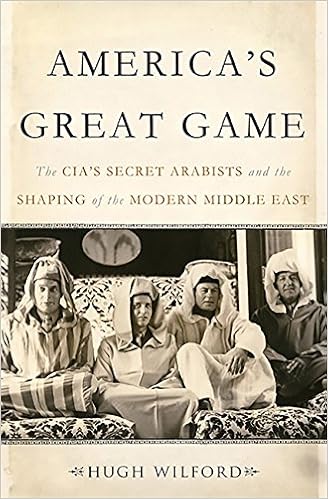
I am only about half way through reading this, but it has been a real eye opener. The first 30 pages or so are a bit tough to stay interested in, as it's primarily setting the stage, introducing us to the young Roosevelts, and detailing our relationship with the middle east countries. I do wish they'd have devoted half as much time to helping us get to know the Dulles brothers, as they play as big a role as the Roosevelts in the development or the CIA.
Already, at just half way into the book, I have a far better understanding of the development of the middle east, what went right, what went wrong, and how we got to where we are today. It's given me a new perspective on Israel, and opened my eyes to just how much goes on that the general public doesn't know about. I've now got an understanding of why we give money to middle eastern countries, and where it goes. Of course, I'm left with almost as many questions as when I began reading the book. Things like "why, when we realized we were creating a dangerous pattern of military dictatorship, Coupe, new military dictatorship, we did nothing to fix it. According to the book, it all started with Syria. What the book leaves out is, why did we allow this to continue once we saw it was a bad precedent? It seems to me we found what the British and French already knew; that we could get a huge benefit out of manipulating the countries in the middle east. So we replaced their colonial system with our covert manipulation, which is arguably much worse.
Then there's Iran and Mossadegh, and the establishment of Israel, with absolutely no regard for the Palestinians who were already there. No wonder we are still battling with these people who arguably just want to be their own independent countries. The thing I am most grateful for in this book, is the huge library of references it offers for further reading. It's heavily referenced, and appears to be very honest about any bias to be found, as well as the level of trust one can expect to have in the various references, and the reasons those references may be suspect.
I will end with the words that led me to buy the book in the first place, as they have undeniably been proven to be true for me:
If you want to know what is causing all the turmoil in the middle east, and how we got here, there is no better place to start than with this book. There are many things that are glossed over, but the author give you references, or at the very least leads to references that will flesh out the details of those people and incidents.
Then there's Iran and Mossadegh, and the establishment of Israel, with absolutely no regard for the Palestinians who were already there. No wonder we are still battling with these people who arguably just want to be their own independent countries. The thing I am most grateful for in this book, is the huge library of references it offers for further reading. It's heavily referenced, and appears to be very honest about any bias to be found, as well as the level of trust one can expect to have in the various references, and the reasons those references may be suspect.
I will end with the words that led me to buy the book in the first place, as they have undeniably been proven to be true for me:
If you want to know what is causing all the turmoil in the middle east, and how we got here, there is no better place to start than with this book. There are many things that are glossed over, but the author give you references, or at the very least leads to references that will flesh out the details of those people and incidents.

No comments:
Post a Comment