Saturday, March 31, 2018

THE MAGIC SHOW BOOK by DK Publishing ; illustrated by DK Publishing Age Range: 7 - 11 (DK) (IBRChildrensBooks)


Seventeen simple tricks, many with cleverly prepared ministages on which to perform them.

Aspiring prestidigitators will need to supply coins, string, and a few other props, but the book comes with sets of trick cards and wallets, plus a pop-up “slicer” to chop a paper snake (temporarily). Some double-page spreads also offer atmospherically decorated flat spaces or “zones” for working selected feats. All of the steps in the clear, encouraging instructions are illustrated with digitally rendered illustrations. Cogent reminders that practice makes perfect, useful performance tips, and alternative procedures for thumb-fingered beginners have not been neglected. Directions for trickier tricks are printed upside down behind flaps in order to be visible to the performer but not (supposedly) to the audience. However individually well-chosen for beginners, though, the tricks don’t build to a climax as they should in a proper magic show. Also, the package is problematic for library use considering the many loose pieces and the wand, made by tearing out a perforated sheet and rolling it up.

Not ready for prime time as a “show,” but the interactive elements make up a decent starter kit. (Pop-up nonfiction. 7-11)

Gun: A Visual History Paperback by DK (DK)


From rifles to sniper guns, machine guns to grenade launchers, Gun: A Visual History is a fully loaded guide to over 300 of the most important guns from the last 700 years.
Perfect for anyone interested in firearms, Gun: A Visual History has revealing features on twenty 'key' guns from history, including the Musket, Gatling Gun and AK-47 assault rifle.
Step inside famous gun maker factories, from Colt and Smith & Wesson to Beretta and discover how guns were — and still are — developed and produced. Meet famous gunslingers and legendary sharpshooters from Dick Turpin and Billy the Kid to James Bond, hear their stories and learn about the guns that made them famous.

Military History: The Definitive Visual Guide to the Objects of Warfare Hardcover by DK Publishing (DK)


From the siege towers and catapults employed by ancient invaders to the unmanned drones and stealth bombers used by today's armed forces, the mastering of superior technology has always played a critical role in determining an army's chances of success — or defeat.
Following in the footsteps of DK's esteemed military history titles Military History is the definitive guide to the development of battlefield technology through the ages, from Bronze Age Mesopotamia to the War on Terror.
Organized chronologically and by key military technology, Military History: The Definitive Visual Guide to the Objects of Warfare covers the iconic weapons, armor, equipment, and battles that have defined war through the ages, showing the impact of changes in military technology on the very fabric of history.

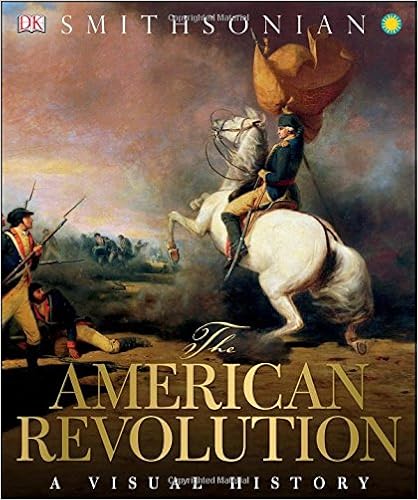
The American Revolution: A Visual History Hardcover – April 5, 2016 by DK (DK)


St

Battle: A Visual Journey Through 5,000 Years of Combat Paperback by R. G. Grant (DK)


DK's Battle draws together, for the first time, the many facets of battle--the glory and the gore, the attrition and atrocity--in a new and original way. Organized chronologically, Battle provides a detailed overview of the conduct of warfare through the centuries, from the first recorded battle at Megiddo between the massed ranks of Hittites and Egyptians, to the war of the missing Weapons of Mass Destruction. In each era, the technology that transformed the battlefield and the tactics that won the day are explored and explained. Battle is an indispensable reference to this most fundamental part of the human story.

This is a three in one review on the truly splendid books, Warrior, Weapon, and Battle. Or more formally: Warrior, A visual History of the Fighting Man. Weapon, A visual History of Arms and Armor. Battle, A visual Journey through 5000 Years of Combat.

They can be reviewed together because of their kinship in sharing the same visual concept and the same supremely expert author, R. G. Grant. No pilgrim, Grant is the author of over 20 books, most on the subject of conflict, implements of war and the fighting man.

All three books are wonderfully delicious for those of us whose DNA inclines us toward the history of arms, armament and the men who have carried them. These books are chock full of photographs, charts, maps and illustrations on every page to beautifully compliment and expand upon a tightly written, no fluff text. And this text is extremely well researched.

In the spirit of full disclosure, I must confess that I have not read each of these three books in their entirety. I've had them for only 2 weeks and after scanning them from start to finish, I am now devouring them slowly, page by page, like a monk with a holy book, meting out tasty morsels judiciously. I want this to last a long time.

Although, the books overlap to a degree, they are not repetitious in any negative way as they each have their own exclusive focus.

Warrior takes on the subject of the individual fighting man from 600 BCE to the present, from the Greek Hoplite, the Samurai, Zulu, Mongol bowman, American rifleman to the modern western infantry and special forces...and almost everything in between.

Weapon focuses on just about every kind of implement of a fighting man's arsenal of killing tools from Assyrian spears to the AK 47. In some cases, replicas have been photographed but mostly it's the often crusty, old real thing. The photography is first rate. As in all three books, the text and illustrations are intermingled in such an artful way as to make each page a visual smorgasbord.

Battle covers the first recorded major battle which is between the Canaanites and the Egyptians at Meiddo and takes us through conflicts in every age all the way to modern times. Its focus is on the Generals, the strategies, the troops and their weapons.

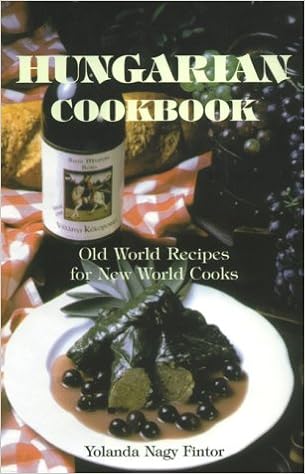
Hungarian Cookbook: Old World Recipes for New World Cooks (Hippocrene International Cookbooks) Hardcover by Yolanda Nagy Fintor (Hippocrene Books) (IBRCookBooks)


I gave this book 5 stars because it accomplishes so many things at once that most cookbooks fail to do! Its genuine and honest tone captures you and makes you want to refer to the book again and again. It makes you feel like your grandma is talking you through the experience. It also helps that it is written without the assumption that all Hungarian spices and other ingredients will be available at any part of the world... And most of all, it's not just about the food, it's about tradition and life in Hungary too. It helps the non-Hungarian reader understand the occasions for which a dish is prepared, as well as remind the Hungarian reader of their childhood experiences of eating those dishes. Reading certain parts of it brought back memories that made me emotional and want to prepare the food then and there. :)

The book gives some background on the language too, and helps beginner cooks with some basic tips, reminding others of those same ones in an effective, no nonsense manner. Short cuts always help, as do "rescues" for any dish and I enjoy learning about other cooks' methods before reading their recipes. This book has a great structure for that.

I see some reviewers complaining that the book leaves out some ingredients and makes things "bland" but the truth is that sometimes it just isn't practical to make things the old school "hearty and Hungarian" way. If you are ordering this book from Amazon in English, chances are that you live outside of Hungary and trying to cook with what you can buy in your local "ethnic food store". You are probably also cooking for your non-Hungarian friends, some of whom were not raised with food that spicy. Making the food more "authentic" will mean that they may never try it again, or they will forever talk about how they were "traumatized" by your cooking. Last but not least, there has been a change in cooking styles in Hungary too. The younger generation tends to cook less, well... Some would call it less flavorful.

Lard has been replaced by olive oil (there goes 50% of the flavor you grew up with), salt use has been decreased to a third of what it used to be (there goes the rest of the flavor), there is less paprika and more "exotic spices" used, and overall everything is more likely to be prepared in healthier ways. I feel that this cookbook is somewhere in the middle of the road. Not quite Lajos Mari style "hardcore" and authentic, but also not completely bland and boring as some reviews suggest. It contains a great number of recipes that you and your family will enjoy for a long time to come, that are explained in an easy to understand manner and that you will want to share with others. I have given this book as a gift as well as used it myself and would give it no less than 5*.

The Chinese Kitchen: Recipes, Techniques, Ingredients, History, And Memories From America's Leading Authority On Chinese Cooking Hardcover – November 17, 1999 by Eileen Yin-Fei Lo (William Morrow) (IBRCookBooks)


Eileen Yin-Fei Lo, author of award-winning cookbooks, menu developer for top Asian restaurants, and cooking teacher, presents her life's work. Reflecting on her life in food, including her childhood in Canton, China, where she learned to cook at her grandmother's side, Eileen has created an exhaustive cookbook of extensive scope. Everything about Chinese cooking has cultural significance, and much of what Eileen talks about in this book has never appeared in print before in the English language.

There are more than 250 recipes in all, including many classic banquet-style recipes, quite a number presented for the first time in the traditional manner, from Peking Duck to Beggar's Chicken. Dozens of the techniques for preparing these elaborate recipes are shown in full-color photographs in the color insert as well. Eileen also includes many of her own creations, such as infused oils and rich, flavorful stocks, essential for cooks who are serious about mastering the ancient art of Chinese cooking.

Everything is here: dim sum, congees, stir-fries, rice dishes, noodles, bean curd, meat dishes, and more. For anyone who loves Asian cuisines, this is the ultimate cookbook, and for cookbook lovers and aspiring food professionals, this is required reading.

In this unique book, Eileen Yin-Fei Lo delves richly into Chinese cuisine, reflecting in its complexity the nation's culture, history, geographic diversity, and philosophies of health and living. Regardless of how many Chinese cookbooks you already own, The Chinese Kitchen is sure to bring you new information and recipes. And no one else can offer the intriguing family recipes she includes, such as her mother's lean, steamed loin of pork marinated in ginger juice and oyster sauce.

Lo grew up in Canton (now Guangzhou). Her stories about her visits with Ah Paw, her maternal grandmother, become lessons she shares with us. Lo learned about cooking and received much wisdom from this sparrow of a woman, whose feet were bound, in the old way, when she was a child, to keep them four inches long, but who fiercely brought her daughter and granddaughter into modern times. She also taught Lo about Confucius and the ancient traditions such as the Seven Necessities of rice, tea, oil, salt, soy sauce, vinegar, and firewood.

When Lo talks about ingredients in the "Chinese Larder" chapter, she provides Chinese characters in the margin that can be photocopied so you can show them at stores to be sure you get the right ingredients. Familiar recipes in The Chinese Kitchen, from Orange Beef to Moo Shu Pork, are followed by more exotic choices such as Shrimp Stir-Fried with Garlic Cloves and Hakka Bean Curd, stuffed with dried shrimp and lightly fried. An entire chapter is devoted to Buddha Jump over the Wall, a kind of a Chinese Babette's Feast. This special recipe from the Fuzhou region requires two days to make and calls for 28 ingredients, mercifully not including the fish lips, duck gizzards and other items used in the true Fuzhou version but which Westerners generally shun. This robust, country dish, combining chicken, duck, ham, and lamb in a kind of pot-au-feu, is so alluring that supposedly the Buddha himself, a vegetarian, could not resist it. It provides insight into Chinese cooking at its most complex.

Fans of Chinese tea will delight in the chapter devoted to this revered beverage. For everyone, simply reading The Chinese Kitchen will enhance enormously the pleasure of dining out in Chinese restaurants