Israel Book Review

Jews Praying In The Synagogue on the Day of Atonement by Maurycy Gottlieb (Tel Aviv Museum of Art) The Israel Book Review has been edited by Stephen Darori since 1985. It actively promotes English Literacy in Israel .#israelbookreview is sponsored by Foundations including the Darori Foundation and Israeli Government Ministries and has won many accolades . Email contact: israelbookreview@gmail.com Office Address: Israel Book Review ,Rechov Chana Senesh 16 Suite 2, Bat Yam 5930838 Israel

Showing posts with label Yale University Press. Show all posts

Saturday, February 18, 2017

Steven Spielberg: A Life in Films by Molly Haskell Yale University Press,224pgs, $25


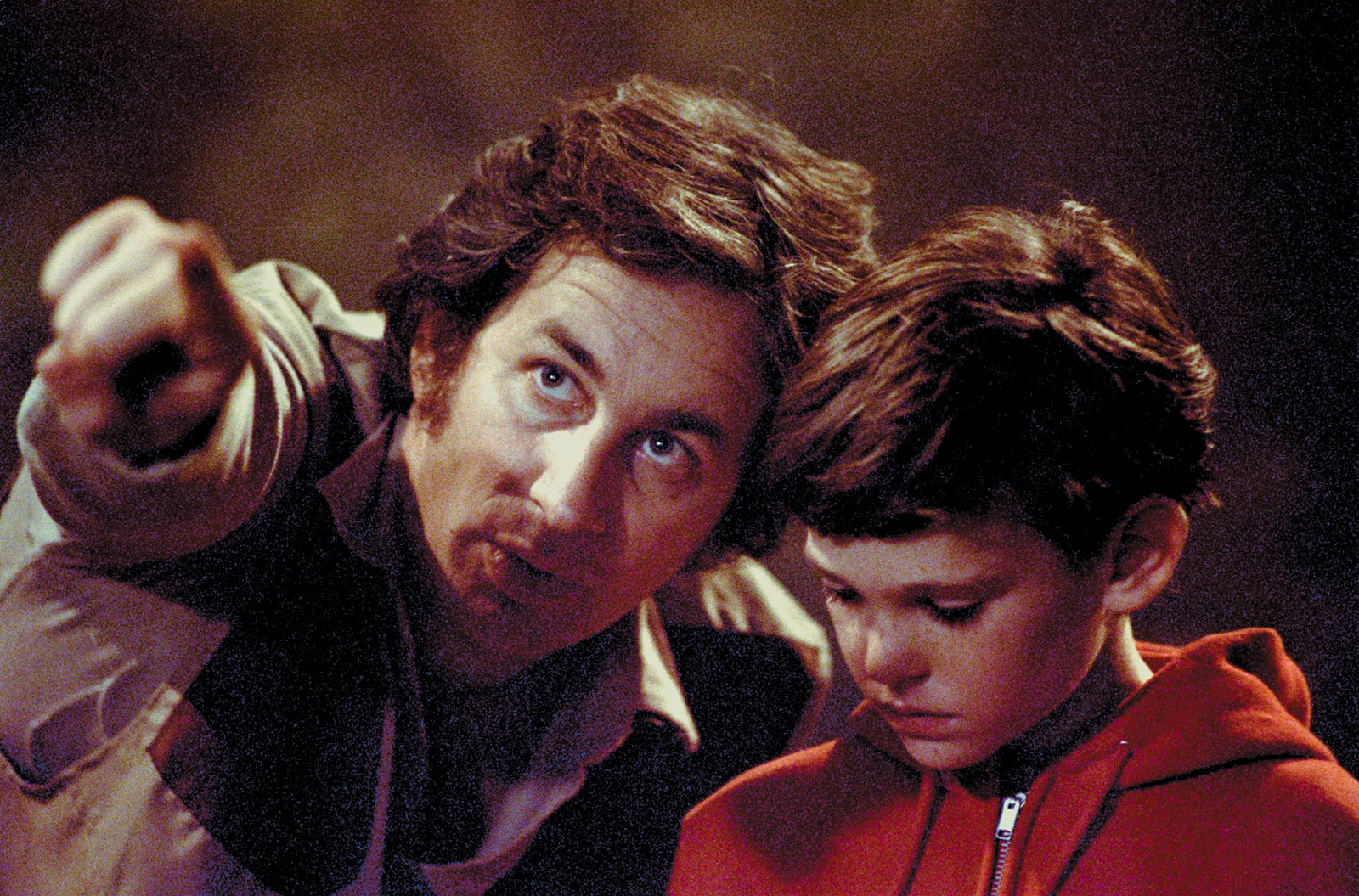
Universal/Everett Collection
Steven Spielberg and Henry Thomas on the set of E.T., 1982

The short biography of Steven Spielberg that Molly Haskell has written for Yale’s Jewish Lives series is subtitled A Life in Films for reasons that soon become clear. Where else finally but in his films would you look for the intimate reality of this curiously enigmatic figure, a man who in the midst of his worldwide fame manages to hide in plain sight? The Spielberg who has surfaced in videotaped interviews or televised awards ceremonies wears the mask of the regular forthright guy, good-humored, matter-of-fact, self-deprecating where appropriate. This affable public persona seems designed to deflect attention from whatever might lie in back of it, the force that roams and shapes the domains from which his films emerge.

There are filmmakers whose lives have been adventures in themselves (Simon Callow has needed three volumes to tell Orson Welles’s story, and isn’t done yet), others with careers battered in complicated ways by the turmoil of war and politics or by the explosions of their own domestic lives. In Spielberg’s case there is little in the way of flamboyant or traumatic public episodes for a writer to catch hold of—he is not an agent of chaos—and the private life has been well guarded by a man wary of revealing too much of himself. (He does not, for instance, give interviews to biographers.) This is after all someone whose own mother—herself described as a nonconformist—would say of him: “The conventional always appealed to Steven.”

From the outside he can seem as much institution as individual, and it is a daunting institution. His résumé encompasses, beyond the thirty feature films to date that he directed himself (including three that enjoyed, in turn, the status of all-time top grosser), many more on which he served as producer. For a decade, before DreamWorks was sold to Viacom, he was a mogul with his own studio. As if with the left hand he has branched out into television production and the development of video games. A prominent supporter of liberal and humanitarian causes, he channeled the profits from Schindler’s List toward the establishment of the Survivors of the Shoah Visual History Foundation.

In short, with a name comparable only to Disney as an entertainment industry brand, he is something of an anthology of superlatives—the richest, most famous, most precociously successful, and, for some, the most gifted of filmmakers—a walking lifetime achievement award. As Haskell notes at the outset, a tally has shown that the two names most often cited in Academy Awards thank-you speeches are Spielberg and God, with Spielberg leading God by a considerable margin. For others the very scale and pervasiveness of his success makes him a predictable object of skepticism if not mistrust.

Haskell acknowledges her own early resistance to the spirit of Spielberg’s films:


I had never been an ardent fan…. He always wanted his films to “arrive” someplace. But brooding ambiguities, unresolved longings, things left unsaid, and the erotic transactions of men and women are the very things that drew me to movies in the first place. His great subjects—children, adolescents—and genres—science fiction, fantasy, horror, action-adventure—were stay-away zones for me.

She emphasizes his “rarely if ever featuring an interesting complex woman at the fore or even an adult sexual relationship”—although she is careful to note that this hardly makes him singular among his generation of male film directors.

Her resistance gives all the more credibility to her nuanced and often deeply sympathetic accounts of his films. She is alert, for instance, to the intensity of the erotic energy that, however rarely, comes to the surface, whether in the kiss exchanged by two women in The Color Purple (which “may be the most sensual scene in all of Spielberg”) or the scene (the saving grace of Always) where Holly Hunter dances accompanied by Richard Dreyfuss as the unseen ghost of her lover. In what is on screen Haskell discerns the essential matter of a life story that might otherwise be reduced to the most fragmentary evidence: some childhood anecdotes, a good number of tales (some undoubtedly apocryphal) about how he got into the movie business, the vagaries of his marital and professional life as far as they can be gleaned from the public press (a couple of marriages, an expensive divorce, many children, an assortment of business deals and lawsuits and hobbies and residences), the usual more or less reliable bits of scattered rumor and recollection.

Much surmise has to go into filling out a portrait of the man. One thinks of the shot in Citizen Kane of the partly obscured view through a fence of the aging and secluded Kane, captured by an intruding news photographer. Not that, for all his extraordinary wealth and influence, there seems to be anything especially Kane-like about Spielberg—he is too much the family man to be likened to Welles’s isolated plutocrat—even if he did manage to acquire the Rosebud sled for his private collection, and even if Haskell does suggest that in recent years he has become “more and more withdrawn and secretive, even paranoid,” and, after some disturbing threats and stalker incidents, “extremely security conscious.”

For Haskell, the crucial starting point is a reckoning with Spielberg’s childhood fears. Born in Cincinnati in 1946 but moving at an early age to Camden, New Jersey, where his father worked in the emerging field of transistor technology, young Steven was from an early age a chronic nail-biter, consumed by anxieties set off by everything from Disney’s Pinocchio to the storm-whipped maple tree waving outside his window. He knelt with his face against the television set, listening to voices he heard calling to him amid the static.

His father’s workaholic tendencies meant that Spielberg was raised essentially among women, his artistically inclined mother Leah (“more coconspirator than parent,” in Spielberg’s words) and his three sisters. In Haskell’s account the restless and fearful boy turned at times into a mischievous, borderline sadistic prankster, locking his sisters in closets and terrifying them with a plastic skull. (Later he would pelt the guests at his bar mitzvah with oranges from a rooftop.)

None of this amounts outwardly to extreme drama. A reconstruction of the secret lives of the children of the 1950s would yield a myriad of such pictures. How many children were not at some point terrified by storms or gnarled trees, especially children exposed to the influence of such a terrifying film as Pinocchio, a work easily as unsettling as Jaws? The small-scale juvenile cruelties of suburban life likewise would make for an endless chronicle. Those voices in the television set—later replicated, along with the scary tree, in Poltergeist (1982)—are more suggestive. The sense of being addressed directly by unknown entities might offer some clue to the air of certainty that marks every early step of his career and that serves as a counterweight to all that unappeasably restless nervous energy that he has admitted as an ongoing impetus: “Yes, I’ve always had shpilkes. I have it now. I had it then. It is my fuel, basically.”

From a certain angle one can see Spielberg as one of those archetypal children of the mythic suburbs, cheery on the outside and nervewracked on the inside, a myth on which his own films have worked variations time and again. So much of his early trajectory feels so generic: “his mind was permanently blown” by Destination Moon; he watched Davy Crockett: King of the Wild Frontier; he developed an obsessive interest in dinosaurs; he joined the Boy Scouts. He can be seen as the awkward haunted child observing the adults around him while inwardly keeping his distance from them and the history they bring with them. They include his Odessa-born maternal grandfather, a gregarious singer and storyteller who was also a strictly observant Orthodox Jew; his father, an army veteran deeply involved in the work that gave him an inside view of world-changing developments in computer science; his mother, “the anything-goes mom, the fairy godmother, who grants her son his every wish,” who would shock more conventional neighbors and eventually leave her husband for another man.

His parents’ divorce took years of increasingly vociferous domestic argument before coming to a head in his last year of high school. The split was evidently momentous for him, both by Spielberg’s accounts and by the evidence of his movies with their recurrent theme of broken families. Haskell reads much of his work as a symbolic coming to terms with a parental drama that for a long time he misunderstood, wrongly blaming his father for the marriage’s collapse.

The young Spielberg seems a picture of an unsettled personality darting about internally in search of its own borders. He was a brilliant child whose intellectual curiosity did not motivate him to be more than a desultory student; a nerd who shunned athletics and the outdoor life yet found his greatest social fulfillment in the Boy Scouts; a Jewish kid uncomfortable with his identity, fantasizing about the communal joys of Christmas. He yearned, apparently, for the mainstream American life evoked by the paintings of Norman Rockwell (of whom Spielberg would become a major collector) and from which his Jewish identity seemed to exclude him. “Being a Jew meant that I was not normal,” he would explain, “I was not like everybody else. I just wanted to be accepted. Not for who I was. I wanted to be accepted for who everybody else was.”

The sense of a barrier was heightened by the communities in which he found himself living—especially after his family moved to Arizona when he was nine, to a suburb on the edge of the desert, an environment of (in Spielberg’s words) “kitchen windows facing kitchen windows facing kitchen windows,” precisely analogous to the freshly built development so thoroughly devastated by the angry dead at the climax of Poltergeist (a film, written and produced but not, at least officially, directed by Spielberg, that as Haskell notes serves as a repository for some of his darkest fantasies).

Not long after the move to Arizona his father gave him an 8-millimeter movie camera, and a life still nebulous came abruptly into focus. At first he took over responsibility for filming the family’s vacations, complete with retakes and carefully elaborated setups, and discovered that “staging real life was so much more fun than just recording it.” By the age of twelve his ambition as a filmmaker was fully formulated, and with it the conscious construction of his own legend. Filmmaking defined his social life, reinforcing his ties with his fellow Boy Scouts and classmates, as he roped everyone in his circle (including of course his parents) into increasingly complex projects.

The intensity of this precocious professionalism prefigures the relentless energy of his subsequent career. One gets the impression that he did not so much express his personality by means of filmmaking as construct his personality through the very act of filming. Not just filming: he was already aware of the ancillary requirements of exhibiting and marketing and even market research. (He would screen movies and then quiz the spectators about their reactions.) At seventeen, still in high school, he wrote, directed, and exhibited a feature-length movie—a UFO story prefiguring Close Encounters of the Third Kind—at a movie theater in Phoenix. After what seem to have been some very casual studies at California State College in Long Beach, he made his way rapidly as a director.

This was in the mid-1960s, but for Spielberg there were no lost years of self-searching, no eccentric vagabondage, no inclination for the psychotropic indulgences of his contemporaries. At twenty he already had a precise sense of the kind of filmmaker he would be, telling a student journalist: “I don’t want to make films like Antonioni or Fellini. I don’t want just the elite. I want everybody to enjoy my films.” Art house fare had never been his thing. His primal movie experience in childhood was Cecil B. DeMille’s all-star Technicolor circus extravaganza The Greatest Show on Earth, and the title alone may have given him a clue to what he wanted to offer his audience. He has said that his first venture into filmmaking was an attempt to replicate DeMille’s train wreck sequence with his Lionel train set.

The deepest stratum of Spielberg’s work was being formed: filmmaking as preservation of childhood, a means of ensuring that the enchanted world of rocket ships and dinosaurs and toy trains could endure in a perpetually habitable parallel life—analogous perhaps to the post-human existence of the androids in A.I. If Spielberg’s childhood and early youth occupy so much of his biographer’s attention, it is because they are never quite done with; as Haskell moves through his career film by film, she constantly draws attention to the ineradicable uncertainties from those years that persist even in works whose ostensible subjects are far removed from his own circumstances. (“E.T. assembling a phone,” she writes, “is the amateur son’s playful rebuke to the engineer father,” while in Schindler’s List “the stories his grandparents had told were finally connecting in a painful, visceral way.”) She argues for Spielberg being, obliquely but profoundly, a most autobiographical filmmaker, marked by “his compulsion to insert versions of his own family drama into the more ritualized conventions of genres where family ordinarily took a back seat.”

Indeed, given the early age at which he absorbed the techniques of filmmaking, it’s as if those techniques became themselves a tangible continuation of childhood, a way to stay directly in contact with a certain rapt pleasure. Technical problems are never just technical; the result is the peculiar sense of intimacy he can impart even when filming—as he has so often done—the equivalent of a train wreck. In his later films, as he has moved beyond train wrecks into the larger catastrophes of history, the intimacy is still there, imbued now with a terrifying vulnerability. His reenactments of storm trooper raids or the slave trade, or, in Empire of the Sun, the wartime chaos in which a boy is separated from his parents—these scenes of ultimate dispossession—were all the more brutal in effect for being filmed as excitingly as the action highlights of Raiders of the Lost Ark or Jurassic Park, as if one had been lured into an amusement park in order to be initiated into hitherto unrevealed horrors.

He made his transition into professional filmmaking with the help of Amblin’, an extremely low-budget twenty-five-minute short imbued with hippie-ish late-1960s imagery of hitchhiking and pot-smoking far removed from Spielberg’s own way of life. It is a slight but undeniably proficient piece of work, and in short order he was put under contract as a television director at Universal. A year later he was directing Joan Crawford in an hour-long episode of Night Gallery, after Bette Davis walked out rather than take direction from someone so young. In a production still reproduced in the book, the twenty-two-year-old director, a viewfinder dangling from his neck, stands slightly hunched in front of the seated Crawford, his gaze fixed on the star as if she were some slightly forbidding foreign material he must find a way to work with. The poise and unwavering focus of his stance give him the air of a dancer—or perhaps of a seabird preparing to swoop.

Spielberg might have restricted himself to being the director who defined a new era of popular filmmaking with Jaws (1975), Close Encounters of the Third Kind (1977), Raiders of the Lost Ark (1981), and E.T. the Extra Terrestrial (1982). He was typed early on as the master of cinematic roller-coaster rides—his first feature, Duel (1971), with its nearly abstract depiction of a hapless commuter stalked by a murderous truck, was already a flawless demonstration of action reduced to its purest, almost wordless terms—and then, with the triumphs of Close Encounters and E.T., of cosmic mystery and childhood wonder. He has not hesitated to build on the success of earlier films, with multiple sequels in the Indiana Jones series (a fifth entry is in the works) and a follow-up to his 1993 dinosaur extravaganza Jurassic Park.

More pronounced, though, has been the energy with which, beginning with The Color Purple in 1985, he has pushed in other directions, in the impressive array of films as ambitious and varied as Empire of the Sun (1987), Schindler’s List (1993), Amistad (1997), Saving Private Ryan (1998), A.I. (2001), Minority Report (2002), Catch Me If You Can (2002), The Terminal (2004), Munich (2005), Lincoln (2012), and Bridge of Spies (2015). However public the themes, there is nothing impersonal about these films. He remains the same filmmaker regardless of genre. His early admirer Pauline Kael was effusive in praise of The Sugarland Express (1974), suggesting that Spielberg might be “that rarity among directors—a born entertainer” truly endowed with “movie sense”—but worrying that “he may be so full of it that he doesn’t have much else.” Kael later decided that in taking on conventionally humanistic themes Spielberg had betrayed his gifts and become a bad director.

If you wanted evidence that Spielberg had nothing to say, you could turn to his follow-up to Close Encounters, the excruciating epic slapstick comedy 1941 (1979) set in L.A. just after Pearl Harbor, a demonstration of technical mastery dedicated to creating a live-action cartoon on a Wagnerian scale, demoniacally efficient and utterly dispiriting, an ode to the void. 1941 is founded on an aesthetic of total assault. There is no breathing room for the spectator, no escape from the next heavy object falling from its mooring: a fighter plane crash-landing on Hollywood Boulevard; an unanchored ferris wheel rolling off a pier. In this Spielberg is a true child of the 1950s, the age of CinemaScope and 3-D, of flying saucers and atomic monsters and marauding Vikings and anything else calculated to amaze the audience with something they had never seen before. For the children of that time, if not necessarily for their more skeptical elders, the big-screen attractions had the authoritative presence of Mount Everest or the Grand Canyon: everything was brighter, gaudier, louder, more passionate, realer than real.

Spielberg is the child who has fully understood the power of that screen and seized control of it, acquiring daunting gifts: to reconfigure fantasy life and rewrite history, not just for himself but for everyone. At some point, however, the rapture of the boy playing with his toys is interrupted by a disturbing sense of the horrors and dangers in which even these games are implicated. In his grand historical set pieces—the Japanese occupation of Shanghai in Empire of the Sun, the emptying of the Kraków ghetto in Schindler’s List, the slave mutiny in Amistad, the D-Day landing in Saving Private Ryan—he takes it upon himself to surpass those earlier epic spectacles by achieving something not only more lifelike but more truthful. The fine points of the truth of any of these depictions can be and has been argued endlessly; but if Spielberg is not a historian he should be acknowledged as an extraordinary and quite conscientious history painter.

It is not surprising that he should have moved in this direction. He has shown a particular gift for clarifying the essential form of complex action, notably in the tumult of crowds, from the panicked beachgoers of Jaws through the violently dispossessed of Shanghai and Kraków and the invaders of Omaha Beach: one could string all those scenes of mass movement into an endless diorama of humans packed together, flung against each other, clustering together to gaze at a public spectacle, looking for a way out, pressing forward in attack, attempting to scatter in flight, driven to destruction.

He has often been accused of sentimentality, of allowing the swelling orchestral accents of John Williams’s music to sweep away every other consideration, and there is no doubt that he shares a talent for the emotional climax with the classic Hollywood directors he so much admires. That talent is coupled, however, with an analytical precision that has come increasingly to the fore. The analysis may be precisely of the implications of the persuasive force of his own film language. The dramatic emotions he evokes with such force play out within resilient rational structures diagrammed with detached precision, whether the futuristic cyberpolice operations of Minority Report or the businesslike subterranean networks of terrorists and intelligence agents in Munich or the immense military machine set in motion in the World War I saga War Horse. Even the warmer comic touches of The Terminal are offset by the hierarchical labyrinth of the airport where almost the whole film takes place, with its bureaucratic barriers and banks of spy cameras.

The determination of Spielberg’s protagonists to resist or break free leads to seeming victories that stir the emotions—the exile Tom Hanks finally makes it out of the airport, the boy in War Horse finds his way back to his village, the Mossad agent in Munich is reunited with his family—but the eyes continue to look clearly at what is going on, and to register with dry clarity an awareness of unresolved contradictions and decidedly mixed outcomes. The surges of feeling no matter how expertly elicited do not erase the world.

That analysis of systems draws him to themes of linguistic incomprehension, between species in Close Encounters and E.T., between nations in Amistad and The Terminal. The mechanisms of law and negotiation become dominant subjects of Amistad and Lincoln and Bridge of Spies. Always the emphasis is on how to effect a translation between mutually incompatible discourses, a translation that may be only partial or tentative, forgivably so if it serves its purpose, bridges the gap, achieves the transfer.

In Amistad, Anthony Hopkins as the aging John Quincy Adams remarks: “In a courtroom, whoever tells the best story wins.” This is not a matter of falling back on easy resolutions, but of pragmatically seeking out the argument or configuration that can prevail, at least tentatively or in part, over forces of destruction. Mastery of technique, even the technique of deception, might prove an indispensable weapon. Catch Me If You Can—perhaps the most blatantly personal of Spielberg’s films—hinges crucially on a con man’s forgery. It is after all the expert forger who is most qualified to detect falsification.
Posted by BardofBatYam at 12:25 PM No comments:
Email ThisBlogThis!Share to XShare to FacebookShare to Pinterest
Labels: .Israel Book Review, @stephendarori, #IsraelBookReview, #stephendarori, #stephendrus, Stephen Darori, Stephen Drus, The Darori Foundation., Yale University Press

Saturday, January 14, 2017

The Sociology Of Plants ....Territorial Ambitions and the Gardens of Versailles Part of Cambridge Cultural Social Studies by Chandra Mukerji, Cambridge University Press Fresh Fruit, Broken Bodies Migrant Farmworkers in the United States, With a Foreword by Philippe Bourgois Seth Holmes (Author), Philippe Bourgois (Foreword), University of California Press Edible Memory: The Lure of Heirloom Tomatoes and other Forgotten Foods by Jennifer Jordan,University of Chicago Press, 2015 Structures of Memory: Understanding Urban Change in Berlin and Beyond by Jennifer Jordan,Stanford University Press, 2006, The Botany of Desire: A Plant's-Eye View of the World Paperback – May 28, 2002 by Michael Pollan,, Random House A Natural History of English Gardening 1650-1800 by Mark Laird, Yale University Press


The questions at the heart of my research are always similar — how do memory and meaning shape the material world? — but I ask these questions in starkly different kinds of settings, as well as both indoors and outside. When I first started my dissertation research on post-1989 urban change and collective memory in Berlin, I headed to the State Library in the former West Berlin, or Stabi West — the modernist library in the opening scene of Wim Wenders’s film, Wings of Desire. This was 1996, so the serious but helpful librarians pointed me to the long row of card catalogue drawers where I spent hours flipping through the soft paper cards in search of knowledge and ordering books from the closed subterranean stacks. In those thoughtful days at Stabi West, there were a few clunky (but back then cutting-edge) computers with the beginnings of computerised databases. Web 2.0 was still years away, and most of my research was analogue and on-site.

On days when I wasn’t in that library or hidden away in one of the many archives across the city, my outside research involved a pair of sturdy sandals or urban-appropriate boots, a notebook and a camera — first my father’s Canon AE-1, in my brief foray into the world of SLRs, and then a Canon Sureshot that I could quickly pull from the pocket of my jacket, get the shot and move on. I would shoot 400 or sometimes 200, mostly slide film and sometimes black-and-white. I would get it developed at the local drugstore, always careful in how many pictures I took as each click of the shutter had a clear financial cost. A decade later, one of those photographs became the cover of my first book, Structures of Memory: Understanding Urban Change in Berlin and Beyond.

I would walk for miles and miles in Berlin. The city smelled of diesel, cigarettes and coal smoke, some generated by my own coal stove. For all their toxicity, these smells still provoke a deep nostalgia to this day. I walked through derelict postindustrial landscapes, which today house gleaming condos, and down row after row of apartment buildings hastily built in the late-nineteenth-century boom, which had become layered with the violence of the twentieth century — bullet holes, neglect, air pollution. The quiet hours in the library paired with the dogged, pedestrian inquiry into the forgotten corners and secret memories of this complicated city. For me, a researcher posing specific questions about human action and the material world, the one didn’t make sense without the other. My ability to read the landscape grew with the hours spent learning the unique German vocabulary for talking about the built environment. But those books, and the mimeographed papers I pored through in the archives, made more sense the more time I spent learning, inch by inch, the topography of the city.

Today this pairing of indoors and outdoors continues in my research, but the locations and objects of inquiry have changed — to gardens and fields and forests, and to the digital world. After completing nearly a decade of work on Berlin and on the violence that once occupied its streets and buildings, I turned to the plant-human intersection and to landscapes of sustenance. My last book investigated heirloom tomatoes and antique apples (Edible Memory: The Lure of Heirloom Tomatoes and Other Forgotten Foods), and I am now writing on the one hand about climate change and historical kitchen gardens, and on the other about the changing landscapes of beer brewing — forgotten hops fields, revitalised barley fields, abandoned malt houses and hop kilns and the like. My research continues to be profoundly material. Even in this digital age, I do much of my research with old-fashioned books and am still a committed user of libraries, taking advantage of the serendipity of open stacks and the tactile focus of paper books and interlibrary loans.

I pair this indoor work with the work I do quite literally out in the field, with muddy feet, finding old apple trees or talking with gardeners in the shade of an arbor. While conducting this research I have been too hot, too cold, soaked to the bone, jetlagged, sunburned and mosquito-bitten. This research also requires an unfamiliar pace for my hectic self — being slow, standing still, watching, listening. It is a very physical, visceral form of research, and one that allows me to be present in landscapes that are often undergoing great transformations that are not always immediately apparent.

Royal Kitchen Garden, Hampton Court, London There are aspects of this research that are terrifying (thunderstorms, climate change), but there is also much joy and pleasure to be had. Because I focus on edible plants, there is almost always something good to eat or drink at hand. I have eaten plums pulled of a tree that is a research object, been nourished by the tea room at Hampton Court Palace with its Henry VIII-inspired menu and produce from the Georgian garden nearby and tasted tomatoes plucked from a garden in a vacant lot in Garfield Park in Chicago. This research engages all senses — it has smells (some good, some bad), tastes (almost always good). It also has the sounds I have learned to listen for of bird and insect life as well as the weather, those important forces that Mark Laird and others remind garden historians to attend to. This work is also utterly visual and tactile. I am certain that part of what has sent me in this direction is the deep draw of gazing out at a landscape that contains more shades of green than I will ever be able to name.

But the ability to read a landscape of plants is quite dependent on some kind of experience and expertise. This is most often the knowledge of plants acquired over a lifetime and handed down across generations in communities that rely, at least in part, on foods and medicines gathered from forests, meadows and seashores or grown in local gardens and fields. Most of the time I have a guide of some sort explaining the landscape to me — a seasoned gardener or young apprentice, a costumed interpreter or an eager volunteer. In many respects, landscapes do not speak for themselves. And, in contrast to how I feel in a library or a database, I am a novice in the landscapes I enter: an intruder, a visitor, uninitiated.

When I stand in a garden or a field or a forest, my interpretation of that landscape is profoundly limited. In other words, I see the forest and I see the trees, but without a conversation with the local expert or gardener, a look into the archive or a perusal of archaeological and meteorological reports, I have little ability to place this landscape into context. I have little way of knowing if it has changed, if I am glimpsing a snapshot of radical transformation or arboreal or horticultural continuity. A local forager, a historian, a botanist, a park ranger, a phenologist and a meteorologist might all have different takes on a given landscape. Or, surveyed, their takes on that landscape might line up in compelling or even startling ways.

So, for my purposes of seeking the links between human action, memories and meanings and the landscapes we inhabit, I triangulate. I sit quietly at home or in my office, reading a stack of library books or the dim glow of journal articles held in the vast expanse of my hard drive. Then I walk out into the world, either alone or in the company of a knowledgeable farmer or gardener, and seek to bring together what I see (and smell, hear, taste and touch) with what I have read, and with the instruction that my guide can give me in reading the ways of the landscape. Sometimes this is quite obvious, embarrassingly so, as when a young gardener at Old Sturbridge Village answered my question about their apple tree collections by pointing to a good-sized cider orchard that was sitting in plain sight and that I had just walked by — no excuse. Once this past summer, another costumed interpreter at a different historical garden, observing me from afar for a while, finally crossed the dusty road running through the centre of a reconstructed agricultural village. He had watched me taking an inordinate number of photographs — with my phone rather than the SureShot of my Berlin days — in the apothecary’s garden that he tended. My read of that garden changed utterly once he talked and walked me through it — my initial impressions were wrong, nearly the opposite of what I learned when he told me of its origins and intentions.
Image Credit: (Tracy Reid CC BY 2.0)

A sociology of plants is already underway, and is also very much demanding the presence of the researcher in the field and the archive. Two examples are Seth Holmes’s Fresh Fruit, Broken Bodies, where the materiality of the research requires Holmes to work alongside the broken bodies of the women and men he writes about, to cross the border with them, to see and experience all the painful physicality of migrant labour, the people who harvest the fruit in such high demand across the USA and around the world. A quite different example would be Chandra Mukerji’s Territorial Ambitions and the Gardens of Versailles, where the researcher triangulated the physical experience of viewing the garden at ground level and from above with deep archival records that explain not only the meaning of this particular arrangement of box hedges, annual beds and opulent fountains, but also the military technologies and intentions at work.

I now spend a lot of time with plants, both under the open sky and with the digital and analogue research materials at my desk. This is not ornamental work. Do I even have to say it? Without plants, there are no people. Water is life, and so are plants. Look to your plants. The weeds in the cracks of t
he sidewalks, the great trees like time machines from past centuries and millennia, the meticulously monotonous cornfields, kelp washing up on shore. The apple orchard, carrot patch and the rice paddy. The rain forest, the chaparral, the high desert with its plant life meticulously adapted to arid conditions, the alpine meadow. Without them, there is no us, no life on planet earth.
Many of my colleagues, with good reason, write about space, territory and violence of various sorts. Violence and loss are never far away, and the sociology of plants is as intricately connected to power as any other realm of sociological inquiry. But I keep reaching for space, territory and joy, a very intentional move. There is much death in the world, and I want to write about life. So much cruelty, but I want, sometimes, to write about kindness. This is part of why I set out into the kitchen in my last book, and now wander forth into gardens and forests. It is impossible to ignore that these green spaces are intrinsically connected to systems of struggle, exploitation and deep imbalances of power, but, as Pierrette Hondagneu-Sotelo and others make so clear, they can also be places where people find peace and create life.

Posted by BardofBatYam at 3:32 AM No comments:
Email ThisBlogThis!Share to XShare to FacebookShare to Pinterest
Labels: .Israel Book Review, @stephendarori, #stephendarori, Cambridge University Press, Stanford University Press, Stephen Darori, University of California Press, University of Chicago Press, Yale University Press

Friday, August 26, 2016

The Land Is Full: Addressing Overpopulation in Israel Hardcover,by Alon Tal, Yale University Press

 
The Land Is Full: Addressing Overpopulation in Israel Hardcover,by Alon Tal, Yale University Press

An Israeli academic claims the country faces problems if it keeps having too many children.

Tel Aviv beach
Tel Aviv beach


Two kinds of countries are emerging in the world, claims Prof. Alon Tal.“There will be lands where timid, myopic, or misguided leaders took a path of least resistance and let demographic inertia continue unrestrained,” he writes. In those places, people will become poor and food will prove scarce. In other places, he claims, “cultural evolution will combine to produce the regulation and self-restraint required for stabilizing population.”


“The fate of civilization may even hang on Israel’s population situation, which, if left unchanged, likely will play an expanding negative role in that nation’s behavior,” write Paul R. Ehrlich and Anne H. Ehrlich, in a foreword to The Land is Full: Addressing Overpopulation in Israel.

The book, written by Tal, who founded the Israel Union for Environmental Defense and the Arava Institute for Environmental Studies, argues that Orthodox Jews and Arabs should reduce family size, and the country must plan for the future by having fewer children. He admits that “it is especially difficult to talk about strategies for limiting the number of Jews,” but nevertheless “our thinking must change.”

What follows is a litany of claims that assert how overpopulation is a doomsday scenario for Israel.

Tal notes that Israel is “unique among Western countries” in that 73 percent of Israeli women between 45 and 50 have two or more children. By contrast, the rate in Germany is only 51 percent. Israel is “one of the most crowded nations on the planet,” he writes, adding that it is “1,000 percent more congested on average than other countries in the OECD.”

Tal notes that there are 7,522 people per square kilometer in the area around Tel Aviv. Rapid demographic growth creates poverty; there are crowded classrooms, crowded hospitals and crowded highways, the book claims. But Tal still brings some hope. He notes that many Arab families have reduced family size, in line with the Muslim world in general.

“Phenomenal drops to replacement or below-replacement fertility levels were reported in Tunisia, Morocco, Qatar, Saudi Arabia and Lebanon,” he notes. Saudis are having fewer children than Jewish women in Israel, and Israel has nine times the population density of the kingdom.

Tal claims people are deterred from addressing demography by “the very virulence of attacks against anyone who challenges such a central principle in the country’s code of ethics.”

Those who critique Beduin birthrates, he says, are said to have racist motives, and those who say Jews should have fewer children are accused of being “anti-Zionist.”

He asserts that the sense of “social justice” among “privileged, liberal intellectuals” makes them fear criticizing haredim and Beduin who have large families.

Not to mention the constant presence of the Holocaust.

“Some of the world’s leading Jewish environmentalists feel that the normal rules of demographic restraint should be suspended in the case of the Jewish people,” Tal writes, “at the very least until pre-World War II numbers are restored.”

But Tal’s perspective is heavily jaundiced by his own stereotypes about Israel.

He describes the arrival of Soviet Jewry as a “human tsunami”; Moroccan Jews, the author concludes, were “less able to contribute economically to Israel”; and he claims that “Israel’s Ethiopians are unable to change their skin color and blend in like immigrants from earlier waves.”

One almost gets the feeling reading this book that if only Jews had all been non-Russian, white Europeans from Germany, then it would have been better to have millions of them. Perhaps it’s not demographics that is the problem, but not having enough white Europeans in Israel? This book is a classic example of how someone can have all the correct data and draw the wrong conclusions. Tal is correct that overpopulation harms the environment.

He is correct in discussing how crowded classrooms result in “frustration and disillusionment” among teachers.

There is a link between poverty and family size among Beduin and haredim.

But the conclusion that Israel is in for a demographic doomsday is misguided.

Germany, the supposed model of demographic success, needs migrants because of low fertility. In 2015, when 1.1 million mostly Middle Eastern migrants arrived in Germany, The Los Angeles Times noted that “the nation’s population is shrinking at an alarming rate and it desperately needs” newcomers. The Financial Times wrote that the “country’s aging population is threatening its position as Europe’s largest economy.”

Tal claims Israel needs “enlightened public policies” to keep up with the “intoxicating influence” of Western civilization’s progressive birthrates. But every country that has become wealthy and Western, from Japan to Italy, now needs millions of fertile immigrants from the Middle East to “save” them from demographic decline.

Not only should Israel not go down the path of Germany, but one solution that’s already taken place is the number of Israelis who have emigrated to the US and EU, and will undoubtedly continue to do so. This will relieve population pressures naturally, as in other countries with high population densities. And why does Israel need a “strategy for limiting the number of Jews,” when Jews are a tiny minority in the world? Let the billions of people in India and China have lower birthrates, Jews can have high birth rates and emigrate.

Israel is not the most crowded country – it is 32nd behind South Korea, Lebanon, Barbados, Bangladesh and many others, including the economically successful Netherlands. Tel Aviv is also not the densest city in the world – Manila (41,000 per square km.), Taipei and Seoul are far more crowded. Tel Aviv isn’t even in the top 40 cities by population density. Israel as a whole closely resembles the US northeast’s megalopolis between Boston and Washington, where density is 360 people per square kilometer.

Israel is perfectly positioned to be similar to Singapore or the UAE. What it needs is a more dynamic economy and solutions to its housing crises. That doesn’t mean fewer people, it means better policies to plan for them all and to open up the Negev to real development. The land is not full, the land has simply been mismanaged. likely will play an expanding negative role in that nation’s behavior,” write Paul R. Ehrlich and Anne H. Ehrlich, in a foreword to The Land is Full: Addressing Overpopulation in Israel.

The book, written by Tal, who founded the Israel Union for Environmental Defense and the Arava Institute for Environmental Studies, argues that Orthodox Jews and Arabs should reduce family size, and the country must plan for the future by having fewer children. He admits that “it is especially difficult to talk about strategies for limiting the number of Jews,” but nevertheless “our thinking must change.”

What follows is a litany of claims that assert how overpopulation is a doomsday scenario for Israel.

Tal notes that Israel is “unique among Western countries” in that 73 percent of Israeli women between 45 and 50 have two or more children. By contrast, the rate in Germany is only 51 percent. Israel is “one of the most crowded nations on the planet,” he writes, adding that it is “1,000 percent more congested on average than other countries in the OECD.”

Tal notes that there are 7,522 people per square kilometer in the area around Tel Aviv. Rapid demographic growth creates poverty; there are crowded classrooms, crowded hospitals and crowded highways, the book claims. But Tal still brings some hope. He notes that many Arab families have reduced family size, in line with the Muslim world in general.

“Phenomenal drops to replacement or below-replacement fertility levels were reported in Tunisia, Morocco, Qatar, Saudi Arabia and Lebanon,” he notes. Saudis are having fewer children than Jewish women in Israel, and Israel has nine times the population density of the kingdom.

Tal claims people are deterred from addressing demography by “the very virulence of attacks against anyone who challenges such a central principle in the country’s code of ethics.”

Those who critique Beduin birthrates, he says, are said to have racist motives, and those who say Jews should have fewer children are accused of being “anti-Zionist.”

He asserts that the sense of “social justice” among “privileged, liberal intellectuals” makes them fear criticizing haredim and Beduin who have large families.

Not to mention the constant presence of the Holocaust.

“Some of the world’s leading Jewish environmentalists feel that the normal rules of demographic restraint should be suspended in the case of the Jewish people,” Tal writes, “at the very least until pre-World War II numbers are restored.”

But Tal’s perspective is heavily jaundiced by his own stereotypes about Israel.

He describes the arrival of Soviet Jewry as a “human tsunami”; Moroccan Jews, the author concludes, were “less able to contribute economically to Israel”; and he claims that “Israel’s Ethiopians are unable to change their skin color and blend in like immigrants from earlier waves.”

One almost gets the feeling reading this book that if only Jews had all been non-Russian, white Europeans from Germany, then it would have been better to have millions of them. Perhaps it’s not demographics that is the problem, but not having enough white Europeans in Israel? This book is a classic example of how someone can have all the correct data and draw the wrong conclusions. Tal is correct that overpopulation harms the environment.

He is correct in discussing how crowded classrooms result in “frustration and disillusionment” among teachers.

There is a link between poverty and family size among Beduin and haredim.

But the conclusion that Israel is in for a demographic doomsday is misguided.

Germany, the supposed model of demographic success, needs migrants because of low fertility. In 2015, when 1.1 million mostly Middle Eastern migrants arrived in Germany, The Los Angeles Times noted that “the nation’s population is shrinking at an alarming rate and it desperately needs” newcomers. The Financial Times wrote that the “country’s aging population is threatening its position as Europe’s largest conomy.”

Tal claims Israel needs “enlightened public policies” to keep up with the “intoxicating influence” of Western civilization’s progressive birthrates. But every country that has become wealthy and Western, from Japan to Italy, now needs millions of fertile immigrants from the Middle East to “save” them from demographic decline.

Not only should Israel not go down the path of Germany, but one solution that’s already taken place is the number of Israelis who have emigrated to the US and EU, and will undoubtedly continue to do so. This will relieve population pressures naturally, as in other countries with high population densities. And why does Israel need a “strategy for limiting the number of Jews,” when Jews are a tiny minority in the world? Let the billions of people in India and China have lower birthrates, Jews can have high birth rates and emigrate.

Israel is not the most crowded country – it is 32nd behind South Korea, Lebanon, Barbados, Bangladesh and many others, including the economically successful Netherlands. Tel Aviv is also not the densest city in the world – Manila (41,000 per square km.), Taipei and Seoul are far more crowded. Tel Aviv isn’t even in the top 40 cities by population density. Israel as a whole closely resembles the US northeast’s megalopolis between Boston and Washington, where density is 360 people per square kilometer.

Israel is perfectly positioned to be similar to Singapore or the UAE. What it needs is a more dynamic economy and solutions to its housing crises. That doesn’t mean fewer people, it means better policies to plan for them all and to open up the Negev to real development. The land is not full, the land has simply been mismanaged.
Posted by BardofBatYam at 11:53 PM No comments:
Email ThisBlogThis!Share to XShare to FacebookShare to Pinterest
Labels: .Israel Book Review, @stephendarori, Alon Tal, Cameos from Zion, Israel, Just A Rip Roaring Zionist, Overpopulation, Stephen Darori, Stephen Drus, The Darori Foundation, Yale University Press

Wednesday, August 24, 2016

Culture by. Terry Eagleton. Yale University Press.

Culture. Terry Eagleton. Yale University Press. 

In Culture, literary and cultural critic Terry Eagleton turns his attention to defining and pinpointing the role that culture plays in our lives as well as its value, traversing examples including Edmund Burke, Jonathan Swift and Oscar Wilde. This is an accessible and smart primer that explores how to critique culture under the conditions of global capitalism, though its central ideas will be familiar to those who have already encountered Eagleton’s earlier work, writes Danni Glover.


Terry Eagleton’s Culture does not start out optimistically. ‘Culture is an exceptionally complex word’, the book commences, ‘but four major senses of it stand out. It can mean (1) a body of artistic and intellectual work; (2) a process of spiritual and intellectual development; (3) the values, customs, beliefs and symbolic practices by which men and women live; or (4) a whole way of life.’ These definitions seem specific and meagre, but thankfully the book is less interested in definitions than perspectives, which seem to be more useful in reaching an understanding of the nature and value of culture. The pessimism of the first sentence soon gives way to an erudite but ultimately unoriginal discussion of the forces that enshrine culture and how culture is participated in by consumers – and Eagleton very much approaches the enjoyment of culture as a consumerist exercise. Though lucid, clear and readable in a lightly intellectual kind of way, much of Culture riffs on or repeats Eagleton’s earlier work without substantially building upon it.

As usual, his Marxist critiques are comfortable and thorough: ‘A professional caste of artists and intellectuals, as Marx recognises, becomes possible only when not everyone needs to labour for most of the time […] Culture [has] its material conditions’ (44). He begins the Marxist branch of his argument by showing how culture and civilization grow in parallel to, and contingent upon, each other, but that they are not the same thing; that ‘mailboxes are part of civilisation, but what colour you paint them […] is a matter of culture’ (5).

Eagleton’s discourse on the concept of civilization could benefit from some more thorough engagement with postcolonial scholarship, though a later comment that ‘so much contemporary postcolonial thought […] can simply be a shamefaced inversion of colonial values’ demonstrates that this is not so much an oversight as a dismissal. It is an analysis which is therefore characteristic of Eagleton’s antipathy towards relativism, but I am not entirely convinced that a study of the variance of global culture that does not at least acknowledge the force of colonialism is doing the topic justice. Without postcolonial theory, the analysis feels shallow.
Image Credit: Mural Atlantis Books (Alma Ayon CC2.0)

Where colonial and postcolonial discourse sit most comfortably in the book is in Eagleton’s discussion of Irish writers and intellectuals as culture-makers and critics. Eagleton’s Dublin is a cultural counterpoint to the Edinburgh of the Enlightenment. Where David Hume’s comments on the substance of nations speak to a process of civilising by political (in)stability – ‘Time alone gives solidity to [the rulers’] right […] and operating gradually on the minds of men, reconciles them to any authority, and makes it seem just and reasonable’ (71-2) – it is Edmund Burke who speaks to the cultural formation of nations:


Men are not tied to one another by paper and seals. They are led to associate by resemblances, by conformities, by sympathies. Nothing is so strong a tie of amity between nation and nation as correspondence in laws, customs, manners, and habits of life. They have more than the force of treaties in themselves. They are obligations written in the heart (59).

Eagleton also looks to Jonathan Swift and Oscar Wilde for their contributions to and ruminations on culture. The chapter on Wilde, though short, is the most enjoyable. Like the nature of culture itself, Wilde is a difficult person to pin down. Eagleton’s assertion that ‘if Wilde was gay, it was among other things because he found heterosexuality so intolerably clichéd’ (99) will no doubt raise eyebrows amongst queer theorists, but it is an interesting statement about culture’s need to mimic, mock and subvert in order to thrive. Eagleton writes approvingly about Wilde’s awareness of how privilege alters the reality of culture – how wealth creates access – and the subsequent analysis about the cultural and leisurely goals of socialism (107) is the most convincing argument in the book, though it too closely resembles similar arguments in Eagleton’s earlier works Why Marx Was Right (2011) and The Meaning of Life (2007).

Eagleton’s final chapter on ‘The Hubris of Culture’ argues that ‘once literary scholars ventured into the study of film, media and popular fiction, there could be no doubt that they had some plausible claim to centrality. They were, after all, engaged with artefacts consumed by millions of ordinary people’ (150). This centrality, Eagleton argues, has led to the rise of the creative industries, an industrial process which ‘amounts to […] capitalism [incorporating] culture for its own material ends, not that it has fallen under the sway of the aesthetic, gratuitous, self-delighting or self-fulfilling. ‘‘Creativity’’, which for Marx and Morris signified the opposite of capitalist utility, is pressed into the service of acquisition and exploitation’ (152). He goes on to argue that the intent of capitalism to assimilate culture has led to the decline of universities. This is a fascinating argument which comes along quite late in the book, perhaps to lay the groundwork for future publications. I hope so; I would be interested to read contemporary Marxist critiques on the neoliberalisation of higher education, an under-discussed issue that affects all of us working, studying and researching in universities. Eagleton might advance a more radical view on this issue than, say, Stanley Fish, but it was certainly the part of the book which I am most keen to see continue as a conversation in forthcoming literature.

Though distinctly reminiscent of earlier, bolder works of theory, Culture is an accessible primer on how we might go about critiquing the existence of culture under global capitalism. In an era which seems to shun intellectualism, it is refreshing to see an unflinchingly smart book that is intended for an audience outside the strictly academic. Fans of Eagleton’s confident prose will no doubt enjoy it, though his sceptics may find its self-referentialism frustrating. It’s not likely to replace his more substantial books on culture on university syllabuses, but it is an enjoyable enough read.

Posted by BardofBatYam at 5:00 AM No comments:
Email ThisBlogThis!Share to XShare to FacebookShare to Pinterest
Labels: .Israel Book Review, @stephendarori, Cameos from Zion, Culture, Just A Rip Roaring Zionist, Stephen Darori, Stephen Drus, Terry Eagleton, The Darori Foundation, Yale University Press
Older Posts Home
Subscribe to: Posts (Atom)

About Me

BardofBatYam
View my complete profile

Blog Archive

  • ▼  2018 (4496)
    • ▼  December (1)
      • Trumped Up: How Criminalization of Political Diffe...
    • ►  November (21)
    • ►  October (324)
    • ►  September (576)
    • ►  August (448)
    • ►  July (430)
    • ►  June (436)
    • ►  May (834)
    • ►  April (823)
    • ►  March (302)
    • ►  February (187)
    • ►  January (114)
  • ►  2017 (1441)
    • ►  December (73)
    • ►  November (67)
    • ►  October (121)
    • ►  September (268)
    • ►  August (83)
    • ►  July (73)
    • ►  June (112)
    • ►  May (249)
    • ►  April (140)
    • ►  March (101)
    • ►  February (94)
    • ►  January (60)
  • ►  2016 (252)
    • ►  December (10)
    • ►  November (10)
    • ►  October (37)
    • ►  September (32)
    • ►  August (31)
    • ►  July (19)
    • ►  June (11)
    • ►  May (35)
    • ►  April (48)
    • ►  March (16)
    • ►  February (3)
  • ►  2014 (1)
    • ►  August (1)
Simple theme. Powered by Blogger.