Showing posts with label #TastsFromZion. Show all posts

Sunday, September 10, 2017

The Complete Mushroom Book: The Quiet Hunt Hardcover by Antonio Carluccio (Rizzoli )(#IBRCookBooks)


We have a soft spot for mushroom books, and can’t resist adding another to our list of must-haves for enthusiasts. Antonio Carluccio is Italian, a chef and restaurateur, an excellent writer, and known by many as “the mushroom man”—so who better to put together a delectable mushroom guide and recipe collection?
The first half of the book is a valuable and thorough field guide with descriptions, cleaning and cooking instructions, along with photographs of the most common, prized, and “those better to avoid” fungi.
The recipes are top-notch, and full of both classic and surprising combinations… Mushroom and Pearl Barley Soup, Mushroom Strudel, Morel and Porcini Risotto, Tuna Steaks with Wild Mushrooms, Roast Pork with Four Mushrooms, and Matsutake Soup… each one clearly explained and detailed by an author with a skill and passion achieved over many years in the woods and at the stove.
The photographs, both in the field and on the table, really set this book apart and are bound to get mushroom-hunters headed to the woods—or at least their local gourmet food shop!

The Best Recipes in the World Hardcover by Mark Bittman ( Clarkson Potter) (#IBRCookBooks)

If you are one of the many fans of Mark Bittman bestseller How To Cook Everything then get ready to expand your horizons and take a culinary trip of a lifetime with The Best Recipes In the World. Not a writer to shy away from bold claims, Bittman once again delivers a book that lives up to it’s all-encompassing title. For those cooks wanting to peruse new cuisines this is an indispensable guide with one trustworthy voice guiding us through 44 countries and over 1000 recipes. In fact, there is such a dearth of recipes in this tome that Bittman includes an alphabetical recipe guide indicating which dish can be made ahead in 30 min. or less as well, recipes are indexed by cuisine in addition to alphabetical. Menu suggestions too are listed by both cuisine and theme.

By his own admission Bittman is a thoughtful but essentially lazy cook, therefore he follows these rules:
* I don’t use two ingredients where one will do
* I don’t mind spending a long time cooking a single dish as long as I don’t have to pay attention to what’s going on
* I’ll rarely use an ingredient not sold at a supermarket
* I think one great dish, one prepared thoughtfully and with love is a basis of a great meal

Good rules to live and cook by we think and true to his mantra you will find here a collection of recipes that while remaining true to their origins are made more accessible to the home cook of average skill.

“A brilliant project, a beautiful book, and must for any kitchen. Bravo, Mark!” – Lidi Bastianich, author of Lidia’s Family Table

Saturday, September 9, 2017

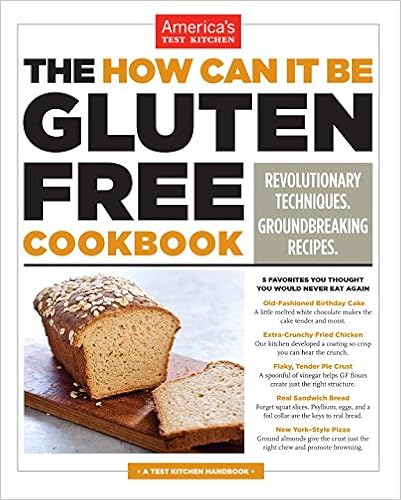
The How Can It Be Gluten Free Cookbook: Revolutionary Techniques. Groundbreaking Recipes. Paperback – March 1, 2014 by America's Test Kitchen , America's Test Kitchen; (#IBRCookBooks)


America's Test Kitchen's Gluten-Free Cookbook Gave Me Back My Saturday Morning Waffles


Gluten-Free Waffles from The How Can It Be Gluten-Free Cookbook by America's Test Kitchen

Cookbook: The How Can It Be Gluten Free Cookbook by America's Test Kitchen

Overall Impression: This book is for all former gluten-lovers who are now gluten-free. It’s a comprehensive guide to making and baking all of your old favorites without sacrificing any of the taste or texture!
As someone who has been gluten-free for almost ten years, it's fun to see the evolution and progression in gluten-free baking — from inedible loaves of dense bread and sad-looking treats, to cookies and cakes that fool my gluten-eating family on a regular basis! We've come a long way, baby! This book is totally a part of that. It's a celebration of knowledge, striving to deliver results that are as much like the "real thing" as possible.


Recipes I Tried

Buttermilk Waffles, pg. 42-43
Chocolate Chip Cookies, pg. 212-213
Quinoa Salad with Bell Pepper and Cilantro, pg. 82-83


Reading The How Can It Be Gluten Free Cookbook

The How Can It Be Gluten Free Cookbook is just as much textbook as it is filled with recipes. If you crack it open, they immediately school you on the science of gluten, what it is, and what it does. The book is in depth and thorough. They explain their special flour blend for this book, as developed by America's Test Kitchen (ATK), and the reasons why it works the way that it does. If you have an inner science geek living inside your brain (like I do), you're going to love it!


Beyond the science-y stuff, the cooks at ATK break down different gluten-free grains with a thorough description of each. There are charts comparing different gluten-free products on the market as rated by a tasting panel, determining things like which gluten-free breads and pastas they would recommend straight off the shelf. I had never seen something like that done before, so it was fun to read and gave me some good ideas on new products I might want to consider.


The Recipes + Cooking From The Book

In order to get a real sense of what this cookbook can do, you're going to have to whip up The America's Test Kitchen Gluten Free Flour Blend (located on page 13). Like many gluten-free flour blends, there are quite a few ingredients that go into it. This one is a mixture of white rice flour, brown rice flour, potato starch, tapioca starch and some nonfat milk powder.

If you don't have all of those items already in your kitchen, it can be a rather pricey hurdle just for making a loaf of bread. I get it. I've been there. The cooks at ATK have also taken the time to compare the way their flour blend bakes up against some of the leading blends in each recipe. Say you don't have tapioca starch, but you do have a bag of Bob's Red Mill Gluten Free All-Purpose Baking Flour on hand — you're not out of luck. They have included a section for each baked recipe on how to get the best results with flour substitutions. I thought this was thoughtful and handy, and something that will be majorly appreciated by those who feel overwhelmed by making, or simply don't have the time to make, a batch of flour blend every time they go to bake a few treats.

However, I will say that my results with the ATK Gluten Free Flour Blend were pretty incredible!


America Test Kitchen's Gluten-Free Flour Blend

I let my gluten-loving husband pick the recipes we were going to test from the book. His first pick was waffles! I wasn't surprised since he's a total breakfast junkie. We broke out our waffle iron, whipped up the batter, and voila! They were beautiful. Oh, and the crunch! I love a waffle that gets crispy on the outside. They weren't super dense or spongy or soggy like other gluten-free waffles.

I asked my husband why these tasted different and he simply said "Because, Gina, they taste like regular waffles." Yup, indeed they did. I would definitely make them again!


Gluten-Free Chocolate Chip Cookies

That same weekend, we also tested the book's Chocolate Chip Cookies. I always feel a chocolate chip cookie is a baseline for testing any cookbook (or, maybe I just really LOVE chocolate chip cookies).


I followed the recipe to a "T" but my cookies came out differently than what was pictured in the book. Mine were cake-y and slightly smaller with less spread. This was slightly disappointing since I usually opt for the gooey, flat cookies with crispy edges. However, their flavor was on point! They were really delicious.

My mom also came by that day and snagged a cookie off the counter. When I went for my own cookie, she actually warned me they weren't gluten-free! I had to explain to her that they came from a gluten-free cookbook I was trying out. She also compared them to the cookies that my grandmother used to make around Christmas. You don't know my grandmother, but if you did, you'd know that is some serious praise! Bravo, America's Test Kitchen! You get granny points. If that isn't an actual measure of rating baked goods, I think we can all agree it should be.

Although the book is loaded with sweets and baked goods, it also covers everything from homemade gluten-free pasta to savory dishes and salads. I'm definitely going to try their Baked Macaroni and Cheese! Look at that thing! Hubba hubba.

What Could Be Better

My only complaint is that it can be pricey and impractical to bake gluten-free — though this could be a complaint of any gluten-free cookbook. The amount of ingredients you have to source and buy in order to make a gluten-free flour blend can be stressful. But the reason that this book succeeds is because of its really great, thoughtfully put together flour blend. So you trade a little bit of stress for a big pay off! In my opinion, that's a small price to pay if you want to eat waffles that taste EXACTLY like waffles.

Final Takeaway

The book is smart, well thought out, and full of useful explanations about how gluten-free baking works. It's a science lesson with a side of really great-looking recipes! This is the perfect book for that family member who needs to go gluten-free, but worries they'll never get to eat a real-deal piece of cake again. Its recipes are very comprehensive, spanning breakfast all the way through classic American dinner dishes like fried chicken and meatloaf. This book is an amazing asset for anyone with a gluten issue.


Rawsome Vegan Baking: An Un-cookbook for Raw, Gluten-Free, Vegan, Beautiful and Sinfully Sweet Cookies, Cakes, Bars & Cupcakes ,Paperback, by Emily von Euw (#IBRCookBooks)


It's Raw. It's Awesome. But Can The Rawsome Vegan Baking Book Really Satisfy My Sweet Tooth?


Overall Impression: A beautiful yet fuss-free approach to raw desserts

From cakes to cupcakes, bites, bars, cookies, pies, tarts, pudding, and ice cream, Rawsome Vegan Baking is jam-packed with recipes from the creator of The Rawsome Vegan Life, Emily von Euw. You'll find a sweet for every mood and occasion — and you'll never have to turn on the oven.


Recipes I Made

Nut-free Creamy Coconut Cheesecake - p. 28
Totally Tahini Cups with Coffee Cream Filling - p. 109
Peanut Butter Cookies - p. 124
Amazing Avocado Chocolate Pudding - p. 172

As indicated in the title, all of the recipes are raw and vegan. There is no dairy, refined sugar, processed flour, eggs, or gluten. Commonly used ingredients include raw nuts, coconut, cacao, dates, liquid sweeteners (your choice), bananas, and oats or buckwheat groats. Unfortunately I wasn't able to try many of the recipes because I'm allergic or sensitive to cacao and carob, which figure prominently in the book.


How It Went

Von Euw emphasizes how easy it is to make raw desserts and I think her breezy, casual approach has advantages and disadvantages. On the positive side these recipes are really short, simple, and adaptable. You don't need to use any fancy techniques or much equipment beyond a good food processor (and possibly a blender) and your refrigerator or freezer. As for ingredients, the author says that nuts and seeds are generally interchangeable, carob can be substituted for cacao, and you can choose whichever liquid sweetener you like. One often assumes that raw food is complicated but von Euw makes it accessible.


However, I think some of the recipes could benefit from a little more detail or an extra step or two. For example, the author might have indicated the suggested springform pan size in all of the cake recipes (instead of an easily-overlooked sentence in the chapter intro). It would also be helpful for the recipes to include storage and "eat by" instructions. Many of the recipes simply instruct you to "blend all the ingredients until smooth." This seems efficient but when you're using ingredients like dates or shredded coconut, things can sometimes go more smoothly (pun intended) if you blend them separately first. This would have prevented issues like slightly chunky pudding and grainy cheesecake.

Speaking of the cheesecake, I liked the smart use of fresh young coconut in the Nut-free Creamy Coconut Cheesecake recipe. In addition to coconut, the recipe called for a surprising amount of lemon juice — I even reduced the amount called for and all of the testers were still startled by the tartness. Perhaps if it had been called "lemon coconut cake" the expectations would have been different. That said, it was delicious and tasted even better on the second day.


Chocolate peanut butter cups are one of the foods I've missed most since giving up chocolate and refined sugar, so I was really curious to try the Totally Tahini Cups with Coffee Cream Filling. (There is also a recipe for Chocolate Nut Butter Cups in this cookbook.) They took just a few minutes of active time and less than an hour in the fridge. And they were scrumptious! These were a great example the book's many recipes that can satisfy a sweet tooth with minimal effort and time.

Two final design notes: One, the book lays flat, which is always a welcome feature in a cookbook. Two, all of the recipes are accompanied by a color photograph. Readers should be aware, however, that the desserts are often styled with garnishes that are not included in the actual recipes.


Final Takeaway

In her friendly, supportive style, Emily von Euw offers a great foundation and a lot of variety for anyone who wants to learn how to make raw, gluten-free, and vegan desserts. The recipes are creative and striking and you can follow them exactly as written or make them your own.

The Forest Feast: Simple Vegetarian Recipes from My Cabin in the Woods Hardcover,, 2014 by Erin Gleeson (Harry N. Abrams) (#IBRCookBooks)


The Forest Feast by Erin Gleeson


Erin Gleeson's recipes in The Forest Feast are so beautifully presented that you might mistake them for being complicated. That is, until you realize that most of them require only a handful of ingredients (in some cases just three or four) and minimal preparation. All vegetarian, these recipes are fresh, vibrant, and equally fitting for a weeknight supper or a cocktail party with friends.


I have long admired the vibrant, nature-filled aesthetic of Erin's The Forest Feast blog (as well as her recipes here at The Kitchn). Like the blog, the cookbook is filled with colorful watercolors and photographs taken at her woodland cabin. Yet I had never actually cooked any of her recipes, so I was curious to give them a try. The book has 100 mostly new recipes encompassing appetizers, cocktails, salads, vegetable dishes, and sweets. Much of it would be considered seasonal and CSA box-inspired, and above all color-driven.


Recipes I Made
The Skylonda Cocktail - p. 76
Bay Potatoes - p. 134
Aglio, Olio & Peperoncino Collards - p. 146
Peanut Butter-Coconut Balls - p. 204

I chose these recipes based on what I had available and what met my gluten-free, dairy-free, and other food allergy needs. Vegans might want to note that many of the recipes in the book call for yogurt or cheese.


(
How It Went

Each recipe gets a two-page spread — one page featuring the recipe and the other page showing the finished dish. Everything is in full, gorgeous color. Rather than a traditional recipe format with the list of ingredients followed by the steps, the style here is a mashup, with the ingredients listed as they are used. Ordinarily this would not be my preferred format. Yet because these recipes require so few ingredients and steps, it is easy to taken all the ingredients needed for a recipe at a glance.
One thing I did find initially puzzling was that very few of the recipes indicate the number of servings. However, this is taken care of in the front of the book and in some of the chapter introductions — Gleeson writes that most recipes serve four.


The Skylonda Cocktail was actually one of the more involved recipes in that it called for soaking cinnamon sticks in bourbon for three days. (I actually took them out after two days, as the cinnamon flavor was strong enough for me.) Still, it was an easy-peasy cocktail that one could make without any mixology skills or special equipment.


Next I made the Bay Potatoes, a clever dish of roasted sliced sweet potatoes, red onions, and red potatoes. Besides slicing the potatoes, it was mostly hands-off and tasted good both just out of the oven and cold the next day. My testers found the bay flavor a bit overwhelming, but I'd definitely use this general idea again.


The Aglio, Olio & Peperoncino Collards were even easier to make and were a good example of how the dishes in this cookbook really fall into that sweet spot of being easy and healthy for a weeknight dinner yet pretty enough to serve while entertaining. One note, however: in the case of this collards dish the recipe most definitely would not have served four people, but more likely two. (Perhaps my collards were smaller than the ones used to test the recipe?)


Most of the sweets recipes were off-limits to me due to my dietary restrictions but I did make the no-bake Peanut Butter-Coconut Balls. They made an easy dessert as well as hiking snack.


Final Takeaway

Gleeson writes that many of the dishes are equally good warm or at room temperature and can be made ahead. This, coupled with the fact that the recipes are so pretty, makes them great for stress-free entertaining. The book also proves that healthy food can be enticing and simple food can be beautiful. It's beautiful, functional, and inspiring — a great book to have in the kitchen as well as on the coffee table.


Find It! The Forest Feast: Simple Vegetarian Recipes from My Cabin in the Woods by Erin Gleeson, $24.63 at Amazon

Friday, September 8, 2017

My Little French Kitchen: Over 100 Recipes from the Mountains, Market Squares, and Shores of France Hardcover – October 14, 2014 by Rachel Khoo (Author), David Loftus (Photographer)(Chronicle Books) (#IBRCookBooks)

Rachel Khoo Makes Us Fall In Love With French Food All Over Again


Chunky Savoie Salad with a Walnut Vinaigrette, p. 208(Image credit: Coco Morante)

Cookbook: My Little French Kitchen by Rachel Khoo
Overall Impression: Drawing inspiration from her travels throughout France, Rachel Khoo puts her distinctive stamp on the country's regional cuisines.

What do you do when you’ve got a case of Parisian ennui? Why, cavort all over France with an ace photographer, gathering gorgeous images and riffing on classic recipes from the country’s various food-producing regions, of course! Put your envy aside and live vicariously through Ms. Khoo as she does just that in this breezy, charming travelogue.


Recipes I Tried
Gelée de piment d'Espelette (Espelette Pepper Jelly) p. 127
Salade Savoyarde avec une vinaigrette de noix (Chunky Savoie Salad with a Walnut Vinaigrette) p. 208
Soupe au jambonneau et légumes (Ham Hock and Vegetable Soup) p. 250
Cooking from My Little French Kitchen

This is the fourth offering from Rachel Khoo, English cookbook author and BBC television personality. She’s known for taking French dishes and giving them a playful twist, and she often takes this tack in My Little French Kitchen. Classic Paris-Brest (p. 40) gets a savory update with a filling of brie, spinach, apples, and a mustard mousse. Hazelnut-Crusted Monkfish Cheeks (p. 151) get a zingy lift from a bright salad of watermelon radishes, carrots, and grapefruit.

And then there are more off-the-wall dishes such as Pad Alsacien (p. 237), an irreverent riff on Pad Thai using ingredients from Alsace. Shredded red cabbage and julienned carrots are tossed with smoky cubes of bacon, Alsatian egg noodles, and a sweet and sour stir-fry sauce of honey and white wine vinegar. Ms. Khoo definitely takes French cuisine to a new place!


Espelette Pepper Jelly (p. 127)(Image credit: Coco Morante)

You will find a few recipes that are straight from the playbook de cuisine, such as the fantastic condiments in the section on the Basque region of southwestern France. Espelette Pepper Jelly (p. 127) tastes at once classic and new, a fruity and spicy spread that's perfect on a cheese plate or tartine.

If you can’t get your hands on dried Espelette peppers in whole form (which, by the way, is no small feat outside of France. I was lucky enough to find a local grower, though piment d'Espelette grown outside of their designated region of origin cannot technically be labeled as such), seek out the freshest, medium-hot dried peppers you can find. There’s no need to worry about finding a use for any leftover chiles, since you’ll need them for the two other condiments in this chapter, Xipister Sauce (p. 112) and Basque Ketchup (p. 125).


Ham Hock and Vegetable Soup (p. 250)(Image credit: Coco Morante)

Ham Hock and Vegetable Soup (p. 250) is comfort food with a little pizzaz. The otherwise basic broth gets a spike of piquancy from a spoonful of grainy mustard, and a last-minute topping of chopped green onions and quick-pickled, julienned pears adds a pleasing pop of freshness.

I’m looking forward to playing with this recipe, perhaps subbing in a smoked turkey leg for the ham, and sliced apple for the pear. I’d never thought to top a soup with quick-pickled fruit, which as it turns out, is a great way to perk up a wintery dish. It’s always fun when a recipe teaches you something new.


Chunky Savoie Salad with a Walnut Vinaigrette (p. 208)(Image credit: Coco Morante)

I also picked up a couple great techniques from the recipe for Salade Savoyarde (p. 208), a sumptuous, Lyonnaise take on salade gourmande. First off, when you fry up a pan of bacon with cubed, crusty bread, you get golden, bacon fat-infused croutons and crispy bacon bits all in one go. It was very, very difficult not to eat these toppings straight out of the skillet, let me tell you.


The dressing is unusual, too — it's enriched with pan-toasted, finely chopped walnuts and coats the lettuce leaves to add even more richness to the party. Oh and there's a generous amount of shaved Beaufort cheese in here, too. Frankly, the vegetables seem like a bit of an afterthought, basically providing you with an excuse to eat croutons, bacon, walnuts, and beaucoup de fromage.


What Could Be Better

I don’t have a lot to complain about when it comes to this cookbook — the recipes are unique, delicious, and well-written, and it’s great fun to learn about each region of France as you flip through the chapters. Where unique, hyper-regional ingredients are used, Ms. Khoo offers similar substitutes, encouraging the reader to improvise based on season and locale.

The recipes have French titles, but each is accompanied by an English translation — nothing is left unexplained or assumed. Even the fancy pastry recipes look doable due to their thoughtfully written directions, reflecting the author’s background in patisserie and cooking instruction.

Copious photography helps to give a sense of place to each region of France, and David Loftus has a real knack for capturing gorgeous, natural-looking portraits of his subjects. You'll find charming photos of food producers from all over France, as well as dozens upon dozens of dreamy documentary shots of Rachel Khoo on her travels, looking effortlessly gorgeous in her trademark lipstick and fringe. Whether or not you appreciate the photo-palooza is a matter of personal taste.
Final Takeaway

When I first picked up My Little French Kitchen, I expected to find traditional French recipes. What I actually discovered was a quirky collection of riffs on the canon of cuisine française, peppered with the occasional straight-ahead recipe for a well-known regional dish.

This wasn't a bad thing. Many staid, serious books have been written on authentic recipes and techniques, hewing to the codified classics. Ms. Khoo's warm, irresistible energy shines through in her recipes and descriptions of her travels, and I couldn't help but feel a little sunnier each time one of her dishes came out of my own little kitchen.