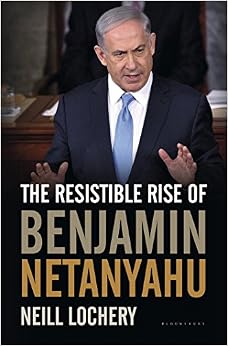
Israel’s Putinisation
Ahmad Tibi, a long-standing Arab member of the Knesset, once remarked that ‘Israel is democratic towards Jews, and Jewish towards Arabs.’ For many years, that soundbite nicely captured the contradictions of ‘Jewish democracy’: fair elections, press freedom, cantankerous debate and due process for some; land theft, administrative detention, curfews, assassinations and ‘muscular interrogations’ for others. Tibi meant to call attention to the hypocrisy of Israel’s claims to be a democratic state, but as he effectively admitted, Jewish democracy did work for Jews – even Jews radically opposed to the occupation and indeed to Zionism itself. For as long as it did, liberals in Tel Aviv could tell themselves that things weren’t so bad behind the Green Line, the border between Israel and the territory it captured in the 1967 war. Indeed, the resilience of Israel’s democratic institutions helped sustain the illusion that the Green Line was still a frontier, even as it vanished under the weight of the settlement project, launched when Labor was in power and subsidised by every subsequent government.
Colonial rule, however, is corrosive in its effects. Since the Second Intifada, Palestinian citizens in Israel have been reminded at every turn that they are not welcome, from the police killing of 13 demonstrators in October 2000, to Benjamin Netanyahu’s election day warning last May: ‘Arab voters are coming out in droves to the polls. Left-wing organisations are busing them out.’ The spectre of ‘Arab voters’ was hardly new: the Israeli right has never looked fondly on Arabs exercising their voting rights, unless they can be presented as evidence of the virtues of ‘Jewish democracy’. What is novel is the intensifying campaign inside Israel against those ‘left-wing organisations’ Netanyahu mentioned: human rights NGOs and their (mostly) Jewish leaders. The campaign has been launched both in the Knesset and on the street, with an apparently high level of co-ordination between state officials and ultra-nationalist militants. Israel is increasingly ‘Jewish towards Arabs’, as Tibi said, but it’s also on its way to becoming less and less democratic for Jews.
Consider the case of Michael Sfard, one of Israel’s best-known human rights lawyers, whose work focuses on land confiscation and the separation wall. According to a report by Uri Blau for Haaretz, between 2010 and 2013 a private detective was commissioned to gather information on Sfard. This ‘investigation’ was paid for by Regavim, a group that describes itself as ‘the only organisation’ fighting an ‘illegal land grab’ by Palestinians, acting in concert with the UN, the EU, and Israeli and American NGOs. Haaretz’s investigation revealed that Regavim had received about $2.8 million from various government bodies – mostly local councils in West Bank settlements. At the time, Regavim’s legal department was run by Bezalel Smotrich, now a member of the Knesset for the right-wing Jewish Home party.
Im Tirtzu is another pro-settler group prominent in the campaign against NGOs. It emerged among ultra-nationalist university students in 2006, and made a name for itself in 2010, when it published a document linking the New Israel Fund, a liberal NGO, to the Goldstone Report, the UN fact-finding mission on the 2008-9 war in Gaza, which found Israel, as well as Palestinian fighters, to be responsible for war crimes, and possibly crimes against humanity; it also put up a large billboard depicting the NIF’s chairwoman, Naomi Chazan, with a devil’s horn on her forehead. In December it released a flagrantly inflammatory video, just over a minute long, which distils the message of the assault on the NGOs: they are accomplices to murder, and traitors. A young, bearded Arab man facing the viewer raises his arm to attack, then the image freezes and a female announcer tells us:
Before the next terrorist stabs you, he already knows that Yishai Menuhin, a planted agent belonging to Holland, will make sure to protect him from a Shin Bet interrogation. The terrorist also knows that Avner Gvaryahu, a planted agent belonging to Germany, will call the soldier who tries to prevent the attack a ‘war criminal’. He also knows that Sigi Ben-Ari, a planted agent belonging to Norway, will protect him in court. Before the next terrorist stabs you, he already knows that Hagai El-Ad, a planted agent belonging to the European Union, will call Israel a ‘war criminal’. Hagai, Yishai, Avner and Sigi are Israelis. They live here with us, and are implants. While we fight terror, they fight us. The ‘Planted’ law can outlaw them. Sign it.
Yishai Menuhin heads the Public Committee against Torture in Israel. Avner Gvaryahu is the outreach director for Breaking the Silence, a group that gathers soldiers’ testimonies of their actions in the occupied territories. Hagai El-Ad and Sigi Ben-Ari work, respectively, for B’Tselem and HaMoked, human rights organisations known for exposing abuses in the occupied territories. (Their photographs all feature in the video.) The ‘Planted’ bill was recently proposed in the Knesset by Yoav Kish, a member of Likud. Under it, NGOs that receive funding from another state for allegedly ‘subversive’ activity would be defined as shtulim or ‘moles’, fined and potentially forced to dissolve.

Im Tirtzu describes itself as a ‘centrist’ group. This is not as far-fetched as it sounds: the centre in Israel has radically shifted, and Im Tirtzu has friends in high places. One of them is Naftali Bennett, Netanyahu’s education minister and a leader of the Jewish Home party. His campaign manager, Moshe Klughaft, produced the Im Tirtzu video, and Bennett shares its loathing of human rights organisations. In December he declared that representatives of Breaking the Silence would be banned from schools. His ministry has also removed from the curriculum a novel about a love affair between a Jewish woman and an Arab man, on the grounds that ‘intimate relations between Jews and non-Jews threaten the separate identity’: language that would not have been out of place in apartheid South Africa. Avigdor Lieberman, Netanyahu’s former foreign minister, has supported similar anti-NGO legislation, and Netanyahu himself once starred in an Im Tirtzu fundraising video. In November, Netanyahu’s justice minister, Ayalet Shaked, a cofounder of Jewish Home, introduced a ‘Transparency’ bill in the Knesset. It would require NGOs that receive at least 50 per cent of their funding from foreign governments to declare themselves; their members would also have to wear name-tags if they appeared in the Knesset. The bill applies only to states and not to the far more abundant ‘foreign funding’ that right-wing groups receive from wealthy Zionists in the diaspora, such as Sheldon Adelson, the Las Vegas casino magnate who owns the Israeli newspaper Israel Hayom.
The current darling of Im Tirtzu, however, is Netanyahu’s culture minister, Miri Regev, a former brigadier-general in the Israel Defence Forces. The daughter of Moroccan immigrants, Regev made headlines in 2012 by taking part in anti-immigration demonstrations, and describing Sudanese immigrants as ‘a cancer in our body’. On 27 January she announced a ‘No Loyalty, No Budget for the Arts’ bill, which would deny public funding to those who fail to demonstrate loyalty to the Jewish state. Hours after the bill was introduced, Im Tirtzu released a list of supposed ‘moles’, including David Grossman, Amos Oz and other members of the liberal Zionist establishment. This was too much even for Bennett, who described the list as ‘embarrassing’. But Regev is thought to be more in tune with the attacks against the old Ashkenazi elite. On the Israeli right, a lingering attachment to liberal ideas inherited from Europe is enough to mark you as a ‘mole’.
‘Mole’ is not the worst epithet being hurled at Jews whose loyalty falls under suspicion, as Daniel Shapiro, the US ambassador to Israel, discovered last month at a security conference in Tel Aviv. ‘At times there seem to be two standards of adherence to rule of law, one for Israelis and one for Palestinians,’ Shapiro said – for an American official, a fairly blunt criticism. In return, in a TV interview, Avi Bushinsky, a former adviser to Netanyahu, called him a yehudoni – a Hebraisation of the derogatory Yiddish term yidele, usually translated as ‘little Jew boy’.
There has always been a deep strain of contempt in Zionism for the Yiddish-speaking Jews of Eastern Europe, who lacked the will, or the muscle, to defend themselves against anti-Semitic violence. The veneration of the state and the worship of force that are the pillars of Jewish identity in Israel, as much as Judaism itself, grew out of an effort to wash away the shame of having once been yidele. But the cult of state and army was always tempered – behind the Green Line at least – by a nostalgic attachment to liberal European values, an attachment that was particularly strong among Jews of German origin, the so-called yekkes. But their power, their numbers and their cultural authority have declined over the years: they are an old elite, and viewed with the disdain and resentment that old elites tend to provoke. Of Israel’s six million Jews, nearly three million are Mizrahi, from Middle Eastern countries, and about a million are Russian. A growing number of Jews are religious, and they have many more children than secular Jews. It is no wonder that, as Asher Schechter recently observed in Haaretz, ‘Israel is increasingly turning its back on Europe.’
Writing in 2003, at a time of high Euro-optimism, Tony Judt described Israel as a ‘characteristically late 19th-century separatist project’ in ‘a world that has moved on, a world of individual rights, open frontiers and international law … Israel, in short, is an anachronism.’ Today, it is Judt’s cheerfully Hegelian description of ‘a world that has moved on’ that seems out of step with the neo-tribal spirit of the times. Israel does not seem like such an outlier in a world reshaped by the drive towards ethnic and religious separatism, the militarised policing of frontiers, and the emergence of authoritarian populist governments. For a country of its size, it has made a handsome contribution to the creation of this world, through its occupation and its wars – and through its high-profile involvement in the arms trade and the ‘security’ industry.

But its influence has also made itself felt by way of example. It is often argued that Israel lacks soft power in the Middle East, as a Jewish state in a predominantly Muslim region, and as an occupier of Arab land. But military and economic success create a soft power of their own, no less effective for being concealed. In 1963, Jalal Al-e Ahmad, who would become one of the spiritual fathers of the Islamic Revolution in Iran, travelled to Israel for two weeks. In a book about his trip, he described Israel’s fusion of religion and state power as a potential model for Iran. After the crushing defeat by Israel in the 1967 war, many Arabs asked themselves whether the Jews had won because they remained closer to their faith, and defected from the nationalist camp to Islamism. The ethnic cleansing from which the state of Israel emerged is now being repeated, with even more horrifying consequences, in other parts of the Middle East.
Israel has often been criticised for its refusal to integrate into the region, its (racist) insistence on being a ‘villa in the jungle’. Its politicians have responded by saying, essentially, what James Baldwin said in the 1960s: ‘Do I really want to be integrated into a burning house?’ The regional fires have led to a certain amount of gloating in Israel, and provided a welcome distraction from the occupation, which has grown only more entrenched. But it’s not clear that Israel can remain unscathed by the flames that are consuming its neighbours.
According to some Israeli pundits, the attacks on NGOs are symptoms of a deepening Putinisation. Israeli politicians have made no secret of their admiration for Putin, a tough, ruthless leader whose resolve – and preference for military solutions – stands in sharp contrast to the caution and indecision of Barack Obama. Putin is also, in Israeli eyes, refreshingly indifferent to human rights. As relations with the Obama administration have cooled – particularly in the aftermath of the Iran nuclear deal, which Netanyahu did his best to torpedo – Israel has increasingly turned to Russia, as well as to China, from which it now imports more than it does from the US.
But the unbridled, insular nationalism of Netanyahu’s Israel is also reminiscent of Sisi’s Egypt and Erdoğan’s Turkey, where there is constant talk of foreign plots hatched in Washington and Brussels, and a toxic mix of resentment and entitlement vis-à-vis their Western patrons. As Diana Pinto suggests in Israel Has Moved (2013), the Jewish state has tended to see its neighbours as ‘so many vaulting poles with which to catapult itself into a peaceful because distant globalisation’. Economically, it has succeeded in escaping the region; politically, that goal has proved far more elusive. ‘Israel is now just another Arab regime,’ the Syrian poet Adunis once said to me, and the proposed legislation against ‘moles’ is scarcely different in kind, if not degree, from anti-NGO campaigns in Cairo. The repression of Jewish dissent is the latest phase of what Pinto describes as the ‘turning inward of a state in the process of its own ghettoising’. As if it preferred to remain in that ghetto, Israel has stubbornly carried on a colonial project at the risk of harming its relations with Europe and the United States, both of which are finally realising that Israel has no intention of making a genuine peace with the Palestinian people.

