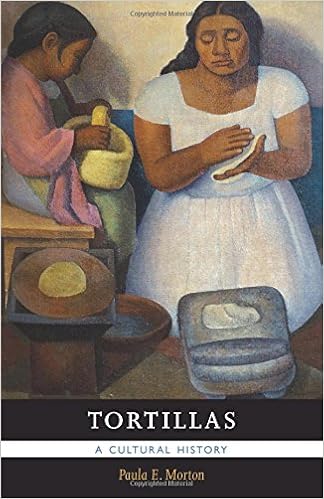
This is exactly what the title says, a cultural history of tortillas. It's got some oral history (and several "guest essays", an unusual feature but each contributes information), it's very slightly academic in a few sections, and the overall tone is something akin to social anthropology. The writing is lively and the reader will find out a lot about tortillas.
Morton provides some history for the tortilla in pre-Columbian Mexico. Much of the history is the interplay between corn tortillas and flour tortillas. The Spanish considered wheat to be better and somehow, more civilized, so the tortilla became a mark of the poor and the Indian. Flour tortillas eventually happened, and this is somewhat mysterious. Among the possibilities are closeted Muslims or secret Jews, both groups apparently settling on the frontier. There's also what might be described as the interplay between grandma's and the industrial tortilla, with grandma's tasting better but being hell on women to make.
Some of the story is the similarities and differences between the northern areas of Mexico and the more traditionally Indian portions. Morton describes particularly Aztec and Maya cuisine, sharply different. Then there are several stories about Mexican and Mexican-American entrepreneurs who set up tortilla manufacturing companies or restaurants. The last chapter is on the world tortilla, mostly in the USA and certainly not Mexican but in a way a sort of ambassador for Mexican culture; and there are stories of Mexicans now Americans and their foods.
This is a quick (125 pages or so, with an additional helpful short annotated sources section at the end).

No comments:
Post a Comment