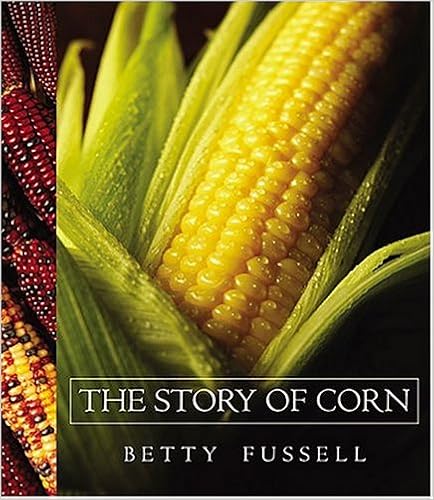
The author is descended from folks who grew corn on the plains, and their story is woven into the start and end of the text. There is a great deal of detail on ritual and traditional uses of corn by Native American peoples, from the Toltecs and Aztecs and Woodland peoples to modern tribes, and especially much on the uses of corn as a food, in fact so much on alternative ways of making some dishes (such as bread-like dishes) in various cultures that many readers would skip over these details. The chapter on the mechanization of corn process also has lots of detail but is hard to follow for those of us who don't know the function of many of the agricultural tools: the author doesn't describe them. Similarly, while the author mentions the six general types of corn (sweet, dent, pop, flour,...), she never explains the differences among them, and there is limited information on corn genetics. The author describes the surprising number of industrial uses for corn in some detail:the book has lots of information on all aspects of corn but some useful details are missing. I was especially interested in the conflicting theories on the ancestry of corn in a section titled The Corn War (at the time of publication, there were theories that teosinte was either not the ancestral grain or not the only one). One error: in the text on Chaco, the author states that Pueblo Bonito housed more than 1000 people; it is now accepted that it housed relatively few. A limitation of this book is that it was published in 1992 and hence has nothing on modern developments related to GMOs. There is an extensive bibliography but few references within the text indicating which sources contain more information on a topic. Of course, a reader can go to the web for a particular topic (such as the types of corn), but it would be useful to have it in the text.

No comments:
Post a Comment