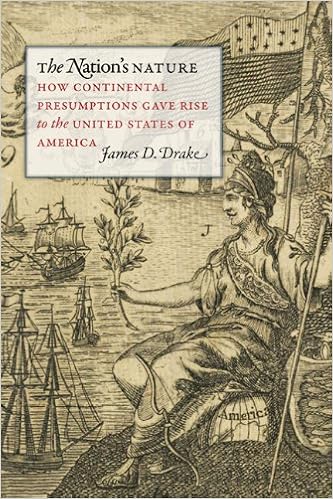
 One of the most remarkable aspects of the Founding era was the willingness of so many Americans to believe that their shaky young republic was somehow destined to dominate North America. James Drake explains why people with only the haziest ideas of the continent's geography could have found this proposition plausible, and shows how, in acting on their convictions, they positioned the United States to realize a vision that was far more improbable than they dreamed. This elegantly argued, graceful, and rewarding book invites us not only to reimagine the American Revolutionary impulse, but to reassess the nature of the nation it created.In The Nation’s Nature, James Drake untangles the critical and complex process by which free Americans imagined the United States stretching from sea to sea long before it actually did. He makes a convincing case that this continental vision was critical to the Americans’ success at breaking up the British Empire in 1776 and launching their own eleven years later. Along the way, he proves that it is possible to trace the evolution of a nation’s collective imagination in jargon-free prose that is actually fun to read.Geographers have begun to ask whether continents are any longer a viable category of analysis, while the new field of global history has challenged the idea that the story of this nation can be contained between the seas. In this moment of geographic turbulence, we are suddenly liberated from the tyranny of continental presumptions and encouraged to reimagine ourselves in a less landlocked manner. Drake's book comes as a gift at this critical time."
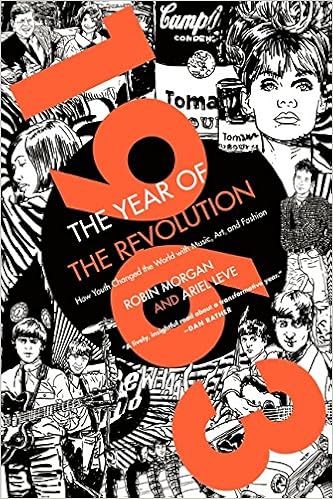 1963 was a pivotal year for me growing up in Boston. Still, it would have been impossible for me, at that time, to foresee what the 60’s were to become. I’ve read good books about 1965 as well as 1968, but I’ve never given much thought to the influence of 1963. This book shows how the radical changes taking place in England in 1963 laid the groundwork for the youth rebellion here in the “States.” The Boomers and their rise to power as a cultural and economic force were shaped by what was happening on the music, fashion and art scenes in London.Ariel Leve and Robin Morgan's oral history 1963: The Year of the Revolution is the first book to recount the kinetic story of the twelve months that witnessed a demographic power shift—the rise of the Youth Quake movement, a cultural transformation through music, fashion, politics, and the arts. Leve and Morgan detail how, for the first time in history, youth became a commercial and cultural force with the power to command the attention of government and religion and shape society.
While the Cold War began to thaw, the race into space heated up, feminism and civil rights percolated in politics, and JFK’s assassination shocked the world, the Beatles and Bob Dylan would emerge as poster boys and the prophet of a revolution that changed the world.
1963: The Year of the Revolution records, documentary-style, the incredible roller-coaster ride of those twelve months, told through the recollections of some of the period’s most influential figures—from Keith Richards to Mary Quant, Vidal Sassoon to Graham Nash, Alan Parker to Peter Frampton, Eric Clapton to Gay Talese, Stevie Nicks to Norma Kamali, and many more.
I was expecting a more American focused presentation, but I was pleased with what I found

Among scholars and activists working on the phenomenon of statelessness, the Bidoon of Kuwait and the Gulf States more generally are simultaneously one of the best- and least-known cases. Best-known, because the Bidoon (“without”, short for bidoon jinsiyya, or “without nationality”), are among the longest-standing populations of stateless persons; least-known, because it has been challenging to acquire detailed information about their circumstances and the numbers affected, and to understand the real blockages to resolution of their status.
The Bidoon are also exemplars of many of the broader causes of statelessness: a population left behind when nationality is determined and documented after state succession (in this case, transfer of sovereignty between Britain and a newly independent Kuwait); a law which provides for nationality to be acquired at birth only on the basis of descent, and only through the father; and a minority group facing suspicion on grounds of ethnic and religious affiliation. Though Kuwait’s democratic institutions have only limited power, the Bidoon are also numerous enough to be perceived as threat to the existing political balance of power if fully integrated as nationals of the state; while the extension of recognition might also risk dilution of generous welfare benefits to nationals.
Kuwait, in line with the other Gulf States, recognised British authority by treaty in 1899 as a way of resisting incorporation into the Ottoman Empire, becoming a British “protected state” notionally in control of its internal affairs. The sheikhdom adopted its first nationality law in 1948, the same year as the first major legislation on British nationality, and replaced it in 1959, in anticipation of regaining independence in 1961. The 1959 law, amended several times, remains the law in force. Roughly one third of the 3.4 million residents today are Kuwaiti nationals; and of the remainder somewhere in the region of one or two hundred thousand are Bidoon (the numbers are highly contested), without recognised nationality of Kuwait or any other country. Kuwait insists, as is usual in such situations, that the Bidoon are not stateless, but in fact nationals of other (mainly neighbouring) states.
The 1959 law recognises as nationals those subjects of the sheikh who can trace their ancestry in the country through the paternal line back to 1920 (the 1948 law required 1899); some others could naturalise. Those residents who were left out during an initial population registration exercise following independence have struggled to obtain recognition of nationality till today. In 1986 this group were declared “illegal residents”, a status most continue to hold, despite various initiatives undertaken to provide access to Kuwaiti nationality for some limited numbers, notably through a law on “gradual naturalisation” adopted in 2000.
Claire Beaugrand’s book, based on her doctoral thesis, provides much information to fill the gaps in existing knowledge and scholarship (published in English) about the causes and consequences of the Bidoon’s predicament. In broad terms, the book sets out the historical background, the application of the 1959 nationality law and later initiatives at naturalisation, the social and economic marginalisation of the Bidoon, and efforts to mobilise for better rights. Unfortunately, the book is often hard to follow, especially for someone with no background in the history of Kuwait and existing knowledge of the people and institutions discussed. Key information is not always introduced in logical order, while internal chapter headings are often unhelpful. Despite these problems of poor organisation – which a good editor would have been able to fix – the book will be a valuable source and starting point for those who wish to build on the author’s work.
 I will begin by stating that I am a big fan of "cozy" mysteries, particularly those set in English villages and with characters who are more than two-dimensional.
I am reading the last of the series by Lesley Cookman (Libby Sarjeant Murder Mysteries) and have been totally charmed by them.
The characters are believable and have plenty of quirks and faults so they seem more like real people than most characters found in mysteries. There are plenty of funny moments but these are not what I consider "comic" mysteries.
Another thing I like is that the two main characters do not usually put themselves in peril (something I object to in many mysteries), although there have been a couple of instances where they were briefly in a sticky situation but were swiftly rescued.
Almost every mystery has a twist at the end that I did not see coming in spite of a couple of hints that when I went back and checked, I should have caught but the hints were so skillfully woven into the dialog that I missed them.
The "psychic" bits are downplayed and in several of the stories have little to do with the main story but actually with peripheral stories that turn out to be interwoven with the main plot at the end.
If you like twisty plots, with a bunch of very likeable characters, I think you will enjoy these...
 This is an excellent book that provides the qualitative critical thinking necessary for making better rational decisions regarding purchases, health care, and lifestyle. Many books impart the statistics to differentiate what is truly different from what is not. But, few books focus on framing the question correctly, understanding the biases of the stakeholders, and how to evaluate the findings. Ultimately, the qualitative thinking the author imparts is as important as the quantitative knowledge imparted by math books.
The author does an excellent job explaining how science works. It is a constant feedback loop of battling hypothesis and rebuttals that confuse the public. But, if you make an effort to understand the issue, you will grasp the evolving nuances of the arguments. Through this process our knowledge invariably advances.
Some highlights of the book include the matrix of stakeholders issues on page 34 regarding Global Warming, Drug approval, Genetically engineered food, and Mad cow disease. This matrix succinctly fleshes out all stakeholders positions on those four complex issues. The table of evidence being studied to understand climate change on page 83 is really thorough. Also, the concept of "pseudosymmetry of scientific authority" as explained on page 16 is interesting. It means the Media sometimes allocates as much print to both sides of an issue when the vast majority of the scientific community is on one side (that's why it is called pseudosymmetry). The entire chapter 5 on differentiating between cause and coincidence is excellent. Chapter 7 on interpreting statistics is also very good including its specific section on elucidating hidden confounding factors. Within this chapter, she also states the most important phrase in statistics: "results can be statistically significant without being statistically meaningful." Or given a large enough sample size, stat tests invariably uncover at least small differences which may be trivial. Chapter 9 is an interesting overview of widespread thinking flaws including anchoring, confirmation bias, confusing randomness for a trend, overgeneralization, and mistaking cause and effect. Those themes are now often covered in the trendy topic of behavioral economics. Chapter 10 discloses many websites that are helpful in investigating various claims.
On the other hand, I also found an error and a debatable position. On page 78, the diagram mapping out a clinical study should have Group 1 getting a placebo and Group 2 getting the drug. The diagram instead shows Group 1 receiving nothing and Group 2 receiving both the placebo and the drug. I bet this has confused many readers. Additionally, the mentioned concept of pseudosymmetry is very interesting. But, one should not immediately derive that science is a popularity contest and accept that when many more scientists are on one side of the issue they are right. This is not necessarily so. Thomas S. Kuhn, in his classic "The Structure of Scientific Revolutions," has exposed that correct new scientific ideas often come up against massive resistance from the scientific establishment hoisting the status quo. This suggests that sometimes pseudosymmetry is not so "pseudo" after all.
If this subject interests you, I recommend Motulsky Intuitive Biostatistics: A Nonmathematical Guide to Statistical Thinking that will provide you a strong quantitative foundation to evaluate any hypothesis. I also liked Greenhalgh How to Read a Paper: The Basics of Evidence-based Medicine and Stanovich formidable What Intelligence Tests Miss: The Psychology of Rational Thought. Both books explore various facets of Seethaler's critical thinking in greater details.
 A fascinating look at the genesis and meaning of Van Gogh’s famed paintings of his bedroom
Vincent van Gogh’s The Bedroom, a painting of his room in Arles, is arguably the most famous depiction of a bedroom in the history of art. The artist made three versions of the work, now in the collections of the Van Gogh Museum, the Art Institute of Chicago, and the Musée d’Orsay. This book is the first in-depth study of their making and their meaning to the artist.
In Van Gogh’s Bedrooms, an international team of art historians, scientists, and conservators investigates the psychological and emotional significance of the bedroom in Van Gogh’s oeuvre, surveying dwellings as a motif that appears throughout his work. Essays address the context in which the bedroom was first conceived, the uniqueness of the subject, and the similarities and differences among the three works both on and below the painted surface. The publication reproduces more than 50 paintings, drawings, and illustrated letters by the artist, along with other objects that evoke his peripatetic life and relentless quest for “home.”
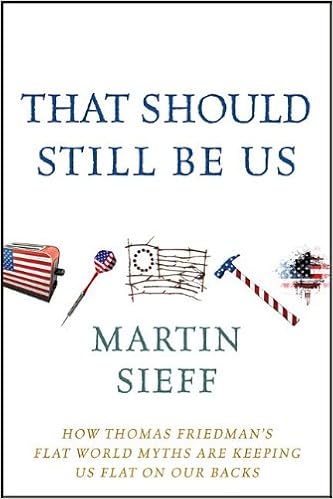
This is an extremely timely book. The serious presentation of the historic growth and development of our industrial strength and economic well-being and the leadership that brought us to it is outstanding. It deserves the attention of our elected leaders in the Congress and Executive branches -- the decision makers we look to to regain our industrial and economic strength, create jobs and stop the decline of our middle class. The book's publicity emphasizes that it takes issue with the writings of Thomas Friedman's "The World is Flat," and "That Used to Be Us." For me that is unfortunate because it distracts one from Martin Sieff's effective presentation of hundreds of years of documented economic history at odds with assumptions and strategies our leaders are currently implementing. These, including concepts such as free-trade have been put into play with the ideological goals of creating the ideal "Flat World" and helping us regain our own economic prosperity. The author clearly shows that many of the assumptions on which these strategies are based are bad and the strategies are not workable. He strives for the reader to recognize how we became the world's greatest industrial economic power and suggests how, understanding that history and regaining our use of those same strategies, we can regain the leadership that we have been losing, indeed, throwing away!
