Showing posts with label .#stephendarori. Show all posts

Tuesday, March 13, 2018

AN AMERICAN MARRIAGE by Tayari Jones (Algonquin)


A look at the personal toll of the criminal justice system from the author of Silver Sparrow (2011) and The Untelling (2005).

Roy has done everything right. Growing up in a working-class family in Louisiana, he took advantage of all the help he could get and earned a scholarship to Morehouse College. By the time he marries Spelman alum Celestial, she’s an up-and-coming artist. After a year of marriage, they’re thinking about buying a bigger house and starting a family. Then, on a visit back home, Roy is arrested for a crime he did not commit. Jones begins with chapters written from the points of view of her main characters. When Roy goes to prison, it becomes a novel in letters. The epistolary style makes perfect sense. Roy is incarcerated in Louisiana, Celestial is in Atlanta, and Jones’ formal choice underscores their separation. Once Roy is released, the narrative resumes a rotating first person, but there’s a new voice, that of Andre, once Celestial’s best friend and now something more. This novel is peopled by vividly realized, individual characters and driven by interpersonal drama, but it is also very much about being black in contemporary America. Roy is arrested, tried, convicted, and imprisoned in Louisiana, the state with the highest per-capita rate of incarceration in the United States, and where the ratio of black to white prisoners is 4 to 1. There’s a heartbreaking scene in which Celestial’s uncle—Roy’s attorney—encourages her to forget everything she knows about presenting herself while she speaks in her husband’s defense. “Now is not the time to be articulate. Now is the time to give it up. No filter, all heart.” After a lifetime of being encouraged to be “well spoken,” Celestial finds that she sounds false trying to speak unguardedly. “As I took my seat…not even the black lady juror would look at me.” This is, at its heart, a love story, but a love story warped by racial injustice. And, in it, Jones suggests that racial injustice haunts the African-American story.


Monday, March 12, 2018

THE CROOKED MIRROR A Memoir of Polish-Jewish Reconciliation by Louise Steinman (Beacon)


A writer/literary curator explores the anguished, often contentious topic of Polish Jewry through the lens of her own family history.

For centuries, Jews “had been part of Poland’s body and soul,” writes Steinman (Los Angeles Institute for the Humanities/Univ. of Southern California; The Souvenir: A Daughter Discovers Her Father’s War, 2001). But during the Holocaust, their Christian neighbors did the unthinkable and allowed millions of Jewish people to die in Nazi death camps. The maternal side of the author’s family was so marked by this horror that family history disappeared into a “black hole” of silence. Aching from this loss of connection to her past, Steinman traveled to a Polish interfaith retreat looking for answers. She left realizing how little she knew, not just about her family and personal prejudices, but also about Polish history. For the next decade, she returned to Poland to recuperate lost family history and understand the relationship between Jews and Christians. As the author pieced together the fragments of her family’s past, she came into contact with Poles of all ages and faiths who had dedicated their lives to not only studying Polish Jewish history, but opening a dialogue about both the Holocaust and Polish anti-Semitism. Steinman discovered how cities throughout Poland and Eastern Europe had once been home to thriving multiethnic communities. When war expunged the Jews and their culture from those populations, the cities became flattened shells of what they had once been. The rise of Nazism was to blame for this mass genocide, but as Steinman learned, Israel also helped to perpetuate anti-Polish sentiment by highlighting only what happened during Hitler’s reign of terror and ignoring everything else.

Steinman’s elegiac book is a powerful reminder of how ideologies can become “crooked mirror[s]” that distort reality and destroy lives, cultures and nations.


Thursday, March 1, 2018

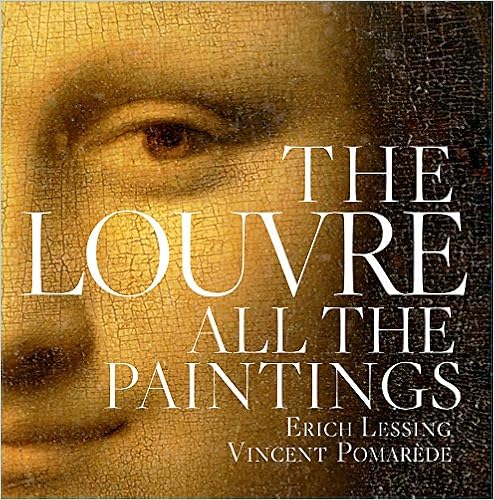
The Louvre: All the Paintings Hardcover by Vincent Pomarède (Author),‎ Erich Lessing (Photographer),‎ Loyrette Henri (Preface),‎ Anja Grebe (Contributor) Black Dog & Leventhal


An historic publishing event! Endorsed by the Louvre and for the first time ever, every painting from the world's most popular museum is available in one stunning book. All 3,022 paintings on display in the permanent painting collection of the Louvre are presented in full color in this striking, slipcased book. 
Comes with an enclosed, supportive DVD-ROM.

The Louvre is the world's most visited art museum, with 8.5 million visitors annually, and houses the most celebrated and important paintings of all time. For the first time ever, The Louvre: All the Paintings collects all 3,022 paintings currently on display in the permanent collection in one beautifully curated volume.Organized and divided into the four main painting collections of the museum— the Italian School, the Northern School, the Spanish School, and the French School— the paintings are then presented chronologically by the artist's date of birth.Four hundred of the most iconic and significant paintings are illuminated with 300-word discussions by art historians Anja Grebe and Vincent Pomarède on the key attributes of the work, what to look for when viewing the painting, the artist's inspirations and techniques, biographical information on the artist, the artist's impact on the history of art, and more.

All 3,022 paintings are fully annotated with the name of the painting and artist, the date of the work, the birth and death dates of the artist, the medium that was used, the size of the painting, the Louvre catalog number, and the room in the Louvre in which the painting is found.

The DVD-ROM is easily browsable by artist, date, school, art historical genre, or location in the Louvre. This last feature allows readers to tour the Louvre and its contents room by room, as if they were actually walking through the building.

DVD-ROM System Requirements: DVD-ROM runs on a PC (Windows 2000/XP or later) and MAC (OSX 10.4.8 or later) running the following browser software Internet Explorer 7 or 8; Firefox 3.6 and above; or Safari 5.0 and above.


Florence: The Paintings & Frescoes, 1250-1743Oct 20, 2015 by Ross King and Anja Grebe Hardcover (Black Dog & Leventhal)

"Florence: The Paintings and Frescoes," by Ross King and Anja Grebe

An art lover's dream come true--a collection of nearly 2,000 images that includes every painting and fresco on display in the Uffizi, the Galleria Palatina of the Pitti Palace, the Accademia and the Duomo, and works from 28 additional museums and churches....It's fascinating to see these treasures of the Western world collected in one volume, with page after page of magnificence, including the works of Uccello, da Vinci, Correggio, Titian, Michelangelo and more. You won't have a better tour unless you visit the city itself--and even then, reading this book first would be worthwhile.

For 800 years Florence, Italy, has been a sacred city whose very walls breathe beauty. In vivid essays and more than 2,000 lush images, this glorious book covers the great collections of the Uffizi, the Pitti Palace, the Accademia and the Duomo, plus key works in 28 of the city's additional museums and churches. The lively text explains Florentine politics, patronage, street life, banking, international trade and the effect of its wars, plagues and religious squabbles. Fascinating

"You needn't travel to Florence to tour the masterpieces created by some of the world's greatest artists. "Florence: The Paintings & Frescoes: 1250 to 1743" by Ross King and Anja Grebe brings more than 2,000 images of them to you, along with a comprehensive guide"―The Sacramento Bee

The paintings and frescoes of the birthplace of the Renaissance get a lavish, full-color treatment in this new book from Canadian historian and novelist Ross King, whose previous work includes "Brunelleschi's Dome: The Story of the Great Cathedral in Florence."...If you're looking for a gorgeous coffee-table book, this one is hard to beat

Wednesday, February 28, 2018

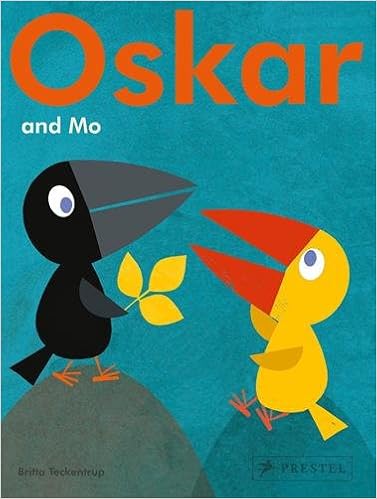
Oskar and Mo Hardcover – November 7, 2017 by Britta Teckentrup (Prestel)


Oskar, the bird who loves so many things, is back, and this time he has brought his friend, Mo. Britta Teckentrup delighted children around the world when she introduced them to Oskar, the charming raven who loves the ocean, snow, books, the sun, and the rain. Oskar Loves was named one of the best children’s books of 2016 by School Library Journal. Now Oskar has a new friend, Mo. Featuring the same gorgeous colors and geometric collages that have made Teckentrup such a popular author and illustrator worldwide, this story will speak to young readers, who will learn about the many forms friendship takes while enjoying Teckentrup’s beautiful illustrations.

Saturday, February 24, 2018

Chris Mouse and the Promise Paperback – November 20, 2015 by Tina Jane Lackey-Adams (Author),‎ Pamela Hopkins (Illustrator) (IBRChildrensBooks)


Chris Mouse recalls her best Christmas ever: After putting her children to bed, she saw a beautiful star in the sky. Right after that a man and his pregnant wife came to stay in the humble stable where Chris and her family live. The woman gave birth that night to a very special baby, and when she whispered his name, Jesus, Chris knew this was the Promised Child she'd been told about all her life.
Review

There are numerous re-tellings of the blessed birth of Christ in children's literature, and I'm always interested in checking out new ones. Chris Mouse and the Promisewas a cute enough story of a mother mouse's reminiscence of the first Christmas, but I thought it was missing that little something extra to make it truly special. I realize this is a children's book and there is only so much one can do with such limited words, but I still couldn't help but feel the story needed a bit more development. As one example, Chris Mouse mentions the wise men visiting Jesus, but not the shepherds. I'm not a historical stickler when it comes to putting the wise men in the nativity, but considering that they most likely weren't there at the actual birth of Christ while the shepherds were, not including them seems a rather big omission. I don't think I've ever read a Christmas story before that left them out. I thought it could have been a bit more original too. After reading Chris Mouse and the Promise, I went to my bookshelf and found no less than three other children's books told from the perspective of animals who were present in the stable when Jesus was born.

The illustrations were also a bit different than what I'm used to seeing in a children's story. When it comes to picture books, the illustrations are half of what makes the book engaging in my opinion. The pictures in Chris Mouse and the Promise are very simplistically rendered, appearing to be pencil and crayon type drawings much like a child's artwork with a bit more sophistication. They appropriately complimented the story being told, but didn't really draw me any further into it.

Children are likely not going to be as particular as an adult reader like myself, so for anyone who is simply looking for something new to read with their young ones for the holiday season, Chris Mouse and the Promise may be the perfect choice. Those readers who are looking for gorgeous illustrations or a compelling story may want to borrow a copy first to make sure it is the right type of book for them and/or their children. Some of the pictures can also be viewed on the author's website. At a cover price of $16.95, it is a bit pricey for a paperback edition of a children's book. Usually, only hardcovers are that expensive. However, a signed copy can be purchased at Ms. Adams website for nearly $5.00 less including shipping.


Friday, February 23, 2018

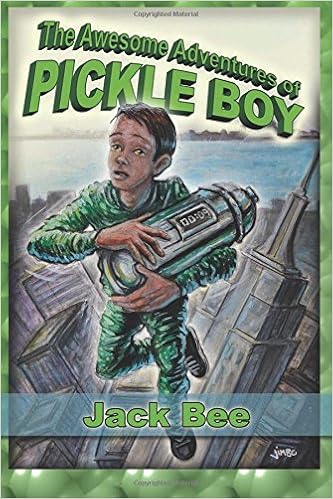
The Awesome Adventures of Pickle Boy By Jack Bee May 2013 242 pages


The Awesome Adventures of Pickle Boy is a rousing action adventure plucked straight out of the hyper-fueled fantasy world of middle school boys.
Danny Green is an average eleven-year-old boy living with his average family in New York City when, quite by accident, he discovers a hidden cache of pickle juice in his basement and drinks it. Danny is immediately transformed into an action hero with supernatural abilities and a desire to right the wrongs he sees in the world. But Danny is still just a kid and he’s up against some serious villains. The Mafia, street gangs and Al-Qaeda terrorists are just a few of the bad guys Danny faces as he tries to navigate the very real perils of a dangerous world.
Pickle Boy is not an overtly Jewish book—aside from the character’s implied ethnicity, there is no actual Jewish content—but it is an old-fashioned adventure, the kind we don’t often see in the secular market. The characters are pre-teen boys who are not grappling with any of the dating and relationship issues that are so prevalent in today’s young adult literature. In this sense, the book is a kosher alternative for tweens. There is, however, quite a bit of violence—knifings, shootings and nuclear bombs, to name just a few—and parents will need to judge whether this would be frightening or exhilarating for their own children.
With the book market for pre-teens flooded with “relationship” books, including many offerings that normalize same-sex relationships among teenagers, finding a book that is primarily plot-driven can be a real relief for parents struggling to find suitable literature.
As an aside, I wish there were some more “showing” and a little less “telling” in this very imaginative book. We could stand to learn more about Danny from his actions rather than by descriptive narrative. Still, Pickle Boy is a fun and exciting read and the cliffhanger will certainly leave kids clamoring for more.

Thursday, February 22, 2018

FIRST STOP IN THE NEW WORLD Mexico City, the Capital of the 21st Century by David Lida (Riverhead) (IBRTravelBooks)


Charmingly unaffected, forthright and widely knowledgeable walk through the highs and low of this teeming, complicated, immensely rewarding “hypermetropolis.”

Mexico City operates in a constant state of combustible reinvention, writes longtime resident Lida (Travel Advisory: Stories of Mexico, 2000). Half its population of 20 million lives in poverty. They grapple with severe traffic, as well as service, transportation and crime problems. The government is in “limbo” and resistant to urban planning. But the Distrito Federal has also become the dynamic, spontaneous, cultural capital of Latin America. With the peso stabilized during the last decade, its economy increasingly attracts a global population. As a result, the author argues persuasively, it will be a significant center of 21st-century life. Since transplanting himself from New York in 1990, Lida has gained an excellent sense of how Mexico City functions, or doesn’t. He profiles its various neighborhoods, from Santa Fe to Condesa, its street markets and food stalls, festive cantinas and desperate pulquerías. He examines the inhabitants’ mania for wrestling matches and saint worship, their distinctive vernacular and the culture’s deeply ingrained machismo. Lida observes and listens to the chilangos, an insulting term for city residents proudly appropriated by the younger generation. He captures the voices of the earnest drunks he met in cantinas; the mature fichera who shared stories of her work as a bar companion for men; the 22-year-old accounting student from Ocho Barrios chosen to play Jesus in the Holy Week Passion; a glue-sniffing homeless waif from the army of 3,000 street children; and radio host Anabel Ochoa as she dispensed sex advice to her spectacularly repressed listeners. “Imagine a scene painted by George Grosz, peopled by figures with brown skin,” the author writes in an affecting, generous depiction of the wide range of humanity that comprises the city.

Lida depicts his adopted hometown with warmth, humor, wisdom and fortitude.

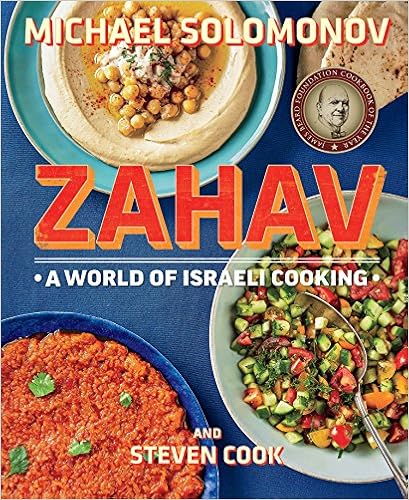
Zahav: A World of Israeli Cooking Hardcover – October 6, 2015 by Michael Solomonov and,‎ Steven Cook ( Rux Martin/Houghton Mifflin Harcourt) (IBRCookBooks)


Ever since he opened Zahav in 2008, chef Michael Solomonov has been turning heads with his original interpretations of modern Israeli cuisine, attracting notice from the New York Times, Bon Appétit, ("an utter and total revelation"), and Eater ("Zahav defines Israeli cooking in America"). 


Zahav showcases the melting-pot cooking of Israel, especially the influences of the Middle East, North Africa, the Mediterranean, and Eastern Europe. Solomonov's food includes little dishes called mezze, such as the restaurant's insanely popular fried cauliflower; a hummus so ethereal that it put Zahav on the culinary map; and a pink lentil soup with lamb meatballs that one critic called "Jerusalem in a bowl."  It also includes a majestic dome of Persian wedding rice and a whole roasted lamb shoulder with pomegranate and chickpeas that's a celebration in itself. All Solomonov's dishes are brilliantly adapted to local and seasonal ingredients. 


Zahav tells an authoritative and personal story of how Solomonov embraced the food of his birthplace. With its blend of technique and passion, this book shows readers how to make his food their own.


Twice-Cooked Eggplant from Zahav

Makes 5 cups
This is probably my favorite eggplant preparation of all time. It first uses pan-frying to char and sweeten the flesh, followed by a second cooking with tons of vinegar. The result is a sweet, sour, and smoky salad that converts unsuspecting eggplant haters into passionate fan boys in a single bite. As a bonus, this recipe flouts all conventions of French technique by charring the eggplant until just before it’s burnt. Most of the chefs I’ve worked for would have made me throw it out if they saw it on my station. But by taking the eggplant to the edge, you can develop rich, deep, and almost chocolaty flavors that make this one of the punchiest bites there is. The flavor intensity of this salad makes it a great complement to roasted lamb, and it’s out of control as a sandwich addition.
Directions
Sprinkle the eggplant slices with the salt and let stand for 30 minutes on a paper towel or a rack.
Film the bottom of a large nonstick skillet with olive oil and set over medium-high heat. When the oil is shimmering but not smoking and working in batches if necessary to avoid crowding, remove the cooked eggplant to a plate. Add the eggplant slices in a single layer and cook until almost black on the first side, about 10 minutes. Turn and repeat on the other side, adding more oil as needed.
Add 2 tablespoons of the olive oil, the red pepper, onion, coriander, and paprika to the skillet. Cook, stirring occasionally, until the vegetables are very soft but not brown, about 12 minutes. Add the eggplant and sherry vinegar to the pan, breaking it up and mashing it coarsely with a wooden spoon until well combined. Cook until the vinegar has evaporated, about 8 minutes. Off the heat, add the parsley and lemon juice. Serve warm or at room temperature.

Sunday, January 28, 2018

The Hungry Mind: The Origins of Curiosity in Childhood. Susan Engel. Harvard University Press. March

Curiosity is vital, but it remains a surprisingly understudied characteristic. The Hungry Mind explores what curiosity is, how it can be measured, how it develops in childhood, and how it can be fostered in school. Although the reader might have come across some of the insights in this book elsewhere, the author does a brilliant job connecting a wide range of essential 20th century research on the development of children.

The Hungry Mind: The Origins of Curiosity in Childhood
.

“When people want to know, they learn”. Although this insight might appear rather simple and self-evident, it is a crucial fact that is often discarded when we consider methods of fostering learning or ways of designing education systems. Therefore Susan Engel’s The Hungry Mind, a book which engages in depth with how our interest and desire to explore the world evolves, makes a valuable contribution not only to the body of academic literature on the developmental and educational psychology of children, but also to our knowledge on why and how we learn.

Starting from the assumption that the very “linchpin of intellectual achievement” is curiosity, Engel presents a range of interesting insights into how this feature expresses itself and develops throughout childhood. While her findings may not always be new and the reader might have come across some of the insights already, the author does a brilliant job connecting a wide range of essential 20th century research on the development of children and turning these insights into a coherent narrative about how children become aware of and interact with their environment.

In the initial chapters, Engel introduces the different sources and forms of curiosity that exist among babies and toddlers; she points out that the feeling for “bad math” or “natural concepts” about what objects belong together already exist at a very early stage in our life. She then goes to trace the role that language has for the child’s ability to expand its knowledge by asking questions and telling stories. Here the author finds not only that a “child’s early question-asking experience lays down a foundation for her future”, but also that children who hear and tell stories in collaboration with their parents become better story-tellers, more engaged readers and self-reflective personalities. Another interesting aspect in this regard has to do with the way children perceive of themselves, either in relation to the stories they hear and read or when they interact with their peers. In elementary school, children develop and “carry around representations of dynamic social matrices”, as Engel puts it, which clearly facilitates their understanding of human relationships, as does gossiping. In Engel’s interpretation, the latter is therefore not understood as a despicable human activity but rather as simply a different way by which children acquire insights into how the world and other human beings function.

The author also traces the role played by parents and teachers and underlines the danger of adults who expect children to learn according to a particular script. Rather than for a prescriptive approach to learning à la “First you do a, the you do b, follow the instructions until you accomplish c”, she argues that children need free time and solitude in order to identify which issues and activities they truly find interesting. Children “absorb, understand, and retain various kinds of information and skills” often when they the opportunity to explore things on their own . Yet Engel does not advocate a complete laissez-faire attitude to learning and education. Rather, she underlines that while some children are “naturally” more inquisitive than others, adults and the setting they provide, impact heavily on the way children learn and develop curiosity. Encouragement to explore, access to unexpected and complex materials, and contact with other children and adults are thus found to be potent ingredients for intellectual advancement.

Even though Engel’s work is first and foremost concerned with the development of curiosity in children and will therefore appeal predominantly to readers interested in this particular field, the books touches on such a large range of subjects that it makes for a valuable read for a much wider audience. The distinction between specific and diversive curiosity, for instance, will resonate with anyone interested in the different ways people acquire knowledge, choose books or engage with internet search engines such as Google. Similarly, readers interested in psychology are likely to be fascinated by the insight that reading fiction enhances people’s ability to also “read people” and to demonstrate empathy, while educators might want to debate how for need for solitude and free time can be reconciled with strict class-room settings and pre-defined learning outcomes.

The fact that The Hungry Mind combines the work of some of most prominent scholars on the childhood development such as Dewey, Piaget or Cuffaro, with lesser-known researchers and examples from Engel’s own childhood, makes the book not only a highly informative but also very enjoyable read that leaves the audience with a number of important takeaways: throughout their life, human beings have an “urge to know about things that have no obvious or utilitarian function”, a feature that distinguishes them from other species; Furthermore Engel finds that this extraordinary kind of curiosity can and needs to be cultivated in order to tap its full potential; And finally, Engel’s findings suggests that a parent or teacher who “knows what the itch to find out feels like is in a better position to foster that itch” in others. What better reason could there be to remain curious?

Friday, January 26, 2018

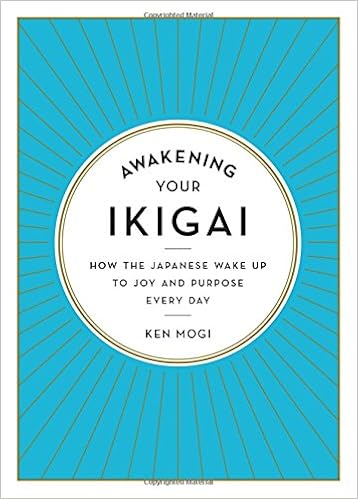
Awakening Your Ikigai: How the Japanese Wake Up to Joy and Purpose Every Day Hardcover – January 2, 2018 by Ken Mogi (The Experiment)


In Japanese, iki means “to live” and gai means “reason” — in other words, the reason to live and how you define it. Ken Mogi begins In Japanese, iki means “to live” and gai means “reason” — in other words, the reason to live and how you define it. Ken Mogi begins AWAKENING YOUR IKIGAI: How the Japanese Wake Up to Joy and Purpose Every Day (The Experiment, $16.95) with a story meant to illustrate the importance of this concept to the Japanese. He describes a famed sushi chef whose Tokyo restaurant is visited by President Barack Obama during a state visit and who is told by the president that his sushi was the best he had ever eaten. No big deal. “Ikigai resides in the realm of small things,” Mogi explains. “The morning air, the cup of coffee, the ray of sunshine, the massaging of octopus meat and the American president’s praise are on equal footing.”

Mogi, a celebrity neuroscientist and broadcaster who has written more than 100 books, describes the five pillars of the ikigai way of life: “starting small,” “releasing yourself,” “harmony and sustainability,” “the joy of small things” and “being in the here and now” (what we might call “mindfulness”). And he demonstrates how some of the rituals most important to Japanese culture, from the tea ceremony to sumo wrestling, are based on these tenets. I admit that certain principles he espouses utterly baffled this Westerner, particularly the notion that in Japan finding purpose and joy in work, even work that requires great individuality and creativity, comes from a sublimation of the ego. He cites the example of the great anime artist Hayao Miyazaki, whose work is so repetitive and painstaking. Wait, if we all know who he is, how is he subsuming his ego? In work, Mochi explains, you have to be like a child, because “a child has no definite idea of the past or the future.” Seriously? Tell that to a 5-year-old screaming, “When will we get there?” in the back seat of a car because “there” involves ice cream.I’m not sure if I could live in Japan for more than a week, what with all the appreciating of teeny porcelain objects and self-abnegation, but “Awakening Your Ikigai” is really quite a delightful look at sometimes mystifying Japanese traditions. (Spoiler alert: There’s a lot more to sumo wrestling than chubby dudes with man buns and diapers.) I can’t resist noting that in 2009, Mogi was charged with violation of Japanese tax laws for failing to report several million dollars in income. See? I guess America does have something to teach the citizens of other nations.: How the Japanese Wake Up to Joy and Purpose Every Day (The Experiment, $16.95) with a story meant to illustrate the importance of this concept to the Japanese. He describes a famed sushi chef whose Tokyo restaurant is visited by President Barack Obama during a state visit and who is told by the president that his sushi was the best he had ever eaten. No big deal. “Ikigai resides in the realm of small things,” Mogi explains. “The morning air, the cup of coffee, the ray of sunshine, the massaging of octopus meat and the American president’s praise are on equal footing.”

Mogi, a celebrity neuroscientist and broadcaster who has written more than 100 books, describes the five pillars of the ikigai way of life: “starting small,” “releasing yourself,” “harmony and sustainability,” “the joy of small things” and “being in the here and now” (what we might call “mindfulness”). And he demonstrates how some of the rituals most important to Japanese culture, from the tea ceremony to sumo wrestling, are based on these tenets. I admit that certain principles he espouses utterly baffled this Westerner, particularly the notion that in Japan finding purpose and joy in work, even work that requires great individuality and creativity, comes from a sublimation of the ego. He cites the example of the great anime artist Hayao Miyazaki, whose work is so repetitive and painstaking. Wait, if we all know who he is, how is he subsuming his ego? In work, Mochi explains, you have to be like a child, because “a child has no definite idea of the past or the future.” Seriously? Tell that to a 5-year-old screaming, “When will we get there?” in the back seat of a car because “there” involves ice cream.


I’m not sure if I could live in Japan for more than a week, what with all the appreciating of teeny porcelain objects and self-abnegation, but “Awakening Your Ikigai” is really quite a delightful look at sometimes mystifying Japanese traditions. (Spoiler alert: There’s a lot more to sumo wrestling than chubby dudes with man buns and diapers.) I can’t resist noting that in 2009, Mogi was charged with violation of Japanese tax laws for failing to report several million dollars in income. See? I guess America does have something to teach the citizens of other nations.

Wednesday, January 24, 2018

The Apostle Paul .....Rabbi Paul: An Intellectual Biography by Bruce Chilton New York: Doubleday,352 pp. $19.96 (hardcover, $13.49 (softcover).In Search of Paul: How Jesus’s Apostle Opposed Rome’s Empire with God’s Kingdom by Bruce Chilton New York: Doubleday, , 352 pp. $19.96 (hardcover), $13.49 (softcover),Social-Science Commentary on the Letters of Paul by Bruce J. Malina and John J. Pilch Minneapolis: Fortress, , 432 pp. $27 (softcover),Paul: His Life and Teaching by John McRay Grand Rapids: Baker Academic,, 480 pp. (hardcover), $29.99 (softcover),Paul: His Story by Jerome Murphy-O’Connor Oxford and New York: Oxford University. Press, , 276 pp. $24.95 (hardcover), $16.95 (softcover),Apostle Paul: His Life and Theology by Udo Schnelle, trans. M. Eugene Boring Grand Rapids: Baker Academic, $49.99,Paul: In Fresh Perspective by N.T. Wright Minneapolis: Fortress,, 176 pp. $25


Although the spotlight usually centers on Jesus, never far away, waiting in the wings and sometimes dashing across the stage, is his most influential apostle Paul—the one who didn’t follow him and was not one of the original Twelve, but the one who wrote half of the New Testament.

Paul has always loomed large on Christianity’s theological landscape. His unflagging commitment to evangelization throughout the Roman empire—to the Jew first and then to the pagan—and his ad hoc letters written along the way provide the matrix out of which the Christian faith could understand itself and develop its theology and sense of community. Paul’s experience and his interpretation of that experience made it possible for Jesus’ Jewish movement, centered on the rule of God and the restoration of Israel, to become relevant and attractive to non-Jews. This was a remarkable achievement.

These books address this accomplishment by using different strategies and with diverse areas of expertise. Three books emphasize archaeological aspects of Paul and his world. The first half of John McRay’s Paul: His Life and Teaching is devoted to the life and travels of Paul. McRay calls on his many years of study, as well as his participation in several major digs in the cities Paul visited. The second half of McRay’s book less successfully grapples with Paul’s theology. Jerome Murphy-O’Connor has authored Paul: His Story, which presupposes its prequel Paul: A Critical Life (1996). Following their successful Excavating Jesus (2001), John Dominic Crossan and Jonathan Reed have again skillfully blended together their respective archaeological, exegetical and theological insights to produce In Search of Paul.

Murphy-O’Connor, who for years has been on the faculty of the École Biblique in Jerusalem, is well traveled in the world of Paul. His book brings to life with vivid imagery what that world looked like in Paul’s time and what it looks like today. Murphy-O’Connor is not interested in giving readers a sanitized, synthesized Paul. On the contrary, we are presented with an evangelist and theologian who wrote with passion and vigorously defended himself and his understanding of the Christian message. To his credit Murphy-O’Connor does not overstate or sensationalize the archaeological data (in contrast to some of the appalling books on Jesus). These data are helpful, to be sure, but they mostly tell us what was typicalin the world of Paul, not something particular about the apostle himself. But Murphy-O’Connor gives readers a few surprises: He suggests that Paul was born in Galilee, was a widower who lost his children in a tragic mishap and referred to Christian opponents (!) when he spoke of his “thorn in the flesh” (2 Corinthians 12:7–10).

Crossan’s and Reed’s book rightly perceives something that most Pauline scholars overlook: “Without seeing the archaeology of Roman imperial theology, you cannot understand any exegesis of Pauline Christian theology.” Crossan and Reed are referring to the numerous inscriptions and works of art that declare the divinity of Caesar and the divine order of the empire itself. Herein I believe is the book’s greatest insight and contribution. In essence, Crossan and Reed have given us “an illustrated theology” of Paul, thanks to insightful engagement with geography and archaeology.

Crossan’s and Reed’s book advances three theses: (1) Paul did not simply oppose the Roman imperial cult, by which Caesar was understood as “son of god” and “savior” of the world; he opposed Roman civilization itself and its ideological underpinnings. (2) Paul went to synagogues not to convert Jews, but to “unconvert” the god-fearers (that is, the non-Jews who attended synagogue and observed some of the Jewish customs). (3) The authentic and historical Paul believed that in Christ and in Christian community all were equal, whether Jew or pagan, powerful or powerless, male or female. It is the “pseudo-Pauline, post-Pauline, and anti-Pauline” elements, as expressed in the Pastoral (non-Pauline) Letters and in other contexts that oppose Paul’s egalitarian convictions.

No doubt many readers will disagree with this interpretation or that reconstruction of Paul’s thought, but all readers will profit from the comparisons made between Paul’s bold statements and the material remains of Rome’s imperial theology. I confess to having reservations about Crossan’s and Reed’s second thesis. Even if one dismisses the portrait of Paul’s activities and preaching as depicted in the Book of Acts (and I don’t think that is wise), does Paul in his letters suggest that the Jewish people themselves need not embrace Messiah Jesus? Surely pagan god-fearers, who were familiar with Israel’s story and scriptures, were not the only ones for whom the apostle’s letters were intended.

Bruce Chilton’s Rabbi Paul exhibits erudition and profound appreciation of the Judaic world of Paul—as Saul of Tarsus before conversion and as Paul the Christian apostle after conversion. Part of Chilton’s burden is to steer readers away from distorted readings of “the Apostle,” in which Paul is understood as the primary, perhaps only, theologian of nascent Christianity. Chilton succeeds. What emerges is a balanced portrait of this innovative, engaging Jew, a portrait informed by a critical reading of primary literature and judicious weighing of the secondary literature (though some will complain that chronological issues were given short shrift). Chilton’s insightful interpretation of the rapprochement between Paul and James (Jesus’ brother who led the post-crucifixion Jerusalem church), in the context of the Jerusalem temple, is especially intriguing and shows that Paul had no intention of breaking away from his Judaic matrix. Indeed, Paul’s willingness to suffer five times the 39 lashes (2 Corinthians 11:24), Chilton observes, demonstrates not only contact with the synagogue but submission to its authority.

Bruce Malina’s and John Pilch’s Social-Science Commentary on the Letters of Paul is eminently practical and focuses on how the social dimension of Paul’s world comes to expression in his letters. Malina and Pilch attempt to take into account the economic and political systems, the social structures and the cultural values of the first-century Mediterranean world and how Paul took them into account, as he affirmed the story of Israel and of Israel’s Messiah as having saving significance outside of Israel and outside the ethnic boundary of the Jewish people.

And finally, we have two recent theological treatments of Paul: one thick and one thin. Udo Schnelle has produced the proverbial doorstop. His Apostle Paul: His Life and Theology is a comprehensive introduction, divided into two parts: (1) Paul’s life and the development of his thought and (2) a systematic treatment of Paul’s theology. Schnelle’s work wisely exhibits discipline and restraint, lest innovation and speculation move us too far away from terra firma.

Paul by N.T. Wright, Bishop of Durham, re-examines how the apostle redefined the essentials of Jewish faith in the light of his experience of the risen Christ. The book, whose thinness is no measure of its importance or distinctive contribution, contains two parts. In part one Wright describes the “three worlds of Paul”: (1) creation and covenant, (2) Messiah and apocalyptic and (3) gospel and empire. In part two Wright examines how Paul works through his theology and worldview, by rethinking God, reworking God’s people and reimagining God’s future. Another chapter considers “the task of the church.” Wright’s book offers an unabashed defense of the genius of Paul: “Despite the long-standing English tendency to sneer at Paul and to press him for answers to questions he didn’t ask, I persist in regarding him as the intellectual equal of Plato, Aristotle or Seneca.”

These brief reviews hardly scratch the surface. After rereading all of them, my impression is that we have entered what might be called a Pauline spring. The authors have been stimulated by ongoing archaeological work, analyses of newly discovered or recently published primary literature, and new ways of understanding an older, bygone era that has had lasting impact on our world.

Tuesday, January 23, 2018

The Battle for Syria: International Rivalry in the New Middle EastOct 25, 2016 by Christopher Phillips Hardcover (Yale University Press)

Syria’s war is far from over but it is already the subject of a large number of books – many about the internal dynamics of the conflict or the headline-grabbing jihadis who dominate perceptions of it. Christopher Phillips’ impressively-researched study of its international dimensions is an important contribution to understanding the bleak story so far. Based on interviews with officials and a mass of secondary sources, it identifies and examines the key external components of the worst crisis of the 21stcentury: the fading of American power, Russian assertiveness, regional rivalries and the role of non-state actors from Hezbollah to ISIS.


The Battle for Syria: International Rivalry in the new Middle East (Yale University Press, 2016)

Phillips’ principal argument is that the Syrian uprising of 2011 – pitting ordinary people against an unforgiving regime – was transformed into a civil war because outside involvement helped escalate and sustain it – and of course still does. Bashar al-Assad’s brutal crackdown was followed by other actions that made a significant difference: ‘omni-balancing’ Qatar’s early backing for rebel groups despite its own limited capacity; ill-considered US and Western calls for the Syrian president’s departure; Turkish and Saudi sponsorship of anti-Assad forces; and, from the start, Russian and Iranian support for Damascus that raised the stakes and created an asymmetry of strategic commitment that persists to this day.

Inaction mattered too – whether in the lack of adequate assistance for the rebels or Barack Obama’s failure to response to the breaching of his famous ‘red line’ when Assad used chemical weapons in Ghouta in August 2013. Phillips correctly acknowledges the lingering after-effect of the false prospectus of the 2003 Iraq war on the British parliamentary vote against military action but I think underplays the wider paralysing role of that intervention.

It was the misfortune of Syrians that their chapter of the Arab uprisings opened in what the author succinctly characterises as ‘an era of regional uncertainty as the perception of US hegemony was slowly coming undone’. Obama’s reluctance to get involved may well have made sense after the lessons of Iraq, Afghanistan and Libya, but he was unable to manage his allies and, crucially, raised unrealistic expectations amongst Syrians and the Gulf states. Only ISIS, with its transnational agenda, moved him to act.

The landmarks of the crisis are familiar but they are illuminated by some fascinating details: Before 2011 knowledge about Syria was surprisingly limited, so there was insufficient understanding of the differences between its security-obsessed, ‘coup-proofed’ regime and those in Tunisia, Egypt and Bahrain. In 2009, the US Department of State Syria desk consisted of one official; of 135 Turkish diplomats working on the Arab world, only six spoke Arabic. Francois Hollande’s diplomatic adviser, wedded to the ‘domino theory’ that meant Assad would follow Ben Ali, Mubarak and Gaddafi, didn’t want to hear the nuanced reports from the well-informed French ambassador in Damascus. Mistaken analysis drove what Phillips calls the ‘escalator of pressure’. Russia, with better intelligence, understood that Assad was more secure than others predicted (or wanted to believe) and that the appetite for western involvement was limited.

If underestimating Assad’s durability was a key failure, that was compounded by over-stating the capabilities and cohesiveness of the opposition. Sponsorship by rivals who prioritised their own agendas, misleading extrapolations from the Libyan example, inevitable tensions between the external opposition and fighters on the ground, and the exclusion of the Kurds were all highly damaging. Policy towards the armed rebel groups was incoherent: despite vast expenditure, no foreign state was able to gain leverage over them.

International and regional institutions performed little better, Phillips argues. The short-lived Arab League mission to Syria was led by a Sudanese general linked to the genocide in Darfur. UN envoys Kofi Annan and Lakhdar Brahimi failed to overcome US and Arab resistance to Iran taking part in the 2012 Geneva conference, thus excluding a key player at a sensitive moment. Staffan de Mistura shuttled between parties who refused to even meet each other in Geneva, where the Syrian government delegation specialised in stonewalling and abuse. It has not been a case of third time lucky for the UN. ‘Everybody had their agenda’, in Brahimi’s words, ‘and the interests of the Syrian people came second, third or not at all’.

This judicious and measured book stands well back from the Twitter-driven ‘war of narratives’ that has distorted too much media reporting on the Syrian conflict. In the heat and controversy of complex and terrible events, it is helpful to pause and look coolly at the big picture. But it is sobering to contemplate the damning evidence of how outside actors helped fan the flames of ‘an internationalised civil war’ without any end in sight.

Saturday, January 13, 2018

Saudi Arabia and the Path to Political Change: National Dialogue and Civil Society (Library of Modern Middle East Studies) y Mark Thompson Hardcover (I.B.Tauris)


Under domestic and international pressure, authoritarian monarchies in which citizens are completely disenfranchised, are often compelled to occasionally engage multiple domestic constituencies in dialogue. This is usually a response to specific terrorism threats, demands for reform, or internal sporadic mobilisation. Post 9/11 Saudi Arabia was on the brink of implosion from within. The country witnessed the worst terrorism crisis in its modern history as its major cities became the ground for suicide bombings targeting locals and foreigners, shoot outs between militants and security forces, and multiple voices calling for serious political reform. It did not help that its monarch King Fahd (d.2005) was incapacitated. Crown Prince Abdullah (d. 2015) had to step in and respond to the various immediate and long-term challenges. The book under review analyses one of the steps taken by Abdullah to save Saudi Arabia from sinking further into real crisis with multiple contributing causes.


Saudi Arabia and the Path to Political Changeaddresses one response to the mounting challenges that in addition to terrorism included increasing unemployment, the youth bulge, religious reform, gender equality and many other areas of concern that had remained unaddressed during the late stalemate years of King Fahd’s reign. Based on several years of working in Saudi Arabia, and conducting research between 2009-2011, Mark Thompson examines the National Dialogue Forum, initiated by King Abdullah Centre for National Dialogue KACND and its progress during those turbulent years that followed 9/11.


Thompson’s interlocutors who are used as a research focused group deny that the National Dialogue was initiated because there is a political crisis and insist that the initiative is unique because there is no conflict in the kingdom (p. 108). This statement, however, seems to reflect official narratives that often deny the presence of multiple challenges whether they are related to terrorism, unemployment or radical preachers. Thompson seems to accept it at face value although he must be aware of the numerous upheavals that swept Saudi Arabia between 2003-2008, a year before the commencement of his research. In fact, in Chapter 2, the author alludes to various Saudi debates, state and non-state actors who are engaged in conversation about the future of the country and the threats it faces as a result of awareness among professionals and elites that reform has become urgent.


The idea of reform remains ambiguous, illusive and hotly debated. According to Thompson, the question about it should move away from whether the Al-Saud leadership is serious about reform, to asking what the leadership understands and means by reform (p 45). A further question is also related to what multiple state actors mean by reform, with princes not admitting that it is urgent while others invoke it to mean development. Amidst this confusion, the National Dialogue was a state sponsored institutional initiative in which aspects of reform/development were discussed by carefully chosen professionals, bureaucrats, technocrats, religious scholars, academics and others designated by the state administrators as worth engaging in successive dialogues.


The book is a study of a new state institution that came to be known as King Abdullah Centre For National Dialogue (KACND). Chapter 1 and 2 are introductory, surveying previous scholarship on the history of the kingdom and identifying key actors. In chapter 2, there is an interesting discussion of tribalism, considered a way to forge a protective zone between the individual and the state in the absence of civil society (p. 52). Thompson argues that education and economic advantages have begun to undermine the salience of tribal affiliation, resulting in greater homogenisation and integration. Yet, further down the lines, an interviewee highlights that various military institutions remain tribal, with individuals using tribal affiliations to foster their individual and group interest. Later in this section, a female journalist affirms that ‘tribalism is getting stronger because the state has tolerated it for so long.’ (p.53). A third interviewee claims that southern tribes are taking over state institutions, thus pointing to the preeminence of one tribal group over others. The discussion of tribalism swiftly shifts to regionalism without resolving the debate about the salience or weaknesses of tribal affiliation. These short insights could have been developed further with Thompson inserting his own objective assessment of the question of tribalism. This could have been achieved with empirical evidence collected during fieldwork. Unfortunately, we are left with multiple statements and quotations volunteered by interviewees without a serious assessment of the empirical evidence in support of these statements.


Chapter 3 sketches the genesis of KACND, starting with the leadership recognising that it is time for the country to have a ‘culture of dialogue’, which seems odd given how new communication technology and new media in general have operated since the late 1990s to allow Saudis of all political persuasions to discuss their frustration at the stagnation of the political system and the stumbling of reform, regardless of how loosely it is defined. Nevertheless, the state endeavoured to teach Saudis and train them to engage with dialogue. Thompson explains the aim as stated in official documents as to consolidate national unity, foster a true image of Islam, solve problems, include multiple voices, and engage in dialogue with multiple establishments. He then discusses the eight forums that took place between 2008-10. The title of these conference meetings reflected the concerns of both the state and society at the time: national unity, extremism, women’s rights, youth issues, ourselves and the others, education, employment, and health. With time, the topics discussed moved away from ideological concerns to services, which focused on development of welfare such as education, employment and health. In addition to dialogue, Thompson examines the rationale behind government training programmes (chapter 4). Amongst many schemes, the government promoted empowerment and ambassador projects, both are meant to encourage young people to discuss ideas that generate jobs and enlist students studying abroad on government scholarships to improve the country’s image and that of Islam.


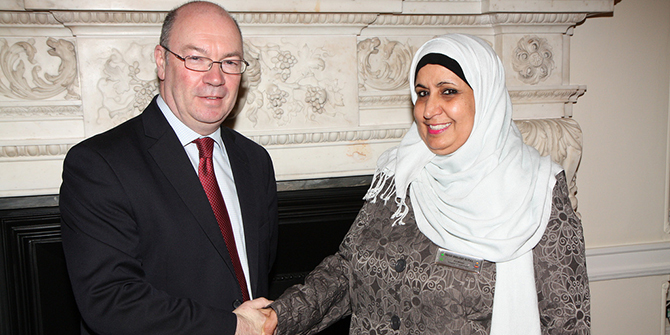
In subsequent chapters, Thompson traces the official narrative and the rationale behind various meetings and societal reactions to them over a long period of time. In chapter 8, he captures the debate that accompanied the meeting on the role of women in society and king Abdullah’s initiatives to empower them, especially in education and employment. The appointment of Norah Al Faiz as first Saudi female deputy minister of education (not minister as stated by Thompson on page 194) was a novelty that promised greater visibility and endorsement of women’s issues. But this appointment was short-lived as Al Faiz was relieved of her duties when Salman became king in 2015, thus casting doubt over previous reform initiatives that seem to have been either abandoned or reversed with the arrival of a new king to the throne. It would have been insightful had Thompson discussed the durability of these high profile appointments and initiatives and the prospect of them generating long term serious shifts in the practices of power in the kingdom.


Norah Al Faiz, seen here meeting UK Former Foreign Office Minister Alistair Burt, was appointed as first Saudi female deputy minister of education (UK FCO, flickr.com)


The book’s conclusion argues that there are ample opportunities for bottom up influence and horizontal interventions into the leadership. According to Thompson, the KACND allowed the leadership to hear multiple voices. But acting on the policy recommendations of these voices is not straightforward as the recommendations of the dialogue forums are not binding to the leadership. They have the status of advise. It is regrettable that the book concludes by asserting that ‘there is more freedom in Saudi Arabia than even before and this is because there has been a convergence of forces that are transforming the whole system, linked to awareness by certain individuals in power, especially king Abdullah, of these forces.’ (p. 245). It is not clear what kind of freedom there is now after the dialogue forums. If the author means freedom of expression and assembly, there is certainly less freedom, given the number of political prisoners in Saudi Arabia and the various human right violations as documented by independent international organisations. Women are still under the guardianship system unable to work or leave the country without authorisation of their male relatives. They are also deprived of freedom of movement with the ban on driving still in place. Activists on social media face long prison sentences following any criticism of the performance of the top leadership, with the king and the princes remaining beyond criticism.


The book succeeds in documenting the euphoria that accompanied the new dialogue initiatives and the debates that they generated among multiple audiences that included enthusiasts, critics and skeptics. Some sections read as general praise for king Abdullah. Although the book is rich on documentation, it would have benefited from further analysis and above all a critical theoretical approach to the debate on civil society in authoritarian states such as Saudi Arabia.


The book stands as a documentation exercise of the era of King Abdullah and his many initiatives that have attracted a lot of media attention but whose everlasting impact on state-society relations is yet to be explored. The book could have benefitted from further analysis of the role of top-down initiatives in societies where the central absolutist state monopolises initiatives and leaves little space for non-governmental institutions to flourish in ways that allow them to act as buffer zone between the individual, society and the state. In the absence of such independent and legal initiatives, Thompson’s book is a welcome addition to our understanding of how the Saudi state manages crisis, controls initiatives and manipulates results in ways that empowers it alone and reinforces the control of a handful of state institutions over society.

Tuesday, December 5, 2017

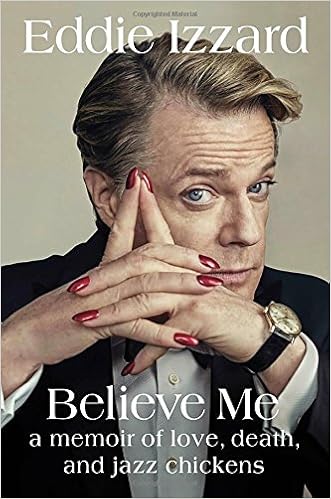
Believe Me: A Memoir of Love, Death, and Jazz Chickens Hardcover – June 13, 2017 by Eddie Izzard (Blue Rider Press)


  • 57 SHARES
  • TWEET
  • 1 SHARE
  • COMMENT
  •  EMAIL
Trans Atlantic humor : Eddie Izzard is a comic genius by Bill Gates ( republished with permission)
I’ve recently discovered that I have a lot in common with a funny, dyslexic, transgender actor, comedian, escape artist, unicyclist, ultra-marathoner, and pilot from Great Britain. Except all of the above.


Eddie Izzard is one of my favorite performers. Melinda and I had the pleasure of seeing one of his comedy shows live in London, and then we got to talk with him backstage after the show. So I was excited to pick up his autobiography, Believe Me. It was there that I learned for the first time that Izzard and I share a lot of the same strengths and weaknesses.

As a child, Eddie was nerdy, awkward, and incompetent at flirting with girls. He had terrible handwriting. He was good at math. He was highly motivated to learn everything he could about subjects that interested him. He left college at age 19 to pursue his professional dreams. He had a loving mom who died of cancer way too young.

I can relate to every one of these things.

You might find you share similarities with Eddie as well. In fact, that’s the overarching point of this book. We’re all cut from the same cloth. In his words, “We are all totally different, but we are all exactly the same.”

If you’ve never seen Eddie perform his stand-up routine, you’re missing out. Like Monty Python, he often draws from real historical figures, such as Shakespeare or Charlemagne, and comes up with hilarious riffs, many of them improvised. And like other super talented comedians like Robin Williams and Tom Hanks, he’s also great in serious dramatic roles. (He recently appeared in the movie Victoria and Abdul, with Dame Judi Dench.) He even talks semi-seriously about running for Parliament.

Despite all those gifts, I’m not sure I’d recommend this book for those who’ve never seen Eddie perform. There are some comedians, such as David Sedaris and George Carlin, whose books would make perfect sense even if you haven’t seen their act. That’s not the case here. You have to witness his brand of surreal, intellectual, self-deprecating humor. Otherwise, it will be like you’re walking into the middle of a conversation.

But if you have seen Eddie’s stuff and you like it—here’s a typical bit, a riff on Pavlov’s dogs—I promise you’ll love this book. You’ll see that his written voice is very similar to his stage voice. You’ll also see that the book provides not just laugh-out-loud moments but also a lot of touching insights into how little Edward Izzard, a kid with only a hint of performing talent, became an international star.

The book begins with the event that had by far the biggest impact on his life—the death of his mom in 1968, when Eddie was just six years old. Eddie’s father, an accountant who traveled a lot for work, was not able to care for Eddie and his brother by himself. So the Izzard boys were sent off to a boarding school near a Welsh seaside resort “where you’d expect a few dead bodies to wash up occasionally … but no such luck.” Imagine you’re six years old, you’ve just lost your mom, you’re starting to have gender-identity issues that make no sense to you, and you’re packed away to a boarding school where you have to cry yourself to sleep!

As hard as these experiences were, there’s no way Eddie would be the star he is today if they hadn’t happened. “I do believe I started performing and doing all sorts of big, crazy, ambitious things because … on some childlike magical-thinking level, I thought doing those things might bring her back. But she never came back. I keep trying, though, just in case.”

He’s honest about the fact that he was the opposite of a natural. Instead of innate talent, he had something perhaps more important: a burning desire to be in show business and the propensity to be relentless in pursuit of his goals.

He spent most of the 1980s working as a street performer, often in London’s Covent Garden. It was a slog, with a lot of embarrassing moments. But he got much better the old-fashioned way: by working at it day in and day out and learning from his many failures.

In fact, I couldn’t help but think that Eddie’s life would be a perfect case study for the Stanford psychologist Carol Dweck, who has written about the concept of the “growth mindset.” As Dweck explains in her book Mindset, the growth mindset is one in which you believe that your capabilities derive from practice and perseverance rather than DNA and destiny.

Eddie has the growth mindset in spades. Being lousy at something doesn’t stop him from doing it. In fact, it often has the opposite effect, driving him to work at it until he is no longer terrified of it.

Not only did he apply that to performing in front of huge audiences, despite his fundamental shyness. That growth mindset also drove him to become a pilot, despite his fear of heights. It drove him to run 27 marathons in 27 days, despite his lack of natural athleticism. And it drove him to start performing stand-up in French, German, Arabic, Russian, and Spanish, despite the difficulty of learning these languages and translating his British humor into other cultural contexts.

Maybe most difficult of all, that growth mindset allowed him to walk out the door of his home in 1985 in makeup and a dress, despite opening himself up to ridicule and hate. But doing so was liberating: “It led to … a world I could begin to change in my own personal way, carving out for myself a small slice of freedom of expression.”

I’m always impressed by the growth mindset when I see it in action. Now that I understand how much it’s at the core of Eddie’s brilliance on stage, I’ve become an even more devoted fan of his.

Thursday, October 26, 2017

Finite Media: Environmental Implications of Digital Technologies. Sean Cubitt. Duke University Press. 2017.


We desire the latest mobile phones. We expect to be contactable and connectable at all times: wherever we go, our portable media devices come too and probably record each step of the way, either intentionally or otherwise. Yet how often do we think about the underlying consequences of these expectations? For instance, when was the last time you connected to Google search and thought of its environmental impact? In Finite Media: Environmental Implications of Digital Technologies, Sean Cubitt considers these issues and does the hard work of digging up answers and figures: each Google search emits 0.2 grams of C02 (18).
Cubitt is part of a group of scholars arguing that mediation must be understood in an expanded sense. To say anything about the constant use of media in today’s world, it is necessary to investigate what lies beneath the shiny screens or the weightless ‘cloud’ metaphors, including their material infrastructures and ecological basis. This reveals uncomfortable truths about our media consumerism:
When we add the energy required by server farms to the demands of domestic and office equipment usage, and to them the energy costs of extracting materials, manufacturing digital equipment, and recycling it, we begin to understand the scale of the environmental footprint proper to digital media (35).
The ecological theme builds upon recent interest in the topic from authors like John Durham Peters and Jussi Parikka who are expanding the remit of media studies beyond its traditional textual basis. However, while other works sometimes celebrate the media-as-ecology interpretive metaphor, Cubitt exposes the messy and exploitative realities that underlie it. For Cubitt, these reveal the political character of all media.
Image Credit: (Jason Beaumont CC BY SA 2.0)
Finite Media directly addresses media’s imbrication with the environment, which has been a key theme in Cubitt’s work on communications, media art and aesthetics in previous books including EcoMedia (2005) and The Ecocinema Reader (2012). In the introduction, Cubitt outlines two key claims: that the earth has finite resources and mediation depends on their limits; and that ecology consists not only of we call ‘nature’, but also of the ‘secondary environments’ of mediation and technology (11). These are addressed in various ways in Finite Media: initially through engagement with media’s empirical environmental consequences, and in the final third of the book through a more speculative, philosophical perspective with reference to Karl Marx and Martin Heidegger and the philosophy of human rights and citizenship.
Finite Media is replete with examples and case studies and engages a wide range of topics, including the ‘cyborg’ logic of large corporations’ inhuman pursuit of wealth; server farms and data centres; digital labour; the restructuring of consumerism; energy use and sources; the burden on the world’s poor and indigenous peoples of western media consumerism; and the failure of political actors to address ecological issues in the face of catastrophe. Broad reading and engagement across disciplines is evident in the way Cubitt utilises these themes in his book: indeed, this synthesis is necessary for a project with such wide remit.
In Chapter One, Cubitt offers an insightful case study of uranium’s role in mediation. Digital media allow us to expand our communications manifold: we generate more and more data in a wanton manner, using more power as we do so. The more abundant, cheap energy we have, the more we use it (47). This paradoxical (mis-)use of resources creates huge waste disposal issues. Two examples Cubitt provides are the sole nuclear waste plant in the United States, located in New Mexico, which is planned to be sealed off within 75 years, and the Ranger Mine in Australia’s Northern Territories, which is seen to pose direct threats to local populations and heritage, as reported by the Australian Senate. Cubitt shows that energy is treated differently around the world. Waste is not only a byproduct of global capital, but an integral part of it. In both these cases, however, indigenous peoples are the losers as the plants are located on Navajo and Aboriginal lands, respectively.
70 per cent of the world’s uranium supplies are located under indigenous lands (51), which means that the potential for political activities to resemble colonial tactics remains a real risk. The Australian government were found to have breached UN Human Rights Commission charters on racial discrimination through their actions in the Northern Territories. Similar actions by governments at other sites of uranium resources also threaten indigenous populations in Greenland, Kenya, Tanzania and Mongolia, among others (52). In the pursuit of cheaper energy, what were once common lands have become the private property of corporations that disavow responsibility towards peoples inhabiting these sites. All of this serves the needs of the digital economy and the corporate logic of profit due to uranium’s powering of diverse media systems such as fibre optic networks and telecommunications satellites. For Cubitt, materialist ecocriticism of media must realise these implications even as it abandons human-centric forms of analysis (58).
While the book outlines the massive environmental consequences of our use of media, the answer to these issues is not to divest from media use, as if the relation between humans and technology could ever be unfurled. Instead, Cubitt thinks that we must foster an alternative practice of media: an ‘eco-political media aesthetics’. In the final third of the book, the register shifts from accounting for the data and its consequences to offering a response in terms of ecological communication. The arguments come thick and fast in this section, and there are important ideas presented.
Media are characterised by radical difference as opposed to the integrated image put forward by capital and free markets. Society, economy and polity are abstractions that have failed us. Communicating through difference is the goal of ecological politics and aesthetics. However, the self can no longer be the source of political action. Diverse communities of the human and nonhuman are the goal: ‘The fundamental political task is to build a communicative event embracing the whole world, not just the human’ (184). To foster sustainable media practices and to act in alternative ways to informationalisation, group formation must replace individual action.
Claims about the digital are often hyperbolic. Cubitt carefully sifts through his topics to show realities beyond their generalisation. Instead of assuming that media use and its consequences are the same the world around, Cubitt exposes shocking disparities that disproportionately affect peoples at the poorer end of the spectrum. Indeed, postcolonial theory is an important reference point in the book. It is an all-too-rare use of this resource that media studies should draw upon more often to live up to its interdisciplinary reputation and claims.
The environmentalisation of data explored throughout the book is not, readers realise, something to be celebrated: rather, it is an unsustainable process borne from the contradictions of capitalism. For Cubitt, capital is the great mediator: everything is subsumed under its sign. Capital plays an inextricable role in geopolitical issues and due to this, whole sections of the world population are becoming economic externalities, becoming environmental. It is hard to appreciate the subtleties of all of Cubitt’s arguments on first reading Finite Media. Nonetheless, I have no doubt that further exploration of media’s role in capital and the overdeveloped world in the years to come will show their prescience.

Monday, October 23, 2017

Monsters in Cartography ..Sea Monsters on Medieval and Renaissance Maps by Chet Van Duzer London: The British Library, 143 pp., $35.00 (Distributed in the US by the University of Chicago Press) Sea Monsters: A Voyage Around the World’s Most Beguiling Map by Joseph Nigg University of Chicago Press, 160 pp., $40.00 Witches and Wicked Bodies an exhibition at the Scottish National Gallery of Modern Art, Edinburgh, July 27–November 3, 2013; and the British Museum, London, September 2014–January 2015 Catalog of the exhibition by Deanna Petherbridge. National Galleries of Scotland, 128 pp., £14.95 (paper)


James Ford Bell Library, University of Minnesota, Minneapolis
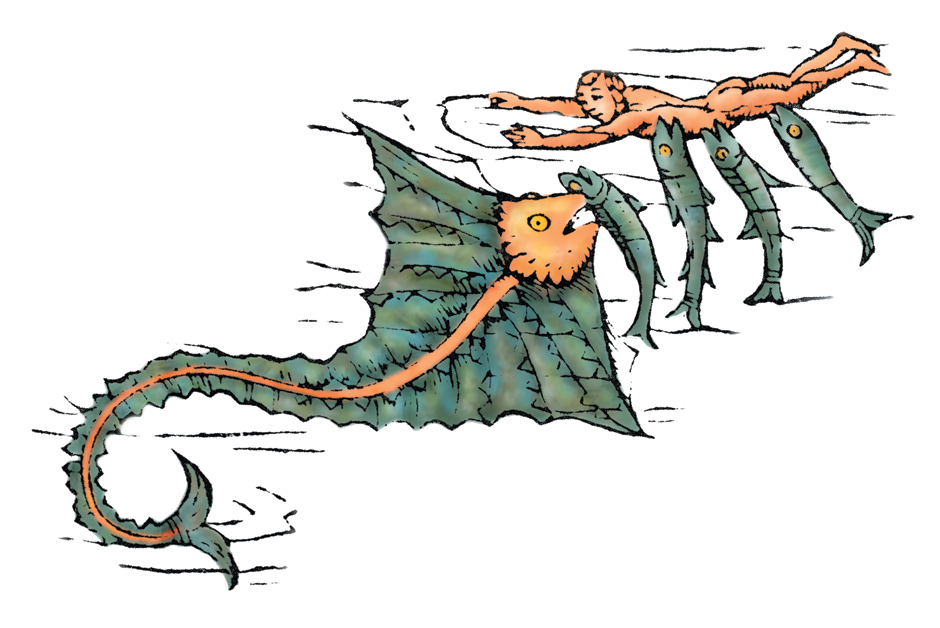
A sea monster from the ‘Carta Marina,’ the map of Scandinavia and Iceland produced between 1527 and 1539 by Olaus Magnus, the archbishop of Uppsala, after his exile to Danzig

In “The Tale of ’Abd Allah of the Land and ’Abd Allah of the Sea” from the Arabian Nights, a poor fisherman fails day after day to catch anything but at last, in answer to his ever more desperate prayers, he feels something heavy land in his net. Joyfully, he hauls it up, only to find a merman, who begs for mercy—and for fresh fruit and vegetables, which are greatly lacking under the sea, he tells his captor. He promises that if the fisherman will bring him the produce and then release him back into the water, he’ll return with lavish recompense. ’Abd Allah of the Land doesn’t believe him, but lets him go anyway out of the goodness of his heart.

But this is a fairy tale, and so the merman will keep his word and rise again from the depths with basketfuls of fabulous gems from the sea bed—pearls and coral and chrysolites and other precious minerals—for his deliverer. Fruitful exchanges continue between them, and eventually, ’Abd Allah of the Sea invites his earthly friend down into the underwater world where, he tells him, he lives in one of many fine and diverse marine cities, each with its own society and culture. The fisherman protests that he will choke on seawater and drown. But the merman has a remedy: a powerful grease from a monstrous and terrifying fish called a dandan: “It is larger than any animal you have on land and were it to come across a camel or an elephant, it would swallow them up.”

The dandan’s liver—or in some versions of the tale its blubber—exudes a potent ointment that “looked like cow’s grease, golden yellow in colour, with a clean smell.” The substance is indispensable to mer-people for their own survival under the sea, but they cannot harvest it without human help. The monster is ferocious and deadly and voracious for flesh, mer- and other; however, it has a fatal flaw: it can’t abide the sound of a human voice. As the great fish approaches, intent on devouring him, ’Abd Allah of the Land must cry out. The mighty dandan will then keel over and die, and ’Abd Allah of the Sea will be able to harvest the precious secretion.

And so it comes about.

Now properly smeared all over in the wonder grease, ’Abd Allah of the Land is given a full tour of the extensive settlements, where different peoples and creatures dwell under the sea. He learns in amazement of the symbiosis between fish and humans, and then finds himself collected by the sultan of the sea for his cabinet of curiosities. When the merman’s mermaid daughters laugh at the fisherman for being “tail-less,” he’s hurt, and wants to go home and eat something besides raw fish; he is also affronted that the mermaids go about in the water bare-breasted and bare-faced, and speak their views so uninhibitedly. So he leaves the world under the sea.

This kind of fairy tale, as it brings the speculative imagination to play on surmises and glimpses of undersea conditions, strikes notes of delightful preposterousness. Much of the lore surrounding sea monsters exhibits the same wonderful mix of fantasy and observation, in which one can catch glimpses of whales and their valuable products, the vast lacy architectures of coral reefs, marine ecosystems, and pearl fishers’ experiences, all mixed up with sheer fancy. Several of the maps explored in these vivid studies by Chet Van Duzer and Joseph Nigg illustrate, for example, the unfortunate sailors who camp on a colossal fish they mistake for an island: they’ve made a landfall on its back and built a fire to cook themselves a meal, but when the beast feels the heat of the flames, it rouses itself and dives, taking the heedless picnickers to their death in the deeps.

This cautionary tale was so popular that the island-monster was given its own name: aspidoceleon, after its resemblance to a shield turtle, and the scene is widely illustrated and told—in the Romance of Alexander, the tale of Sindbad, and in the legend of Saint Brendan, in which the medieval monk glosses it as a warning that too much pleasure-loving idling and dalliance in this world will take you down to hell (see illustration below). Like other monster stories the aspidoceleon envisions a horrible—comically horrible—possibility, and issues a warning; but above all , it belongs to the literature of astonishment—mirabilia, in Latin, or ’ajaib, as in the Arabian Nights, and its tellers aim to astonish and delight.

The status of monsters is never stable: Are they fact or are they fiction? It is a question that early modern mapmakers do not answer. The two ’Abd Allahs reflect the theory, found in Pliny’s natural history, that “anything which is produced in any other department of Nature, may be found in the sea as well.” This fantasy proved convincing to many, although in the thirteenth century Gervase of Tilbury, mindful that sea creatures need to swim, added a touch of hybridity:


There is no form of any creature found living among us on dry land whose likeness, from the navel upwards, may not be observed among the fish of the ocean off Britain.

The terms sea horse, sea cow, and sea lion still enfold this dream of parallel plenitude, while in the past the catalog of sea creatures included every species: sea snakes, sea pigs, sea hares, and the appealing sea mouse that, according to Pliny, helps whales to see where they are heading by parting the heavy brows above their eyes.

While Chet Van Duzer, in his authoritative, wide-ranging study, and Joseph Nigg, who concentrates his full attention on the masterpiece made by Olaus Magnus between 1527 and 1539, strive to distinguish fantasy and reality in their accompanying texts, the pictures have such living presence (that quality of enargeia, the Greek ideal of vivid, hallucinatory representation) that the possibility of any monster—whale or dragon—remains just as likely as it is unlikely. And it must be said that their unlikelihood adds to the pleasurable curiosity such stories excite and feed, the delight in disagreeable and frightening things that Aristotle puzzles over toward the very beginning of the Poetics.

Both these sumptuously produced volumes about sea monsters place maps at the heart of scientific marine inquiry; the mapmakers attempted accurate documentation and measurement of land masses and coastlines but fill the surrounding seas with marvelous, terrible, and colossal fishes, serpents, sirens, and other creatures from the populous mythological cast—besides sea pigs, sea snakes, and sea horses, they include tritons, sirens, Scylla, Charybdis, the kraken, the remora, the grampus, the prister, each of them colossal, singular, and fearsome.

At the unknown beginnings of the world, gigantic monsters embody chaos and emergence, in Babylonian myth as well as in the fabulous classical zoo that Hesiod set down; he traces our anthropomorphic forebears—the Titans and Cyclopes and Olympians—back to terrifying gorgons and dragons and sphinxes. John Boardman has argued in his book The Archaeology of Nostalgia (2002) that the Greeks were attempting to make sense of dinosaur bones they found in the landscape, and he convincingly compares the bone-white sea monster on a vase, lurking in a cave and ready to pounce on Hesione, with the fossil skull of a Samotherium, or Miocene giraffe, such as was found around Troy.

But rational conjectures of this kind, however entertaining, don’t explain the whole activity of the monstrous imagination, which revels in excess and assemblage; tricephalous and multilimbed, with arthropod and reptilian features such as ruffs, tusks, fangs, tentacles, and jaws, many of these primordial monsters are hybrids defying nature. They belong to dark places, those underworlds under land and sea—volcanoes, ocean abysses—because they embody our lack of understanding, and mirror it in their savagery and disorderly, heterogeneous asymmetries of shape. For this reason, at the same time that Olaus Magnus was making his marine map, artists conjured extremes of physical monstrosity to convey spellbound states, in which perverse desires are spoken and thrilling moral transgressions follow.

The artist and art historian Deanna Petherbridge, with her selection of mostly printed images for the exhibition “Witches and Wicked Bodies,” explores how some of the most powerful artists—from Dürer to Goya, Jacques de Gheyn to Fuseli—combine and recombine grotesque medleys of limbs and disfigure and exaggerate aging female bodies to express the terrors of witchcraft. These expressions of monstrosity stigmatize the flesh, especially old women’s, while also appealing to the viewers’ appetite for thrilling perversity; rather like modern British tabloids, lurid scenes of other people’s sins—night-flying and Sabbath orgies—are titillating even while they purport to condemn. (In the case of Goya, the targets are many, ferocious, and tragic.)

Monsters still fascinate precisely because they express what might lie beyond the light of common day. And as in the case of Goya’s dream of reason, the fear and awe monsters inspire can’t entirely be dispelled by enlightened investigations, neither in the past nor today. The ocean swirls in a condition of mythopoeic duality: it is there, it covers two thirds of the world, it is navigable and palpable and visible, but at the same time, unfathomable, stretching down in lightless space and into the backward abysm of time where every fantasy can be incubated.

Both Chet Van Duzer and Joseph Nigg explore maps as maps, with monsters as the decorative—and instructive—elements in the mapmakers’ repertory, and both bring the story into the present, showing how “the geography of the marvellous” has deeply imprinted the collective imagination and has naturalized ancient sea monsters through different media, including video games. Neither author widens out into relations with the Zodiac or cosmology, or dwells on the mythology of shape-shifting Proteus or the terrifying Old Man of the Sea, nor do they linger on the rich fairy-tale lore of undines and selkies.

Nevertheless, they prove the case for the maps’ importance to the continuing life of myth and, above all, to the present vogue for fantasy in film and fiction. Moby-Dick, the giant squid and other sea monsters in Jules Verne, the Creature from the Black Lagoon, and even the computer-generated mask of glaucous, waving, suckered tentacles that the actor Bill Nighy is condemned to wear in the role of Davy Jones in Pirates of the Caribbean: Dead Man’s Chest reveal the near-indestructible longevity of the marine world picture that was crystallized by early cartographic visionaries. It’s also significant that both the volumes under review exemplify a new rich phase in the history of book production: digital magnification and reproduction have made practicable marvelous close-up details from every moment of the maps’ journeys, while the jacket of Nigg’s study unfolds into a full-color poster of Olaus Magnus’s masterpiece, mapping his native Scandinavia.

Olaus Magnus was the Catholic archbishop of Uppsala, who was ousted from his cathedral by the Swedish Reformers and took refuge in Danzig, and he may have been inspired by nostalgic pride in his lost homeland. He truffled the northern oceans with dozens of colossal and polymorphous mythic monsters, as if laying out a deluxe box of chocolates with glorious flavors and varieties, emerald green and crimson, frilled and bulbous, toothy, barbed, and serpentine. In 1555, he went on to add a learned commentary, in which he melded together classical fable and science, lore from bestiaries as old as the Sanskrit Panchatantra, dating to the third century BCE, with observations gleaned from Aristotle, Pliny, and the anonymous Hortus Sanitatis.Bridgeman Art Library
‘St. Brendan and his monks celebrate Easter mass on the back of the giant whale Jasconius’; map by Honorius Philoponus, 1621

Chet Van Duzer’s study begins with the first mappaemundi in antiquity and the early Middle Ages; the author is an encyclopedic scholar of historical cartography, with a magisterial command of comparative knowledge and scrupulous attentiveness to detail, noticing the slightest drollery drawn in the waves. By contrast, Nigg shows a juicier interest in the myths and stories, and provides a useful, gleeful “sea monster key.” (“ZIPHIUS, a horrible sea monster that swallows a black seal in one bite…. ROSTUNGER…somewhat like a sea calf. It goes to the bottom of the sea on all four of its feet, which are very short.”) He also quotes most entertainingly from the anonymous 1568 English translation of Olaus’s commentary, which reads like a cross between Thomas Browne’s Pseudoxica Epidemica, an invention from Borges’s library of Babel, and a recovered gnomic relic of Middle Earth:


And not onely may we understand by sight that there are Images of Animals in the Sea, but a Pitcher, a Sword; Saws and Horses heads apparent in small Shell fish, Moreover you shall find Sponges, Nettles, Stars, Fairies, Kites, Monkies, Cows, Woolves, Mice, Sparrows, Black-Birds, Crows, Frogs, Hogs, Oxen, Rams, Horses, Asses, Dogs, Locusts, Calves, Trees, Wheels, Beetles, Lions, Eagles, Dragons, Swallows and such like: Amongst which, some huge Monsters go on Land and eat the roots of Trees and Plants: Some grow fat with the South wind; some with a North wind blowing.

The monsters teeming in the seas of Olaus’s lost native land, Nigg proposes, might have been aimed at warning off trespassing fishermen—monsters usefully policing the sea roads. This would account for the huge spouting creatures in Scandinavian and Icelandic waters, but the rest of the teeming bestiary displays that fabulist Catholic sensibility that the Protestants deplored as aberrant, and the archbishop’s entry on Sea Swine allegorizes the monster as the Protestant heresy: “the eyes on its scaly body their temptations…and its dragonlike feet the evil that they spread throughout the world.”

The word “monster” encloses a memory of monstrare, to show, as in “demonstrate,” and monsters were interpreted as revealing in many different ways: as in the Arabian Nights, the sea gave evidence of the plenitude and infinite variety of creation and the maps enriched understanding of the Book of Nature and its mirabilia. Artists working for the mapmakers portrayed elements of monstrosity with wonderful ingenuity, shuffling tusks, horns, fins, flippers, flukes, blowholes, tentacles, gills, scales, spikes, tails, and limbs to produce a catalog of jumbled creatures with eyes on their bodies and jaws on their tails and so forth. Many of these are “Poetical Animals,” as Thomas Browne called griffins, but others approximate whales and sharks, polyps and crabs, and in the view of these studies, the mappers were fumbling toward an empirical grasp, and trying to guide and protect navigators.

An echo of monere, to warn, may also sound in the word “monster,” and while sea monsters may have embodied physical dangers, they were also frequently taken to be divine portents—Leviathans to punish the wicked or prophesy doom. Olaus Magnus was facing both ways, backward to medieval allegory, forward to empirical inquiry; but ancient fears still suffuse Melville’s vision of the white whale and Ahab’s pursuit, while recently, when two dead oarfish were discovered in California, one eighteen feet long, the other fourteen feet, they were immediately connected, rather shiveringly, with a local legend that such colossal snaky deepwater fish only surface when an earthquake is pending.

Medieval and early modern mapmakers, before and after Olaus, invoke eyewitnesses, the kind that still report sightings of Nessie in Loch Ness. They are early travelers like Marco Polo, sailors, pilgrims, collectors of curiosities, and the mountebanks who showed wonders and freaks in their shows in Amsterdam, Venice, and London. Petrarch is one of the unexpected authorities—cited by the explorer Sebastian Cabot—for the remora, a monster that, though small in size, attaches itself to a ship, stalls it against wind and current, and sucks it under. In illustrations it looks like a gigantic wood louse.

Magnification and accumulation are the mapmakers’ principles. “The richest collection of sea monsters in any one manuscript” appears in the fifteenth-century Latin version of Ptolemy’s Geographia; Van Duzer has counted them: 476 in all, of which 411 are “generic,” leaving sixty-five “more or less exotic and interesting sea creatures.” These are pen-and-ink doodles, bobbing in a sepia sea of undulating lines; fanciful creatures drawn rapidly, spontaneously, and humorously, they are closer to mischievous marginalia than terrifying scriptural portents. The warnings that monsters issue do call attention to perils and evils, but they can also remind us what relief there can be in fancy, in the spirit of play. “More delicate than the historians’ are the map-makers’ colors,” wrote Elizabeth Bishop, and though the lines don’t describe the rich pigments on display here, they do apply to the light touch of some of the maps’ artists.

In the oceans charted here, the monsters are correspondingly huge: indeed hugeness, an attribute of sublimity, is a defining characteristic of monstrosity—Robert Hooke turned a common flea into a grotesque and terrifying apparition when he drew what he saw through his microscope at approximately 288 times life size. The Bible gave its authority to the existence of sea monsters, with its story of Jonah and the whale, and its blazing poetic invocation of Leviathan in the story of Job:


Who can open the doors of his face? his teeth are terrible round about…. Out of his mouth go burning lamps, and sparks of fire leap out. Out of his nostrils goeth smoke, as out of a seething pot or cauldron…. He maketh the deep to boil like a pot; he maketh the sea like a pot of ointment…. Upon earth there is not his like, who is made without fear.

The colossal sea dragons that blast and spout in the observed sea lanes of Olaus’s and others’ maps owe more to the furious rhetoric of the author of Job than to the sightings of mariners.

The gigantism of the monstrous is also an effect of an imagined, primordial time of emergence and infinite possibility. Even from a post-Darwinian perspective, the sea inspires wonder—and fear. Since the latest of the maps reproduced in these books were made, zoologists have found more and more extraordinary life forms deep in the ocean, with peculiar, rare properties: bioluminescence already has beneficial uses, and more are being researched, while the starfish and other animals’ ability to generate new limbs is being closely studied; the miraculous glass sponge, an intricate mesh of silica, has exceptional tensile strength and durability, and withstands high stress in ways that give new dreams to the architects of Gulf State follies.

Anxiety might be behind the encyclopedic impulse: knowing your monsters can help contain them. One particular section of the Indian Ocean pictured on the Catalan Estense mappamundi (circa 1460) displays three varieties of sirens, including a centaur-like, female hippocampus. With his keen eye, Van Duzer has noticed that blank spaces were left in the sea for a different artist to fill in later, an artist whose speciality would have been sirens. Indeed, Van Duzer reminds us that the majority of old maps do not show monsters—they were expensive and beyond most patrons’ reach. But when they could afford them, patrons wanted them.

Shakespeare, who was writing in the world that Olaus Magnus and his successors were charting, shows every sign of fascination with bestiaries and their legends and lore, and The Tempest, which was first performed in 1611, interestingly conveys this double nature of the monster, perpetually oscillating between illusion and actual presence. Caliban as monster—and a fishy-smelling one—is a phenomenon and a figment; on the one hand, the “savage and deformed slave” of the cast of characters is treated as a sport of nature, whom Trinculo and Stefano plot to capture and exhibit, but on the other, the play also reveals Caliban to be the subject of misprision by those who maltreat him. When Prospero says at the end of the play, “this thing of darkness I acknowledge mine,” his avowal could mean many things. But it patently shows us Prospero recognizing that the darkness belongs to him, too, figuratively.

The development of modern cartography unexpectedly produced a Counter-Enlightenment result: to make monsters real. Both authors assume that the mariners had seen something, which they had mistaken for something else, and then identified the phenomenon with an existing mythical monster—jellyfish are called Medusae, the remora becomes Echidna, zoology constantly poeticized according to prior imaginative construction. Did sex-starved sailors really mistake walruses for mermaids? Or even the swollen, ungainly manatee? A glossary at the back of Nigg’s book tentatively matches some of the marvels tossing in the sea charts to known species: the prister as sperm whale, for example. Cryptozoology, the science of imaginary monsters, only emerges as distinct from zoology and biology after the period covered by the maps that are explored with such rich delight in these two studies.

Some other tales of sea monsters are not so far-fetched, however, which makes them more deeply troubling. For example, when the chronicler Ralph of Coggeshall reported that in the year 1187 a wild man was fished up from the sea off the coast at Orford, in Suffolk, England, what can have happened?


The wild man was completely naked and all his limbs were formed like those of a man. He was hairy and his beard was long and pointed. Around the chest he was very rough and shaggy…he devoured fish raw rather than cooked, squeezing the raw fishes in his hands until all the moisture was removed and then eating them. He did not wish to talk, or rather did not have the power to talk, even when suspended by his feet and tortured….

He survived this treatment over a long period, but eventually “secretly fled back to the sea and was never seen again.” The chronicler concludes, “Whether this was some sort of mortal man, of whether it was an evil spirit inside the body of a drowned man or whether it was some fish in human form, it is not easy to tell….”

Neither author is much concerned with alternative myths of mingling and cooperation. Yet in the far distant past, there were stories told about humans and monsters that promised a mutual alliance: in the Arabian Nights, mortal men fall madly in love with jinn who live under the sea, as in “The Tale of Julnar the Sea-Born”; unlike European legends of man and sea creature (Undine, Rusalka), these interspecies marriages are not doomed.

Today’s sea monsters are less sublime frights than “beguiling” diversions. Yet “why mermaids still swim in our dreams” (as the poet Michael Symmons Roberts asks) leads to more questions about the structure of the minds that produce such marvels, comic and terrible, beguiling and ghastly. In Fishskin Trousers, a lyric drama inspired by the Wild Man of Orford, which was staged in England earlier this year, the playwright Elizabeth Kuti takes up the challenge that the monster from the sea sets us in modern times, when the ignorance he figures is no longer epistemological but ethical, and does not belong to him as much as to his tormentors: scientific overreach, as well as cruelty, exclusion, intolerance. The monstrousness of the monsters can still show us dangers, from the sea and from ourselves.