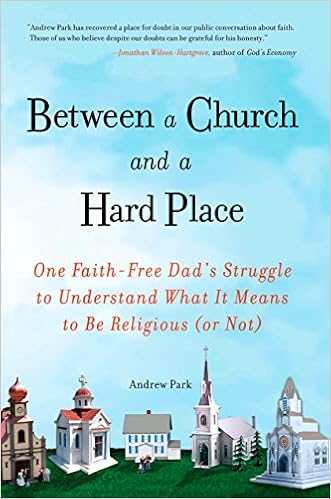
Park had little difficulty teaching his children about ethics and good manners-that is, to live by the Golden Rule-but was struck speechless when they asked about religion. His son first said God at age three, after Park and his wife enrolled him in a nearby Methodist church's preschool. And that was only the beginning. Park tried to balance his nonbelief and sincere appreciation of his son's endless curiosity, attempting to maintain a "Don't ask, don't tell" policy at home. When his daughter began questioning, he realized he had some serious thinking to do. He discusses his parents' religious upbringing and the impact it had on him. His father, for instance, was raised in the Church of Scotland, the forebear of Presbyterianism, which left him with unpleasant memories that he passed on to Park; meanwhile, Park's older brother converted to modern Evangelical Christianity. Whether writing about his family or Rick Warren's Saddleback megachurch, Park remains a father trying to delicately balance the responsibilities of parenthood and being true to himself. A lovely read
When I heard about Andrew Park's book, I was eager to read it. As someone who was raised an Evangelical Christian, but who has abandoned my religious ties to anything other than a basic belief in God, I was intrigued by the idea that two very different upbringings led to similar questions about how to deal with religion when it comes to raising children. Perhaps I read the book searching for answers, but answers are not what I found. Instead, I found a well-written, often humorous, and sometimes touching account of a fellow parent's journey to figure out the answers to some of life's most difficult questions.
I was fascinated as Mr. Parks explored his religious heritage and current mainstream Christian practices. From his experience attending a camp meeting with members of the Pentecostal church started by his great grandfather, to his frank discussion of the events that led to his brother's distance from his family, to his attendance at a Mega Church's discipleship group, I found him enormously respectful, and while not exactly open-minded, certainly mindful of the impact each experience had on his emotions and psyche.
I was satisfied as I came to the end of the book and took away from it the idea of influencing my children without indoctrinating them. It pleased me to find a well-articulated phrase to describe my current approach to raising my children. Like Mr. Park's mother, I've never been afraid to talk to my children about living ethically and morally and about what I expect from them regarding their behavior and treatment of other people. I appreciate that this book doesn't offer a plan, because I would have discarded it, anyway. Chances are, anyone truly seeking answers, won't find them between the covers of one book, but rather through a journey of her own.

No comments:
Post a Comment