Tuesday, May 1, 2018

Islamic Studies in the Twenty-First Century TRANSFORMATIONS AND CONTINUITIES EDITED BY LÉON BUSKENS AND ANNEMARIE VAN SANDWIJK Distributed for Amsterdam University Press 284 pages | color plates, 2 halftones, 2 line drawings (amsteram University Press)


In recent decades, traditional methods of philology and intellectual history, applied to the study of Islam and Muslim societies, have met with considerable criticism from rising generations of scholars who have turned to the social sciences, most notably anthropology and social history, for guidance. This change has been accompanied by the rise of new fields, studying, for example, Islam in Europe and Africa, and new topics, such as the role of gender. This collection surveys these transformations and others, taking stock of the field and showing new paths forward.

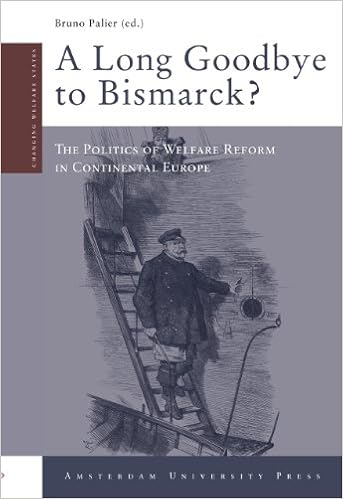
A Long Goodbye to Bismarck? THE POLITICS OF WELFARE REFORM IN CONTINENTAL EUROPE EDITED BY BRUNO PALIER ( Amsterdam University Press) 455 pages | 6 3/10 x 9 1/2 |


A Long Goodbye to Bismarck? is the first study to provide an exhaustive comparative account of all welfare reforms in continental Europe during the past three decades, covering Austria, Belgium, the Czech Republic, France, Germany, Hungary, Italy, the Netherlands, Poland, Slovakia, Spain, and Switzerland.

CONTENTS
Acknowledgements
Prologue: What Does it Mean to Break with Bismarck? by Gøsta Esping-Andersen


1 Ordering change: Understanding the ‘Bismarckian’ Welfare Reform Trajectory by Bruno Palier

2 A Social Insurance State Withers Away. Welfare State Reforms in Germany—Or: Attempts to Turn Around in a Cul-de-Sac by Karl Hinrichs

3 The Dualizations of the French Welfare System by Bruno Palier

4 Janus-Faced Developments in a Prototypical Bismarckian Welfare State: Welfare Reforms in Austria since the 1970s by Herbert Obinger and Emmerich Tálos


5 Continental Welfare at a Crossroads: The Choice between Activation and Minimum Income Protection in Belgium and the Netherlands by Anton Hemerijck and Ive Marx


6 Italy: An Uncompleted Departure from Bismarck by Matteo Jessoula and Tiziana Alti


7 Defrosting the Spanish Welfare State: The Weight of Conservative Components by Ana Guillén


8 Reform Opportunities in a Bismarckian Latecomer: Restructuring the Swiss Welfare State by Silja Häusermann


9 The Politics of Social Security Reforms in the Czech Republic, Hungary, Poland and Slovakia by Alfio Cerami


10 Reforming Bismarckian Corporatism: The Changing Role of Social Partnership in Continental Europe by Bernhard Ebbinghaus


11 Trajectories of Fiscal Adjustment in Bismarckian Welfare Systems by Philip Manow


12 Whatever Happened to the Bismarckian Welfare State? From Labor Shedding to Employment-Friendly Reforms by Anton Hemerijck and Werner Eichhorst


13 The Long Conservative Corporatist Road to Welfare Reforms by Bruno Palier

Notes
Bibliography
About the Contributors
Index

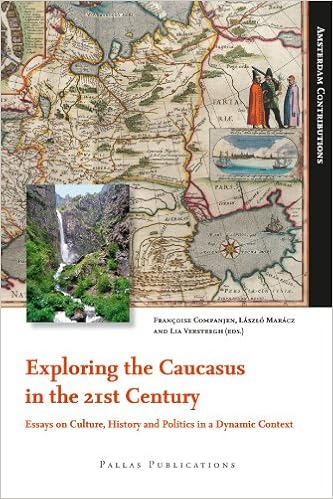
Exploring the Caucasus in the 21st Century: Essays on Culture, History and Politics in a Dynamic Context (Amsterdam Contributions) by Françoise Companjen (Editor),‎ László Marácz (Editor),‎ Lia Versteegh (Editor) (Amsterdam University Press)


I've recently purchased the book, hoping to enrich my knowledge and understanding of the complex Caucasus region. I have to say that while the book contributes to the issues of studying some of the recent socio-political events in the Caucasus and has interesting ideas, it falls way short on the part of properly researching and presenting the history and legal aspects. Considering that a centuries-old map of Europe is adorning the cover of the book and the term "history" and "politics" are part of the title, it would lead one to believe that the subject of history and legal aspects would be presented with more scrupulous attention, especially when published by a major university press by a group of scholars. But the book also falls short in its "artistic freedom" chapter.

To begin with, the book has many strange errors and mistakes, which are too many and cannot be always charitably described as simply typos. For example, on page 233, in the very first sentence of a chapter about artistic freedom, the Azerbaijani artist Javad Mirjavadov is identified as ethnically "Assyrian". On that same page, his wife's surname is at first spelled as "Mirjadova", but already in the second line of the same page it is corrected to "Mirjavadova". On the page 235, it now describes Azerbaijani artists as "Azirian" (some unknown to us ethnic group). Of course, both are wrong, the late Mr. Mirjavadov was Azerbaijani. Aside from this very unfortunate editing, it does not mention a plead of great and often still-living artists, such as Togrul Narimanbekov, Tahir Salakhov, Sattar Bahlulzade and a few others, who are perhaps better known in the artistic world on a global scale than the also great artists mentioned in the chapter.

Then, on page 116, the chapter on the political history of South Caucasus, uses some uncited figure of 6.5 million as the supposed Armenian population worldwide, when the correct number is almost double that, at 11 million, according to multiple sources cited in Wikipedia (a better source than no source at all). The chapter then proceeds to mention genocide allegations, whilst not presenting the Turkish view (also, in the endnote #27 page 131, it claims that "15 to 20 countries have recognized the genocide in the meantime" - that's incorrect, only 3 countries have recognized it in terms of full parliamentary and presidential/head of state recognition. The rest of the 18 nations had one of their parliament's chambers, typically the lowest one, and sometimes their regional legislatures, pass non-binding resolutions that did not amount to any state/national recognition).

Furthermore, it then proceeds stating that in the 1918 war between Dashnak Armenia and the Ottoman Empire (the chapter describes it as Ottoman in one sentence and as Turkey in the next - a peculiar way to go about treating history. I guess there is no difference between Austro-Hungarian Empire on one side, and Austria and Hungary on the other, either, or UK/GB vs. simply England), "Armenia lost the most Eastern strip of land (Erzinan [sic! - it's actually Erzincan], Erzurum, Van) to Turkey" [Ottoman Empire, as Turkey was founded in 1923]. This is of course incorrect - these lands that Armenia supposedly "lost" were not Armenia's to begin with, but were Ottoman Empire's, and not in some distant past, but right in the historic period Dr. Companjen, the chapter's author and book's co-editor, is writing about. That land was Ottoman, and it did not belong to Armenia at all. Thus, Armenia could not have "lost" something it did not legally possess in the first place.

Then, without any clarifications, it is written than Adjara was given to Soviet Georgia "in exchange for the Kars territory, which included the mount Ararat, holy homeland to the Armenians". Aside from the dubious claim about mount Aghri Dagh (Ararat) being "homeland to the Armenians" - father of history Herodotus wrote that Armenians were "Phrygian outcasts" - the territory of the Russian Empire's Kars Oblast (Kars, Ardahan, Artvin, Olti, Sarighamish, etc) was occupied by Russian army in 1878 during the Russo-Ottoman War. Thus, the Ottoman Empire took its own territory back from the Soviet Russia (or Soviet Georgia, if you prefer) in exchange for giving up its territory of Ajaria. Mount Aghri Dagh is holy to all the people in the region, including Turks, Kurds and the Azerbaijanis, as well as Assyrians and others.

On page 117, the author makes a claim that "President Kocharvan [sic! - should be Kocharyan] was eventually succeeded by Andranik Margaryan of the Republica Party. After his death in March 2007, Margaryan was succeeded by Serzh Sarkisyan in February 2008". It should be known that President Kocharyan was succeeded by Sarkisyan only, and that Prime Minister Margaryan was never even a presidential candidate, much less a president. It's unclear what is the source of this peculiar information, as much of the book it lacks proper citations from knowledgeable sources, and as a result, greatly suffers from it.

Meanwhile, on the same page, the book states that "Nagorno-Karabakh is at present a self-proclaimed independent state, not recognized by the UN or by the International community". If it is not recognized by anyone, as Prof. Companjen correctly summarizes, then why state that it is "at present a ... independent state"?! At least if the author were to state "a de facto independent state, but de jure part of Azerbaijan" it would be a little more correct, but still fall short of the obvious - that NK is an Armenia-occupied region of Azerbaijan. Black is black and one has to call a spade a spade. When the book is supposedly about democracy and human rights, what about the human rights of the 800,000 Azerbaijani refugees and IDPs from the historic Karabakh region? What about their democratic rights that have been trampled with for over 20 years now? How about the obvious link between arrested development in the region, and specifically in Azerbaijan and Armenia, and the causal effect of Armenia's occupation of NK on that? What about all those pan-European organizations, such as EU, PACE and CoE decisions that clearly recognize and treat Karabakh as part of Azerbaijan? Is their determination less valuable for the author than when analyzing elections, party politics, and other contemporary political aspects? Why such a double standard?

Finally, on page 118, the author remarks that in "In 1920 ... the region [NK - ed.] was perceived by some to be part of Armenian territory". Again, no citations and references to these mysterious "some". Why care about the "perceptions" by some unidentified and clearly non-authoritative "some" sources, when there are factors like law, legal recognition, and the Paris Peace Conference? If the author cared to investigate the topic a little more, she would have learned that NK has been firmly part of Azerbaijan Democratic Republic of 1918-1920. Since Azerbaijani sources are too few, and might be considered "biased" (unlike, for some reason, the Armenian sources which are cited throughout the book, such as R.G.Suny (1993) and I.Bremmer (1988)), let us refer to the top Armenian-American professor, Prof. Richard Hovannisian of UCLA, "The Republic of Armenia: The first year, 1918-1919". University of California Press, 1971, [...]

"The first conference of the nation's governors took steps to upgrade the quality of the militia by providing it uniforms and higher pay and by petitioning the Ministry of Interior to establish training academies. The conference also rectified certain unnatural variants in the administrative boundaries separating the ten existing provinces: Erevan, Etchmiadzin, Surmalu, Daralgiaz, Zangezur, Novo-Bayazit, Dilijan, Karakilisa, Alexandropol, and Kars" (p. 449). As you can see, Karabakh is not on the list of 10 provinces of the Dashnak Armenia of 1918-1920. Let's read further:

"That the Elisavetpol guberniia was bound to Azerbaijan was clearly demonstrated by the fact that nearly every road led eastward toward Baku, not westward to Erevan. The Armenians of Karabagh depended on Baku for a large share of their supplies, and thousands of them were either seasonal laborers or permanent employees in the oil fields and offices of that rapidly expanding metropolis on the Caspian Sea." (ibid., p. 82)

"The uezd of Zangezur, an area of 2,744 square miles subdivided into the districts of Sisian, Goris, Ghapan (Kafan), and Meghri, formed the strategic passageway between eastern Transcaucasia and the Erevan guberniia. Zangezur, like Karabagh, was inhabited by a mixed population, made up in 1916 of 101,000 Armenians and 120,000 Muslims, Sunni and Shi'a combined". (ibid., p. 86)

"Andranik struck at the defiant fortified Muslim villages that controlled the major routes connecting the four major subdistricts of Zangezur. The process of transforming Zangezur into a solidly Armenian land had begun. The destruction wrought by Andranik drew sharp protests in Erevan from General Halil Pasha, who threatened the Armenian government with retaliation. In reply Premier Kachaznuni claimed to possess no jurisdiction over the partisans. He reminded Halil that Nuri Pasha, having declared the entire Elisavetpol guberniia Azerbaijani territory, had banned regular Armenian units from Zangezur. Certainly, therefore, Armenia should not be held responsible for the prevailing state of affairs in that region. Kachaznuni's sincerity might well have been doubted, but his arguments were reasonable". (ibid., pp. 87-88)

"... The armed encounters between the Armenians on the one side and the native Muslim inhabitants..." (ibid., p. 194)

"while the ultranationalist Georgian press warned against trusting the Armenian "wolves in sheep's clothing", at least until a final territorial settlement has been reached, Zhordania's government closed ranks with Armenia to resist the extension of an invitation to the local administration at Kars. In a devious tactic, the two Christian countries consented to an advisory voice of the South-West Caucasus Provisional Government only on condition that Azerbaijan assent to like representation for Mountainous Karabagh. Azerbaijan naturally could not jeopardize her tenuous hold over the Armenian-populated highland by acquiescing in such a proposition. The overthrow of the South-West Caucasus Republic in mid-April and the Armenian occupation of Kars seem to have obviated that aspect of the issue. Azerbaijan no longer pressed for inclusion of delegates from Kars, and Armenia tacitly accepted the impracticability of gaining a rostrum for Mountainous Karabagh." (ibid., p. 356)

In Richard G. Hovannisian, "The Republic of Armenia, Vol. III: From London to Sèvres, February-August 1920", on page 162 and beyond of the same book, Prof. Hovannisian once again openly admits that Armenia never controlled NK.

So we have the #1 Armenian scholar admit that Armenia never had NK, and that it was Azerbaijan's.

Likewise, when it is incorrectly stated that "But in 1921 the young Joseph Stalin, who was working for the `Kavkas Bureau' in Moscow at the time, assigned Karabakh to Azerbaijan", please note this explanation of this typical cliché:

"NK was not "part of Armenia until 1923" or "part of Azerbaijan since 1920's" and was not "ceded" to Azerbaijan by Soviet dictator Joseph Stalin, as many Western authors and news reports repeat to this day. Archival documents and expert determinations, such as the abovementioned 2001 U.S. Department of State fact sheet, prove beyond any doubt that NK was never part of Armenia and instead, was part of Azerbaijan. However, the most important document in this context is the July 5, 1921 plenum of Kavbureau CC RCP(b) decree (Caucasus Bureau of the Central Committee of the Russian Communist Party of the Bolsheviks), in which Stalin, along with several Armenian members, such as A.Nazaretyan and A.Myasnikyan, decided on "leaving" (or "retaining"; the term in original Russian that was used in the document: '''''''' (ostavit')) NK within Azerbaijan and not "transferring" (or ceding; in Russian: '''''' (otdat')) it to anyone: "Nagorno-Karabakh to leave within the borders of Azerbaijan SSR".

Other scholarly references proving that Karabakh was Azerbaijan's even before Stalin are attested, for example, by Prof. Audrey Altstadt: "Early in 1920, the Peace Conference recognized Azerbaijan's claim to Karabagh".

Thus, when you "retain" or "leave" something somewhere, it obviously means that it was there in the first place (that is, Karabakh belonged to Azerbaijan since before the Sovietization). Due to unfortunate mistranslations and manipulations of the key terminology from Russian into English from these official Soviet documents pertaining to the history of Karabakh region, too many, to be even mentioned here, veteran journalists and political scientists have fallen into the trap of perpetuating the regrettable clichés and mistakes." Source: CAUCASIAN REVIEW OF INTERNATIONAL AFFAIRS, VOL. 2 (1) - WINTER 2008 [...]

There are just too many mistakes like this - the book has a very loud title, but does not live up to the expectations. Poor editing, too many factual errors persist throughout the book. It should come as no surprise, since its editors are not known to be experts on the region and have not publishing anything significant on the region in the past. It does have some fresh ideas and perspectives, and might be useful for some who study strictly humanitarian and otherwise non-historical, non-political, non-legal, non-economic issues.

Exploring the Caucasus in the 21st Century: Essays on Culture, History and Politics in a Dynamic Context (Amsterdam Contributions) by Françoise Companjen (Editor),‎ László Marácz (Editor),‎ Lia Versteegh (Editor) (Amsterdam University Press)


Exploring the Caucasus in the 21st Century is a unique contribution to the study of a complex region. Its authors bring together investigations of both the North and South Caucasus in an effort to explain discrete aspects of the history, linguistic complexity, current politics, and self-representations of the myriad peoples who live between Russia and the Middle East. Here you can find new material on the role of Arabic in Daghestan, conflicts in Georgia over ethnic identification, and the fallout from the Russo-Georgian War over South Ossetia. There is something here for scholars of Caucasia as well as interested general readers. This is a good place to start. Situated between Russia, Turkey, and Iran and comprising part of the Russian Federation along with Georgia, Armenia, and Azerbaijan, the Caucasus region is best known for ethnic and religious divides that have resulted in bloody conflicts for centuries, most recently between various minorities and the post-Soviet independent states. This extensive volume reveals the rich and multifaceted nature of the Caucasus and includes a study of the region’s transition to independence; an exploration of the area’s religions; and a discussion of the role of art in war-torn communities. It is necessary reading for anyone with an interest in one of the world’s most complex regions. 

About the Author
Françoise Companjen is a senior lecturer at the Vrije Universiteit Amsterdam and manager of Caucasus Interconnect. László Marácz is a lecturer in Eastern European studies at the University of Amsterdam. Lia Versteegh is a lecturer in European law at the University of Amsterdam.

THE CITY OF DOMES AND DEMONS FROM THE COLLAPSE OF SOCIALISM TO THE MASS UPRISING OF 2013-2014 ROMAN ADRIAN CYBRIWSKY ( Amsterdam University Press) 372 pages | 45 halftones, 6 line drawings | 6 x 9 | © 2014


The unrest and violence in Ukraine in recent years shocked the world, and the region’s long-term future remains troublingly uncertain. Focusing on the difficulty of Kiev’s transition from socialism to market democracy, this book demonstrates how Ukraine reached this turbulent point. Roman Adrian Cybriwsky delves deeply into the changing social geography of the city, recent urban development, and critical problems such as official corruption, inequality, sex tourism, and the heedless destruction of the city’s historical architecture—all difficulties that have contributed incrementally to Ukrainian citizens’ anger against their government. This thoroughly revised edition brings Cybriwsky’s account of events and their ramifications fully up to date, offering the clearest picture we’ve had yet of what has happened—and what is likely still to come—in Ukraine.

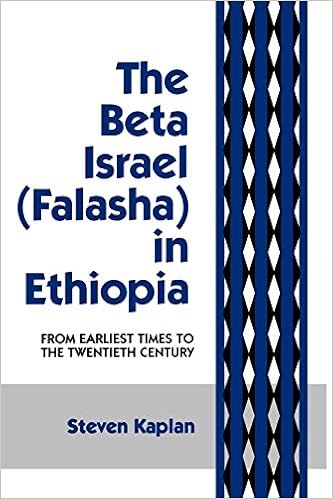
The Beta Israel: Falasha in Ethiopia: From Earliest Times to the Twentieth Century Paperback by Steven B. Kaplan (NYU Press)


The study of this book proved to be a distinct pleasure. It was exciting to see Kaplan clear away the accretions of ignorance and superstition about Ethiopian Jews, one piece after another, relentlessly. That is the polemical aspect of the book, important now, but not necessarily as important in time to come, as the main outline of the history of Ethiopian Jews becomes better understood.

Briefly put, Kaplan shows that Ethiopian Jews are unlikely to have come to Ethiopia from some other place. They are not likely to be some lost tribe of the original children of Israel, for example. He shows the deep Ethiopian roots of these "Beta Israel," which they share with Ethiopian Christians. The latter are more Jewish, and the former more Christian, than the Jews and Christians of Europe. Furthermore, it seems most likely that these Ethiopian Jews, though in some sense continuing earlier Ethiopian Judaism, arose as a group, more or less gradually, only between the fourteenth and sixteenth centuries.

The sources that Kaplan describes are early reports by travelers on the one hand, and the Ethiopian writings in the Ge'ez (and later Amharic) languages on the other. He also utilizes the oral traditions of today's Beta Israel. In the main, other scholars have confirmed Kaplan's main conclusions, particularly James Quirin and Kay Kaufman Shelemay.

Kaplan's last three chapters, including the concluding one, are particularly fascinating. They tell the story of the Beta Israel's growing Jewish self-identification and indeed Zionism during the last two hundred years of their history, much of it in response to both European Christian and European Jewish contacts. The earlier five chapters, covering a period of about a millennium, is more hurried and, to this reader, sometimes confusing in its plethora of names and dates.

Kaplan is not interested in a history of ideas, not even religious ideas. Certain groups are introduced as "Judaized" or even Jews, but it is not always clear how their religious ideas differed from those whom he calls Christian. We can suspect, but often it is only a suspicion, that the Jews did not accept Jesus as god while the Christians did. Rarely does this become explicit in the book. Moreover, we are told that the Beta Israel's Torah is called orit, and that, like other Beta Israel literature, it seems to have come from Ethiopian Christian sources after some changes were made. We are not told quite what these changes were. It would have helped to define Jewish-Christian differences, in the realm of religious ideas, more sharply.

Notwithstanding these reservations, I see this book as of very fundamental importance. It is one of those works that have changed the thinking of a generation. We owe the author a very profound gratitude.

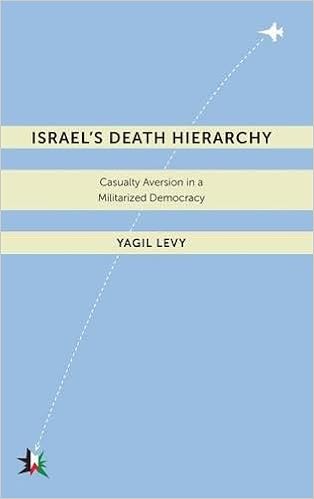
Israel’s Death Hierarchy: Casualty Aversion in a Militarized Democracy (Warfare and Culture) Hardcover – November 5, 2012 by Yagil Levy (NYU Press)


Yagil Levy provides powerful contribution to the debate about the degree to which liberal democracies are ‘casualty sensitive.’ With his concept of ‘death hierarchy’ he reflects on whether these states tend to favor their soldiers' lives over those of enemy civilians and how far this is explained by the declining motivation among their own privileged groups to sacrifice their lives in the military. Although focused on the case of Israel, the argument encompasses other cases and will appeal to scholars of ‘casualty aversion’ on both sides of the Atlantic.

"A superb analysis of the relationship between the changing social structure in Israel, the makeup of its military, and the resulting strategic posture. It is unique in that it explores these relationships through the analysis of the social and economic characteristics of the casualties in Israel’s limited conflicts with the Palestinians and with Lebanon. It also blends sociological and political theories of civil-military relations in a manner that is insightful and thought-provoking. Anyone who is interested in societal-military relations and in Israeli society and politics should put this book on top of their reading list."

Whose life is worth more?

That is the question that states inevitably face during wartime. Which troops are thrown to the first lines of battle and which ones remain relatively intact? How can various categories of civilian populations be protected? And when front and rear are porous, whose life should receive priority, those of soldiers or those of civilians? In Israel’s Death Hierarchy, Yagil Levy uses Israel as a compelling case study to explore the global dynamics and security implications of casualty sensitivity. Israel, Levy argues, originally chose to risk soldiers mobilized from privileged classes, more than civilians and other soldiers. However, with the mounting of casualty sensitivity, the state gradually restructured what Levy calls its “death hierarchy” to favor privileged soldiers over soldiers drawn from lower classes and civilians, and later to place enemy civilians at the bottom of the hierarchy by the use of heavy firepower. The state thus shifted risk from soldiers to civilians. As the Gaza offensive of 2009 demonstrates, this new death hierarchy has opened Israel to global criticism.