Showing posts with label Israel Book Review Children's Books. Show all posts

Monday, May 23, 2016

The Wonderful Things You Will Be, by Emily Winfield Martin,Written and Illustrated by Emily Winfield Martin Age Range: 3-7 Hardback Book: 36 pages Publisher: Random House Children’s Books

Image result for The Wonderful Things You Will Be, by Emily Winfield Martin
Every child is unique, and parents can’t wait to see what they will one day be!

Emily Winfield Martin’s delightful book dreams of what children will someday grow to be. Every child is different and completely unique. We follow beautifully illustrated children as they discover themselves. A girl might grow to be in a garage band or become an actress, while a sweet little boy could be a gardener with his friends. The next boy is a tailor for tiny animal friends, and the next girl is a toy doctor. And beyond that, we see that children are really more than just professions. Young girls and boys are shown being kind, clever and bold, loving and brave.


Perhaps the most beautiful image is of a girl standing beside a dark wood, being “brave and bright/so no shadows can stay.” Because there is more to being something in life than just a profession. At the end of the book, all of the children we have met along the way are showcased in an outstanding foldout page. Children are dressed as whatever they wish to someday be: ballerinas and bears and musicians and robots. There is no wrong answer, and that’s what is so great about this book. Childhood is a time of wonder.


This is a gorgeous book with warm and playful illustrations featuring a diverse set of children. Little ones will be drawn to the pictures, quickly pointing out which one matches what they themselves want to be. The surprise of a double foldout page at the end is a very exciting treat for children too, and my daughter wanted to look at it over and again. The prose is sweet and rhyming, drawing children in and lulling them (hopefully) to sleep before bedtime. A charming book that I highly recommend for young children.

The Cricket in Times Square,Written by George Selden , Illustrated by Garth Williams, Age Range: 7-10 Paperback: 151 pages, Publisher: Farrar, Straus and Giroux

Image result for The Cricket in Times Square,Written by George Selden


The Cricket in Times Square may be the perfect book for Charlotte’s Web devotees. Cricket has many of the same, masterful literary components asCharlotte’s Web: A homesick animal who must adjust to a new environment? Check. A cast of animal characters who supports the confused, lost friend? Check. A young child who befriends and defends the seemingly helpless animal? Check.

Cricket tells the story of Chester, a cricket who, after accidentally trapping himself in a picnic basket in his home state of Connecticut, finds himself in the Times Square subway station. Once he frees himself from the basket, Chester is alone, afraid, and quickly becoming hopeless. After several days alone in his cold pile of dirt in the corner of the subway station, Chester begins to chirp, a sweet plea for help. His chirps, so unique in the din of the city, are heard by Mario, a poor boy, the son of Italian immigrants who run a newsstand in the station. Mario is immediately enchanted with the cricket. He gives Chester shelter in the form of a matchbox in the newsstand, despite the rather forceful objections of his mother. A local cat and mouse (who are an unlikely but somehow totally believable pair) befriend Chester; the quirky trio meet in the evenings after the newsstand closes to talk and listen to Chester’s musical chirps. As the story progresses, we discover that Chester’s musical ability far surpasses that of any ordinary cricket. It is this phenomenal talent that eventually brings Mario’s struggling family some much-needed luck and fortune.

Eventually, Chester can no longer deny that he loves the Connecticut countryside far more than the bright lights of New York City. In the most emotional moment of the book, Chester gives Mario a private concert, a musical, emotional goodbye. (Have tissues at the ready, especially if you’re reading aloud to your child. I cried without reservation when I read this scene to my daughter last summer.) When Chester leaves the city (via subway, of course), he leaves behind a cat, a mouse, and a human family, all of whom are saddened by his departure but contented for having known him at all.

As in Charlotte’s Web, Garth Williams’ illustrations in Cricket make this sweet story even more endearing. As in Charlotte’s Web, Cricket teaches us that goodbyes, though painful, are part of life. As in Charlotte’s Web, Cricket shows us that even the smallest individual can make a major difference in many lives.

Is Cricket a better book than Charlotte’s Web? No, but it’s also not a worse book. It is (despite all above evidence to the contrary) a different book. While Cricket andCharlotte’s Web do share similar themes and lessons, Cricket also provides some elements not found in Charlotte’s Web. The setting in Cricket is a breath of fresh, albeit big-city, air. Farm stories are charming, but it is oddly refreshing to read about a place with some grit and some toughness. By the time I was eight years-old, I had read countless tales that took place in a country setting, but only a handful that occurred in a city. Cricket served as an introduction to the world beyond my suburban neighborhood. It made me realize that there was an amazing place – sometimes intimidating, sometimes fascinating, always interesting – outside my experience.

Cricket also introduces children to the American story. We meet Mario’s parents – hard-working, Italian immigrants who want to give their son a better childhood than they had. We get to explore Chinatown when Mario decides to buy Chester a pagoda-style cage. When I read Cricket to my daughter earlier this year, she was truly intrigued by the idea of Chinatown and Little Italy. Cricket served as a launch point for a long conversation with my inquisitive little girl, a conversation about American history, about immigrants, about my grandparents’ trip to the United States from Poland and Czechoslovakia. This teaching aspect of Cricket is worth the price of a whole stack of Charlotte’s Webs. (I know, I know…heresy!)

In Charlotte’s Web, the human child (Fern) never has to say a final goodbye to any animal or arachnid friend. Cricket’s Mario realizes Chester has left the newsstand and he is forced to deal with his sadness.


“He won’t come back,” said Mario.

“How do you know?” said Papa.

“The bell’s gone,” said Mario. “You and I and the cricket were the only ones who knew where it was…My cricket took it and went home.” Mario’s voice dropped off abruptly. But then it came back firm. “And I’m glad.”


Showing a young reader that another young person can say goodbye, can show empathy, and can accept the loss? Priceless.

I rediscovered The Cricket in Times Square last summer with my daughter. We now have the delightful voices of Chester and Mario in our heads. They whisper to me along with Fern and Charlotte, each of them offering a different – but equally lovely – perspective.

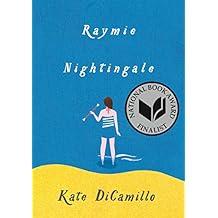
RAYMIE NIGHTINGALE By Kate DiCamillo 272 pp. Candlewick Press. $16.99. (Middle grade; ages 8 to 12)

Raymie Nightingale

Perhaps the sincerest aim of any fairy­ tale is not to introduce young readers to the quixotic pleasures of magic and fantasy but rather to initiate all readers into life’s unspeakable verities: Parents desert families, orphaned children often go hungry, and even the most loyal beloveds are capable of astonishing acts of betrayal. Early on in Kate DiCamillo’s captivating new novel, “Raymie Nightingale,” we learn about an older woman who regularly feeds a bevy of swans, seeming “like something out of a fairy tale.” Ten-year-old Raymie Clarke, an anxious heroine, considers the possibility that it’s “a fairy tale that hadn’t been told yet.” That’s an irresistible promise to begin a novel with, and DiCamillo is up to the challenge. With its short, vibrant chapters and clear, gentle prose, this triumphant and necessary book conjures the enchantments of childhood without shying away from the fraught realities of abandonment, abuse and neglect.

Set during the summer of 1975, “Raymie Nightingale” features an unlikely threesome of girls who bond over a series of disastrous baton-twirling lessons as they prepare to vie for the fantastic title of Little Miss Central Florida Tire. Raymie, fretful and sensitive, hopes to win the crown, become famous and lure her father, who has run away with a dental hygienist, back home. Louisiana Elefante, an angelic-­looking orphan living with her grandmother in penury, sets her wide eyes on the prize money — confident that the winnings will keep her out of the county home and the clutches of the mysterious Marsha Jean. Beverly Tapinski, the unflappable, streetwise daughter of a former beauty queen and a New York City cop, is committed to sabotaging the entire pageant. Louisiana dubs the girls “the Three Rancheros,” and with their every misadventure and escapade, the Rancheros pledge to rescue one another from their troubled lives.

DiCamillo, a former National Ambassador for Young People’s Literature and the author of the Newbery Honor book “Because of Winn-Dixie” as well as two Newbery Medal winners, “The Tale of Despereaux” and “Flora and Ulysses,” has returned to her Florida roots and to the careful handling of such thorny issues as loneliness and parental desertion. In “Raymie Nightingale,” DiCamillo uses her light touch and boundless humor to deliver the difficult news that adults are fallible and that children must learn to develop an unwavering sense of self-reliance and self-acceptance. Summoning the wit of Flannery O’Connor and the sweet melancholy of John Prine, she elegantly connects her characters’ wild actions to their roiling emotions. She writes with compassion and grace about both childhood traumas and adult ­transgressions.

Along the way, the Three Rancheros search for a missing library book about Florence Nightingale (inspiring the book’s title); steal a baton; discover the whereabouts of a missing, beloved cat; and develop a tender but hard-earned friendship. Louisiana Elefante, who may or may not be the daughter

of famous trapeze artists, is one of DiCamillo’s most singular and arresting creations. With “swampy lungs” and an untamed warren of multiplying bunny rabbit barrettes, Louisiana delights on every page. When Louisiana asks her new friends, “Have you ever in your life come to realize that everything, absolutely everything, depends on you?” the reader understands not only her sorrow but also the vibrant powers of her imagination. Then there is Beverly Tapinski, who makes twirling a baton “look easy and impossible at the same time” and has already run away from home and made it as far as Atlanta. She is jaded and unimpressed by adult wisdom, yet when she lies about the origins of her black eye and beats the gravel with her new baton, it is impossible not to feel her vulnerability along with the quake of her anger and the fierceness of her still-developing strength.

But it is Raymie Clarke, with her ever-­expanding soul, her pluck and fortitude, who succeeds at something far bigger than any Little Miss competition. Though Raymie’s absent father ironically sells family insurance — his receptionist answers the phone with “Clarke Family Insurance. How may we protect you?” — DiCamillo tackles the ever-present uncertainty of whether any family can be protected from separation or disaster. By learning to make new friends and to trust in her friendships, Raymie comes into a powerful sense of self-knowledge. She is a terrific model for young readers and adult readers alike.

Twirling a baton requires flair and confidence, in addition to an understanding that the baton is always balanced just a tiny bit off-center. There is something wonderfully off-balance, too, about ­DiCamillo’s storytelling. It allows her characters to sparkle and soar. DiCamillo has called this novel, based partly on her own fatherless Florida childhood, “the absolutely true story of my heart.” What a beautiful and generous heart it is.

The Fault in our Stars by John Green , Dutton Books

Image result for the fault in our stars

John Green is possibly the most renowned author of Young Adult Fiction currently operating. His most well known book so far is probably this one, The Fault In Our Stars. The basis of the story is that a girl named Hazel who has cancer meets a boy named Augustus who she falls in love with. The two of them try to deal with cancer, love, and books. It's your average boy meets girl, girl has cancer, boy and girl talk about how a fictional book ends book. The whole story is beautifully written and is just breathtaking. The metatextual elements with references to the fictional book which the two are both a fan of (An Imperial Affliction) have a very Third Policeman–esque vibe to it, which, as a great fan of The Third Policeman was very enjoyable. I thought the plot was wonderful, the characters were absolutely believable and you do completely fall in love with them. Hazel and Augustus are fantastically drawn and the voice of them both is very funny and very well done. It is not a sick lit novel, despite having many of the trappings associated with the genre, it is a story about two people in love, one of whom has cancer. It also has a certain philosophical bent in which it discusses the meaning of life and death.

Of course, I cannot talk about The Fault In Our Stars without mentioning the brilliant film adaptation. It is equally as brilliant as the book and, in my opinion, enhances the novel which very few films do. For me, the novel and book are now as one, each dependent on the other. Augustus will always be Ansel Elgort and Peter Van Houten will always be that guy who I thought was John Hurt but wasn't and then realised was in The Life Aquatic. Or Willem Dafoe for short.

I would recommend that everyone reads this book. It is beautiful, enthralling, funny and just fantastic. It shows how a short life can still be an infinity, even if it is a lesser one. It enthralls, entertains and educates and offers a jumping off point for young people to explore and discuss important philosophical issues.

And yes, I did get something in my eye at the end.

But it was totally dust.