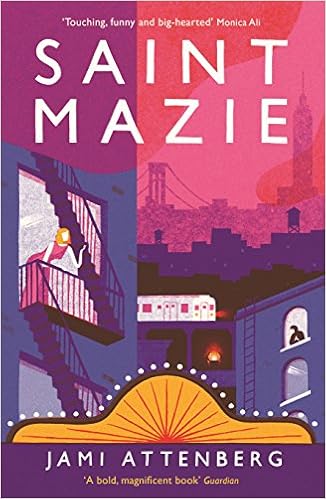
In 1940, Joseph Mitchell, a writer for "The New Yorker", wrote a series of essays about New York City. One featured a woman named Mazie Phillips Gordon, who was known throughout the poorer parts of the city as "Saint Mazie". She spent the Depression-era years helping the down-and-out, those poor men who slept in the streets and begged for food and drink. She'd pay for them to sleep in shelters and pass out money for them to buy food. She'd call the ambulances when they were sick or dying. Mazie Gordon gave poor men - "bums", as others called them - some dignity in their lives. The "New Yorker" article was real, the men were real, and Mazie Gordon was real. But, who was she? And what were her motives for helping as she did?
Author Jami Attenberg has taken the bare facts of Mazie Gordon's life and has written a novel based upon those facts. She has added her own interpretation of Mazie's life and extrapolated a story. How much of the story is true is unclear, past the basic facts. But Attenberg - whose latest novel was "The Middlesteins" - has created a woman who, both in her own words in diary form and those of relatives and friends, is someone you won't soon forget. She was the owner of a theater and she worked the box office. Facing the street, she saw the rough and real life of Depression-era New York City and felt compelled to help those she could. But she had her own life, too, and it was filled with interesting people who she loved and who loved her.
I finished the book a bit curious about why Jami Attenberg chose to write a fictional account of the life of Mazie Gordon, rather than a non-fictional one. I suppose I would have preferred reading a biography of this fascinating woman who helped so many needy. I hope that someone will write a bio of Mazie. Until then, I'm satisfied with this excellent novel.

No comments:
Post a Comment