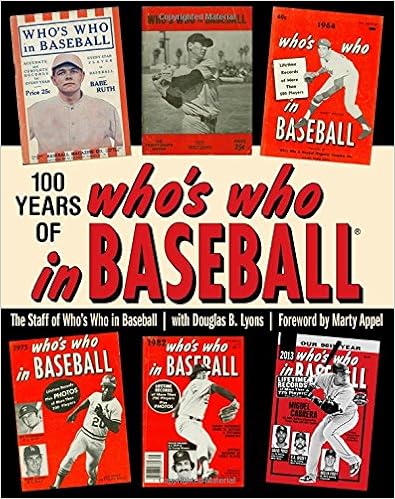
What's Good: The book shows the front covers in full size of the 100 years of publication with interesting and striking pictures, especially before the magazine went to the all-red background in the 1950's. It would be very expensive - if not impossible for the reader to accumulate these on his own.
What's Indifferent: In a 200 page book, the pictures of covers noted above take up half the space all by themselves. The other pages are devoted to brief biographical sketches of the players on the cover, and to very brief summaries of what happened in baseball that year. The consumer who buys this book is most likely a baseball nut (like myself), and who likely already has much of this information in his memory, or has it readily available, and in more detail, on thirty other books on his shelves.
What's Not So Good: There's a lot of material that might have been included that was left out - and, sadly, a lot of blank space that might have been put to better use. Back in the 1950's and '60's, many of us would use the Who's Who (and Street & Smith's Annual) for much of our baseball information. Street and Smith's gave a snapshot of the coming year along with a good stat summary of the previous year. But Who's Who gave us the player's entire career stats, including minor league stats. Back then, a player could be in the minors for 8-10 years before getting up to the majors; his minor league stats were his whole career, so if you wanted to know about him, you needed those stats. And Who's Who gave the player's trade history. Before free agency, many players, especially lesser ones, were traded many times, sometimes more than once in the same year. And the trades were complex; three-way trades involving eight or nine different players were not unheard of. All of this information is readily available today on websites like Retrosheet or Baseball Reference, but "back in the day" Who's Who was the only source for many of us. So 100 Years of Who's Who in Baseball is nice to have, but I believe it missed its roots. Who's Who - the actual magazine - was crammed with information and stats, a stat junkie's dream. This book is a picture book with a lot of empty space and paltry facts. A few examples of a players stats - the players on the cover, or perhaps some obscure player who was always a trade "throw-in"would have put all that dead space to good use.

No comments:
Post a Comment