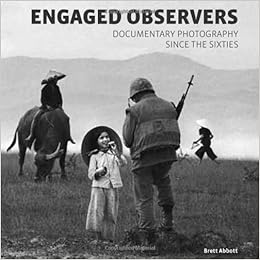
1990s teen life could not be more different from the horrors of Vietnam. But both stories, accompanied by many others, will soon be found in one exhibition at The Getty Museum in L.A. "Engaged Observers: Documentary Photography since the Sixties," opening late June, surveys some of the most acclaimed photographic stories that have blurred the line between journalism and art — from Lauren Greenfield's "Girl Culture" to "Vietnam Inc.," by Philip Jones Griffiths.

Lewis W. Hine/The J. Paul Getty Museum

Walker Evans/The J. Paul Getty Museum

Philip Jones Griffiths/Magnum Photos

W. Eugene Smith/Aileen Smith/Center for Creative Photography/University of Arizona

W. Eugene Smith/Aileen Smith/Courtesy of Robert Mann Gallery, New York

Mary Ellen Mark/The J. Paul Getty Museum

Larry Towell/Magnum Photos

Sebastiao Salgado/The J. Paul Getty Museum

Sebastiao Salgado/The J. Paul Getty Museum

Sebastiao Salgado/The J. Paul Getty Museum

Lauren Greenfield/Institute
In many cases, documentarians risk their lives to tell stories that a wider public might otherwise never see. This kind of photojournalism has its stylistic roots in the early war photography of Robert Capa and Henri Cartier-Bresson, but it dates back to the social reform photographs of Lewis Hine — or even Alexander Gardner's Civil War imagery. But, oddly enough, the exhibition ends with these early photographs.
Rather than emphasizing the roots of photojournalism, the show focuses on its modern impact. During the civil rights era, photographer Leonard Freed traveled America with Dr. Martin Luther King Jr., resulting in his photo essay, "Black in White America." In the 1970s, Eugene W. Smith captured the tragic face of Minamata disease, a rare neurological syndrome concentrated in the Japanese town of Minamata, caused by the mercury waste of a large petrochemical plant. In the late '70s, Susan Meiselas documented the violent Sandinista revolution in Nicaragua.


It's hard to say whether photojournalism has changed much since the '60s. Because although personal styles may depend on era, subject matter and medium, each of these photographers has had a similar mission: to show the world something new and provoke some sort of change.
No comments:
Post a Comment